A lot of risky decisions are not planned. They happen in a few seconds: someone offers you a drink at a gathering, sends a message saying "just try one hit," or tells you a vape is harmless because "it's only flavor." Those moments can affect your health, safety, reputation, and future much faster than most people expect. Knowing what alcohol, drugs, and vaping can do is important, but knowing what to say and what to do in the moment is what protects you.
You do not need to be "the type" to run into substance-related pressure. It can happen during a birthday party, at a park, after a sports event, in a group chat, on a livestream, during a gaming hangout, or while riding with older teens. Sometimes the pressure is direct. Sometimes it is subtle, like everyone acting as if saying yes is normal and saying no is awkward.
The real skill is not just memorizing facts. It is being able to pause, assess risk, protect yourself, and get help when needed. That is real-life responsibility: making a safe choice even when other people are making unsafe ones.
Substance use means taking a drug or chemical that changes how your body or brain works. Refusal strategy means a planned way to say no and protect yourself in a pressured situation. Help-seeking means reaching out to a trusted person or emergency service when a situation is unsafe or someone may be in danger.
One reason this topic matters so much in your teens is that your brain is still developing. The parts of the brain that help with decision-making, self-control, and long-term thinking are still getting stronger. That means substances can interfere with learning, mood, memory, and judgment more than many teens realize.
Your judgment, reaction time, and self-control can change quickly after using substances through the body systems most affected. Even if someone says they feel "fine," alcohol, nicotine, and other drugs can make it harder to think clearly, notice danger, or make smart choices.
[Figure 1] Alcohol slows brain function. Many drugs either slow the body down, speed it up, or distort thinking and perception. Vaping often delivers nicotine, which can change attention, mood, and cravings. Some vape liquids may also contain other chemicals or drugs that the user did not expect. That uncertainty is part of the risk.
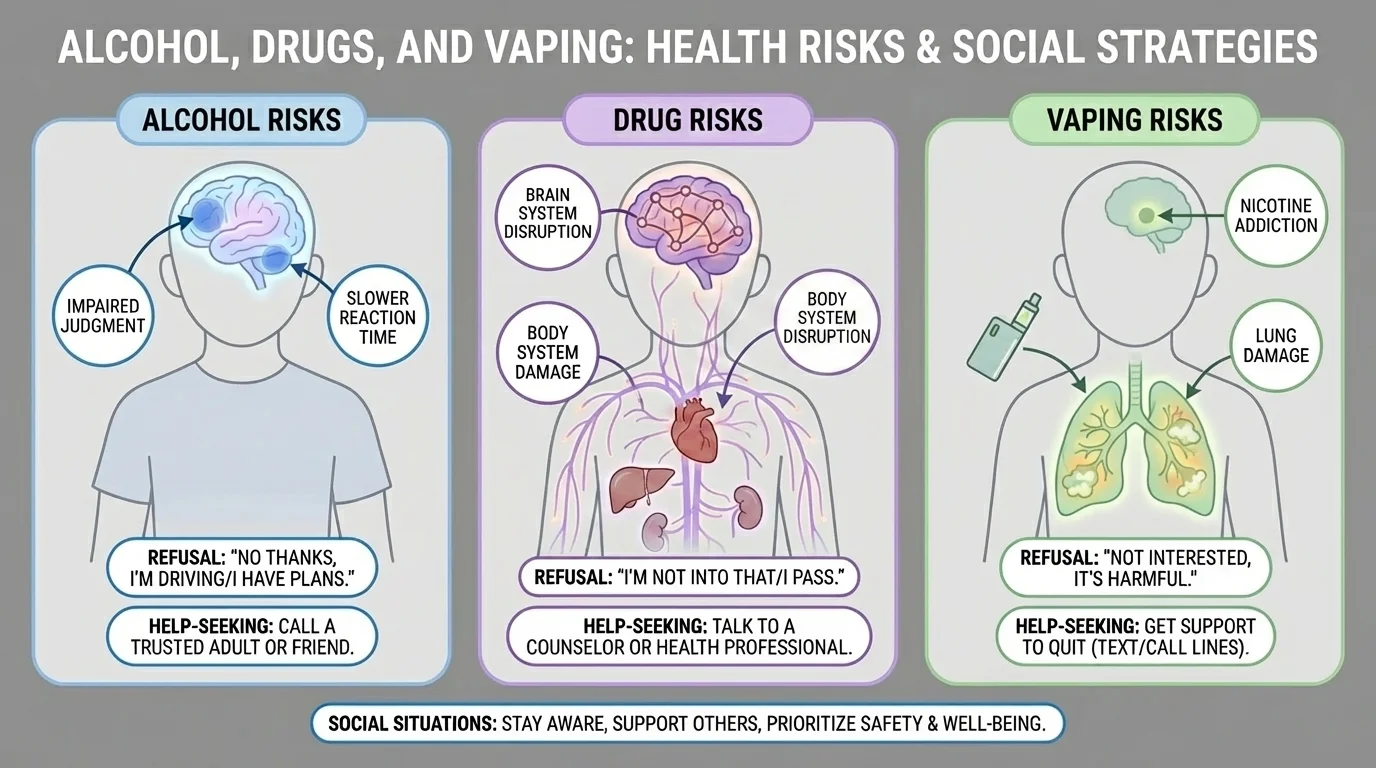
Substances also affect the body, not just the mind. Breathing can slow down. Heart rate can rise or become irregular. Balance gets worse. Nausea, vomiting, panic, dizziness, chest pain, coughing, and fainting can happen. In an emergency, the body may stop responding normally.
Many young people think vaping is "just water vapor," but vape aerosol is not the same as steam from water. It can contain nicotine, tiny particles, flavoring chemicals, and other substances that go into the lungs.
A practical way to think about risk is this: if something changes your thinking, movement, breathing, or ability to make decisions, it can put you in danger fast. That includes danger from accidents, unsafe rides, fights, unwanted sexual situations, and posting things online you would not normally share.
Alcohol poisoning is one of the most serious short-term dangers. It can happen when a person drinks a large amount in a short time. Warning signs include vomiting, confusion, slow breathing, blue or pale skin, passing out, and not waking up properly. This is a medical emergency.
Alcohol also increases the chance of falls, drowning, car crashes, dangerous dares, and impulsive behavior. A person who has been drinking may think they are in control when they are actually less aware, less coordinated, and more vulnerable.
Long-term alcohol use can damage the liver, heart, and brain, and it can lead to school problems, family conflict, depression, and dependence. Starting early can raise the risk of future problems with substance use.
Why "just one bad night" can matter
A single unsafe alcohol situation can lead to injuries, assault, legal trouble, or hospitalization. Even if long-term health damage does not happen right away, short-term decisions made while impaired can have lasting consequences.
If you hear someone say, "I only drink on special occasions," that does not automatically mean it is safe. Risk depends on how much, how fast, where they are, who is with them, whether they mix substances, and whether they can get help quickly.
The word "drugs" covers many substances, and the risks are different, but one major problem is unpredictability. A pill, gummy, vape cartridge, or powder may not contain what the seller claims it contains. That can turn a "small experiment" into a medical emergency.
Overdose means the body has more of a drug than it can safely handle. This can slow breathing, stop breathing, cause seizures, trigger extreme overheating, or affect the heart dangerously. Overdose can happen with illegal drugs, prescription medicines used the wrong way, or mixed substances.
Prescription medications can be especially misleading because people assume "medicine" means safe. But a prescription is only safe when it is taken by the right person, at the right dose, for the right reason. Taking someone else's pain pills, anxiety medication, or ADHD medication is misuse and can be dangerous.
Cannabis products can affect memory, focus, reaction time, and coordination. Some people also experience panic, paranoia, or confusion. Stronger products can have stronger effects than users expect. Mixing cannabis with alcohol increases risk.
Stimulants may make a person feel energetic for a while, but they can also cause anxiety, aggression, chest pain, and sleep loss. Opioids can make breathing slow down so much that a person stops getting enough oxygen. Unknown pills are especially dangerous because counterfeit pills may contain powerful substances without the user knowing.
Nicotine addiction can develop faster than many teens expect. Nicotine changes how the brain responds to reward and cravings, so using a vape can become something your brain starts demanding instead of something you feel fully in control of.
Vaping can irritate the lungs and throat, increase coughing, and affect exercise endurance. For athletes or active teens, this matters immediately. If your breathing is worse, your performance and recovery can also be worse.
Some people think vaping is safe because it does not smell the same as cigarettes or because the device looks modern. That is marketing, not proof of safety. A device being popular does not make it low-risk.
Another serious issue is hidden content. Some vape products contain high nicotine levels. Others may contain THC or other chemicals. Because the user cannot always verify what is in the device, the health risk increases.
"If you have to guess what is in it, it is not safe enough to put in your body."
The pattern across alcohol, drugs, and vaping is simple: if something reduces control, increases cravings, harms breathing, or changes your brain, it can interfere with your goals, relationships, and safety.
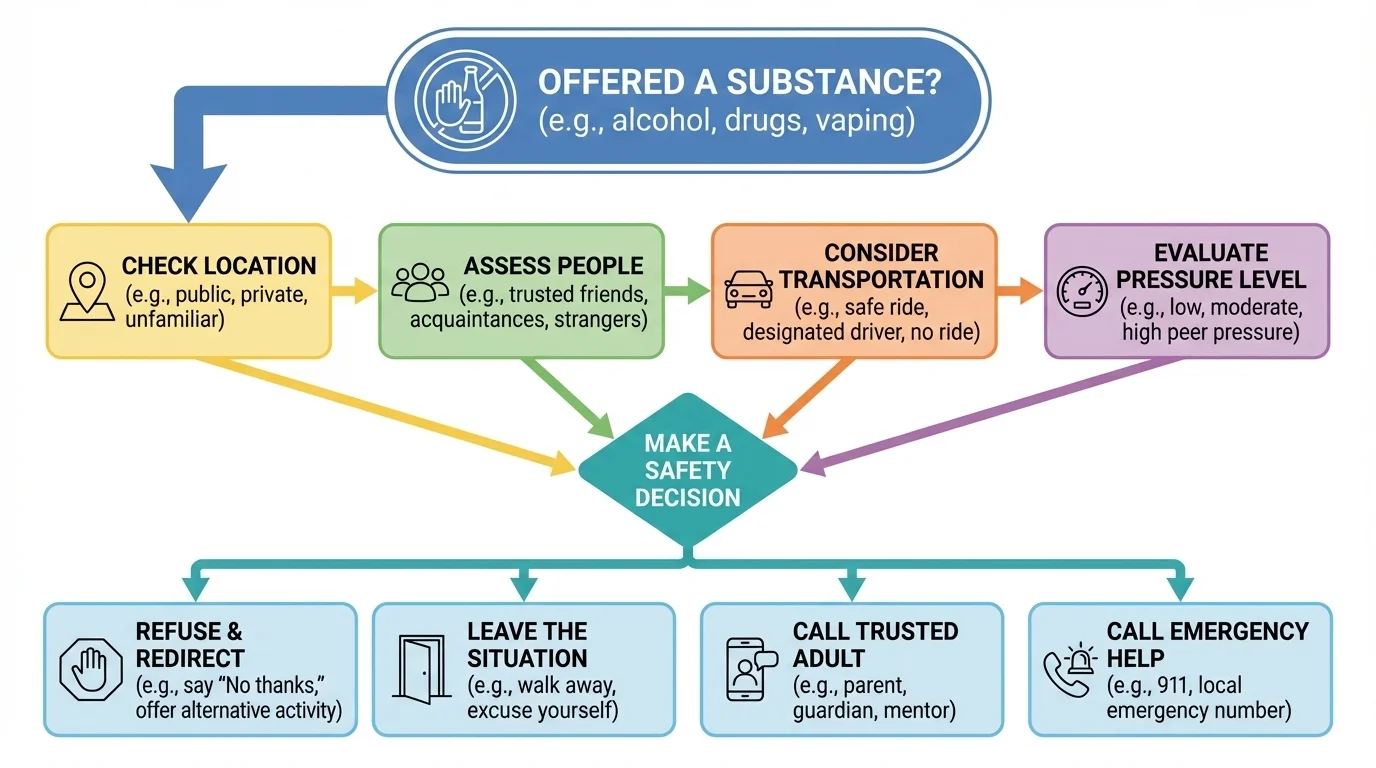
Being safe is easier when you notice warning signs early, and a practical decision path can help you act before things get out of control. If someone is pressuring you, hiding what a substance is, laughing at your boundaries, or trying to separate you from safe people, the risk level is already rising.
[Figure 2] Watch for social clues such as: no trusted adult nearby, people much older than you, people you do not really know, no safe ride home, substances appearing suddenly, dares, filming for social media, and anyone saying "don't tell anyone." Those are not small details. They are danger signals.
Texts and direct messages can also be risky. If someone asks you to meet secretly, bring money, hide something from your family, or get into a car with someone who has been drinking or using, that is a situation to exit, not negotiate.
Trust your discomfort. If something feels off, you do not need courtroom-level proof to leave. You are allowed to protect yourself early.
Quick risk check before you say yes to anything
Step 1: Ask what is happening.
What is the substance? Who brought it? Who is there? How are people getting home?
Step 2: Check your safety supports.
Do you have a charged phone, a trusted contact, and a ride that does not depend on an impaired person?
Step 3: Notice pressure.
If people are mocking, rushing, or hiding information, treat that as a red flag.
Step 4: Decide fast.
Refuse, leave, contact a trusted adult, or call emergency help if someone is in danger.
A good rule is this: if your safe exit plan is weak, your risk is high. That idea connects directly to the choices shown earlier in [Figure 2], where transportation and pressure level matter as much as the substance itself.
[Figure 3] The best refusal strategy is usually short, calm, and confident across text messages and face-to-face situations. You do not owe anyone a long speech. Clear beats clever.
Here are practical refusal methods you can use right away.
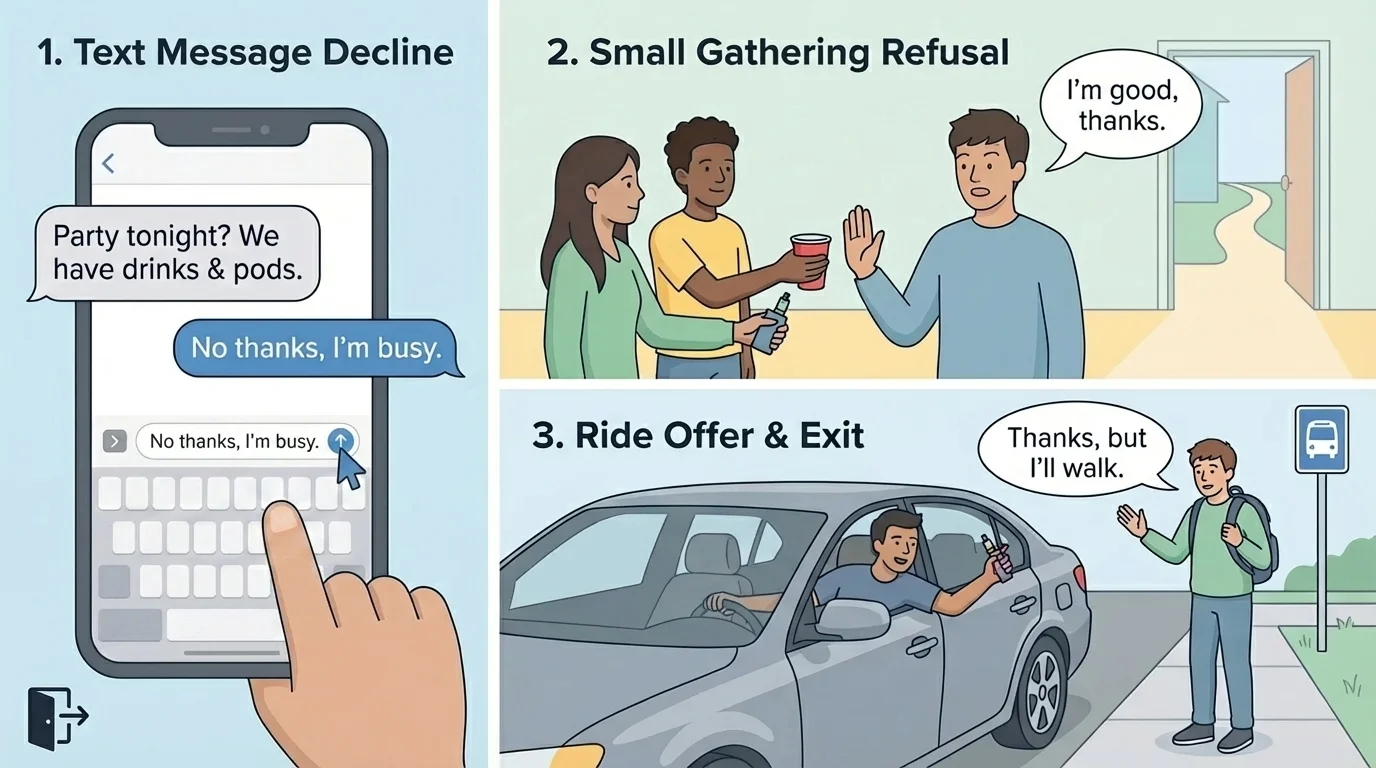
Be direct. Say, "No, I don't use that," "I'm good," or "Not for me." A short answer can sound stronger than a nervous explanation.
Use the broken-record method. Repeat your answer without arguing. "No thanks." "No, really." "Still no." This works because you do not get pulled into a debate.
Blame the rule if you need to. "My family will know." "I have practice tomorrow." "I'm not getting grounded over that." You are not weak for using an outside reason. You are being strategic.
Suggest a different action. "Let's get food instead." "Want to play ball?" "Let's leave and go somewhere else." Sometimes changing the activity lowers the pressure.
Create an exit. "I have to go." "My ride is here." "I need to call home." Leaving is a refusal strategy.
Use digital refusal too. If someone pressures you by text, you can reply once, stop responding, block them, or save the messages and show them to a trusted adult if needed.
Refusal scripts you can actually use
Scenario 1: Someone offers you a vape at a park.
You say: "No thanks. I don't vape." If they push, say: "I already said no." Then move closer to safe people or leave.
Scenario 2: A friend messages you, "Just take one pill, it helps you chill."
You reply: "No. I'm not taking random pills." Then stop engaging and tell a trusted adult if the pressure continues.
Scenario 3: You are offered a ride by someone who has been drinking.
You say: "I'm not getting in the car." Then call your backup ride immediately.
Confident refusal is not rude. It is self-respect. The calm body language and simple wording in [Figure 3] are effective because these strategies do not invite negotiation.
[Figure 4] Sometimes saying no is not enough because the situation has already become dangerous. That is where help-seeking matters. Getting help quickly can save a life.
Call emergency services right away if someone is hard to wake up, cannot stay conscious, has trouble breathing, has a seizure, turns blue or gray, vomits repeatedly, acts extremely confused, or collapses. Do not wait to see if it gets worse. Worse may come too fast.
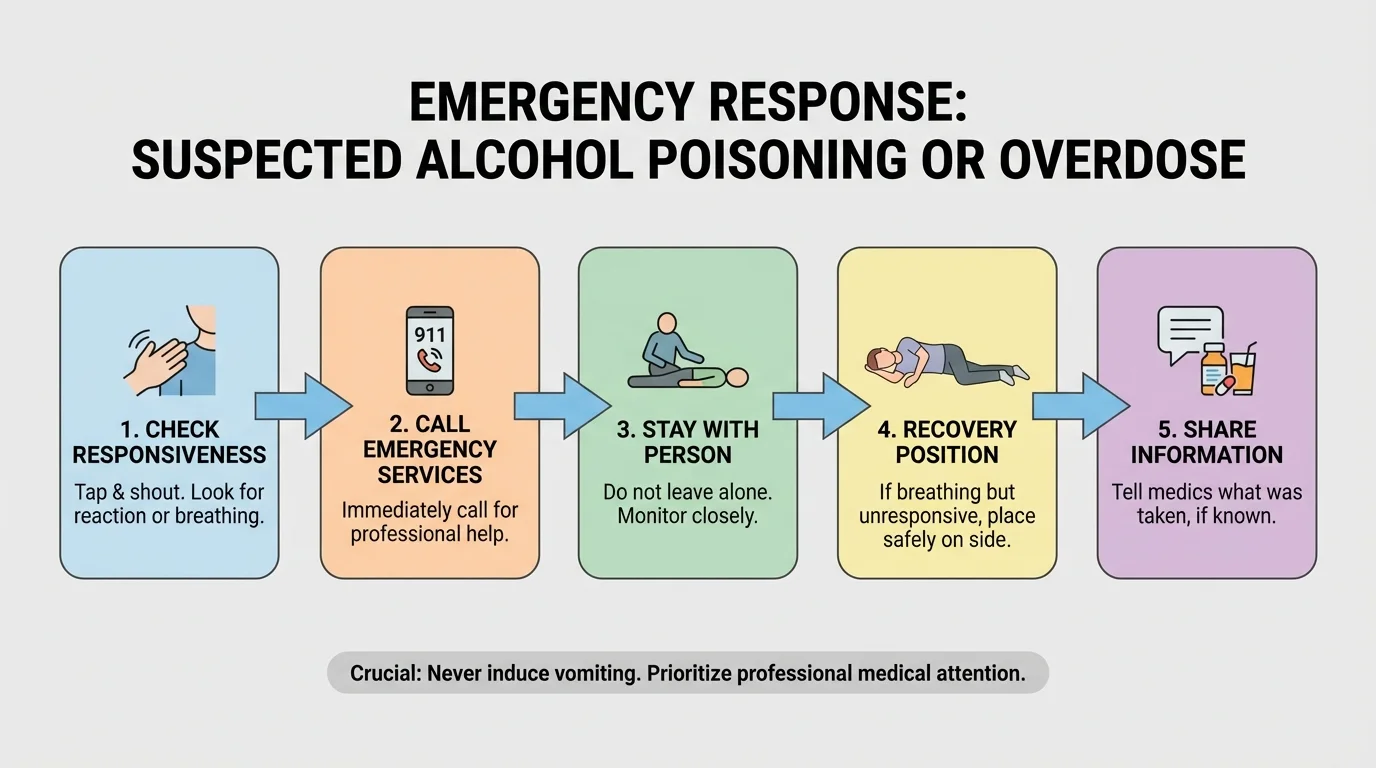
If the person is unconscious but breathing, place them on their side if you can do so safely. Stay with them. Do not give them food, coffee, or another substance. Do not put them in a shower. Do not leave them alone to "sleep it off."
When help arrives, be honest about what was taken if you know. Medical workers need accurate information to help. Protecting someone's life matters more than protecting their image.
If it is not a 911-level emergency but still unsafe, contact a trusted adult right away. That could be a parent, guardian, coach, relative, youth leader, neighbor, or another adult who takes safety seriously. Send a clear message: "I'm in an unsafe situation. I need a ride now."
You can also use a code word with family or trusted adults. For example, if you text a pre-planned phrase, they know you need to leave without asking questions in front of other people.
You are not "snitching" when someone is in danger. Protecting a life is more important than protecting someone from embarrassment.
The emergency sequence shown earlier in [Figure 4] matters because panic can make people freeze. A simple plan helps you act fast: check, call, stay, protect breathing, tell the truth.
A safety plan works best before you need it. If you wait until you are pressured, your brain has less time to think clearly.
Step 1: Choose your non-negotiables. Decide now what your answer is about alcohol, drugs, vaping, and rides with impaired people.
Step 2: Pick trusted contacts. Save at least two adults and one safe friend in your phone favorites.
Step 3: Set a code word. Make sure your trusted adult knows exactly what it means.
Step 4: Plan transportation. Know how you would get home without relying on someone who is impaired.
Step 5: Practice one refusal line out loud. This feels awkward for about ten seconds and useful for a long time.
Step 6: Protect your digital boundaries. Turn off location sharing if needed, avoid sending personal photos when people are pressuring you, and do not let someone use your phone to pretend you agreed to something.
A strong plan lowers pressure
People are more likely to make a safe choice when they already know what they will say, who they will call, and how they will leave. Planning does not make you paranoid. It makes you prepared.
Your safety plan should fit your real life. If weekend sports matter to you, use that in your refusal line. If a family rule is strict, use it. If a certain friend tends to pressure people, stop hanging out one-on-one in risky settings.
Here are a few realistic examples of how this can play out.
Scenario A: You are at a community event, and someone hands you a drink they already opened. Safe response: do not drink it. Say no, put distance between yourself and that person, and stay near trusted people. An open drink from an unknown source is a serious risk.
Scenario B: A friend on video chat is acting dizzy and confused after taking "something" from an older sibling's room. Safe response: tell them to wake a trusted adult immediately. If they become hard to understand, hard to wake, or stop responding normally, call emergency services.
Scenario C: A group chat is pushing everyone to try a vape after practice, and people are posting clips to make it look funny. Safe response: refuse in the chat or privately, leave the conversation if needed, and remember that being recorded while making a bad choice can create long-term problems online.
Scenario D: Your ride home says they only had "a little" alcohol. Safe response: do not get in the car. A "little" is not a safety measurement. What matters is whether driving ability is affected, and you cannot count on an impaired person to judge that honestly.
| Situation | Unsafe Thought | Safer Thought | Best Action |
|---|---|---|---|
| Friend offers a vape | "One time won't matter." | "Addiction can start with repeated 'just once' decisions." | Refuse and leave pressure behind |
| Unknown pill at a hangout | "They say it's safe." | "If I cannot verify it, I should not take it." | Say no and contact a trusted adult if needed |
| Drunk ride offer | "I do not want to be annoying." | "Being alive matters more than being polite." | Find a sober ride or call for help |
| Friend passed out | "They just need sleep." | "Unresponsiveness can be an emergency." | Call emergency services and stay with them |
Table 1. Common risky situations, unsafe thinking patterns, safer thinking, and practical actions.
Protecting your health does not mean you are scared or boring. It means you understand consequences. Strong choices often look quiet: saying no, stepping out, making a call, or helping someone get medical care.
