Have you ever seen someone standing by themselves while other kids are having fun? A small act of kindness can change that moment. When you include someone, you help them feel welcome, safe, and happy. That is a big way to build a caring community, even when you are playing at home, talking on a video call, or joining a club or activity.
People like to feel that they are part of the group. When someone is left out, they may feel sad, shy, or confused. When you include others, you show empathy. That means you try to understand how another person feels.
Including others does not mean you have to be best friends with everyone. It means you act in a kind and fair way. You make space. You share turns. You help others know what is happening.
Inclusion means helping others feel welcome and able to join. Community means a group of people who care about and help one another.
When inclusion happens, games are often more fun. More kids can play, more ideas are shared, and people learn to work together.
Sometimes a person is left out on purpose, and sometimes it happens by accident. Maybe the group starts playing too fast. Maybe someone does not know the rules. Maybe a child is quiet and does not know how to ask to join. You can help in all of these moments.
Being fair means giving people a chance. It does not always mean everything is exactly the same. It means making sure others can join in a way that works for them.
You can notice clues that someone may want to join. They might watch the game, move closer, smile, or ask questions. Looking for these clues helps you become more caring and aware.
There are many simple ways to include people, as shown in [Figure 1]. You can invite them by saying, "Do you want to play?" You can save a turn for them. You can hand them the ball, crayons, cards, or a role in the activity. You can also scoot over to make space.
If the game has rules, explain them in a simple way. A rule is something that tells how the game works. A new player may need extra help learning what to do.
People who include others also use kind voices. They do not laugh at mistakes. They cheer for others. They wait while someone learns. That helps everyone feel brave enough to try.
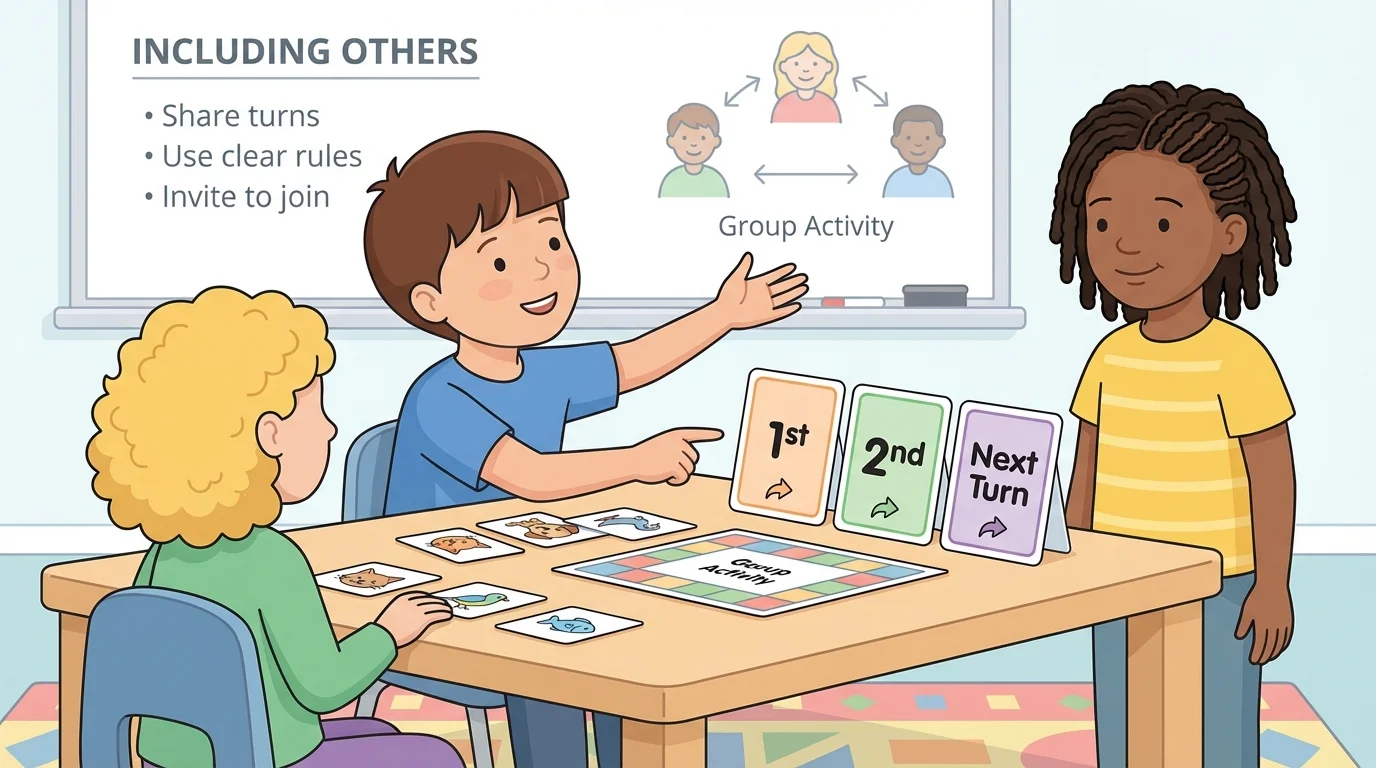
Turn-taking is another important skill. Turn-taking means one person goes, and then another person goes. When you share turns, everyone gets a chance. If one person always goes first or gets the biggest part, others may feel left out.
Helpful ways to include someone
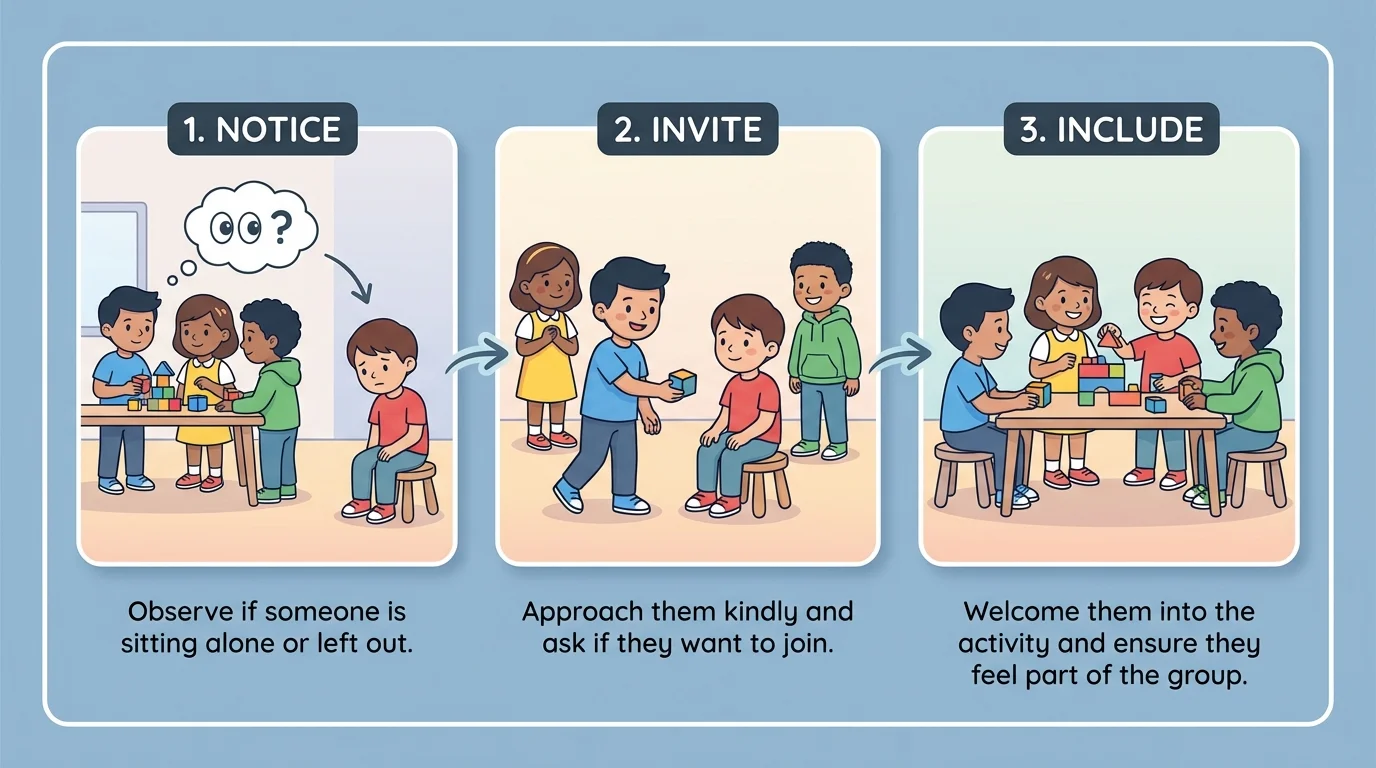
Step 1: Notice
Look around. Is someone watching but not playing?
Step 2: Invite
Say, "You can play with us," or "Do you want a turn?"
Step 3: Help
Show the person what to do and stay kind while they learn.
You can do this in many places: while building with blocks at home, while playing an online drawing game, while talking with cousins on a video call, or while joining a park activity.
[Figure 2] Sometimes you may notice that someone is not joining in. A good plan is: notice, invite, help. First, notice the person. Next, invite them kindly. Then, help them get started.
You can also speak up if a group forgets to include someone. You might say, "Let's make room," or "They can be on my team." These words are small, but they can make a big difference.
If someone says no, that is okay too. Being inclusive also means respecting choices. You can still be kind by smiling and saying, "Okay, maybe next time."
Sometimes a game is already full or almost finished. You can still include others by saying, "You can go next," "We can start a new round soon," or "You can help us choose teams." Inclusion is about finding a way to welcome people when you can.
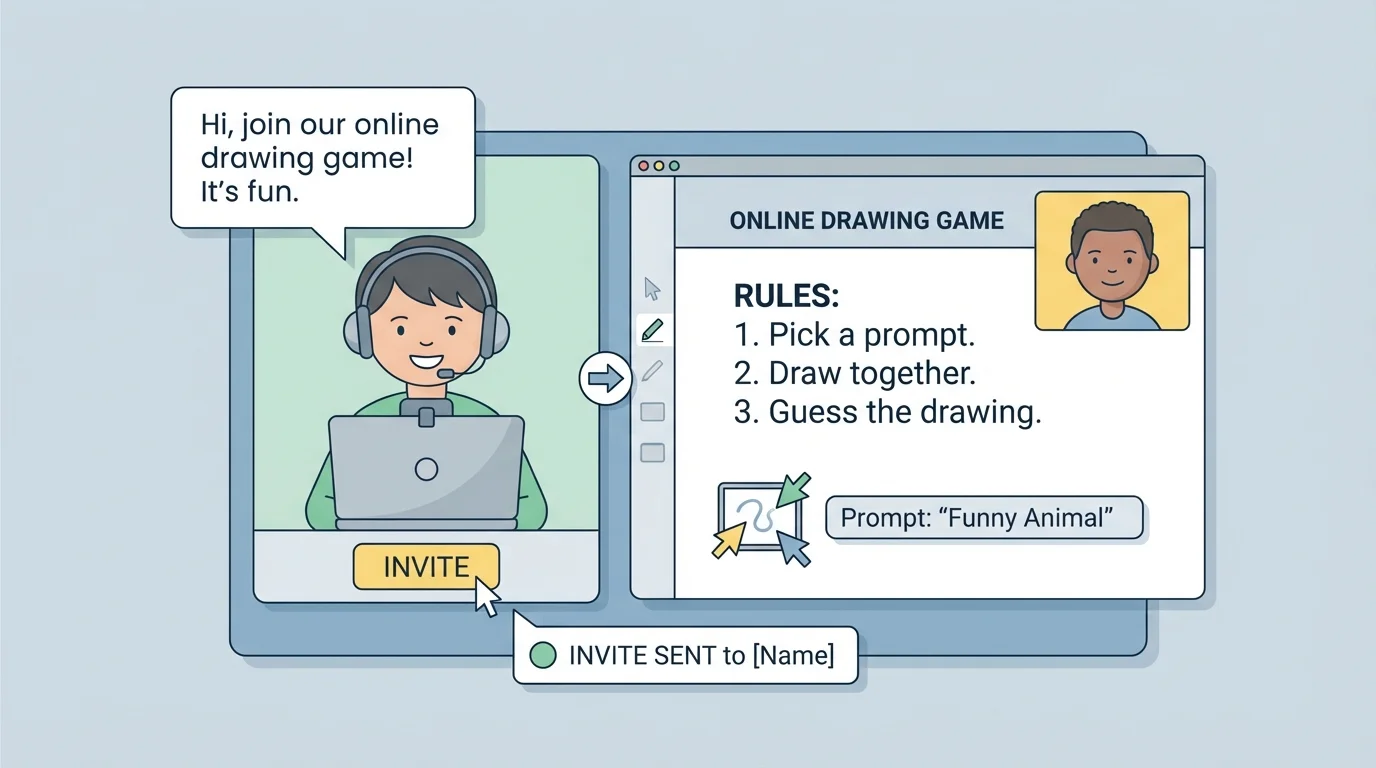
[Figure 3] In online spaces, inclusion matters too. If you are on a video call, you can greet everyone by name. If someone is quiet, you can say, "Do you want to share too?" If you are in an online game, you can explain the game and wait for a new player.
At home, you can include siblings, cousins, or neighbors by choosing games everyone can try. You can offer choices like drawing, tossing a soft ball, pretend play, or simple board games. A community grows stronger when people feel welcomed in everyday moments.
Kind online behavior matters. Do not type mean words. Do not ignore someone on purpose. If a new player joins, tell them the plan and help them feel part of the fun.
Later, the same idea from [Figure 1] still helps: make space, explain the rules, and share turns. Whether the game is on a screen or on the floor at home, welcoming actions are much the same.
Not everyone plays the same way. Some children are fast. Some are slow. Some are learning new words. Some may need extra time, extra space, or quieter play. Being inclusive means noticing these differences and staying kind.
You can change the game a little so more people can join. Maybe you use easier rules. Maybe you use a bigger ball. Maybe you slow the game down. Maybe you pair up and help each other. That is not ruining the fun. That is making the fun bigger.
Including others means being flexible. Sometimes kindness looks like changing your plan a little so everyone can take part. Flexible players think, "How can we make this work for everyone?"
If someone makes a mistake, do not tease. If someone needs help, offer it kindly. If someone communicates in a different way, be patient and listen. This helps everyone feel respected.
Sometimes the hardest part is knowing what to say. You can use short, friendly words.
Try saying: "Come play with us." "You can have a turn after me." "I can show you." "Let's make room." "Want to be on my team?" "We can do it together."
These words help people feel welcome. They also help you become a leader who makes groups kinder.
Kindness can spread. When one person welcomes someone, other people often start being kinder too.
As we saw in [Figure 2], you do not need a big plan. You just need to notice, invite, and help. Small actions can change a whole game.
When you include others, people trust you more. People may feel safer trying new things. Games go more smoothly because people understand the rules and feel calmer. Over time, groups become friendlier and stronger.
When people are left out again and again, they may stop trying to join. That can hurt feelings and make play less fun for everyone. Inclusion helps stop that problem before it grows.
Every time you make room, share a turn, explain a game, or use kind words, you help build a caring community. That is a life skill you can use anywhere.
