Have you ever noticed that a park stays cleaner, a library stays calmer, and an online class works better when people do their jobs? Shared spaces do not run well by accident. People help them every day.
A shared space is a place that many people use. It can be your online class, a library, a playground, a park, a sidewalk, or even a room at home that everyone uses. When people share a space, they need to work together.
Role means a job or part a person has. Responsibility means something a person should do to help. Community means people who live, learn, and help in the same place.
When everyone knows their role and does their responsibility, the space feels safer, cleaner, calmer, and happier.
In your online class, different people help learning go smoothly, as [Figure 1] shows. Your teacher helps by explaining, listening, and guiding the class. The teacher may remind everyone to take turns speaking, use kind words, and stay focused.
You are important too. Your role is to listen, try your best, be kind, and follow directions. You can mute your microphone when needed, use the raise-hand feature, and wait for your turn to talk.
A parent or caregiver often helps by setting up your learning space, checking that your device works, and helping you get ready on time. A technical support person may fix sound, video, or internet problems so the class can continue.
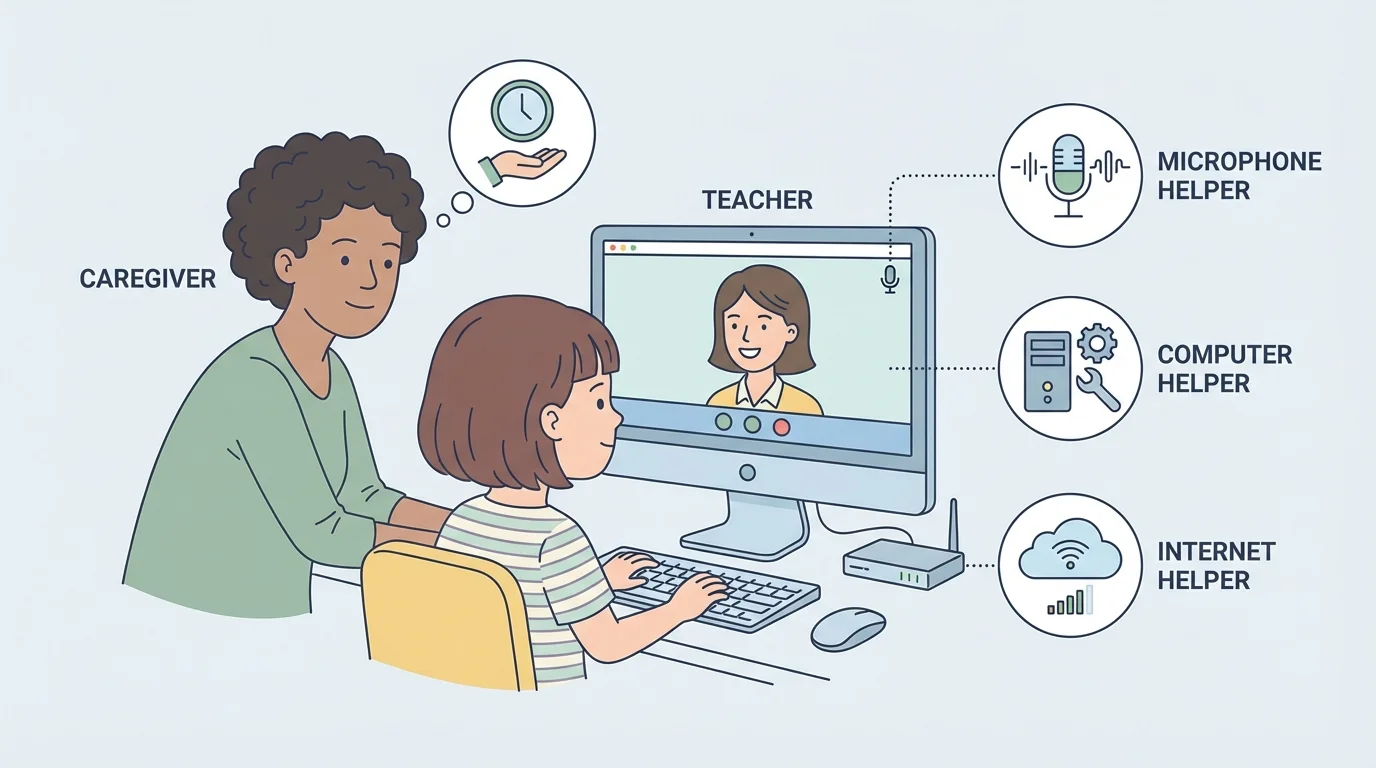
If these people do their jobs, class feels smooth. If no one helps, there may be loud sounds, missed directions, or trouble getting online. That is why each role matters.
Real-life example: getting ready for online class
Step 1: A caregiver helps turn on the device.
Step 2: The teacher opens the lesson and welcomes everyone.
Step 3: You listen, answer kindly, and stay ready to learn.
When each person does their part, the class works well.
Even small actions help. Putting your water nearby, sitting in a quiet spot, and asking politely for help are all ways to be responsible in your online classroom.
Your community has many helpers in shared places, and [Figure 2] introduces some of them. A librarian helps people find books and keeps the library organized and calm.
A sanitation worker helps collect trash so streets and parks stay cleaner. A park worker helps care for grass, paths, and play areas. A crossing guard helps people cross safely near roads.
Firefighters help keep people safe in emergencies. Police officers help protect people and enforce laws. Neighbors can help too by picking up litter, being respectful, and caring for shared places.
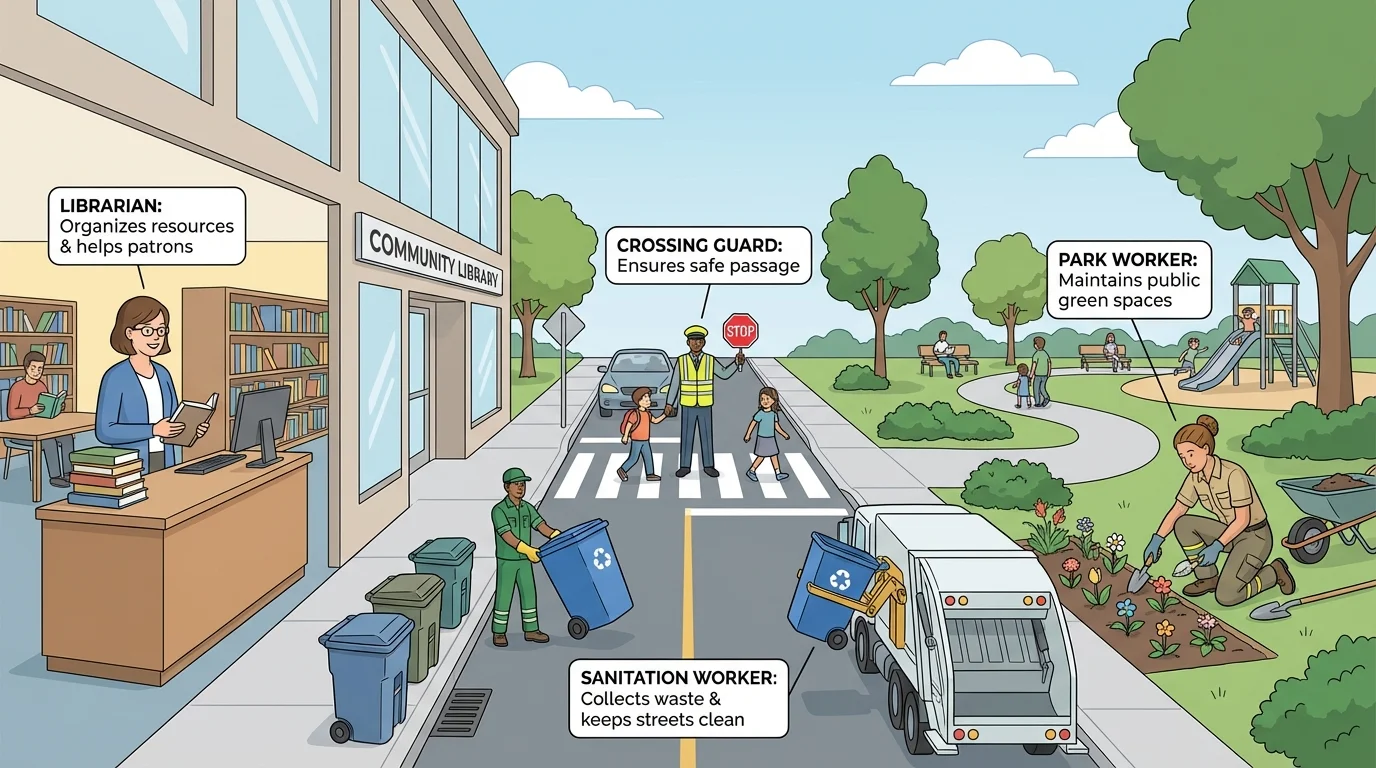
These roles help shared spaces run well. Without them, books may be messy, trash may pile up, and places may become unsafe or hard to use.
Many community helpers begin work early in the day so shared places are ready before most people arrive. You may not always see them, but their work helps everyone.
When you visit a park or library, you are part of that community space too. Your choices can help or hurt the space.
You do not have to be a grown-up to help. Your actions matter, and [Figure 3] shows simple ways you can be a helper. You can put toys away, throw trash in a bin, use walking feet when needed, and speak kindly.
In online spaces, you can wait for your turn, stay focused on the lesson, and tell a grown-up if something feels wrong or unsafe. In community spaces, you can follow rules, stay with your adult, and take care of things you use.
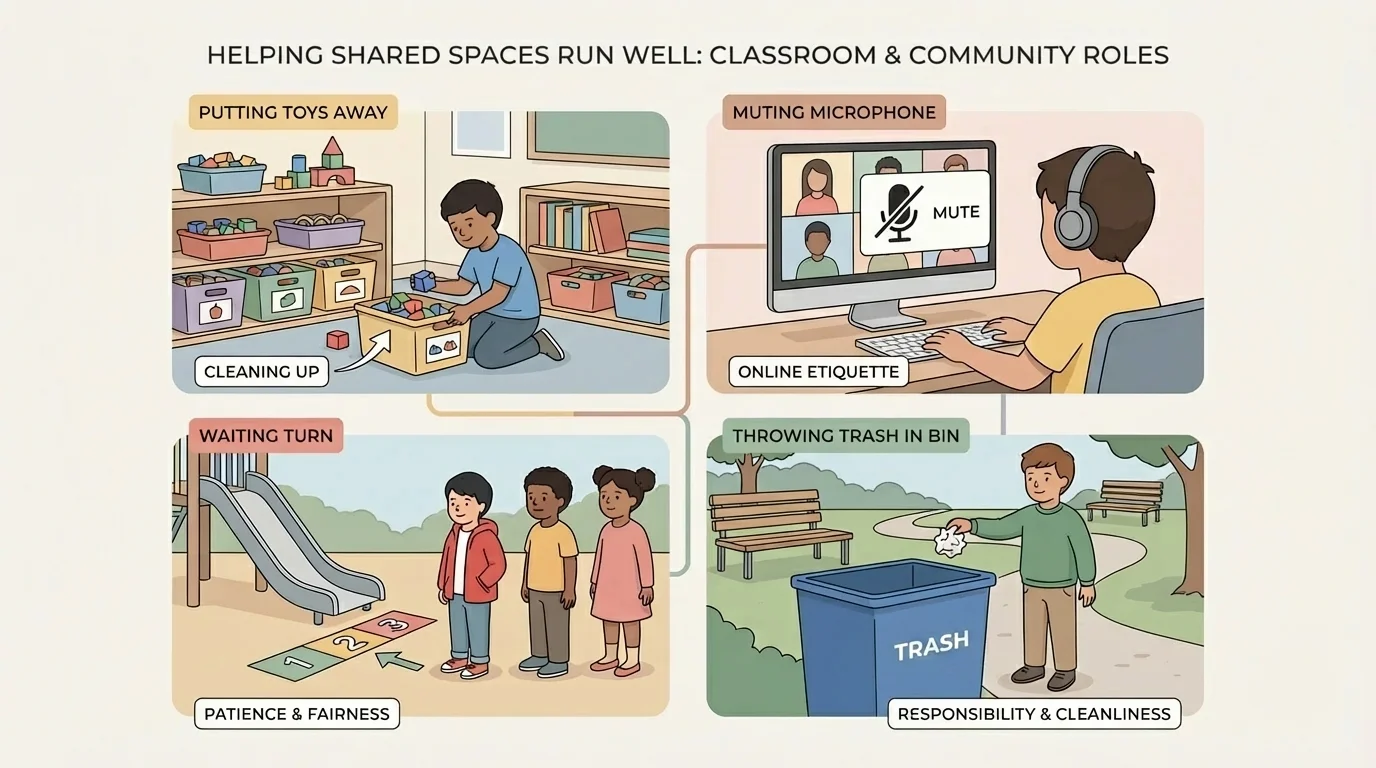
Helping is not only about cleaning. It is also about respect. Respect means caring about other people and the space you share with them.
Everyone has a part
Shared spaces work best when people know what to do and do it. Some people lead, some people protect, some people clean, and some people learn. You may be little, but your part is still important.
If you remember the helpers from [Figure 2], you can see that every community role has a purpose. If you remember the actions in [Figure 3], you can see that children help too.
When people do their jobs, shared spaces feel good to use. An online class is easier to hear. A park is nicer to play in. A library is easier to enjoy. Sidewalks are safer to use.
When people forget their responsibilities, problems can happen. If trash is left on the ground, the area gets dirty. If people shout over each other online, learning becomes hard. If rules are ignored, someone may get hurt.
This is one way to think about it: helpful choices make shared spaces better for everyone. Unhelpful choices make shared spaces harder for everyone.
Here are simple things you can do today:
First, put away one item after you use it.
Next, use a quiet voice when someone else is speaking online.
Then, throw away your trash.
Finally, thank a helper you see in your community.
These small actions show responsibility. They also show that you care about your community.
"We all help shared spaces stay safe, clean, and kind."
As you saw in [Figure 1], your classroom works best when everyone helps. The same is true in your neighborhood, library, park, and home shared spaces.
