Have you ever felt so upset that you wanted to cry, yell, or hide right away? That happens to many children. Feelings can grow big very fast. The good news is this: you can learn small, safe ways to help your body and mind slow down.
During your school day at home, big feelings might come when the video lesson feels hard, when the internet stops working, when a noise distracts you, or when you miss someone. You do not have to make the feeling disappear all at once. You can use simple tools to help yourself feel safer and calmer.
A feeling is an emotion you have inside, such as sadness, anger, fear, or frustration. Your body often gives clues first, as [Figure 1] shows. You might have a tight face, fast breathing, tears, a loud voice, or hands that want to grab or throw.
When you notice these clues, that is an important step. You are learning to calm your body before the feeling gets even bigger. Noticing is not bad. It helps you know, "I need a calm-down tool now."
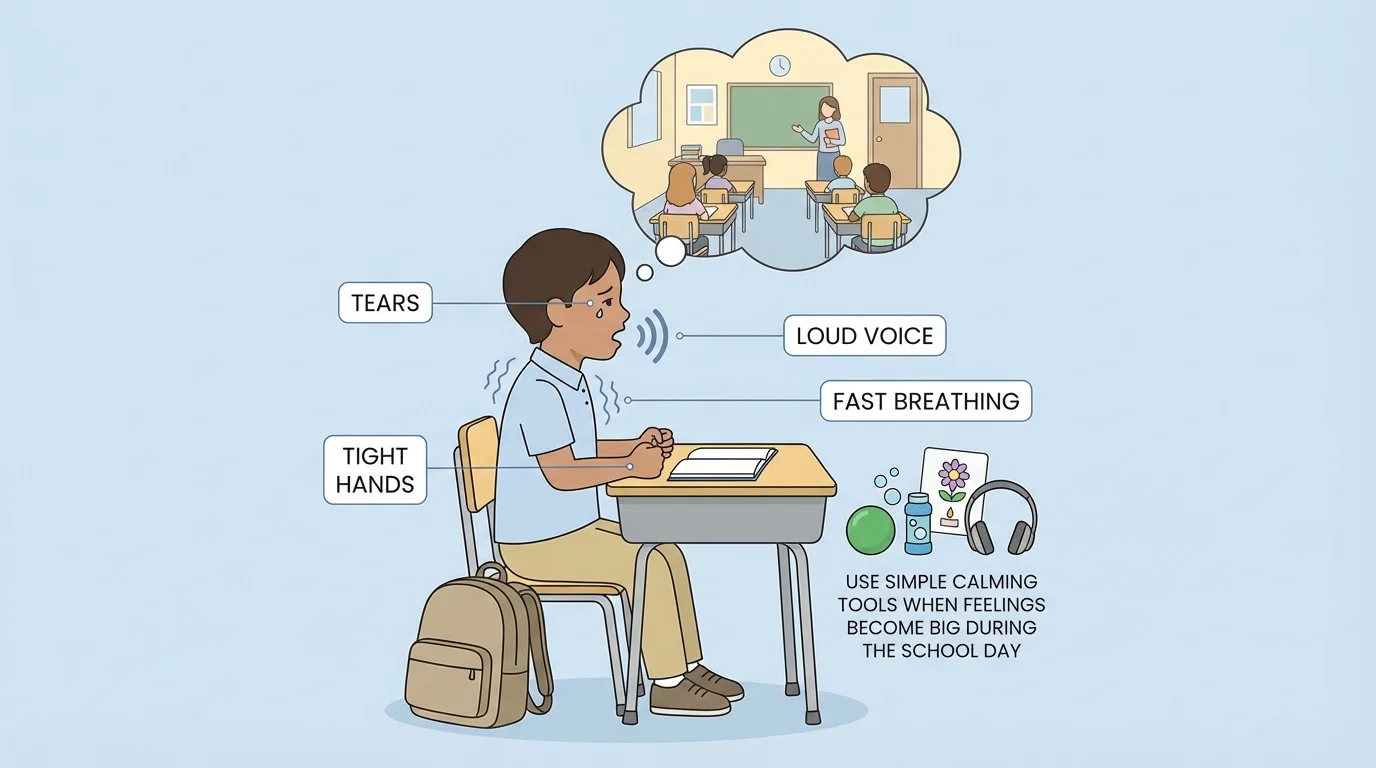
Big feelings are strong emotions that can make your body feel busy, tight, loud, or out of control. Body clues are the signs your body gives you, like crying, stomping, or breathing fast.
All feelings are okay. It is okay to feel mad. It is okay to feel sad. What matters is choosing safe actions when those feelings get big.
You can use a calming tool when your body feels too busy. These tools are simple choices, and [Figure 2] illustrates several good ones. A calming tool helps your body slow down so you can listen, think, and keep going.
Belly breathing is one helpful tool. Put your hands on your tummy. Breathe in slowly. Breathe out slowly. You can pretend to smell a flower and blow out a candle. Slow breaths tell your body, "I am safe."
Hug something soft is another tool. You can hug a pillow, blanket, or stuffed animal. A soft squeeze can help your body feel steady.
Squeeze and release can help too. Squeeze play dough, a soft ball, or your hands together, then let go. This gives your body a safe job to do.
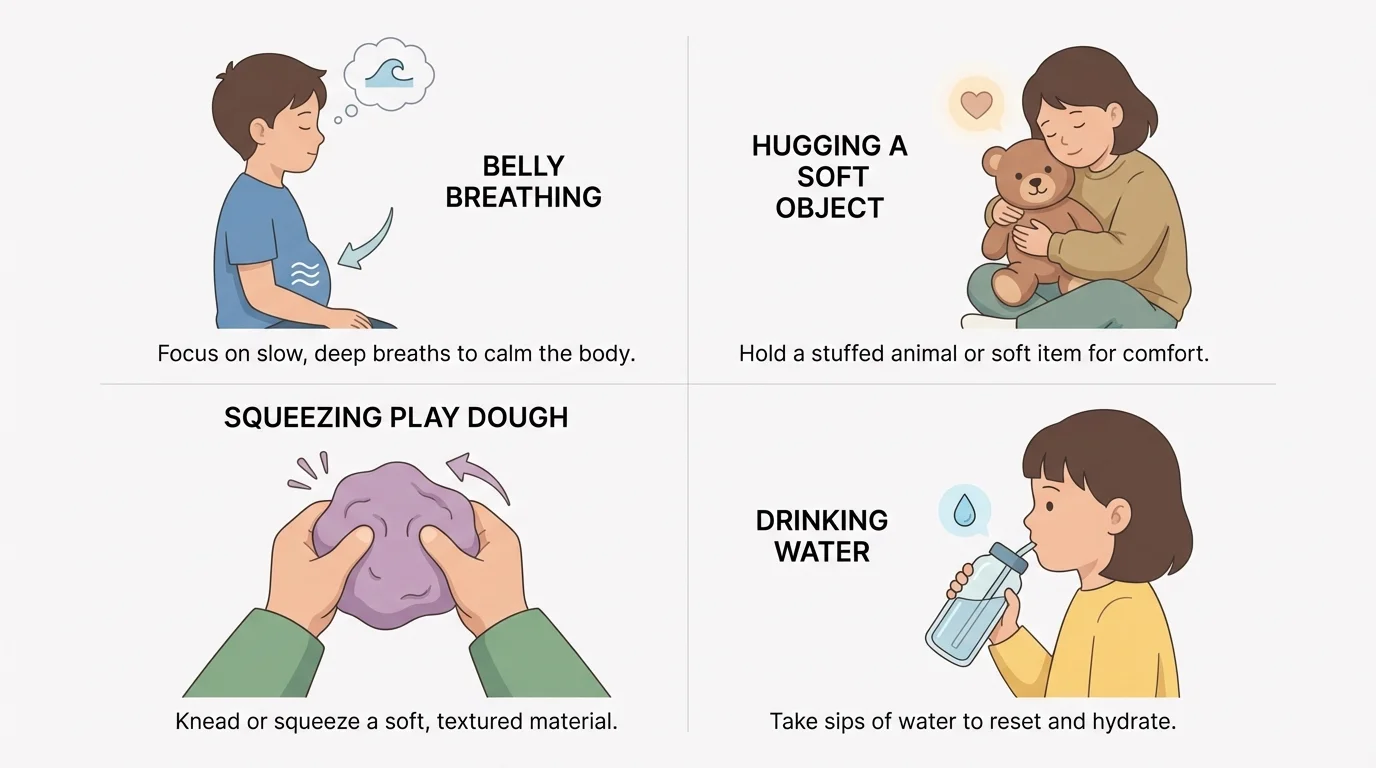
Take a sip of water or sit in a quiet spot with a grown-up nearby. Sometimes less noise helps your body rest. You might also place your hand on your heart and say, "I can calm my body."
Why calming tools work
When feelings get big, the body can become fast and tense. Calm-down tools give the body a slow, safe action. When the body slows down, listening and thinking become easier again.
Different tools work for different children. One day, breathing may help. Another day, a hug or a drink of water may help more. You can learn which tool feels best for you.
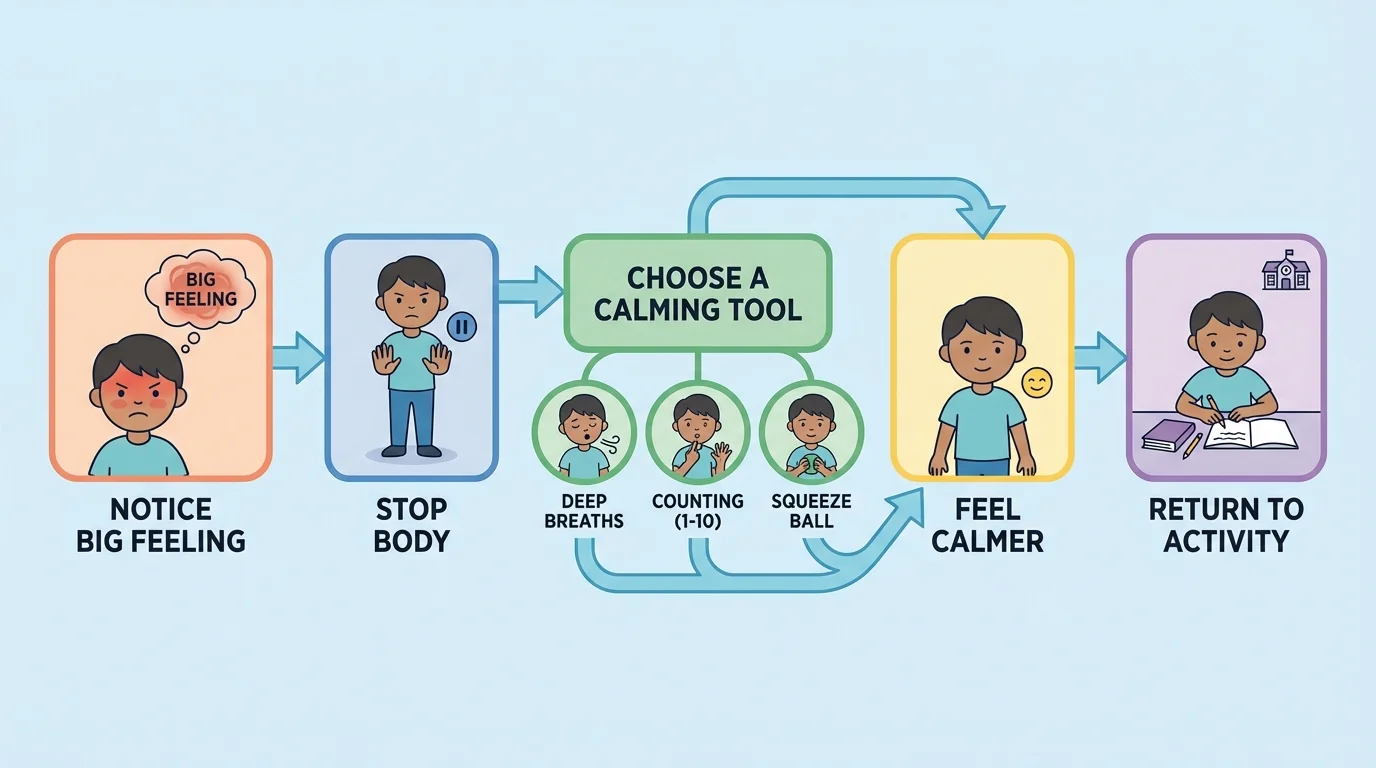
A simple plan helps you remember what to do. The steps are easy, and [Figure 3] shows the order: notice, pause, choose, and return.
First, notice your body clue. Maybe your face feels hot or your eyes fill with tears. Next, pause. Stop your hands and feet. Then choose one calming tool. After your body feels softer and slower, return to your school task or ask for help.
A calm-down plan you can use
Step 1: Say, "My feelings are big."
Step 2: Stop your body. Keep hands safe.
Step 3: Pick one tool: breathe, hug, squeeze, water, or quiet spot.
Step 4: When you feel calmer, go back to listening, drawing, talking, or watching your lesson.
You do not need to do many things at once. One safe tool is enough to start. Later, you can add another tool if you still need help.
Sometimes your feeling is so big that you need help right away. That is okay. Ask a parent, caregiver, or teacher during your lesson for support. You can say, "I need help calming down."
If you want to hit, throw, or run away, or if you cannot stop crying for a long time, find a grown-up right away. Asking for help is a strong choice. As we saw in [Figure 3], calming down is a step-by-step process, and grown-ups can help with those steps.
"Stop. Breathe. Get help if you need it."
Your grown-up may help you move to a quiet space, take breaths with you, or hold you gently if that helps you feel safe. You are not in trouble for having feelings. You are learning what to do with them.
There are many times this can happen. If your video lesson freezes and you feel mad, first notice your hands getting tight. Then take belly breaths and call for help. If your pencil breaks and you want to cry, hug your stuffed animal and ask for another pencil.
If a loud sound in your home bothers you during school, you can cover your ears for a moment, move to a quieter spot with a grown-up, or take a sip of water. If you feel shy talking on camera, put your hand on your heart, breathe slowly, and whisper your answer first before saying it louder.
Strong feelings often get smaller when your body gets slower. That is why slow breathing and safe squeezing can help so much.
Your body clues in [Figure 1] help you know when to start, and the choices in [Figure 2] remind you that you have more than one calm-down tool. With practice, these tools can become part of your everyday school routine.
You are learning an important life skill. Big feelings happen, but you can notice them, stay safe, use a tool, and begin again.
