Toys can make a room feel fun quickly, but they can also make it messy just as quickly. When you put things away, you help make your home safe, calm, and ready for the next activity. That is an important life skill you can use every day.
Putting away materials means returning items to the place where they belong. When blocks go in the bin, books go on the shelf, and crayons go in the box, it is easier to find them later. Cleanup also helps keep feet safe from tripping and helps shared rooms stay nice for everyone.
Routine means doing the same helpful steps in the same order again and again. A routine makes a job easier because your body and brain learn what to do next.
If you leave puzzle pieces on the floor, someone might step on them. If you put them back in the puzzle box, the pieces stay together. Good cleanup habits show care for your things and for other people in your home.
[Figure 1] A routine can help you every time you finish playing or working. Cleanup works best when you do one small step at a time instead of trying to do everything at once.
Step 1: Stop and look around. What is out?
Step 2: Pick up one kind of item first. Maybe all the blocks first.
Step 3: Put each item in its home.
Step 4: Check the floor, table, or rug for anything left behind.
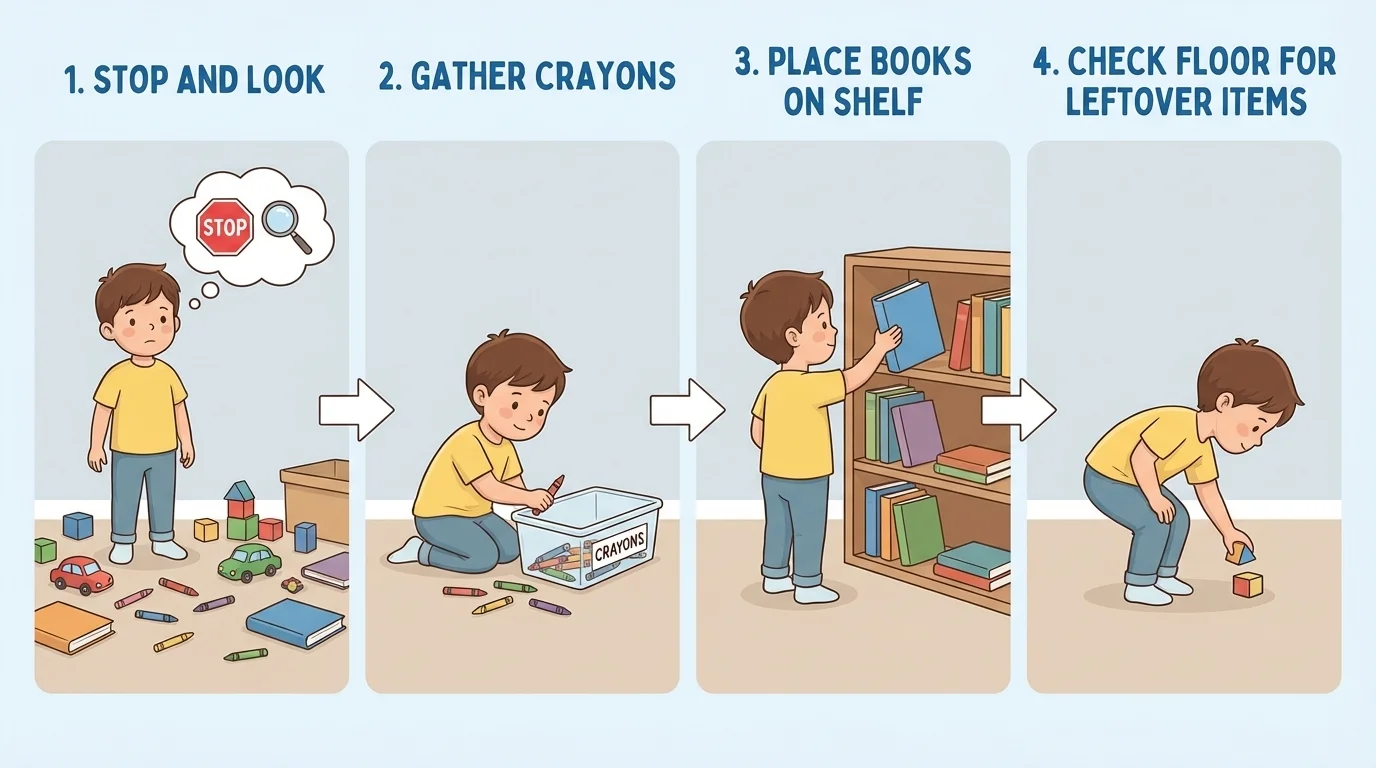
You do not need to do cleanup fast. You just need to do it in order. One toy, one book, one crayon at a time is enough. Small steps help the whole job get done.
Example: Cleaning up after coloring
Step 1: Put the caps back on the markers.
Step 2: Stack the paper neatly.
Step 3: Place the markers and paper in their basket or drawer.
Step 4: Look under the table for any dropped items.
Now the coloring space is ready for next time.
Later, when you clean up toys again, you can use the same order from [Figure 1]. The routine stays the same even when the materials change.
A shared space is a place used by more than one person, like a living room, play area, table, or family reading corner. Caring for a shared space means thinking, "Other people use this too." You can see simple ways to help a shared area stay clean and ready.
You care for shared spaces when you use things gently, throw trash away, wipe small spills with help if needed, and return chairs, pillows, or supplies to their spots. These actions help everyone feel comfortable.
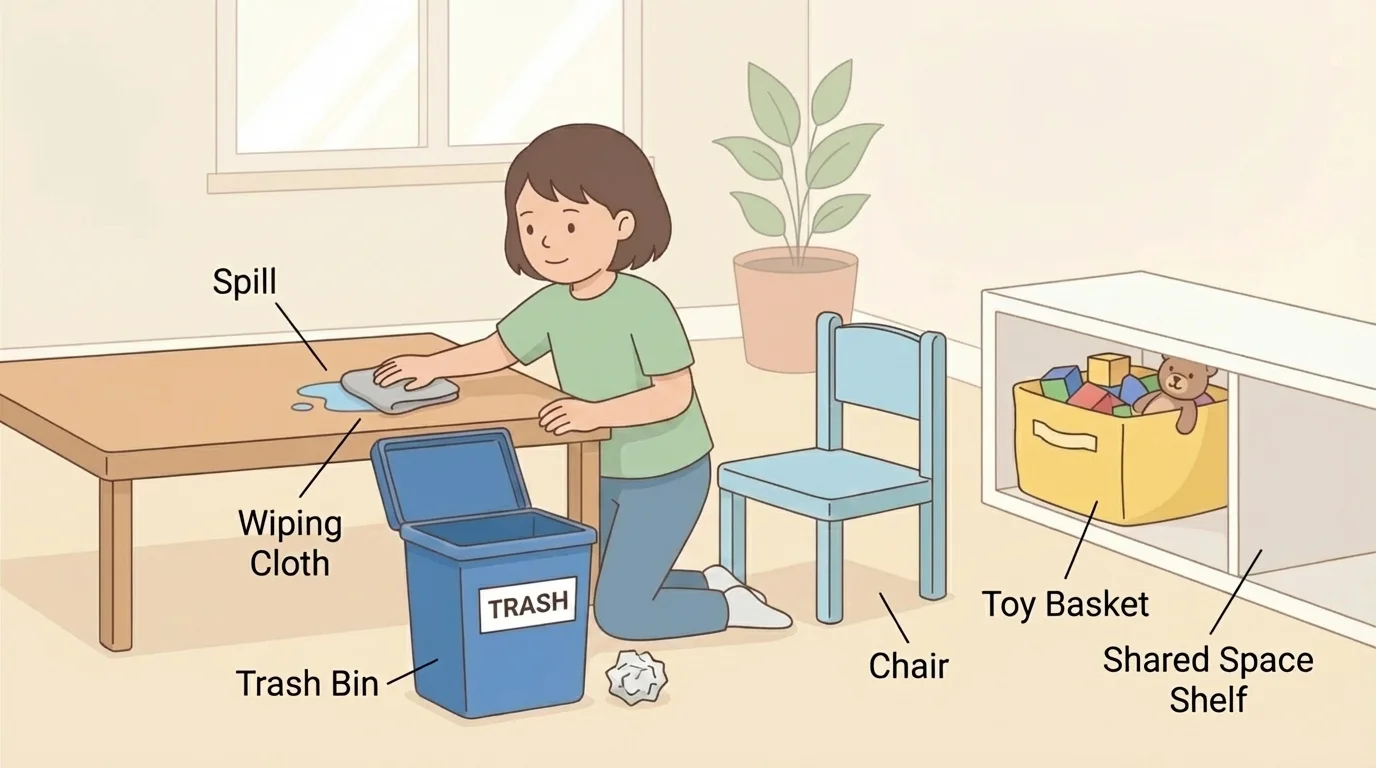
If you spill water, tell a grown-up and help wipe it up. If you finish a snack, put trash in the bin. If you move a blanket or cushion, place it back where it belongs. These are caring actions.
Shared spaces often stay cleaner when everyone does one small helpful job right away. Tiny cleanup moments can stop a big mess from growing.
When you remember to push in a chair, throw away a wrapper, or place shoes by the door, you are helping your whole home. That is another way cleanup connects with kindness.
You can practice this skill many times each day. After building with blocks, put the blocks in the bin. After reading, return the book to the shelf. After using play dough, close the containers and wipe the table. After an online lesson, place pencils, papers, and headphones in their spots.
| After You Use | You Can Do |
|---|---|
| Toys | Put them in a basket or bin |
| Books | Place them back on the shelf |
| Crayons or markers | Put them in the box with lids on |
| Snack items | Throw trash away and wipe the table |
| Blankets or pillows | Return them neatly to the couch or bed |
Table 1. Everyday materials and simple ways to put them away.
These routines help your materials last longer. Books with bent pages and crayons without caps can get damaged. Gentle hands and careful cleanup keep things ready for next time.
Sometimes cleanup feels big. That is okay. You can start with just one job: pick up the books, or put away the cars, or find all the blue blocks. Finishing one small part helps you keep going.
Why small routines work
Young children do better when jobs are clear and short. A simple pattern like "pick up, put away, check" helps you know what to do without feeling confused.
You can also sing a short cleanup song, use a picture label on a bin, or ask a grown-up, "What should I put away first?" Asking for help is part of learning.
Try This: When you finish one activity today, stop for a moment, look around, and put away just one kind of item first. Then check the space one more time.
"We take care of our things, and we take care of each other."
Each time you follow your cleanup routine, you are practicing responsibility. You are showing that you can use materials, finish an activity, and leave the space ready for someone else too.
