Your hands help you play, eat, and explore. Your clothes help keep you comfortable. Cleaning up helps keep your home safe and neat. These are important self-care tasks you can practice every day.
When you take care of yourself, you help your body stay healthy. When you put things away, you can find them later. Small self-care jobs help you feel proud and more independent.
Self-care means doing simple things to take care of your body, clothes, and space. Routine means doing something in the same order again and again, like washing hands before eating.
[Figure 1] A good routine makes the day smoother. You can wash your hands before meals, get dressed after waking up, and clean up after playtime. Doing the same steps often helps your brain remember what to do.
Germs are tiny organisms that can make people sick, so handwashing matters. When you wash your hands, you follow easy steps, and each step helps remove dirt and germs from your skin.
Step 1: Turn on the water. Step 2: Get your hands wet. Step 3: Apply soap. Step 4: Rub your hands together. Rub the fronts, the backs, between fingers, and around thumbs. Step 5: Rinse with water. Step 6: Dry your hands with a towel.
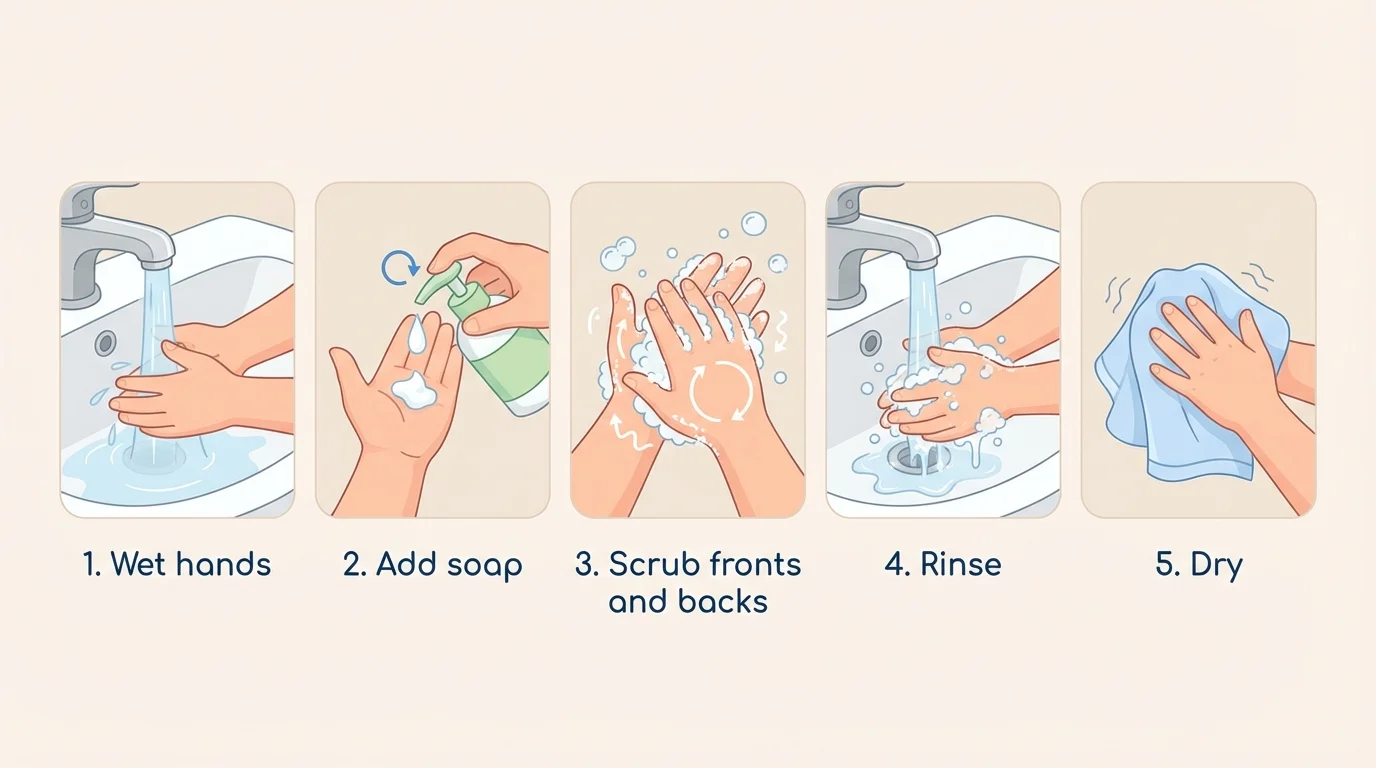
Wash your hands before eating, after using the bathroom, after playing outside, and after coughing or sneezing into your hands. If your hands look dirty, that is also a good time to wash them.
If your hands feel slippery from the soap, that is okay. Keep rubbing until your hands feel clean, then rinse well. Later, when you remember the order from [Figure 1], handwashing becomes easier and faster.
Clean hands help keep harmful substances away from your mouth, nose, and eyes, where germs can enter your body.
If you cannot reach the sink, ask an adult for help. A safe stool and a nearby adult can help you practice without rushing.
[Figure 2] Getting dressed is another way to care for yourself. You can do one piece at a time. Start with easy clothes like a shirt, pants with elastic waistbands, socks, and shoes with simple fasteners.
First, look at your clothes. Find the top and bottom. Put one arm in, then the other. Put one leg in, then the other. Sit down if that helps when you put on socks or shoes.
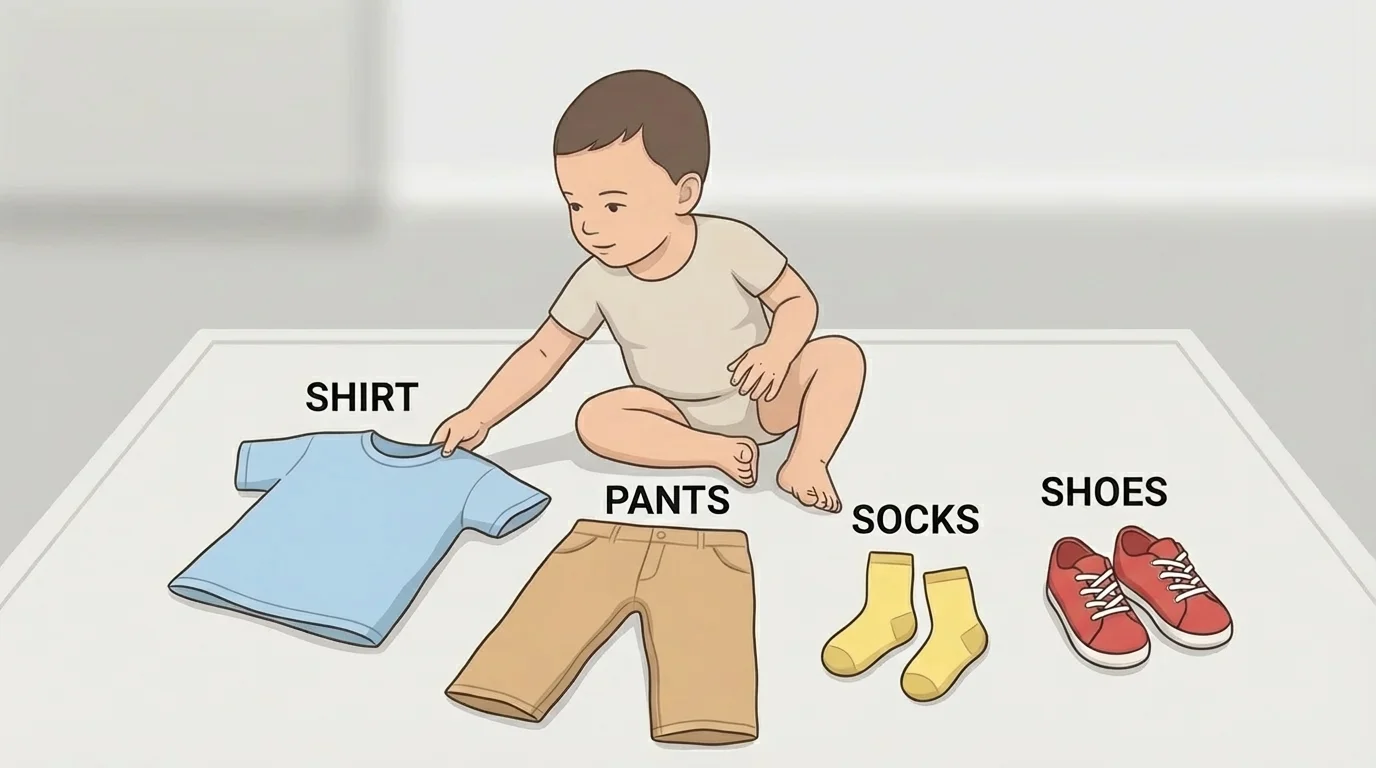
Routine helps here too. You might get dressed in the same order each day: underwear, shirt, pants, socks, then shoes. A simple order helps you remember what comes next.
Wear clothes that are suitable for the weather. If it is chilly, you may need a sweater. If it is rainy, you may need boots. The clothing order helps you see how one step comes after another.
A getting-dressed moment
You want to get ready to go outside and play.
Step 1: Pick clothes that feel comfortable.
Step 2: Put on one piece at a time.
Step 3: Ask for help if something is stuck or backwards.
It is great to try first. It is also good to ask for help.
Sometimes a shirt is backward or a shoe is on the wrong foot. That is okay. You are learning. Stop, check, and fix it with help if needed.
[Figure 3] Cleaning up means putting things where they belong. Toys can go in a bin, books can go on a shelf, and trash can go in the trash can. A clean space is safer for walking and playing.
You do not need to clean everything at once. Pick up one thing, then another. Put blocks in a box. Put crayons in a cup. Put a snack wrapper in the trash.
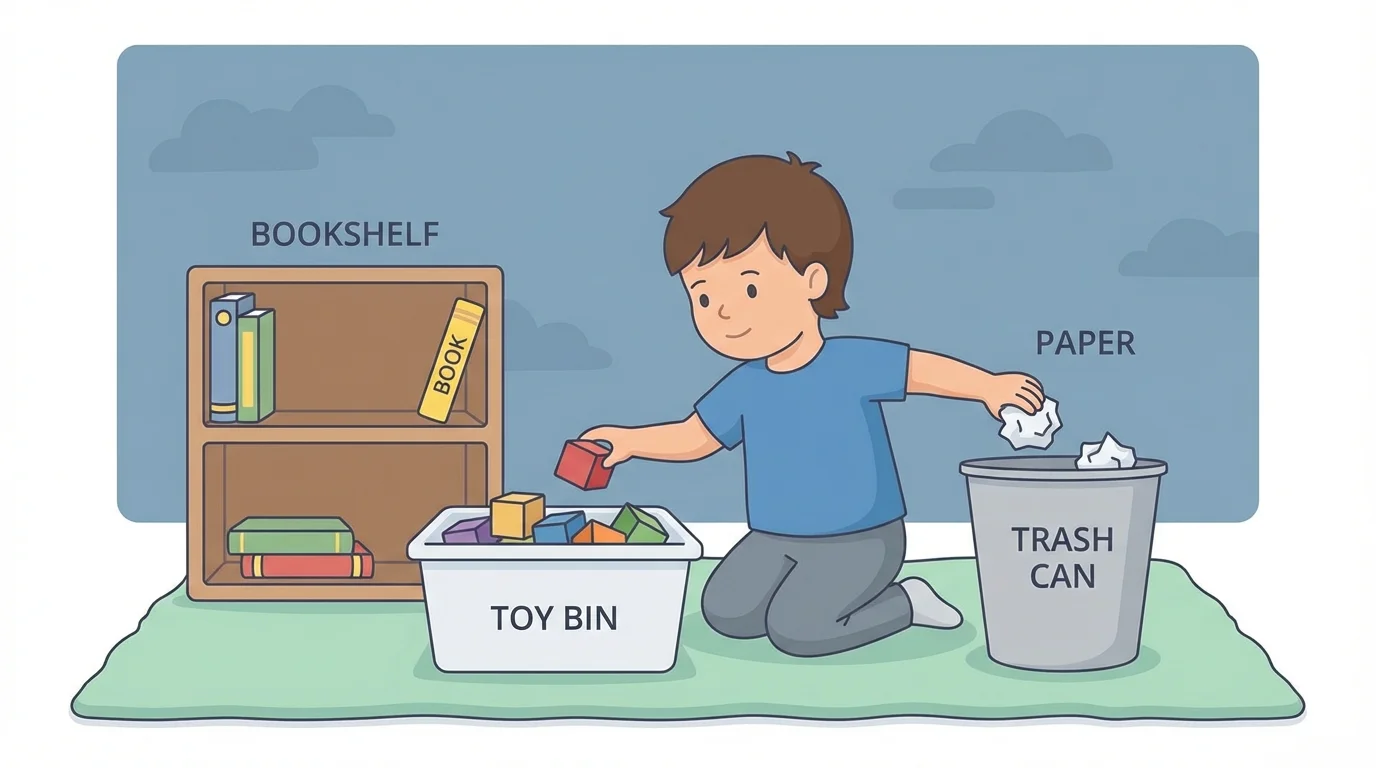
Independent means doing something by yourself or with a little help. When you clean up a few things on your own, you are practicing being independent.
Cleaning up also helps other people in your home. No one wants to step on a toy. No one wants sticky spills left on the table. The cleanup choices in [Figure 3] show that every item has a place.
Why little cleanup jobs matter
Small cleanup tasks build big habits. When you put things away right after using them, your room stays calmer, your things are easier to find, and grown-ups can see that you are taking responsibility.
If there is a spill, tell an adult. You may help wipe it with a cloth if an adult says it is safe. For sharp, hot, or breakable things, always get an adult right away.
You do not have to do every task alone. Self-care means trying, learning, and knowing when to ask for help. If a zipper is hard, the water is too hot, or a mess feels too big, call a grown-up.
Practice helps each task feel more familiar. The more often you wash your hands, get dressed, and clean up, the more easily you remember the steps. Little by little, these jobs become part of your day.
"I can try, and I can ask for help."
You can feel proud of every small step. Putting on one sock, washing with soap, or putting away one toy is real progress. Big skills grow from small daily actions.
