Have you ever worn boots on a rainy day or a coat on a cold day? That is one way you interact with your environment. The environment includes everything around us. It includes the land, water, weather, plants, animals, and buildings in a community. People and families notice their environment every day, and they make choices because of it.
A community is a place where people live, work, and play together. A community can be a neighborhood, a town, or a city. The environment is everything around that community. Some parts are natural, like trees, hills, rivers, and sunshine. Some parts are made by people, like houses, roads, and schools.
Environment means everything around us, including land, water, weather, plants, animals, and buildings. Community means a place where people live together.
Families interact with their environment when they use what is around them and when they change their actions to fit the place. A family may plant flowers in soil, walk on sidewalks, drink water, play in a park, or stay inside during a storm. The environment affects people, and people also affect the environment.
[Figure 1] Weather can be sunny, rainy, windy, hot, or cold. Weather helps families decide what to wear, what to do, and sometimes even what kind of home they need. In a snowy place, people may wear heavy coats, hats, gloves, and boots. In a hot place, people may wear light clothes and look for shade. Families often dress and live in ways that match the weather around them.
Homes can fit the environment too. In rainy places, roofs help keep homes dry. In cold places, homes may be built to stay warm. In sunny places, families may use porches, fans, or trees for shade. People do not build every home exactly the same, because places are not all the same.
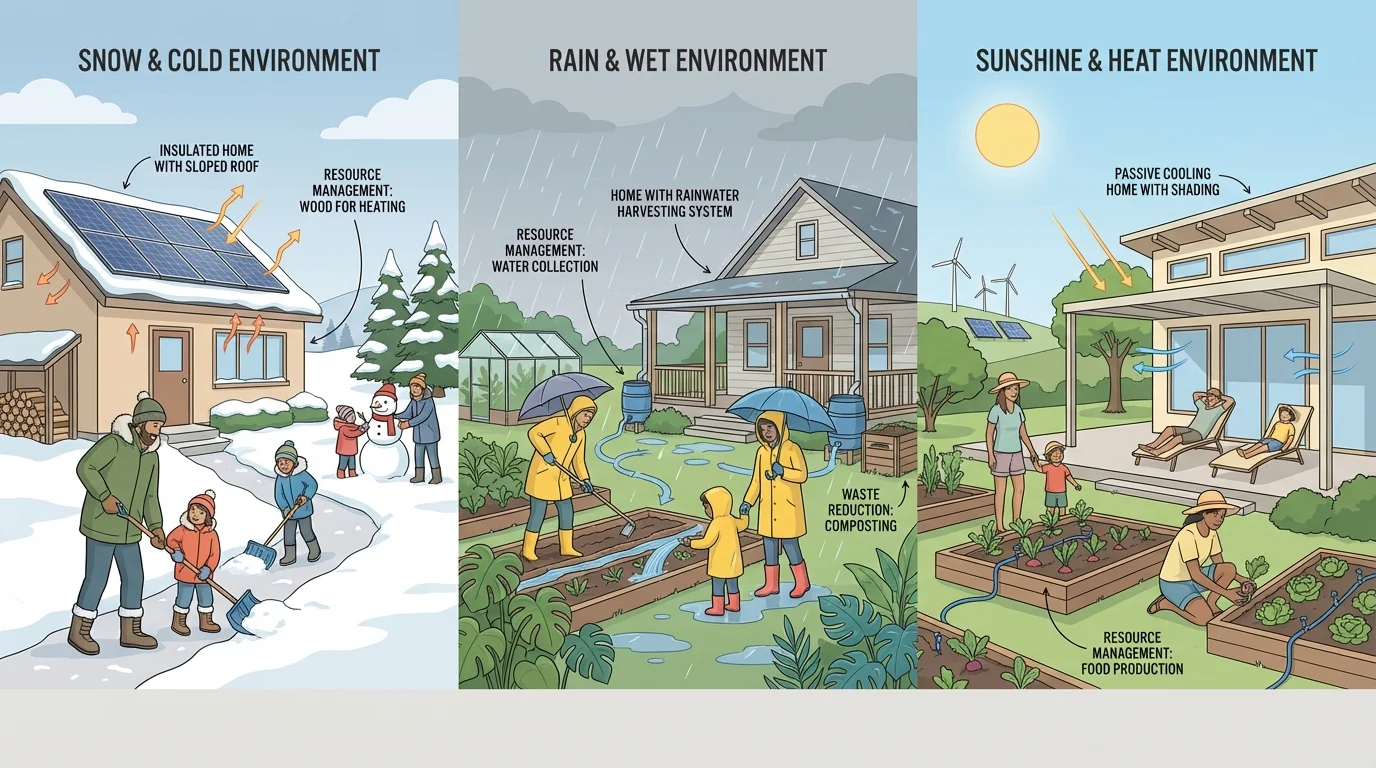
Daily life also changes with weather. A family may play outside on a warm day, but stay indoors during a thunderstorm. They may open windows when there is a cool breeze or use umbrellas when it rains. The environment helps shape many small choices each day.
Some places get lots of snow each winter, while other places stay warm all year. Families in each place learn habits that help them live safely and comfortably.
This idea helps us remember that homes and clothing often match the weather of a place.
[Figure 2] Families use natural resources every day. Natural resources are things from nature that people use. Water is a natural resource. Soil is a natural resource. Trees and plants are natural resources too. A family may use land, water, and plants in ways that help the whole community.
People drink water and use it to wash, cook, and grow food. Families may live near a river, pond, lake, or ocean. Some communities have gardens. In a garden, families plant seeds in soil, water the plants, and watch them grow. Trees give shade on sunny days. Grass and parks give children places to play.
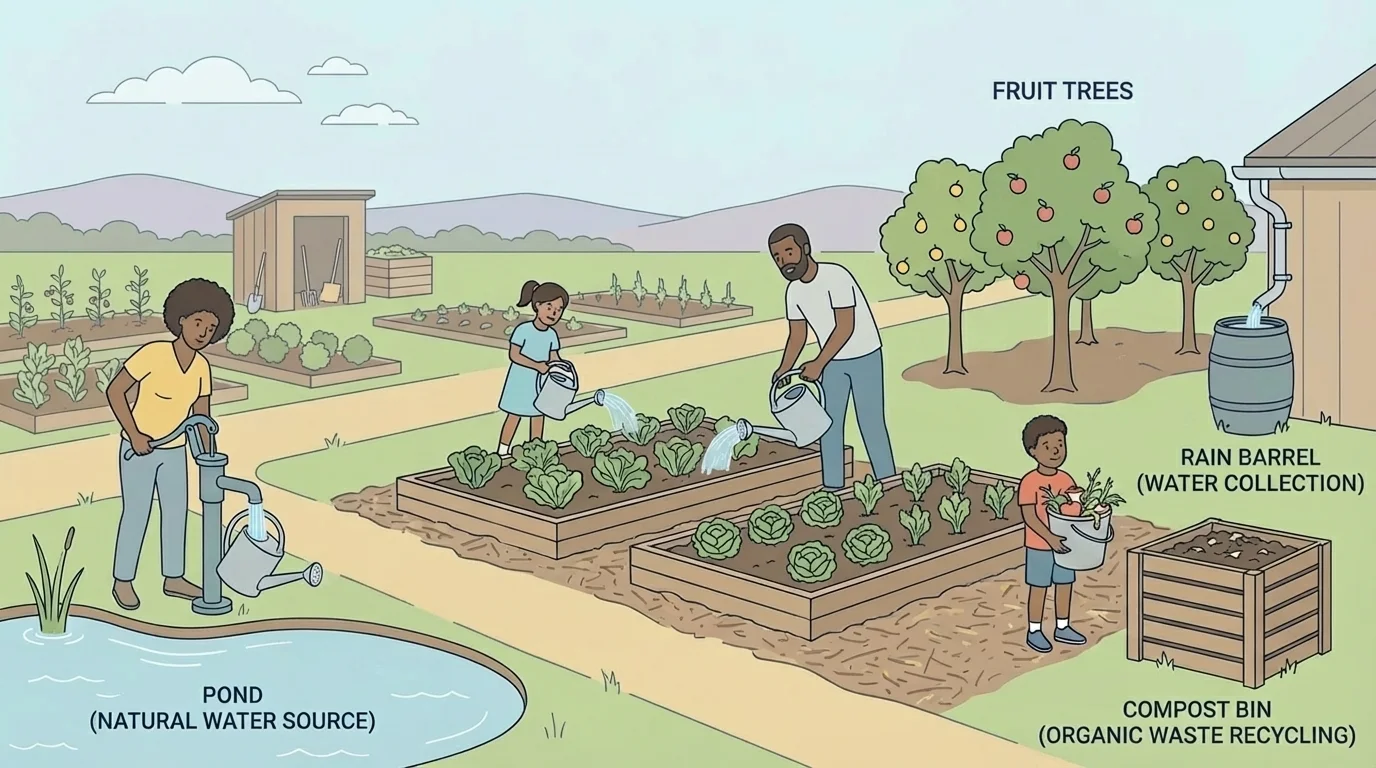
Land matters too. Flat land can make it easier to build roads and playgrounds. Rich soil can help farmers grow crops. Sandy land near a beach may be good for walking and playing, but not every plant grows well in sand. Hills and mountains can be beautiful, but they can also change where roads and homes are built.
People use the environment, and the environment helps shape life. If a place has good soil and water, families may grow food there. If a place has many trees, people may enjoy shade and use parks. If a place is dry, people may need to save water carefully.
When families pick up trash, water plants, or take care of a park, they are also affecting the environment. The place around them can become cleaner, safer, and prettier. That is another way people interact with where they live.
[Figure 3] The environment changes how people move from place to place. In a city, families may walk on sidewalks, ride bikes, or take a bus. In the country, people may drive longer distances. In a place with deep snow, they may wear boots or travel carefully on icy roads. In a place near water, some people may use a boat.
Roads, bridges, sidewalks, and paths are built to fit the land. A bridge helps people cross water. A tunnel may help people travel through a hill or mountain. Wide streets in a busy community help many cars and buses move. Small paths in a park help people walk through nature.
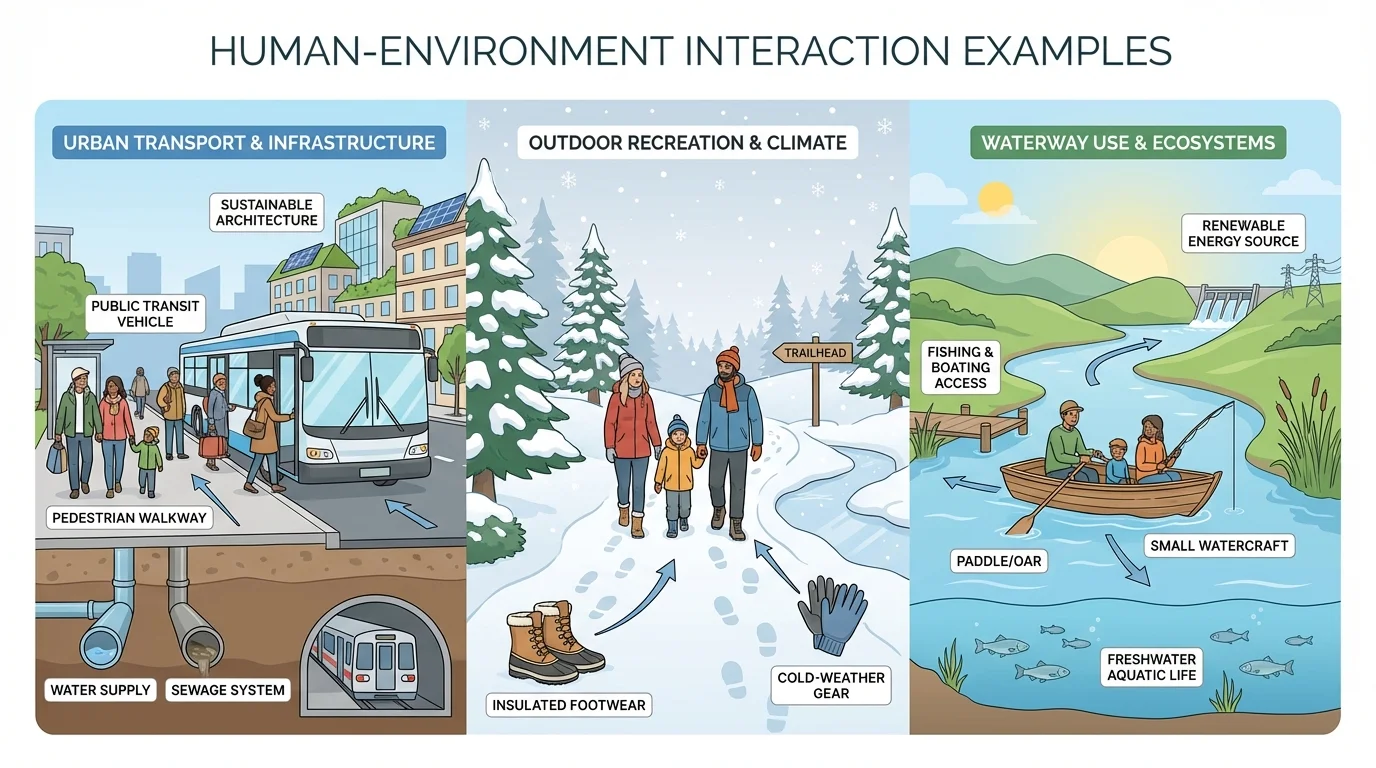
Travel can also change with the season. A family may ride bikes in warm weather and ride in a car when it is cold and rainy. If there is flooding, people may need to stay away from some roads. The environment is always giving clues about the best and safest way to travel.
Examples of interacting with the environment
Step 1: A family sees dark clouds and rain.
They take umbrellas and wear raincoats.
Step 2: A family has a small yard with soil and sunshine.
They plant tomatoes and water them.
Step 3: A family lives where winter is snowy.
They shovel snow from the walkway so they can move safely.
Each example shows people changing their actions because of the place around them.
Travel is not the same everywhere. The land, weather, and water in a community help decide how people get around.
People and families do not just use the environment. They can care for it too. When families throw away trash in the right place, they help keep land and water clean. When they plant flowers or trees, they help make a place more beautiful. When they save water, they help make sure there is enough for later.
Communities often work together to care for shared places. People may clean a park, care for a school garden, or protect animals and plants. These actions help everyone. A clean playground is safer. A healthy tree gives shade. Clean water is important for people, animals, and plants.
People need food, water, shelter, and safety. The environment helps provide these needs, so taking care of the environment is important.
Sometimes people can hurt the environment by leaving litter, wasting water, or damaging plants. That is why good choices matter. Families can learn simple habits that protect the place where they live.
Not all communities look alike. A beach community may have sand, ocean water, and salty air. A mountain community may have steep land, rocks, and cooler weather. A farm community may have fields, barns, and crops. A city community may have many buildings, streets, and buses.
Each kind of community shows a strong connection between people and the environment. Near the beach, people may fish, swim, or build homes that fit windy weather. On farms, families may raise animals and grow food. In cities, people may use tall buildings and public transportation because many people live close together.
| Community | Environment | How Families Interact |
|---|---|---|
| Beach | Sand, ocean, wind | Use boats, enjoy the shore, wear light clothes |
| Farm | Fields, soil, open land | Grow crops, care for animals, use tractors |
| Mountain | Hills, rocks, cooler air | Travel on winding roads, wear warm clothes |
| City | Buildings, streets, sidewalks | Walk, ride buses, use parks and playgrounds |
Table 1. Different communities and examples of how families interact with them.
Even though communities are different, people everywhere depend on their surroundings. They watch the weather, use water, grow or buy food, travel through their community, and make choices that fit the place where they live.
"We all share the places where we live."
When we understand our environment, we can make smart choices. We can dress for the weather, use resources wisely, travel safely, and help our community stay clean and healthy.
