Have you ever seen a flag wave in the wind or heard a song that makes people stand still and listen? These are not just objects or sounds. They can be symbols that help people remember big ideas like freedom, bravery, belonging, and hope. Civic symbols are important because they help tell the story of a country, a state, or a community.
A civic symbol is a sign, place, object, song, or document that stands for a community and its values. A symbol can help people remember what matters to them. Civic symbols can remind people to care about others, work together, and protect rights.
Symbol means something that stands for an idea. A heart can stand for love. A flag can stand for a nation or a group of people.
Civic means connected to a community, a city, a state, or a country.
Some civic symbols are known by many people. Other civic symbols are especially important to certain groups. Learning about them helps us understand our neighbors and our shared history.
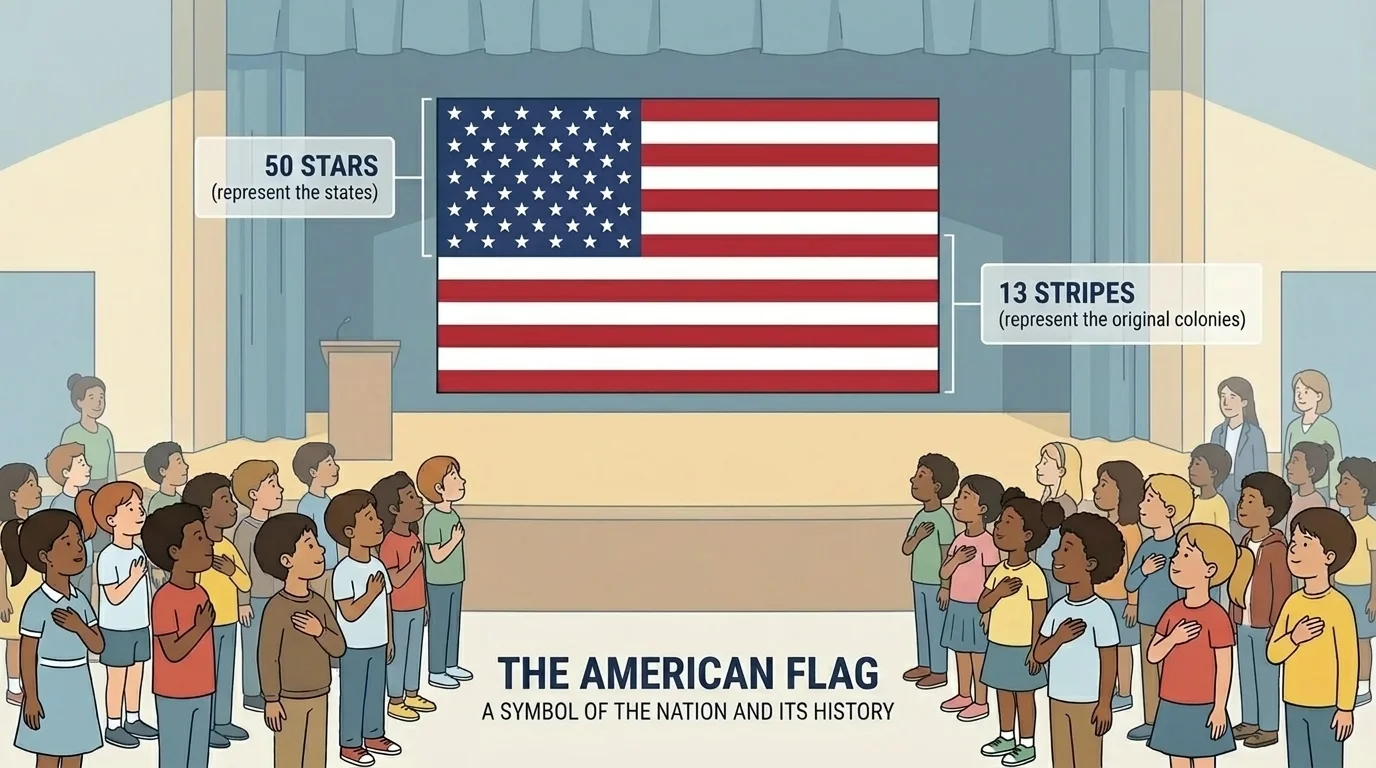
The American flag, as shown in [Figure 1], is one of the best-known civic symbols in the United States. It has stars and stripes. The stars stand for the states, and the stripes represent the original thirteen colonies. When people look at the flag, they may think about the country, its people, and the idea of being united.
Many people show respect to the flag by handling it carefully and standing quietly during special times. The flag can mean freedom and belonging, but it can also remind people that a country should keep working to be fair and kind to everyone.
The National Anthem is a special song of the United States. When people sing or listen to it, they often stand to show respect. The song can make people think about courage and love for the country. Songs can be symbols too, because music can carry feelings and memories.
The Statue of Liberty is a giant statue in New York Harbor. She holds a torch high. The torch stands for light and hope. For many people, the statue means welcome and freedom. It reminds people that the United States has been a place where many families came looking for a better life.
The Liberty Bell is an old bell in Pennsylvania. It is cracked, but it is still important. It stands for liberty, which means freedom. People remember it as a symbol of speaking up for freedom and rights.
The Emancipation Proclamation is not a statue or a flag. It is an important document from history. It declared freedom for many enslaved African Americans during the Civil War. This document is a civic symbol because it reminds people that freedom is precious and that the nation has worked, and still works, toward greater justice.
The Statue of Liberty was a gift from France. Its torch and tall shape help it stand out as a symbol people remember easily.
When we think back to the flag in [Figure 1], we can see that civic symbols do more than look important. They help people remember ideas, promises, and responsibilities.
Some civic symbols are places, as [Figure 2] illustrates. These places can teach history and help people talk about what they value.
Mount Rushmore is a mountain carving with the faces of four U.S. presidents. Many people see it as a symbol of leadership and the history of the United States government. It can remind people of the country's beginnings and growth.
Crazy Horse Memorial is a large mountain carving being created to honor the Lakota leader Crazy Horse. Many people see it as a symbol of Native strength, memory, and respect for Native peoples. It tells a different story from Mount Rushmore, and it helps people remember that history has many voices.
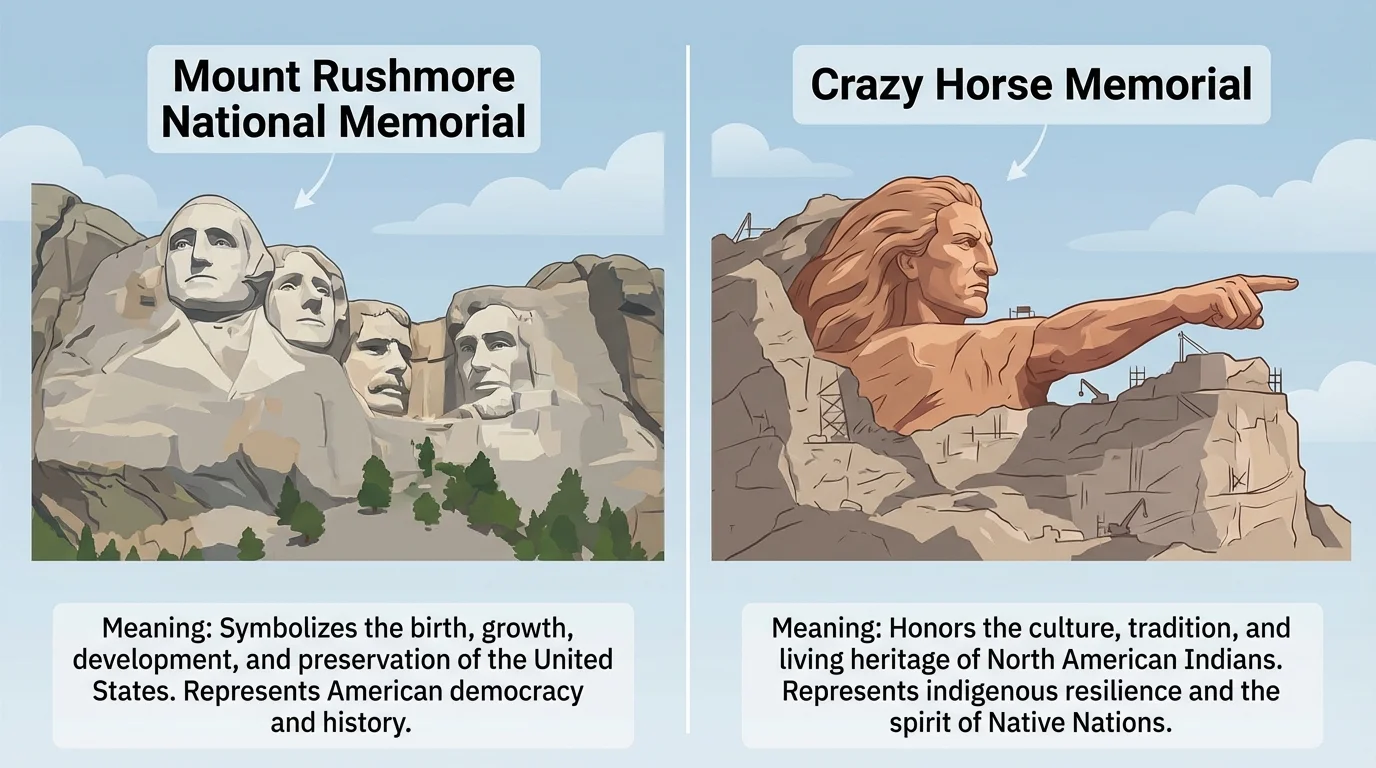
These two places matter because symbols are not always the same for everyone. One person may see a monument and feel pride. Another person may think about whose stories have been told and whose stories need more space. Learning both helps us be thoughtful and fair.
More than one story
A civic symbol can be important even when people think about it in different ways. Listening to different viewpoints helps us learn the full story of a place or event.
Later, when we compare community symbols, [Figure 2] still matters because it reminds us that history can be remembered through different monuments.
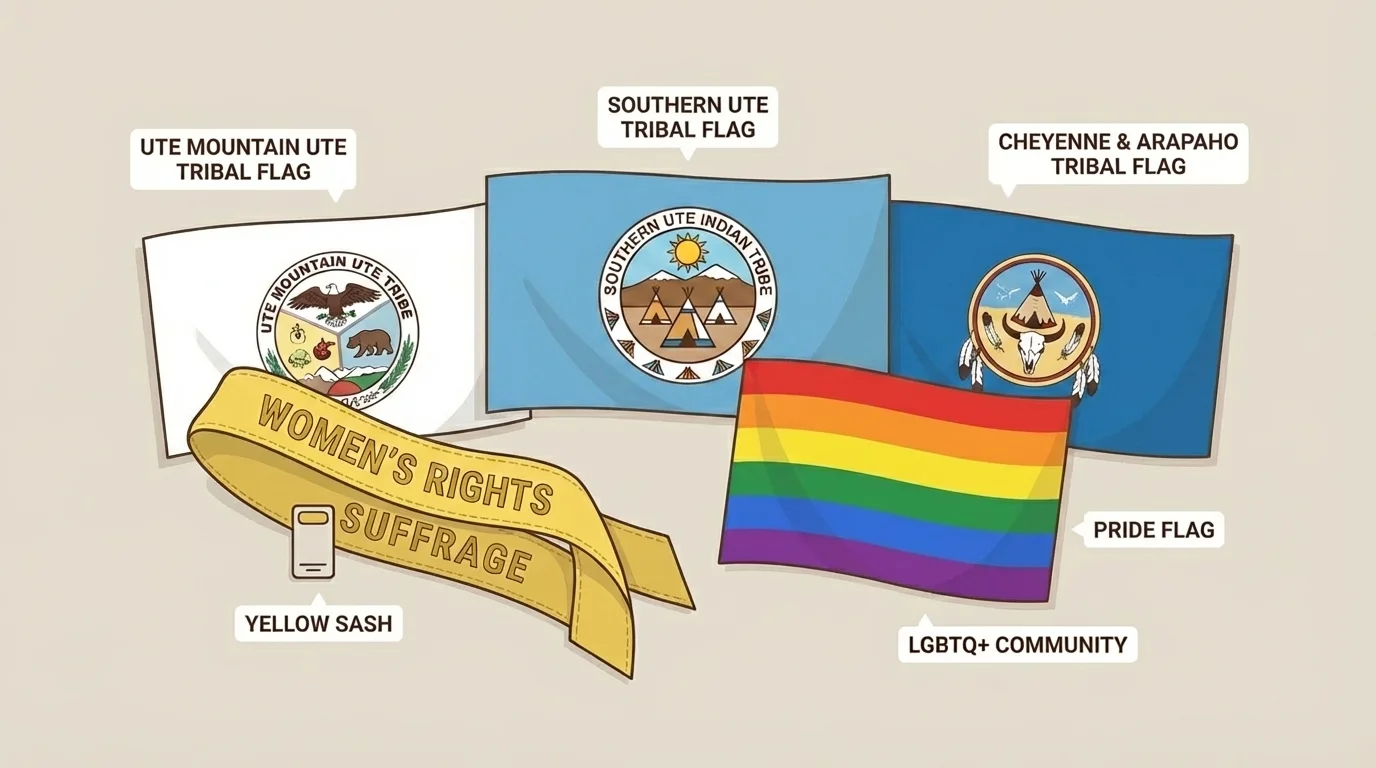
Different groups in a community have symbols that show their history and hopes, as [Figure 3] shows. These symbols can say, "We are here," "We matter," and "Please remember our story."
A yellow sash has been used as a symbol connected to women's rights. Women who wanted the right to vote and to be treated fairly sometimes wore yellow to show support. A yellow sash can remind us that people worked hard so women and girls could have equal rights.
The LGBTQ Pride Flag is a rainbow flag. Many people see it as a symbol of pride, visibility, and belonging for LGBTQ people. It can remind communities to be welcoming and respectful. A flag like this helps people feel seen.
tribal flags are important to Native Nations. A tribal flag stands for a Native Nation's identity, history, and government. In Colorado, Native Nations whose ancestral homelands include present-day Colorado include the Ute Mountain Ute Tribe, the Southern Ute Indian Tribe, and other Native peoples connected to this land, such as Arapaho, Cheyenne, Apache, Comanche, Kiowa, Navajo, Pawnee, Shoshone, and others. Their flags are important because Native Nations are living communities with their own traditions and leadership.
When we see community symbols, we should remember that each one carries real feelings and real history. Just as the monuments in [Figure 2] tell different stories, these symbols do too.
The Colorado Flag, shown in [Figure 4], is an important symbol for people in Colorado. It has blue, white, red, and yellow. The blue stripes can remind people of the sky. The white stripe can remind people of snow on the mountains. The red letter C stands for Colorado, and the yellow circle can remind people of sunshine and gold.
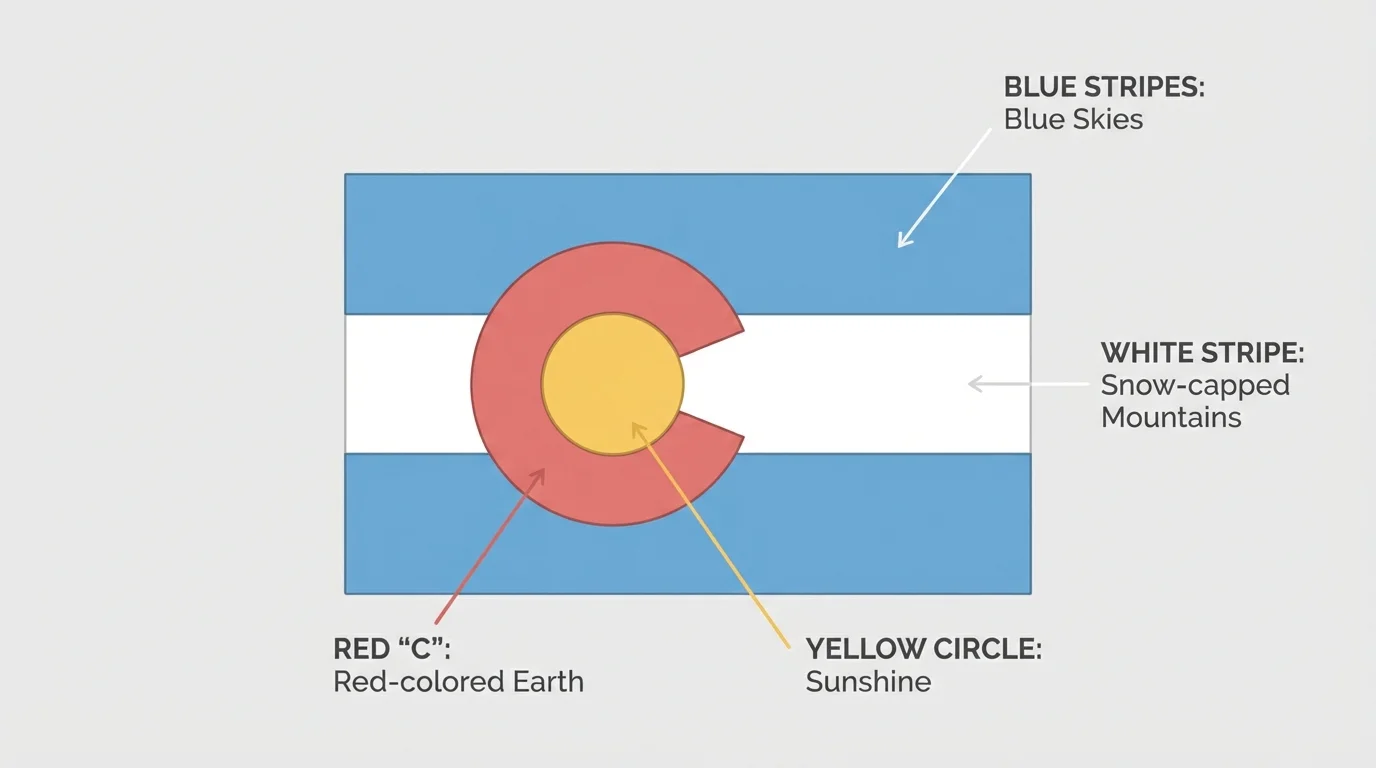
State symbols help people feel connected to where they live. The Colorado Flag reminds people of the land, weather, and history of the state. It can help neighbors feel that they belong to one place together.
| Symbol | What it can mean |
|---|---|
| American flag | Unity, country, freedom |
| National Anthem | Respect, courage, shared memory |
| Statue of Liberty | Welcome, hope, freedom |
| Liberty Bell | Liberty and rights |
| Emancipation Proclamation | Freedom and justice |
| Mount Rushmore | National history and leadership |
| Crazy Horse Memorial | Native honor, memory, strength |
| Yellow sash | Women's rights |
| LGBTQ Pride Flag | Pride, belonging, welcome |
| Tribal flags | Native identity and government |
| Colorado Flag | State pride and Colorado's land |
Table 1. Meanings of important civic symbols discussed in the lesson.
The parts of the Colorado Flag in [Figure 4] show how colors and shapes can carry meaning, just like stars, stripes, songs, monuments, and documents do.
When we learn about civic symbols, we are also learning about people. A symbol may make someone feel proud, safe, thankful, or thoughtful. Another person may have a different feeling because of family history or community experience. That is why listening matters.
Example: Reading a symbol kindly
A child sees a rainbow flag in a shop window and asks what it means.
Step 1: Notice the symbol.
The child sees that the flag has many colors.
Step 2: Learn the meaning.
An adult explains that it is the LGBTQ Pride Flag and that it shows welcome and belonging.
Step 3: Respond with respect.
The child learns that symbols can help people feel included and safe.
This is one way symbols teach kindness in a community.
We do not all have to have the same story to care about each other's symbols. When we learn what symbols mean, we better understand our country, our state, and our neighbors.
