Have you ever wondered how the lights turn on, where clean water comes from, or how food gets to a store? A community uses many parts of the environment every single day. People need water to drink, soil to grow food, trees for wood and paper, and energy to heat homes or power machines. Communities must make choices about how to use these resources wisely so people can live, work, and play safely.
A resource is something people use to meet a need. Some resources come straight from nature, such as water, sunlight, wind, soil, rocks, trees, and minerals. Communities depend on these things for food, shelter, transportation, and energy.
A town or city is not separate from nature. It is part of the environment. People build homes, schools, roads, and parks, but they still depend on land, air, water, and weather. Even a busy neighborhood depends on natural resources every day. Water flows through pipes, food comes from farms, and electricity may come from wind, sun, water, or fuels from deep underground.
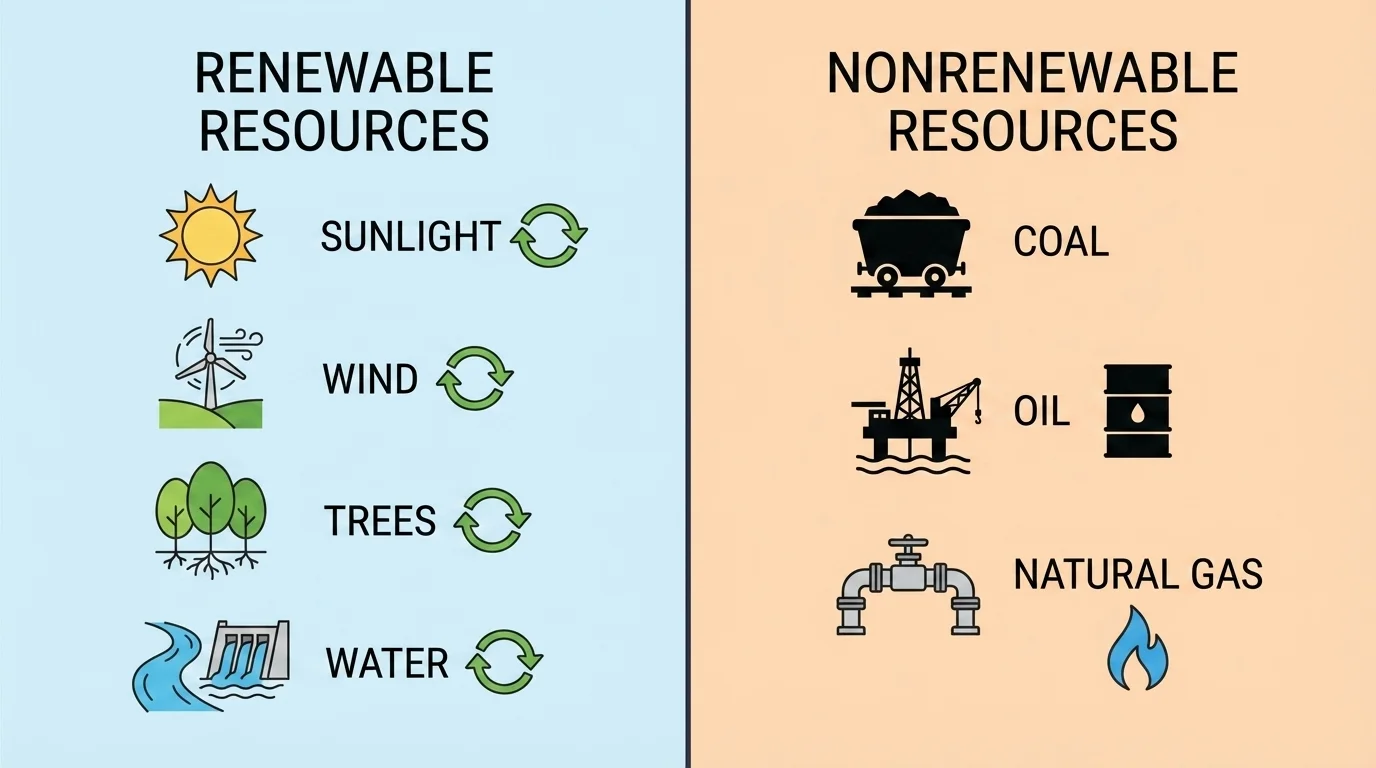
Renewable resources are natural resources that can be replaced in a fairly short time, such as sunlight, wind, and trees when people replant them.
Nonrenewable resources are natural resources that take a very long time to form, so people cannot replace them quickly. Examples include coal, oil, and natural gas.
When communities use resources, they have to think carefully. If they waste a resource, there may be less of it later. If they use a resource wisely, more people can benefit from it for a longer time.
[Figure 1] One big way to sort resources is by asking whether nature can replace them soon. This difference matters a lot because some resources keep coming back while others can run out if people use too much.
Renewable resources include sunlight, wind, and moving water. Communities can use sunlight again tomorrow. Wind keeps blowing. Rivers and rain can refill water supplies, although clean water still must be protected. Trees are also renewable when communities plant new ones and let forests grow back.
Nonrenewable resources include coal, oil, and natural gas. These fuels formed underground over a very long time. People use them much faster than nature can replace them. That is why communities must think carefully about how much they use.
Both kinds of resources are important. Many communities still use nonrenewable fuels to power cars, buses, factories, or homes. At the same time, more communities are also using renewable energy, such as solar panels and wind turbines, to help save fuels that can run out.
Using renewable resources does not mean people can be careless. For example, water is renewable, but a river can still become dirty. Trees can grow back, but forests need time and care. Good management means using resources in ways that protect them.
[Figure 2] A community works like a team. Homes, schools, farms, stores, and parks all depend on resources from the environment. The figure helps show how many parts of a community are connected.
People use water for drinking, cooking, washing, and growing crops. Farmers use soil, sunlight, and rain to grow fruits, vegetables, and grains. Builders use wood, metal, stone, and sand to make houses and roads. People also use fuel or electricity to drive vehicles, light buildings, and keep food cold.
Some communities are near rivers or lakes, so water is easy to collect and use. Other communities may need wells to reach water underground. A windy place may use wind turbines. A sunny place may use solar panels. A forest community may use wood from trees, but it also needs to protect the forest so new trees can grow.
Communities do not all use the same resources in the same way. The place where people live matters. A desert community may value every drop of water. A mountain community may depend on snowmelt in spring. A coastal community may use the ocean for fishing and transportation.
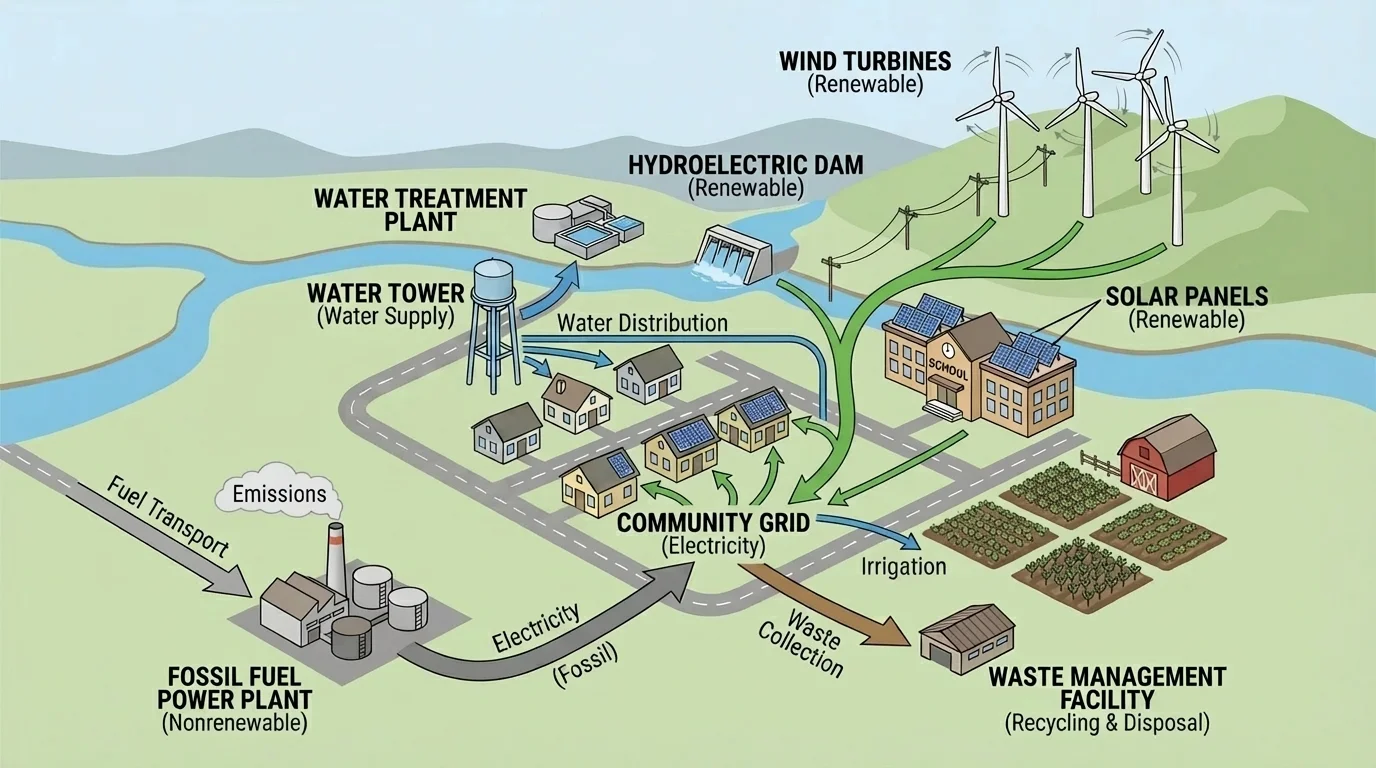
When we look back at [Figure 2], we can see that one resource often supports many jobs at once. Water can help families, farms, and firefighters. Land can hold homes, parks, and roads. This is why communities need plans for sharing resources fairly.
Depending on the environment means people need what the natural world provides. Communities depend on clean water, healthy soil, plants, animals, sunlight, and energy sources. If one part of the environment is harmed, people may feel the effects in many parts of community life.
For example, if a river becomes polluted, people may lose clean water, fish may die, and plants near the river may suffer. If soil washes away, farmers may have trouble growing food. This shows that communities depend on nature and must care for it.
To manage resources means to use them carefully and make good choices. Communities manage resources in many ways. They make rules, build systems, and teach people habits that protect important supplies.
One way is by saving water. People can turn off faucets, fix leaks, and use only the amount they need. Towns may clean water at treatment plants and send it through pipes to homes and schools. Some places collect rainwater for plants.
Another way is by reducing waste. Instead of throwing everything away, people can reuse items and recycle paper, glass, metal, and plastic. Recycling helps save raw materials. For example, recycling paper can reduce the number of trees cut down.
Communities also protect land. They may plant trees, make parks, or limit how much pollution goes into air and water. Some communities create rules about hunting, fishing, or cutting wood so plants and animals have time to grow again.
Community example: saving water in a dry place
A small town in a hot, dry area does not get much rain, so water is precious.
Step 1: The town notices that lawns and gardens use a lot of water.
Step 2: Leaders ask people to water plants only on certain days.
Step 3: Families fix dripping faucets and use buckets instead of hoses for some jobs.
Step 4: The town saves more water for drinking, cooking, and emergencies.
This is one way a community manages a renewable resource carefully.
Careful management helps both people and nature. When communities waste less and plan ahead, resources can last longer and stay healthier.
[Figure 3] People do not only use the environment. They also change it to meet their needs. This is called modifying the environment, and the figure shows several common ways communities do this.
People build dams to store water or make electricity. They dig wells to reach underground water. They clear land for farms, roads, and buildings. They plant trees where forests need help growing back. They place solar panels on roofs and build wind turbines in open, windy spaces.
Some changes are helpful, but they can also have effects on nature. A new road can make travel easier, but it may cut through animal habitats. A dam can provide power and water storage, but it can also change the river's flow. This is why communities must think about both benefits and problems before changing the land.
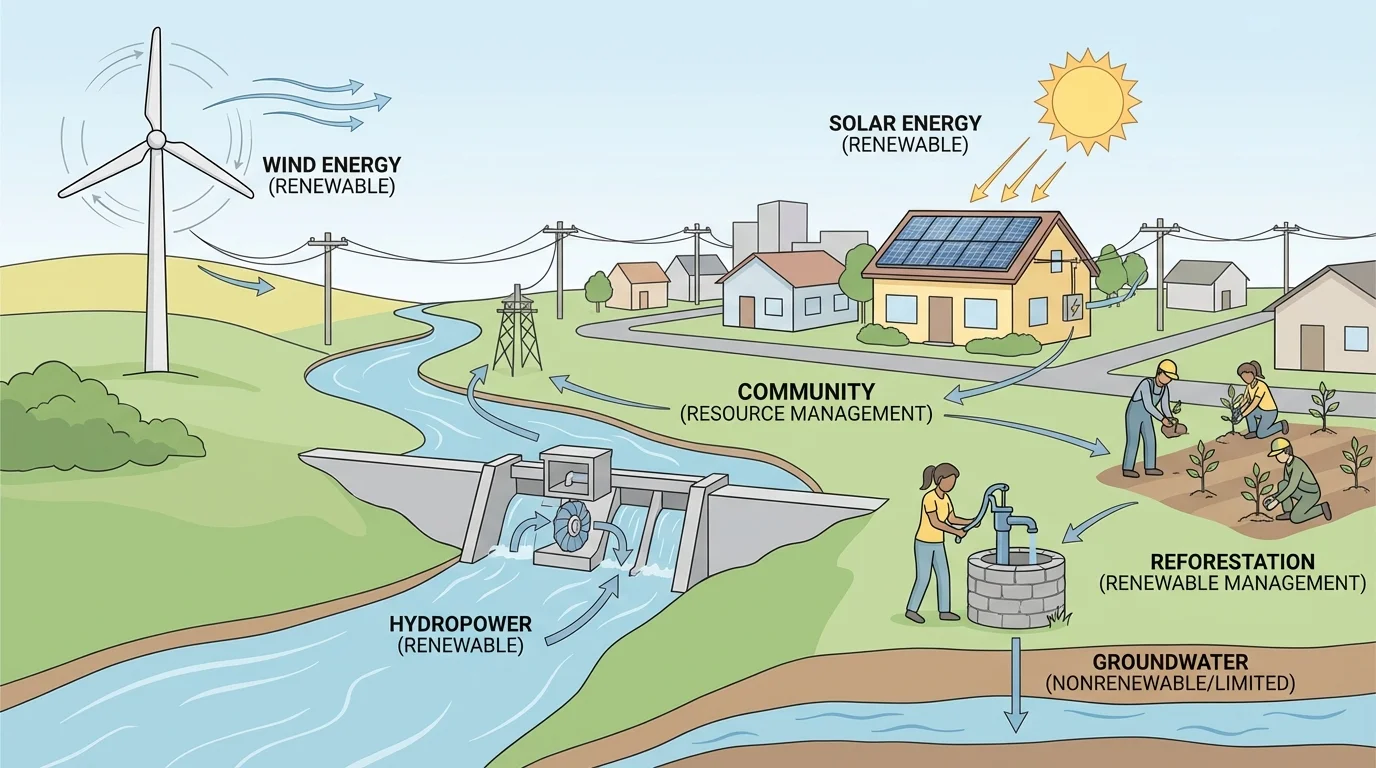
Communities often try to make changes that solve problems without causing bigger ones. For example, planting trees can help stop soil from washing away. Solar panels can make electricity without burning as much fuel. When students think about places in their own community, they can often spot ways people have changed the environment to meet needs.
Later, when we think again about [Figure 3], we can see that one community may use several ideas at once: storing water, producing energy, and repairing land. Managing resources and modifying the environment often happen together.
Communities in different regions use different resources because the land, weather, and natural features are not the same everywhere.
On a windy plain, people may build wind turbines to make electricity. In a sunny desert, solar panels may work very well. In a forest town, people may use wood for building and paper, but they also need to replant trees. In a mining town, people may dig up metals or fuels from underground, which are nonrenewable resources.
Near rivers, people may use water for farming, drinking, or transportation. In cold places, communities may need more energy to heat buildings. Near the ocean, fishing may be a major resource, but the community must avoid catching too many fish so ocean life can stay healthy.
| Place | Resource Often Used | How the Community Manages It |
|---|---|---|
| Sunny desert | Sunlight and water | Uses solar power and saves water carefully |
| Windy plain | Wind | Builds wind turbines in open areas |
| Forest town | Trees | Plants new trees after cutting some down |
| River valley | Water and soil | Protects clean water and grows crops |
| Mining area | Coal, oil, metals, or gas | Uses resources carefully because they can run out |
Table 1. Examples of how different places use and manage different resources.
This variety teaches an important idea in geography: where people live affects how they live. The environment helps shape jobs, buildings, transportation, and energy choices.
Some schools now use solar panels on their roofs. That means the school building itself can help make electricity from sunlight.
Even when places are different, all communities share one challenge: they must meet needs today without harming the future too much.
When a community plans ahead, it thinks about children growing up, new families moving in, and future needs for water, land, and energy. A good plan asks, "How can we use what we need now and still leave enough for later?"
This idea is especially important for nonrenewable resources. Once a community uses coal, oil, or natural gas, those fuels are not quickly replaced. That is one reason many communities try to save energy, use public transportation, recycle materials, and add more renewable energy.
Renewable resources also need care. Forests need replanting. Soil needs protection from washing away. Water must stay clean. Wind and sunlight do not run out in the same way, but the equipment people use, such as turbines and panels, still needs planning and space.
Everyday choices matter. Turning off lights, using less water, recycling cans and paper, and planting trees are small actions. When many people in a community work together, small actions can make a big difference.
"Use what you need, but take care of what you use."
Communities are strongest when people understand that they depend on the environment, change the environment, and are responsible for caring for the environment too.
