If you walk down a street in many towns, you might hear more than one language, smell foods from different places, see different kinds of houses of worship, and notice festivals, music, and art from many traditions. That is a clue that communities are built by many people over time. A community is not made by just one group. It grows as people live there, work there, move there, and share their ideas.
A community is a place where people live, learn, work, and help one another. A community can be a neighborhood, a town, a city, or even a rural area. A larger area with shared land or history is sometimes called a region.
People do not all stay in one place forever. Some families have lived in one area for a very long time. Other families have moved there from nearby places or from far away. When people move from one place to another, that is called migration. Migration can happen for many reasons. People may move for safety, jobs, land, family, education, or freedom.
Migration is the movement of people from one place to another. Contribution means something helpful or important that a person or group adds to a community, such as skills, ideas, music, food, work, or traditions.
When new people arrive, they do not only change where they live. They can change what a place looks like, sounds like, and feels like. They may open businesses, build places of worship, plant crops, teach new songs, create new celebrations, or share words from their language.
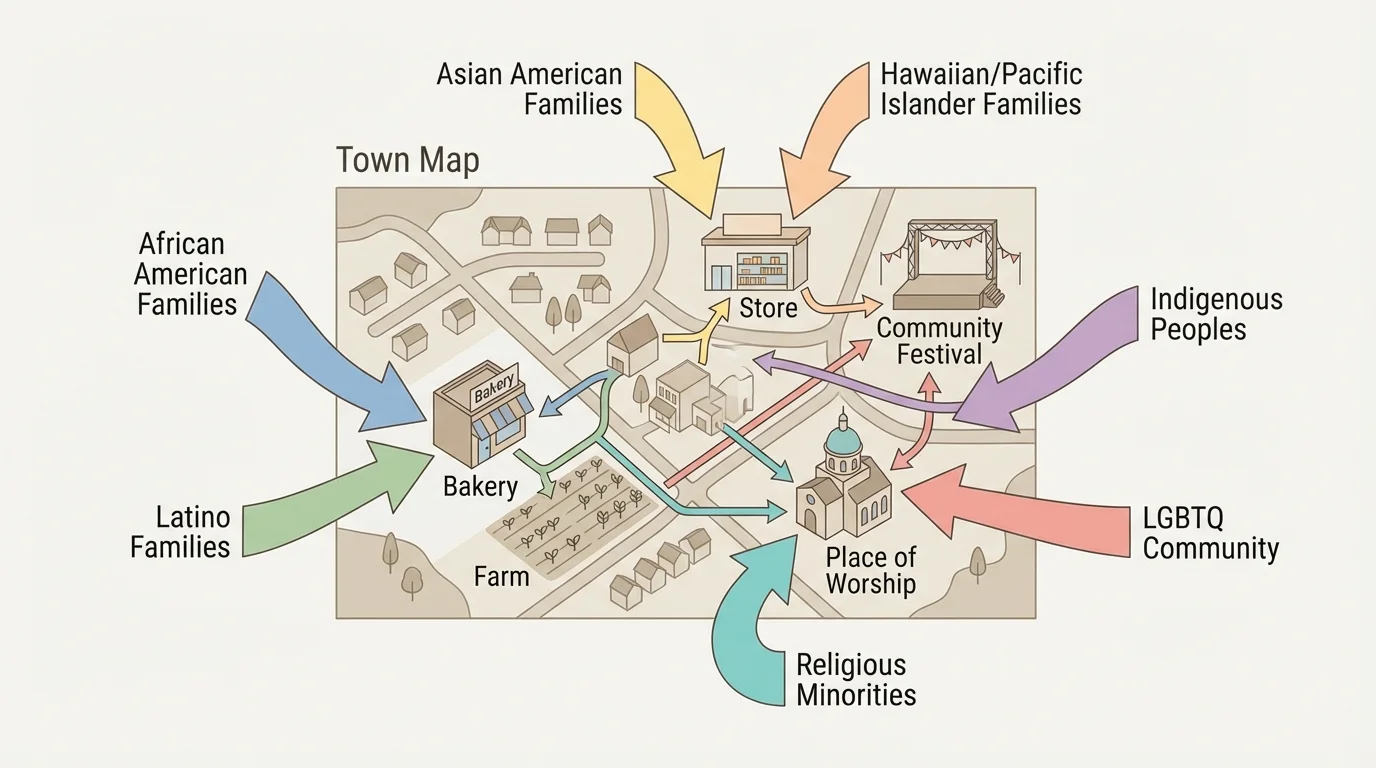
Migration changes communities over time, as [Figure 1] illustrates. A town may begin as a small settlement, then grow as more people arrive. New families might build homes, start farms, work in stores, cook foods from their homelands, or celebrate special holidays that become part of community life.
Sometimes changes are easy to see. A neighborhood may gain a bakery, a market, a new school, or a festival in the park. Other changes are harder to see but just as important. A community may become more welcoming, learn new ways to solve problems, or gain leaders who speak up for fairness.
Communities also change because groups interact. They trade, learn from one another, and share public places like schools, streets, and parks. Sometimes people get along well right away. Sometimes there is conflict because of fear, misunderstanding, or unfair rules. Learning history helps us understand both the good changes and the hard struggles.
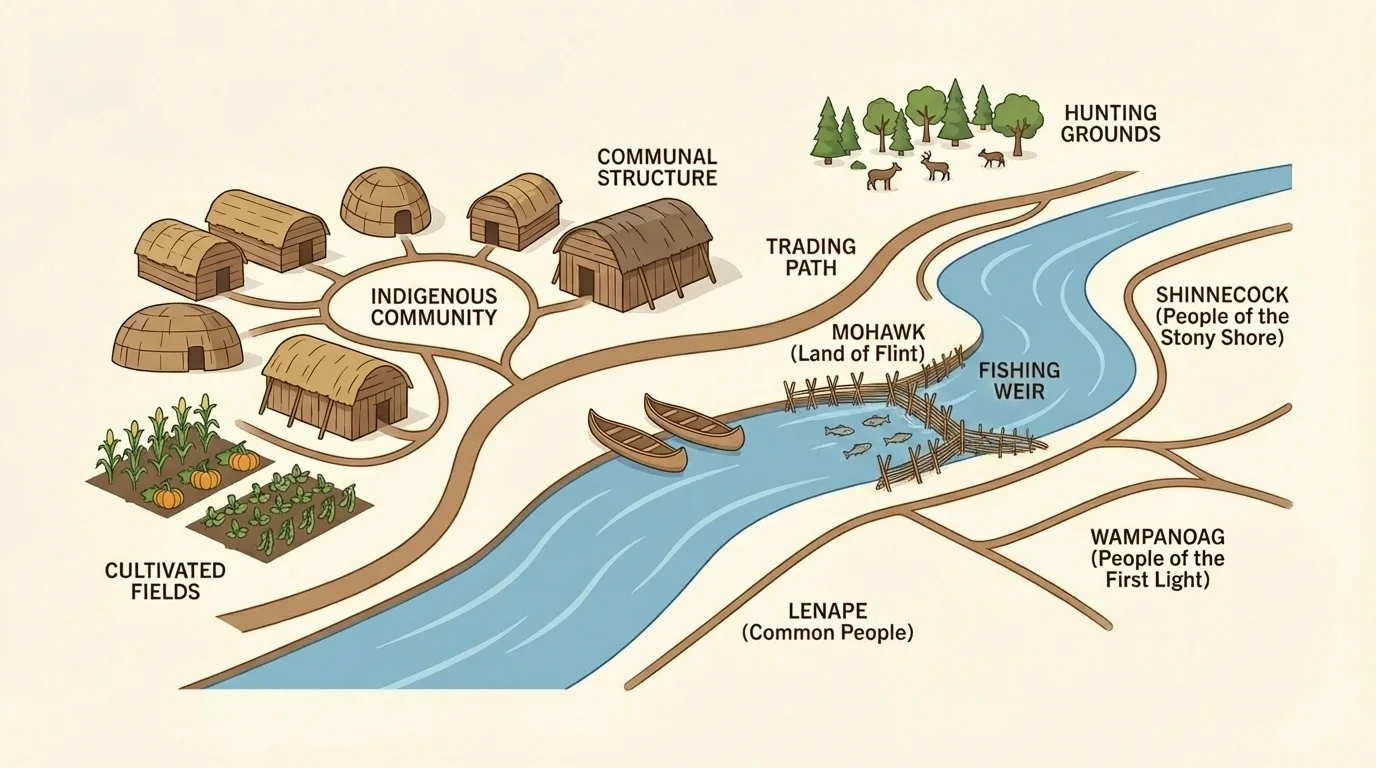
In many places, Indigenous Peoples formed the earliest communities, as [Figure 2] shows. They lived on the land long before people from Europe, Africa, Asia, or other places arrived. Indigenous nations and tribes had their own governments, languages, trade networks, farming methods, hunting practices, art, and beliefs.
Indigenous Peoples knew the land deeply. They understood rivers, forests, animals, weather, and seasons. They built homes that fit their environment. Some communities farmed corn, beans, and squash. Others fished, hunted, or traveled long distances to trade. Many place names we still use today come from Indigenous languages.
Indigenous knowledge has helped later communities in important ways. People learned local routes, food-growing methods, and ways to care for the land. Indigenous stories, crafts, dances, and languages continue to shape communities today. Powwows, tribal schools, museums, and cultural centers help keep these traditions strong.
At the same time, Indigenous communities faced great losses when others took land, brought disease, or forced people away from their homes. Even after unfair treatment, Indigenous Peoples continued to survive, lead, teach, and protect their cultures.
When we study local history, we should remember who lived there first. The first communities shaped roads, food, place names, and ways of living long before later migrants arrived.
Many states, rivers, and towns have names that come from Indigenous languages. These names are everyday reminders that Indigenous history is still part of the present.
Respecting Indigenous history means more than learning old facts. It means understanding that Indigenous communities are still here today, making art, serving in government, teaching languages, caring for natural places, and helping their regions grow.
African American history includes painful injustice and powerful contributions, as [Figure 3] illustrates. Many Africans were forced to come to the Americas through slavery. They did not choose to migrate. This was cruel and unfair. Yet African Americans built families, communities, churches, schools, businesses, and traditions even while facing terrible treatment.
African Americans helped shape farming, cooking, music, language, art, and work in many regions. Spirituals, jazz, blues, gospel, and later many other kinds of music grew from African American creativity. African American inventors, teachers, soldiers, farmers, doctors, athletes, and writers have helped the whole country.
After slavery ended, unfair laws still harmed African Americans. During the long struggle for civil rights, many brave people worked for equal treatment in schools, transportation, housing, and voting. Leaders such as Martin Luther King Jr., Rosa Parks, and many local community members helped change laws and hearts.
In cities and towns, African American neighborhoods often became centers of business, worship, music, learning, and leadership. Churches, newspapers, barbershops, beauty salons, and community groups helped people support one another and fight unfairness.
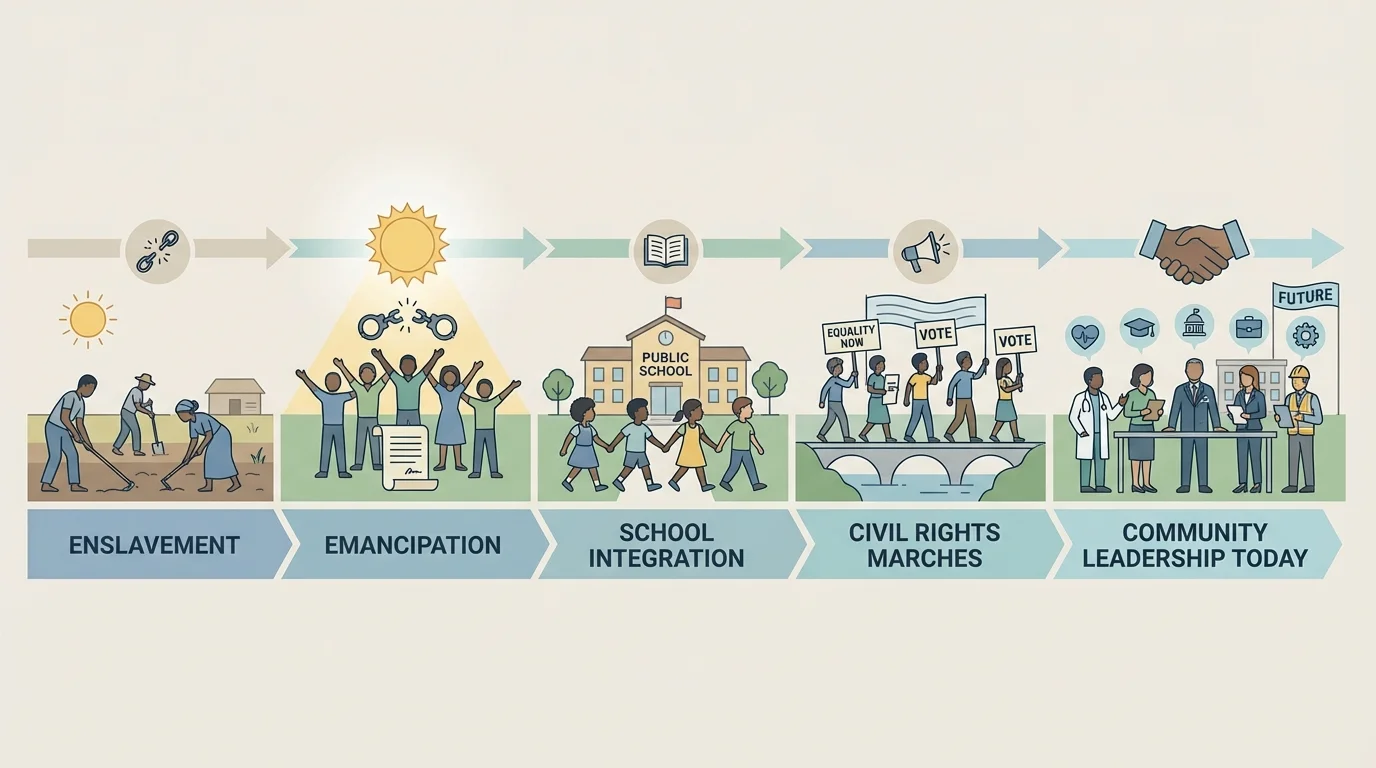
This history reminds us that communities are shaped not only by suffering but also by courage. African American history teaches how people can improve a place while also working to make it more just.
"Injustice anywhere is a threat to justice everywhere."
— Martin Luther King Jr.
This history matters in local communities today. Murals, music programs, museums, historic churches, and annual celebrations help people remember the past and honor African American contributions.
Latino communities have shaped many neighborhoods, as [Figure 4] shows. Latino people may trace family roots to Mexico, Puerto Rico, Cuba, the Dominican Republic, Central America, South America, and other places. Some families have lived in areas that became part of the United States long ago. Others moved more recently.
Latino communities have contributed to farming, construction, teaching, public service, business, food, music, dance, and art. In some towns, bilingual signs in English and Spanish help people communicate. Markets, restaurants, bakeries, and family-owned shops can become gathering places for everyone in the neighborhood.
Celebrations such as Día de los Muertos, Las Posadas, and many local parades and festivals can bring communities together. Murals and music often tell stories of family, memory, pride, and hope. Latino leaders also work for fair treatment of workers, immigrants, and students.
Some Latino families have faced language barriers or unfair stereotypes. Even so, they continue to help communities grow stronger. Schools, parks, and neighborhoods become richer when many cultures are welcomed.
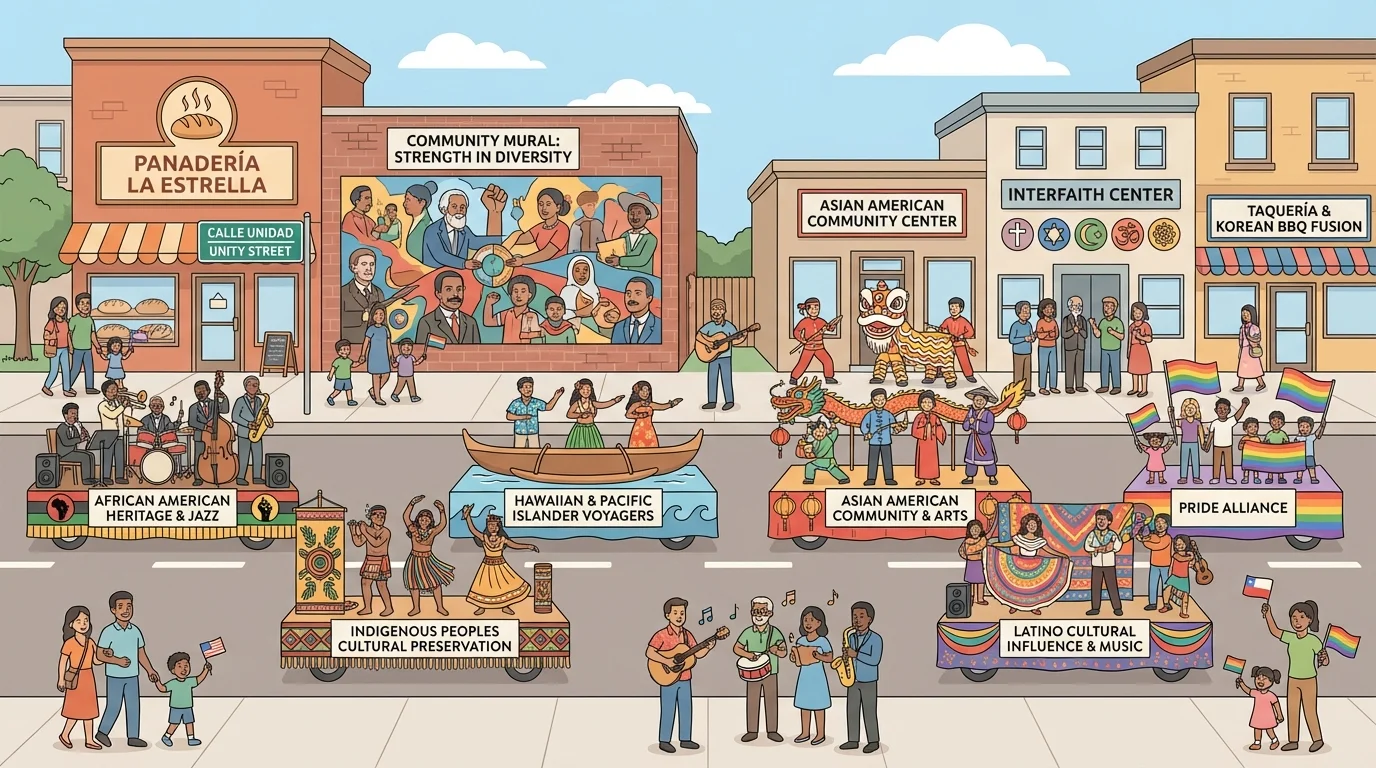
Shared spaces show that migration can change a neighborhood in visible ways. New languages, foods, and celebrations do not erase a community. They become part of its story.
Asian American communities include people whose families come from many parts of Asia, such as China, Japan, Korea, India, Vietnam, the Philippines, and many more places. Because Asia is very large, Asian American cultures are diverse and not all the same.
Asian immigrants and refugees have helped build railroads, start farms, open businesses, serve in the military, teach in schools, and work in science, medicine, and technology. In many communities, Asian American families have created temples, churches, cultural centers, language schools, and neighborhood festivals.
Some Asian American groups faced unfair laws that kept them from becoming citizens, owning property, or entering the country freely. During World War II, many Japanese Americans were unjustly incarcerated in internment camps. Learning this history helps us see why fairness and rights matter so much.
Asian American contributions can be seen in food, clothing, gardens, martial arts, art, music, inventions, and education. Lunar New Year celebrations, cherry blossom festivals, and community events help share traditions with neighbors.
Community case study
A small town grows when several immigrant families arrive and open new businesses.
Step 1: Families bring skills.
One family opens a grocery store, another starts a restaurant, and another teaches language classes after school.
Step 2: The town changes.
More people visit the neighborhood. Students learn new words, and families try new foods and celebrations.
Step 3: The whole community benefits.
Jobs increase, traditions are shared, and people learn to respect one another.
This is one way migration can help a town grow and change.
When we compare Asian American history with other groups' histories, we notice a pattern: people often face obstacles, but they still find ways to contribute and build community.
Hawaiian/Pacific Islander peoples include Native Hawaiians and people whose families come from islands across the Pacific, such as Samoa, Guam, Tonga, and other island communities. Their histories are connected to the ocean, navigation, family ties, and rich cultural traditions.
Native Hawaiians developed strong knowledge of waves, stars, weather, and canoe travel. Pacific Islander cultures also include dance, music, tattoo traditions, storytelling, and deep respect for ancestors and land. These traditions continue in schools, festivals, performances, and family gatherings.
Hawaiian and Pacific Islander communities contribute to art, sports, public service, teaching, military service, and neighborhood life. In some places, hula, lei-making, and island foods become part of shared celebrations. Their presence helps others learn about the Pacific world and its long history.
Like many other groups, these communities have also faced being misunderstood or overlooked. Studying their history helps make sure their voices are included in the story of a region.
LGBTQ people are part of communities too. This term includes people with different identities and experiences. Some may be lesbian, gay, bisexual, transgender, or queer. The most important idea is that every person deserves safety, respect, and kindness.
LGBTQ people have contributed to art, music, teaching, health care, community service, and leadership. In many places, they helped create spaces where people could feel accepted and protected. Some communities celebrate Pride events to honor fairness and belonging.
For a long time, many LGBTQ people were treated unfairly or told to hide who they were. Because of brave individuals and allies, laws and community rules in many places have changed to become more respectful. This shows that communities can learn and improve.
When students learn that communities include many kinds of people and families, they are better able to show empathy. A strong community is one where people feel they belong.
A religious minority is a group whose religion is less common in a place. Communities may include Jewish, Muslim, Sikh, Hindu, Buddhist, or other faith groups, along with Christians and people who do not follow a religion. Freedom of belief is an important part of many communities.
Religious minorities contribute by building houses of worship, running schools, helping neighbors, feeding families in need, and celebrating holidays that teach important values. A synagogue, mosque, gurdwara, temple, or meeting house can become a center of service and community care.
Sometimes religious minorities have faced teasing, unfair rules, or exclusion. Learning about these experiences helps students understand why respect matters. Communities become stronger when people can believe, celebrate, and worship freely.
Food drives, clothing collections, and disaster relief often come from faith communities. These acts of service help the whole region, not only members of one religion.
How diversity strengthens a community
When many groups live in one place, the community gains more languages, more skills, more ideas, and more ways to solve problems. Diversity does not mean everyone is the same. It means different people share one community while keeping important parts of their identity.
Respect does not require everyone to celebrate the same holidays or eat the same foods. It means listening, learning, and treating others fairly.
When many groups of people live in one region, they influence one another. They may trade goods, share recipes, borrow words, learn songs, or work together on town projects. Schools are often places where these interactions happen every day.
But history also shows problems. Groups have sometimes been kept apart by unfair laws or discrimination. Discrimination means treating people unfairly because of who they are. Discrimination can hurt families, limit opportunity, and divide neighborhoods.
Communities can respond by changing laws, teaching accurate history, honoring many cultures, and standing up for one another. People in the past influence the present because their actions shaped schools, housing, celebrations, and community rules that we still live with today.
The migration map in [Figure 1] helps us picture this process. New arrivals do not only add buildings or businesses. They also change relationships, traditions, and ideas about what the community can become.
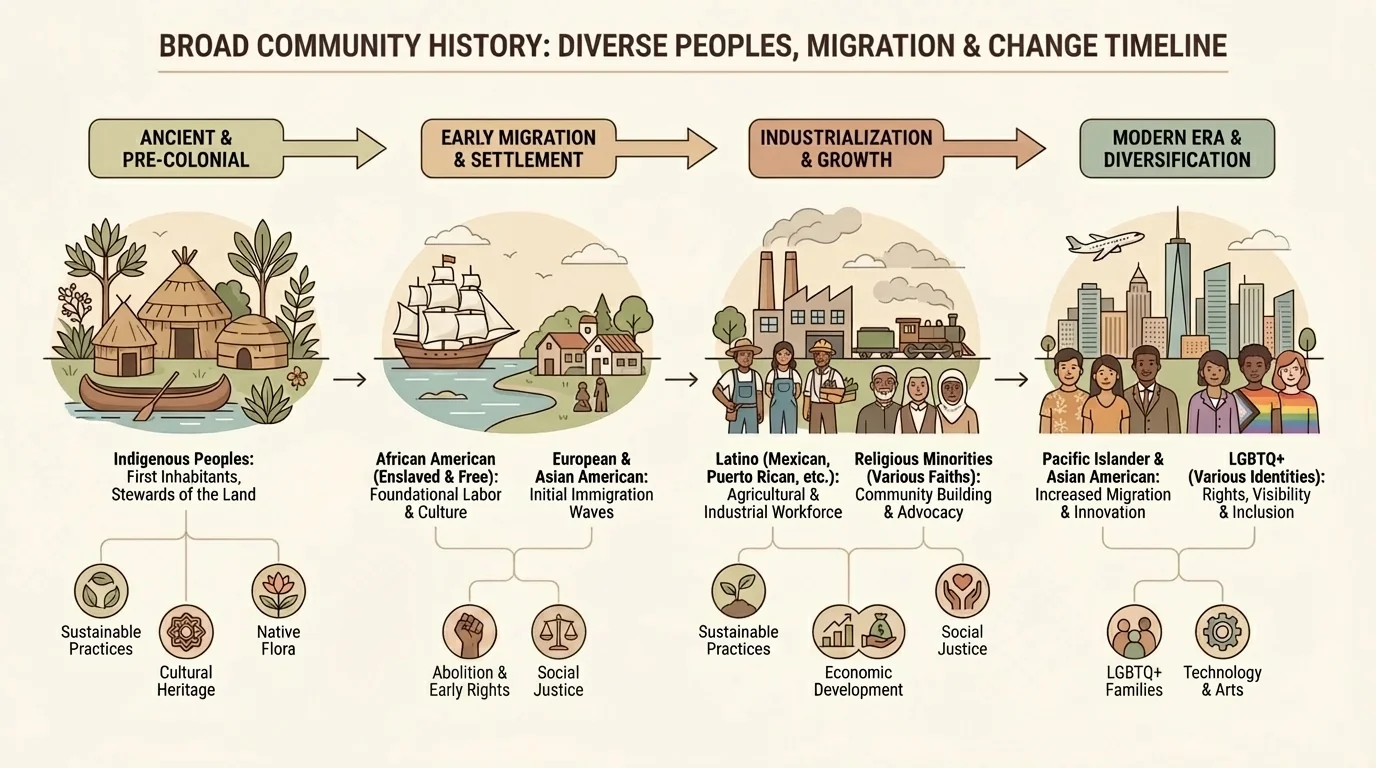
Communities change over many years, not all at once, and history is layered. Indigenous communities lived in many regions first. Later, Europeans arrived. Africans were forced into slavery. Over time, more migrants came from Latin America, Asia, the Pacific, and many religious and cultural backgrounds.
[Figure 5] In the more recent past, people also worked to expand rights for women, African Americans, Indigenous Peoples, immigrants, people with disabilities, and LGBTQ people. This means a community's story keeps growing. New chapters are added, but old chapters still matter.
| Time | What changed |
|---|---|
| Long ago | Indigenous Peoples built the first communities in many regions. |
| Later | Europeans arrived and settlements changed land and government. |
| Over time | Africans were forced to come through slavery; African American communities grew and resisted injustice. |
| Later years | Latino, Asian American, Hawaiian/Pacific Islander, and many religious groups shaped neighborhoods and regions. |
| More recent years | People worked for civil rights, inclusion, and fair treatment for many groups, including LGBTQ communities. |
Table 1. A simple overview of how different peoples and events shaped communities across time.
Looking at a timeline helps students understand that no community appears in one day. It is built little by little by many groups, through both cooperation and struggle.
Historians learn about communities by studying primary sources and secondary sources. A primary source is something from the time being studied, such as a photograph, letter, newspaper, map, song, or diary. A secondary source is something created later, like a textbook or a documentary.
For example, a photo of a neighborhood parade is a primary source. A book explaining why the parade began is a secondary source. Both kinds of sources can help us learn how people in the past influenced a community.
Students can also learn from oral histories. An oral history is a story told by someone who remembers an event or family experience. Grandparents, elders, and long-time neighbors may know how migration changed local schools, businesses, and traditions.
History is not only about famous leaders. It is also about everyday people: shop owners, students, farmers, builders, artists, neighbors, and families.
When we listen to many voices, we get a fuller picture of the past. That helps us avoid telling only one part of a community's story.
Today, communities are living examples of history. Street names, food trucks, holiday events, museums, murals, family businesses, music, and languages all tell us something about the people who have lived there and moved there.
A park may stand on land that has Indigenous history. A local church may have been built by African American families. A downtown block may include Latino-owned businesses, an Asian market, or a temple or mosque. A Pride flag in a shop window may show support for LGBTQ neighbors. All of these are signs that many groups have helped build the place.
The broad timeline in [Figure 5] reminds us that a region keeps changing. The past is not gone. It is visible in the people, buildings, traditions, and values of the present.
When students learn about many peoples and cultures, they do more than memorize facts. They learn that communities are connected, that change happens over time, and that every group can help a place grow.
