Have you ever wondered who decides where a stop sign should go, who helps keep the library open, or who makes sure trash is picked up? Those things do not just happen by accident. In every community, many people work together to help the place run smoothly. That teamwork is called local government, and it affects students every single day.
Local government is the part of government that serves a town, city, or county. It is the level of government closest to the people. Local government helps with everyday needs such as roads, parks, schools, safety, water, and community rules. Because it is close to where people live, local government often deals with problems people can see right in their neighborhoods.
Local government is the government of a town, city, or county. It makes decisions and provides services for the people who live there.
Community means the people who live and work in the same place.
Citizen means a member of a country who has rights and responsibilities. In local government, citizens can help their community in many ways.
Local government is important because it handles many things families use every day. If a streetlight breaks, if a park needs repairs, or if a new crosswalk is needed near a school, local government may help solve the problem. It is easier for local leaders to understand these nearby needs because they live in or near the same community.
A community needs rules, services, and people who are ready to help. Without local government, neighborhoods would have a much harder time staying safe, clean, and organized. Children might see this in simple ways: clean playgrounds, safe school zones, public libraries, and firefighters who respond in emergencies.
Local government is different from state and national government because it focuses on local needs. A national government may make rules for the whole country. A state government may make rules for the whole state. But local government focuses on one area, such as one town or one county.
Many communities have regular meetings where local leaders listen to people's ideas and concerns. That means citizens can often speak directly to decision-makers close to home.
Some local governments are for cities, some are for towns, and some are for counties. A county is a larger area that may include several towns or cities. Even when places are organized in different ways, they all need people to lead, people to work, and people to participate.
Communities choose leaders to help make decisions. In many places, a mayor is one of the main local leaders. As [Figure 1] shows, people in the community often elect a mayor and a group of council members to represent them. The mayor may help guide the city, suggest plans, and make sure city departments do their jobs.
Another important group is the city council. The city council is made up of elected people who help make local laws and decisions. They may vote on issues such as fixing roads, improving parks, or spending public money on important services. In some places, the town council or county board does a similar job.
These leaders have different roles, but they share the same goal: helping the community. They listen to problems, make plans, and decide what actions should be taken. Good local leaders must think about what is fair, safe, and helpful for many people, not just one person.
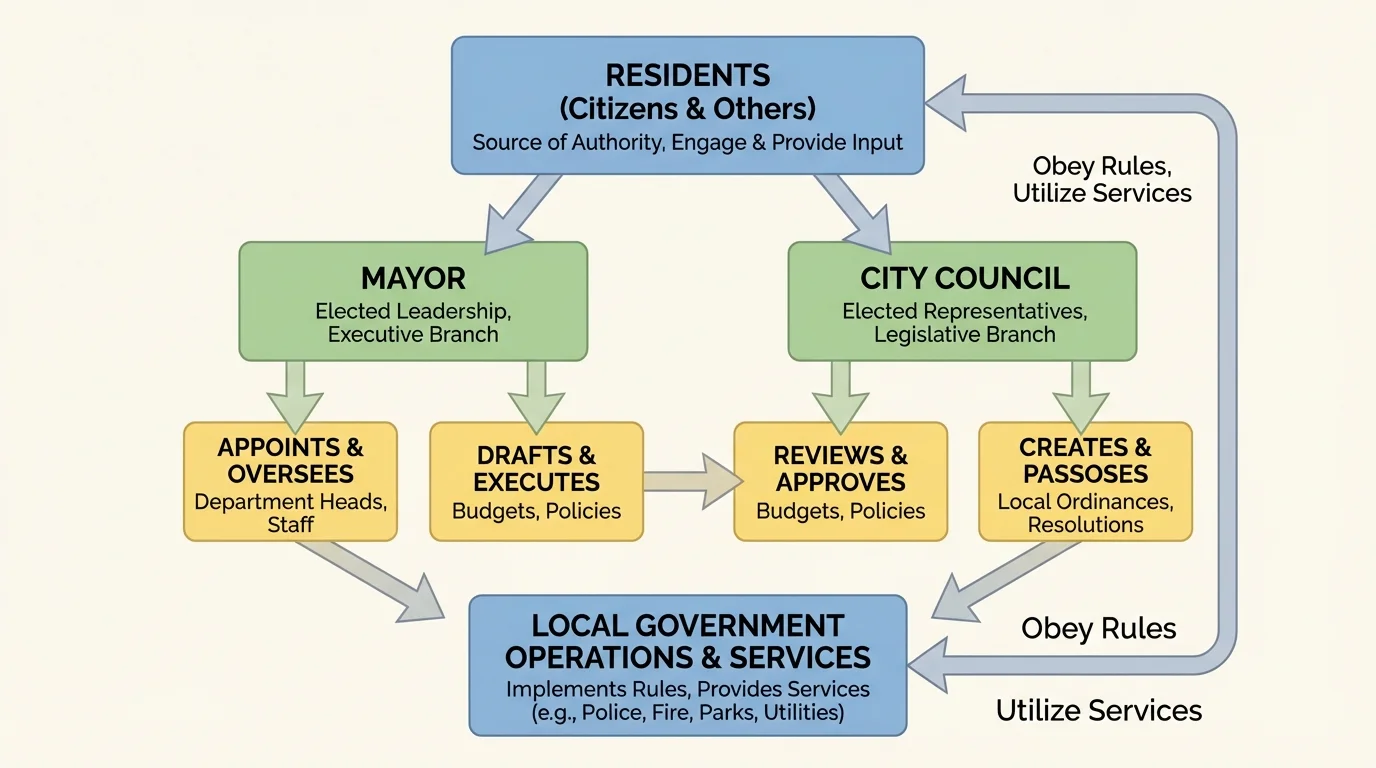
Sometimes other local leaders also help. A school board may make decisions about public schools. A judge in a local court may help resolve certain local legal matters. A county commissioner or board member may help make decisions for the county. The exact titles can change from place to place, but each leader has a job that supports the community.
Leaders are often elected officials. That means people vote to choose them. Voting is one way citizens help decide who should lead. When citizens vote, they are helping shape what happens in their own community.
Why leadership matters
Local leaders do not do every job themselves. Instead, they help set goals, make choices, and organize services. They decide what the community needs most and how workers and resources can be used to meet those needs.
When people disagree, leaders also help communities find solutions. For example, some neighbors may want a new dog park, while others may want a new playground. Local leaders must listen carefully, ask questions, and try to choose what helps the community best. That takes responsibility and fairness.
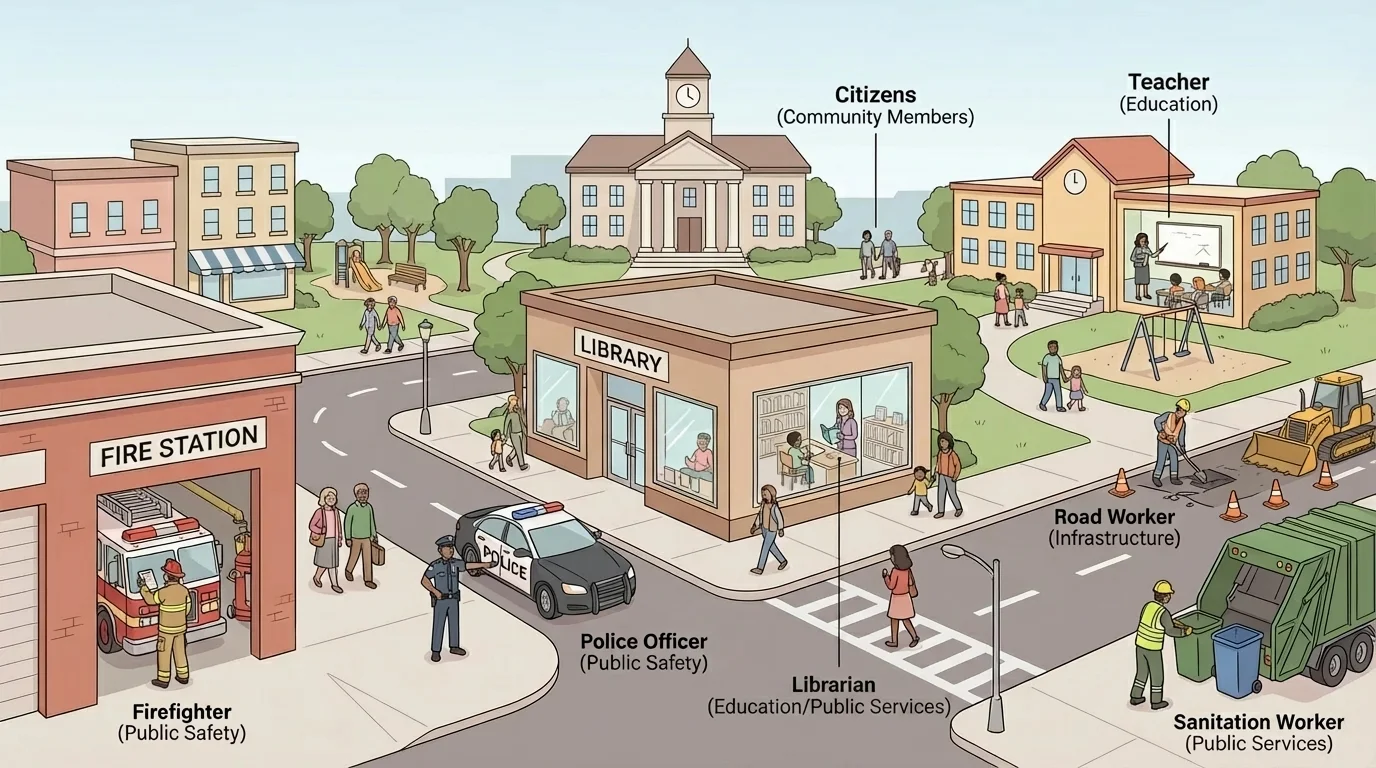
Local government is not only about leaders. Many workers carry out plans and provide services that help people every day. These workers may include firefighters, police officers, librarians, teachers in public schools, road workers, bus drivers, and sanitation workers who collect trash.
[Figure 2] A public service is something provided to help the people in a community. Firefighters provide emergency help during fires and accidents. Police officers help keep people safe and enforce laws. Librarians help people find books, information, and programs. Road crews repair streets and sidewalks. Sanitation workers help keep neighborhoods clean.
Some workers plan for the future. For example, city planners may help decide where buildings, parks, and roads should go. Water workers help make sure clean water reaches homes and schools. Park workers take care of fields, trees, and playgrounds. Each job is different, but all of them support the community.
Think about a public library. A local leader may help approve money for it. A librarian helps people use it. Citizens visit it, borrow books, and join programs. This shows that local government works best when many people play different roles.
Schools are another example. Teachers teach students, principals lead schools, school board members help make decisions, and families support learning. Even though schools are about education, they also connect to local government because many communities help manage and support public schools.
Example: Keeping a neighborhood safe
A storm knocks down tree branches near a road.
Step 1: Citizens notice the problem and report it.
People in the neighborhood call the town office or emergency service to explain that the road is blocked.
Step 2: Local leaders and workers respond.
Workers may send police officers to guide traffic and road crews to clear the branches.
Step 3: The community benefits.
The road becomes safe again, and families can travel more easily.
This example shows that leaders, workers, and citizens all help solve problems.
Just as we saw with the workers in [Figure 2], no one person can do every job in a community. Local government is like a team, and each team member has a special responsibility.
Citizens are not just observers. They are important parts of local government too. Adults can vote, attend meetings, serve on boards, or speak to leaders about community needs. They can write letters, share ideas, or help choose what should improve in their town or city.
Citizens also have responsibilities. They should follow laws, respect public places, and care for shared spaces. For example, if a family uses a park, they should throw away trash properly and follow park rules. Taking care of public places helps everyone.
Some citizens volunteer. They may help at food drives, clean up parks, support community events, or raise money for local projects. Even if volunteering is not an official government job, it helps the whole community and supports local goals.
Rules help groups work well together. Students already know this from school. A classroom runs better when people follow rules, help each other, and speak respectfully. A community works in a similar way.
Children may not vote yet, but they can still be active community members. They can learn about local issues, speak respectfully about community needs, join clean-up events, and practice good citizenship at school and in their neighborhoods. They can also share ideas with trusted adults.
When citizens pay attention and participate, local leaders can make better decisions. Leaders need to hear from the people they serve. If no one shares concerns, important problems may go unnoticed.
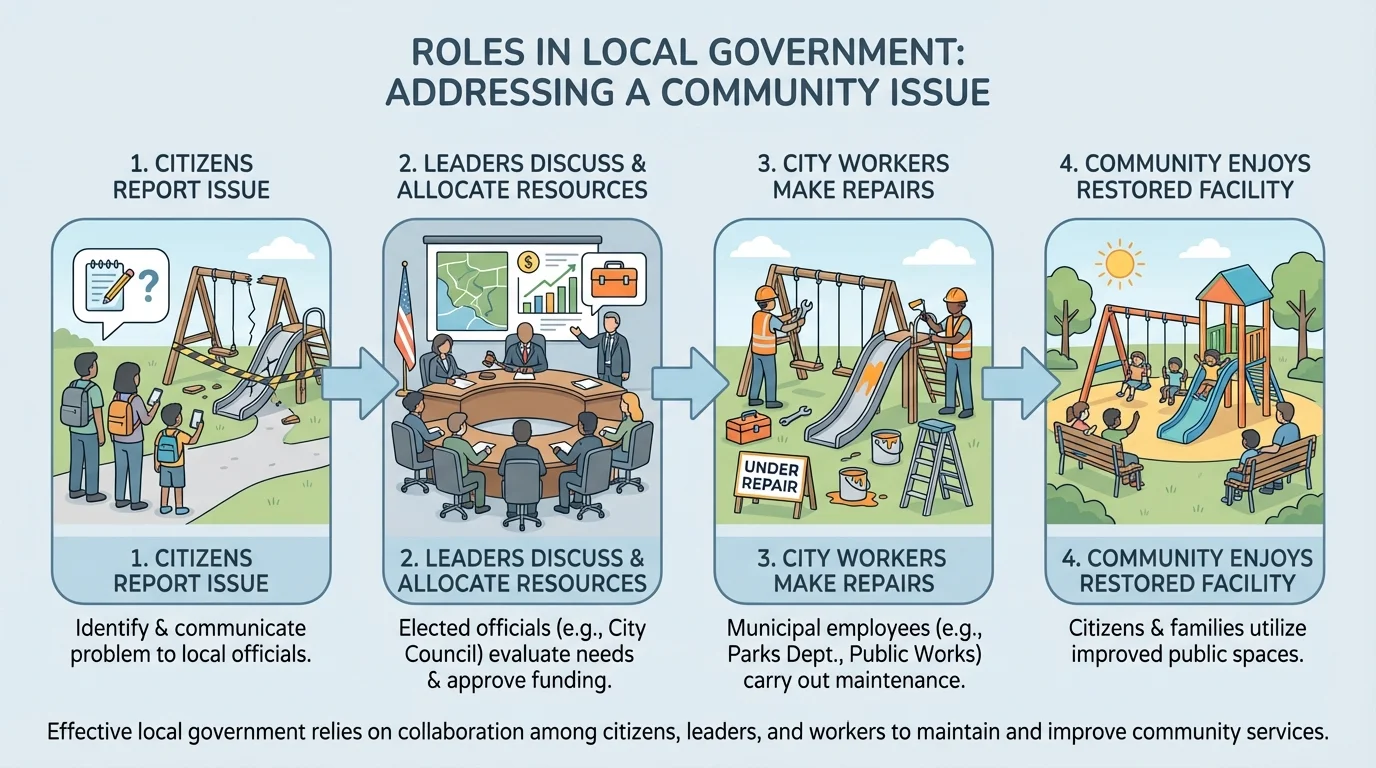
[Figure 3] One of the most important ideas in civics is cooperation. Local government works best when leaders, workers, and citizens cooperate. A broken swing set in a park, for example, may first be noticed by citizens. Then leaders can discuss the problem and decide what to do. After that, workers can make the repair.
This process shows that different roles connect. Citizens notice and report. Leaders decide and organize. Workers carry out the plan. Sometimes local newspapers, community groups, or neighborhood associations also help share information and support solutions.
Here is another example. Suppose a school crossing feels unsafe because cars drive too fast. Families may talk to local leaders about the danger. The city council may discuss adding a stop sign or crosswalk. Traffic workers may paint lines on the road or install signs. Police officers may help enforce the new rule. In the end, children can cross more safely.
Later, if people want to understand how one small problem gets solved step by step, [Figure 3] remains a helpful model. It reminds us that community improvement usually happens through teamwork, not by one person acting alone.
"The strength of the team is each individual member. The strength of each member is the team."
— Phil Jackson
Sometimes local governments must make hard choices because they cannot do everything at once. They may need to decide whether to repair a road first, improve a park first, or buy new library materials first. Citizens can help leaders understand which needs are most urgent.
Not every community is organized in exactly the same way. One city may have a mayor and city council. Another town may have a town manager and town board. A county may be led by commissioners or supervisors. These different systems still have similar purposes: making decisions, providing services, and helping the community.
Some communities are small and rural. Others are large and busy. A small town may have fewer workers and simpler needs. A large city may have many departments, such as transportation, housing, parks, and public health. Even with these differences, local government still depends on leaders, workers, and citizens doing their parts.
| Group | Main Role | Example |
|---|---|---|
| Leaders | Make decisions and guide the community | Mayor, city council, school board |
| Workers | Provide services and carry out plans | Firefighters, librarians, road crews |
| Citizens | Participate, follow laws, and share ideas | Voting, attending meetings, volunteering |
Table 1. Main roles different groups play in local government.
Even people who are not elected leaders or government workers can still matter. Local business owners, parents, volunteers, and community groups may all support local government by sharing ideas and helping improve neighborhoods.
Being part of a community means more than living in a place. It means helping that place be safe, fair, and welcoming. Students can show responsibility by obeying rules, respecting others, taking care of shared spaces, and learning how their community works.
When children see a crosswalk guard, visit a library, play in a park, or watch workers repair a road, they are seeing local government in action. These everyday moments show that local government is not far away. It is part of daily life.
Some local governments invite students to visit city hall, attend a school board meeting, or learn about emergency services. These experiences help young people see how government works up close.
Understanding local government helps students become thoughtful citizens. One day, they may vote, serve on a board, or become leaders themselves. For now, they can ask questions, learn the roles people play, and practice helping their own community.
