Why do many people move to one state while fewer choose another? The answer is not only about houses, schools, or jobs. The land itself matters. Mountains, rivers, beaches, forests, weather, and fertile soil all help shape where people want to live. A state with warm weather and rich farmland may attract families and workers. A state with rough mountains or very little water may be harder for large numbers of people to settle in. Physical environments help guide human choices every day.
When people move into a state from another state or another country, that movement is called immigration into the state. People move for many reasons, but the natural world often plays a big part. As shown in [Figure 1], people need water to drink, land to build on, and places where they can travel, farm, fish, or work. Geography is not just about maps. It is about how the Earth affects human activity.
People often move because they hope for a better life. They may look for safer places, more jobs, better farmland, or nicer weather. Some want to live near oceans or lakes. Others want land for ranching or farming. Some move to mountain states for mining, tourism, or outdoor recreation. The environment helps create these opportunities.
For example, if a state has a long coastline, people may move there to work in shipping, fishing, or tourism. If a state has deep, rich soil, farmers may move there to grow crops. If a state has forests, some people may come for jobs connected to wood products or paper. In each case, the physical environment supports certain kinds of work, and work attracts people.
Physical environment means the natural features of a place, including landforms, climate, water, soil, plants, and natural resources.
Immigration means moving into a place to live there.
Human activity means the things people do, such as farming, building cities, traveling, and working.
Not every move happens for the same reason. Sometimes the environment is a strong pull factor, meaning it attracts people. Warm weather, beautiful scenery, useful rivers, and fertile land can all pull people toward a state. At other times, harsh winters, deserts, floods, or steep mountains can push people away or make settlement slower.
The physical environment includes the natural parts of a place that shape how people live. These parts include landforms such as hills, mountains, valleys, plains, and coasts. They also include climate, which means the usual pattern of temperature and precipitation in an area.
Water is another major part of the environment. States may have rivers, lakes, wetlands, groundwater, or ocean access. Soil matters too because some soils are better for growing crops than others. Natural resources such as forests, coal, oil, or minerals can also influence where people move.
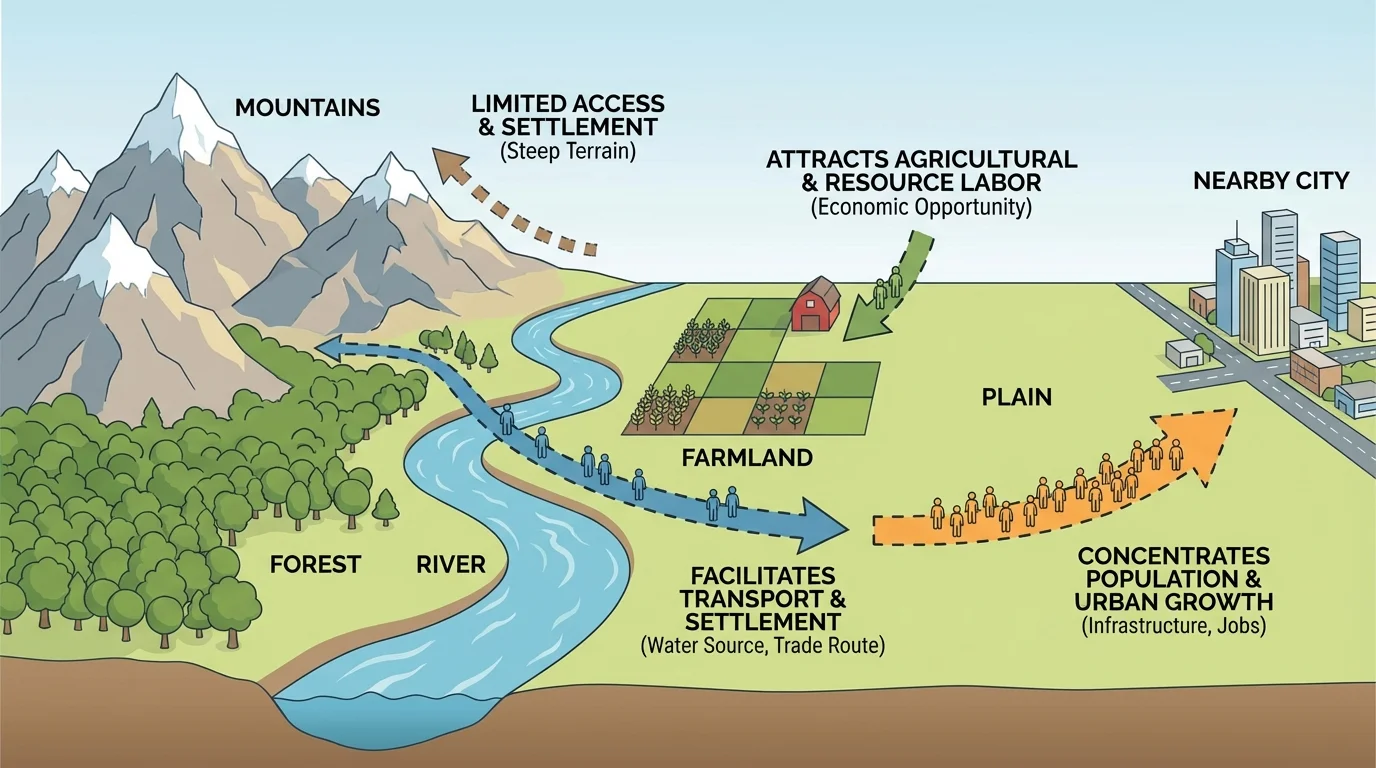
These natural features are connected. A river valley may have fertile soil. A coastal area may support ports and fishing. A mountain region may have cooler temperatures and valuable minerals. Because these features affect jobs, food, transportation, and safety, they can also affect immigration into a state.
Some of the oldest settlements in many places began near rivers because people needed fresh water, good soil, and easy travel routes. Even today, many large cities are still built near water.
When we study geography, we ask an important question: How does the land influence the people who live there? That question helps explain why some parts of a state grow quickly while other parts stay more thinly populated.
As shown in [Figure 2], Landforms strongly affect where people settle. Flat plains and valleys are often easier places to build roads, houses, schools, and farms. Because of this, they often attract more new residents than steep, rocky areas.
Rivers are especially important. They provide water, help crops grow, and make travel easier. Long ago, rivers were major transportation routes for boats. Today, rivers still matter for farming, trade, and city growth. A state with large river systems may attract people because it offers both water and transportation.
Coastal areas can also attract immigrants. States on the ocean may have beaches, ports, and fishing grounds. Ports make trade possible because ships can carry goods in and out. Tourism also grows in many coastal states. This means more jobs, which can bring more people.
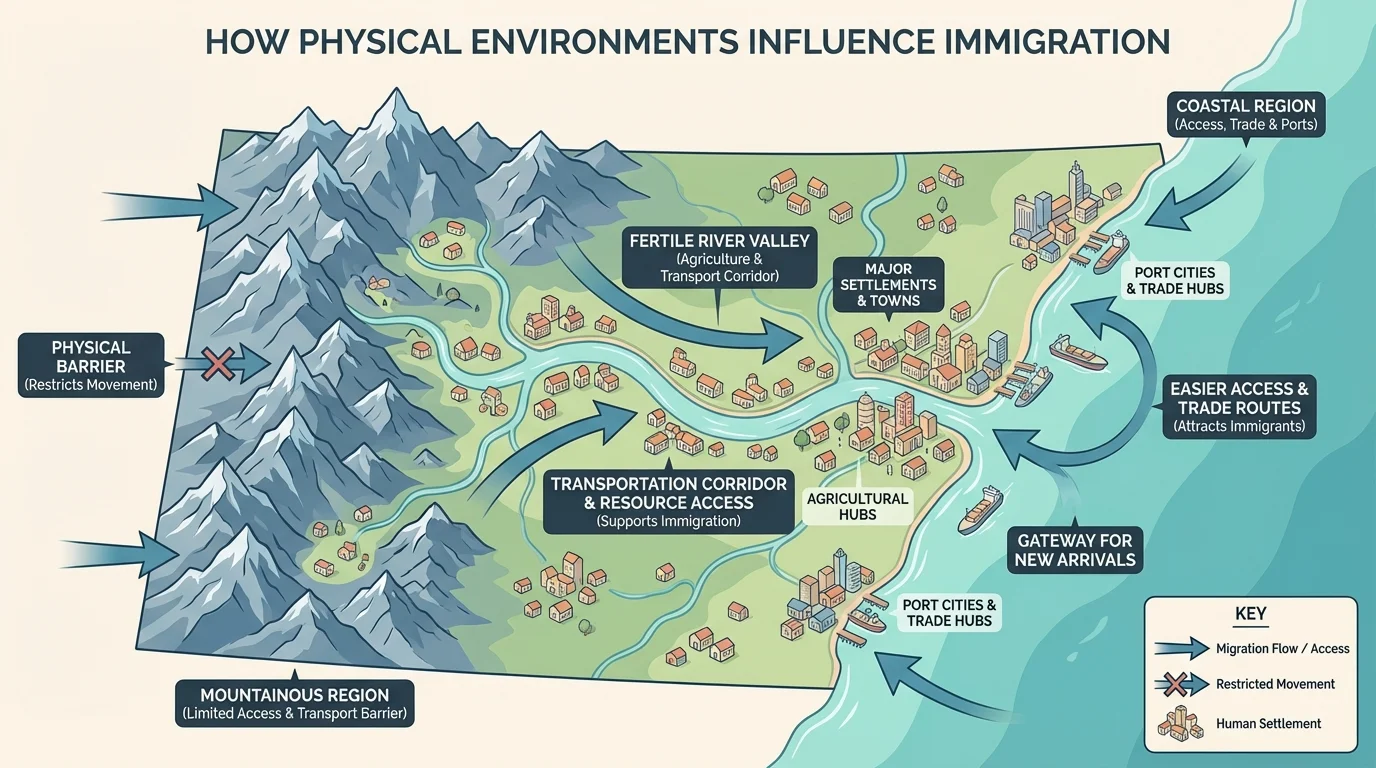
Mountain regions can attract some people too, but usually for different reasons. Mountains may offer mining, skiing, hiking, forestry, or beautiful scenery. However, steep slopes can make transportation and farming more difficult. This can limit how many people settle there compared with flatter areas.
Location matters along with landforms. A state in the center of the country may attract transportation businesses because it connects many routes. A border state may become a place where people enter and settle because it is closer to other regions or countries. As we saw earlier in [Figure 1], the full physical environment works together, not in separate pieces.
As shown in [Figure 3], Climate can attract or discourage people. Many people prefer places where the weather is comfortable for much of the year. Warm winters, enough rainfall, and a long growing season can make a state appealing.
For example, a state with mild winters may attract retirees, families, and businesses. A state with enough rain and sunshine may support farming. If farms and orchards do well, workers may move there for jobs. Pleasant weather can also support tourism, which creates even more reasons for people to move in.
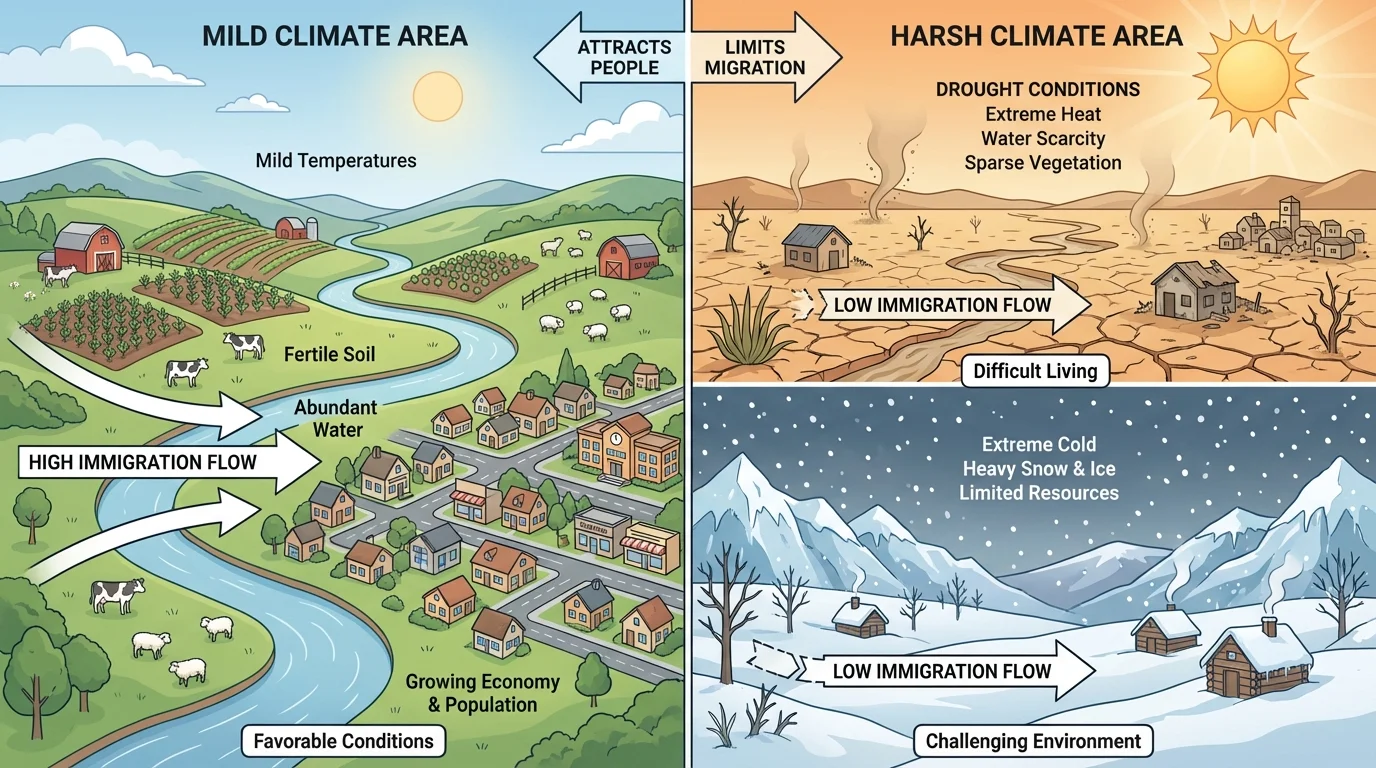
Harsh climate conditions can make settlement harder. Very cold winters may shorten the growing season. Very hot, dry conditions may limit water supplies. Areas with frequent hurricanes, tornadoes, wildfires, or floods may still attract people, but they can also create danger and high costs. Families may think carefully before moving to places where weather disasters happen often.
Weather and climate are not exactly the same. Weather is what the air is like at a certain time, such as rainy or sunny today. Climate is the usual pattern over many years. A state can have a generally mild climate but still experience storms sometimes.
How climate affects human activity
Climate affects what crops can grow, how much water is available, what kinds of clothes and homes people need, and even what jobs are common. Because human activity depends on climate, immigration patterns often depend on climate too.
Later, when we look at state examples, we can see that warm coastal states, fertile valley states, and mountain states each attract different groups of people for different environmental reasons.
People cannot live without water, so states with reliable water sources often attract more settlers. Rivers, lakes, and aquifers support homes, farms, and factories. A dry state may still grow, but it usually needs strong systems for storing and moving water.
Natural resources are useful materials that come from nature. These include forests, fertile soil, fish, coal, oil, natural gas, and metals. If a state has many resources, people may move there to work in farming, fishing, mining, logging, or energy production.
Fertile soil is especially important in farming states. Good soil plus enough water can support crops such as corn, wheat, vegetables, and fruit. When farming succeeds, communities grow. Stores, schools, and roads follow. This creates more opportunities, which can bring even more people into the state.
Forests can attract workers in wood and paper industries. Mineral-rich areas may attract miners and businesses. Lakes and rivers may support fishing and recreation. Each resource changes the kinds of human activity that happen in a state.
Case study: A fertile river valley
A wide river valley in a state may attract many people because the environment supports several needs at once.
Step 1: The river provides fresh water for homes and crops.
Step 2: Floodplains often leave behind rich soil that helps crops grow well.
Step 3: Flat land makes it easier to build farms, roads, and towns.
Step 4: More farming and trade create jobs, which attract more people.
This is one reason many important settlements have formed in valleys and near rivers.
Water and resources do not guarantee easy growth. If people use too much water or damage the land, the environment can become less helpful. States must manage resources carefully so the land can support people for a long time.
The physical environment affects transportation, and transportation affects immigration. It is easier to move goods and people across flat plains than across steep mountains. Harbors make shipping easier. Rivers can connect inland places to larger markets. These features help states grow.
When travel is easier, businesses are more likely to open there. When businesses open, they offer jobs. When jobs increase, more people move in. This chain of effects shows the close relationship between geography and human activity.
For example, a state with a natural harbor may develop a large port city. Immigrants may arrive by ship or plane and settle nearby because work is available. A state with broad grasslands may become important for farming and ranching. A mountain pass may become a major route for roads and railroads. Geography helps decide where these routes and cities develop.
We can connect this back to [Figure 2], which shows that towns often grow where the land is easier to cross and where water routes are available. The environment shapes movement, and movement helps shape settlement.
Not all environmental features attract immigration. Some create problems. Deserts may have very little water. Swamps can make building difficult. Mountainous areas may be beautiful but hard to travel through. Areas with frequent floods or hurricanes may require stronger buildings and more planning.
Natural hazards can slow population growth in certain places. A family thinking about moving may worry about wildfire danger, drought, or severe winter storms. Businesses may also avoid some areas if transportation is difficult or natural disasters happen often.
Still, people sometimes move to challenging places because other advantages are strong. A desert state may have important cities, jobs, and sunny weather. A coastal state may attract people despite hurricane risks because it offers beaches, trade, and tourism. A mountain state may grow because people value scenery and recreation.
From earlier geography learning, remember that people do not choose places based on one factor alone. They think about resources, safety, transportation, jobs, and the natural environment together.
This is why two states with different environments can both attract new residents, but for different reasons. One may attract farmers. Another may attract workers in technology, tourism, mining, or transportation.
As shown in [Figure 4], different states attract new residents for different environmental reasons. Looking at real places helps us see how geography affects human choices in different ways.
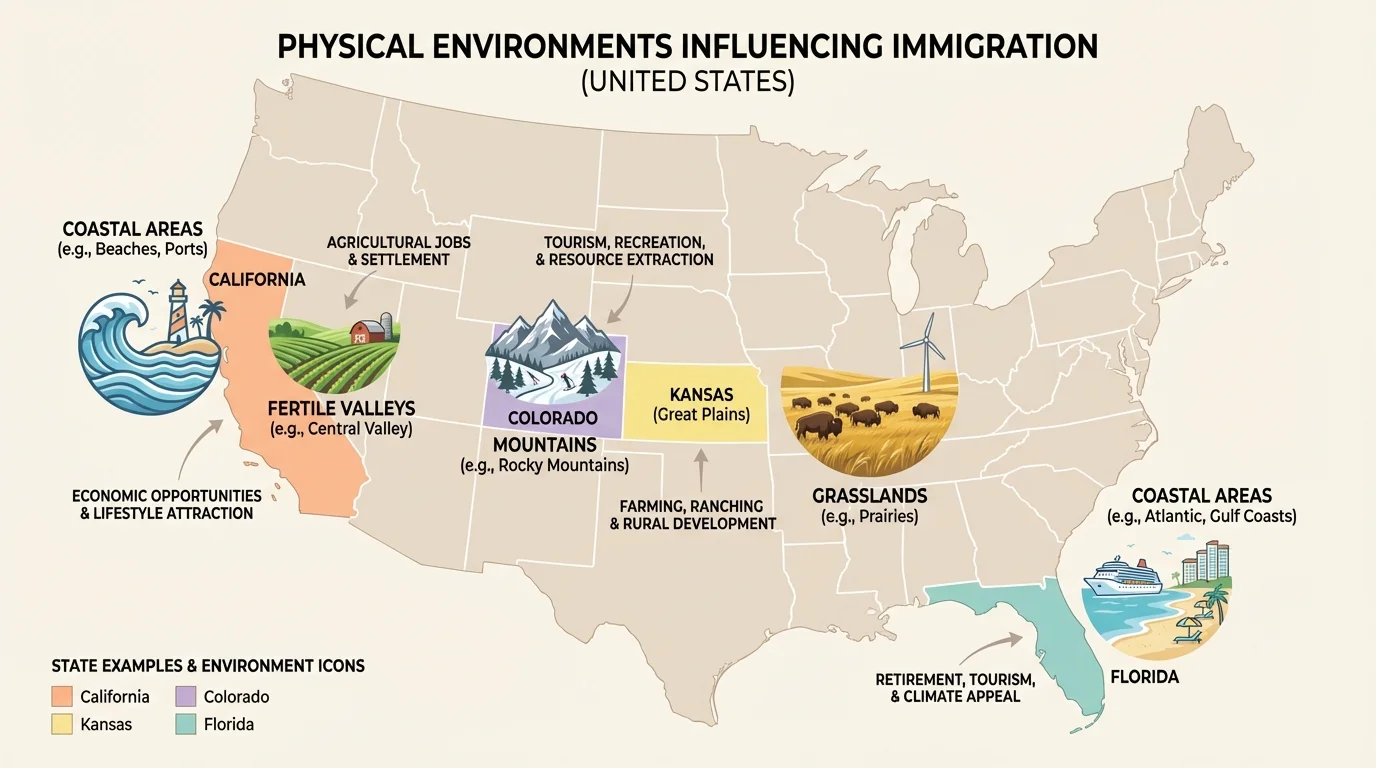
Florida attracts many people because of its warm climate, long coastline, and access to the ocean. Tourism is strong, and the weather appeals to many retirees and families. At the same time, hurricanes and flooding can create challenges.
California has a varied environment. It includes coastlines, fertile valleys, mountains, and a mild climate in many areas. The Central Valley has rich farmland that supports agriculture, while coastal cities support trade and business. Because the environment offers many different opportunities, large numbers of people have moved there over time.
Colorado has mountains that attract people for mining, tourism, skiing, and outdoor recreation. Some areas are less crowded because steep land is harder to build on. Still, the scenery and resources draw many people.
Great Plains states, such as Kansas or Nebraska, have broad, flat grasslands that support farming and ranching. Their open land and fertile soil have attracted settlers for many years. However, drought and strong storms can make life there difficult at times.
| State or Region | Important Physical Features | How It Can Attract Immigrants | Possible Challenges |
|---|---|---|---|
| Florida | Warm climate, coastline, beaches | Tourism, retirement, ocean jobs | Hurricanes, flooding |
| California | Coast, valleys, mountains, mild areas | Farming, trade, varied jobs | Wildfires, drought, earthquakes |
| Colorado | Mountains, forests, scenic land | Tourism, mining, recreation | Steep land, winter weather |
| Great Plains | Flat land, grasslands, fertile soil | Farming, ranching, transportation | Drought, storms |
Table 1. Examples of how physical features in different states can encourage or limit immigration.
These examples show that there is no single "best" environment for everyone. Some people want farmland. Some want warm weather. Some want mountain jobs or ocean access. The physical environment helps create these choices.
As seen earlier in [Figure 3], climate can make a place feel welcoming or difficult, while the map in [Figure 4] shows that different regions attract people for different reasons. Geography does not force people to move, but it strongly influences their decisions.
The influence of the environment is not fixed forever. New roads, dams, irrigation systems, and technology can make some places easier to live in than before. Air conditioning allows more people to live comfortably in hot areas. Better transportation can connect mountain towns to larger cities.
At the same time, environmental changes can make places less attractive. Drought may reduce water supplies. Rising sea levels can threaten coastal communities. Wildfires may damage homes and forests. When the physical environment changes, patterns of immigration can change too.
This means geography is dynamic. States continue to grow and change because people respond to both natural features and new conditions. Understanding the physical environment helps us understand why people move and where communities develop.
"Where people live is often a story written by land, water, climate, and opportunity."
When we study immigration into a state, we are really studying the relationship between Earth and people. Physical environments affect food, water, transportation, jobs, safety, and comfort. Those factors help explain why people choose one place over another.
