Every time people buy lunch, choose a phone case, or decide not to spend money at all, they send signals into the economy. That may sound surprising, but it is true: millions of small choices made by ordinary people help decide which stores stay open, which products become popular, and even which jobs are needed most. In a market economy, consumers are not just shoppers. They are powerful decision-makers.
A market economy is an economic system in which people and businesses make many decisions about what to buy, sell, and produce. Instead of one central authority controlling every choice, buyers and sellers interact in markets. When people spend money on one product and ignore another, businesses notice. Over time, those choices can change what is available in stores, how much things cost, and which businesses grow.
Think about a snack shop at school or in a neighborhood. If many students buy fruit cups and fewer buy chips, the shop owner may order more fruit cups next week. If almost nobody buys a certain drink, the owner may stop stocking it. The business is reacting to consumer behavior. This is one of the most important ideas in economics: spending choices help shape the market.
Consumer means a person who buys or uses goods and services. A business is an organization that produces or sells goods and services. Demand is the amount of a good or service that consumers are willing and able to buy at different prices.
Consumers and businesses depend on each other. Consumers want useful goods and services, such as food, clothing, transportation, streaming services, and haircuts. Businesses want customers because customer spending brings in revenue. In a functioning market economy, this relationship is based on exchange: consumers choose what they value, and businesses try to meet those wants and needs.
In a market economy, businesses answer an important question: What should we produce? One major clue comes from what consumers buy. If customers want more bicycles, businesses that make bicycles may increase production. If customers stop buying a certain toy, factories and stores may produce and sell less of it.
This system does not mean businesses always predict correctly. Sometimes they make too much of a product, and it stays on shelves. Sometimes they make too little, and the product sells out quickly. But overall, businesses use consumer behavior, prices, and competition to decide what to do. That is why consumer spending is sometimes called a "vote" in the marketplace.
How consumer choice acts like a signal
When many people buy the same item, businesses read that as a message: "Make more of this." When people stop buying something, businesses read a different message: "This product is less valuable to customers right now." Prices, advertising, and competition all matter too, but consumer choice is one of the strongest signals in a market economy.
Businesses also compete with one another. If one company sells a backpack for a lower price or better quality, more consumers may choose it. Other companies may then lower prices, improve quality, or create new designs. In that way, consumer decisions can encourage businesses to innovate and improve.
People cannot buy everything they want, so they make choices. A family may need groceries, electricity, and school supplies before it spends money on movie tickets or a new video game. Economists often separate spending into needs and wants. Needs are things required for daily life, while wants are things people would like to have but can live without.
These choices are connected to income. If a person has a limited amount of money, every purchase matters. Choosing one thing often means giving up another. That is called opportunity cost, which is the value of the next best thing you do not choose. If a student has $15 and spends it on a T-shirt, the opportunity cost might be the book, game, or meal they could have bought instead.
Smart spending decisions often involve comparing prices, thinking about quality, and deciding whether something is worth the money. For example, buying a reusable water bottle may cost more at first than buying one drink, but it may save money over time. Consumers who think carefully about value often help their money go further.
Everyday spending choice
A student has $12 for lunch over two days. On the first day, a combo meal costs $8, and a simple meal costs $5.
Step 1: Compare the choices.
If the student buys the $8 combo meal, only $4 is left for the next day.
Step 2: Check what happens with a different choice.
If the student buys the $5 simple meal, then the money left is \(12 - 5 = 7\).
Step 3: Think about opportunity cost.
Choosing the more expensive lunch means giving up the chance to have more money available tomorrow.
This shows how limited money affects consumer decisions.
Even young consumers make economic choices. Deciding whether to save allowance money, spend it immediately, or wait for a sale all affects demand in small ways. When many people make similar choices at the same time, the effect on the market becomes much bigger.
Demand is not just wanting something. In economics, demand means people are both willing and able to buy it. A student may want a $900 gaming computer, but if that student cannot pay for it, that desire alone does not count as market demand.
Demand also depends on price. Usually, when the price of something goes down, more people are willing and able to buy it. When the price goes up, fewer people buy it. This pattern is common for many products, from shoes to notebooks to concert tickets.
[Figure 1] Suppose a store sells notebooks for $4 each. Some families may buy one or two. If the price drops to $2, more families may buy extra notebooks for home or school. The lower price makes the product available to more buyers, so the quantity demanded increases.
The connection between price and buying behavior is often shown with a demand curve. On this kind of graph, price is usually on one axis and quantity demanded is on the other. The line slopes downward because lower prices usually lead to greater quantity demanded, while higher prices usually lead to lower quantity demanded.
Think about sneakers. If a popular pair costs $120, fewer families may decide to buy it. If the price falls to $80 during a sale, more people may decide the sneakers fit their budget. The sneakers did not necessarily change, but the lower price changed how many people were willing and able to buy them.
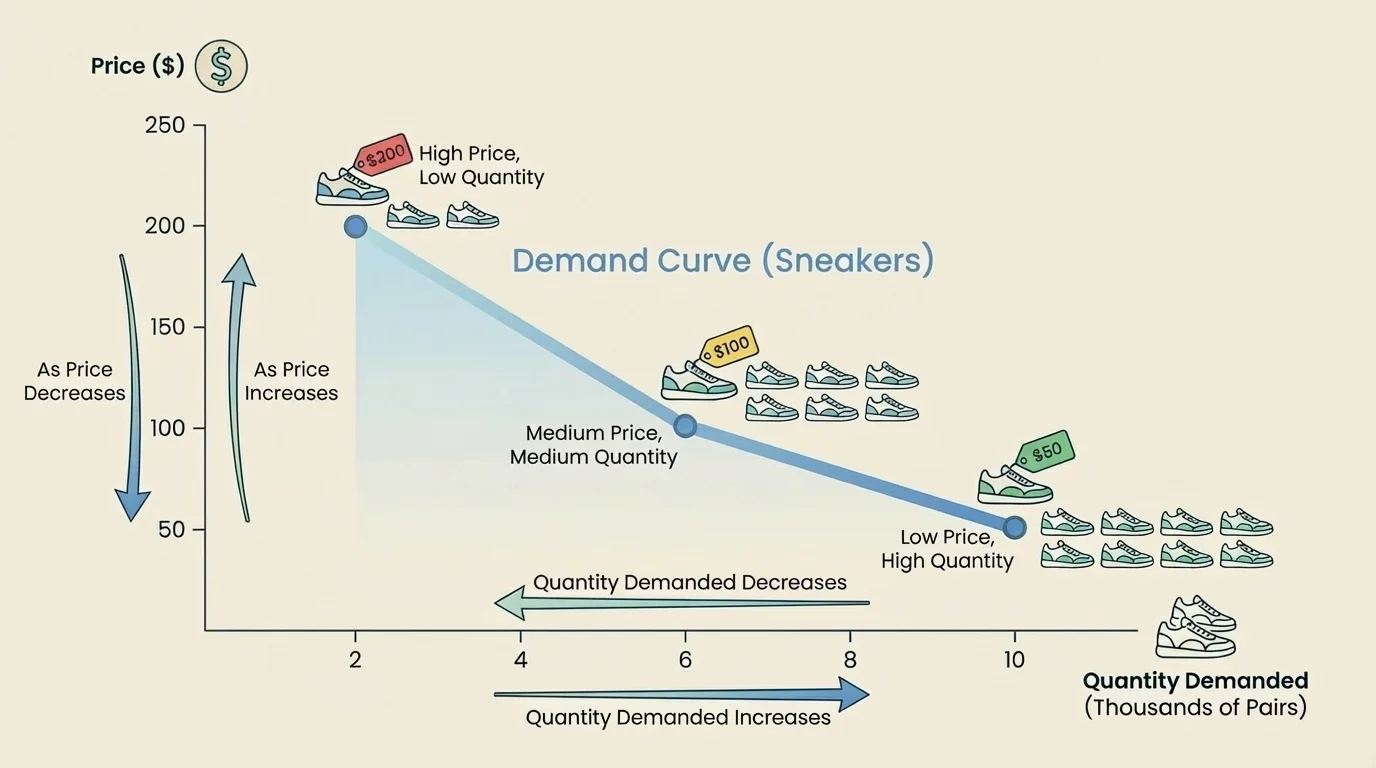
This does not mean every person reacts the same way. Some shoppers will still buy expensive sneakers because they care a lot about the brand. Others will avoid them even at a lower price. Economics often looks at patterns for groups of people, not just one buyer.
Businesses pay close attention to these patterns. If a lower price brings in many more customers, total sales may rise. If a higher price causes too many customers to stop buying, the business may lose revenue. That is why stores often test sales, discounts, and special offers.
Later, when businesses decide how much to make, they still use the same idea we saw in [Figure 1]: consumer response to price helps predict how many items might sell.
Stores sometimes change prices at different times of year because they know demand is not constant. School supplies often become more popular before a new school year, while winter clothing usually sees stronger demand in colder months.
Sometimes students notice this in real life. A video game or sports item may be expensive when it first comes out because many people want it right away. Months later, the price may drop as excitement cools or new products appear.
[Figure 2] Price is important, but demand can change for other reasons too. If more people want a product even when the price stays the same, demand increases. If fewer people want it, demand decreases.
One major factor is income. If families have more money to spend, they may buy more restaurant meals, electronics, or new clothes. If money is tight, families may cut back and buy fewer nonessential items.
Another factor is taste and trends. A celebrity, athlete, or online trend can make a product suddenly popular. Advertising can also increase interest. Seasonal changes matter too. Cold weather raises demand for jackets and hot drinks, while summer often increases demand for swimsuits and fans.
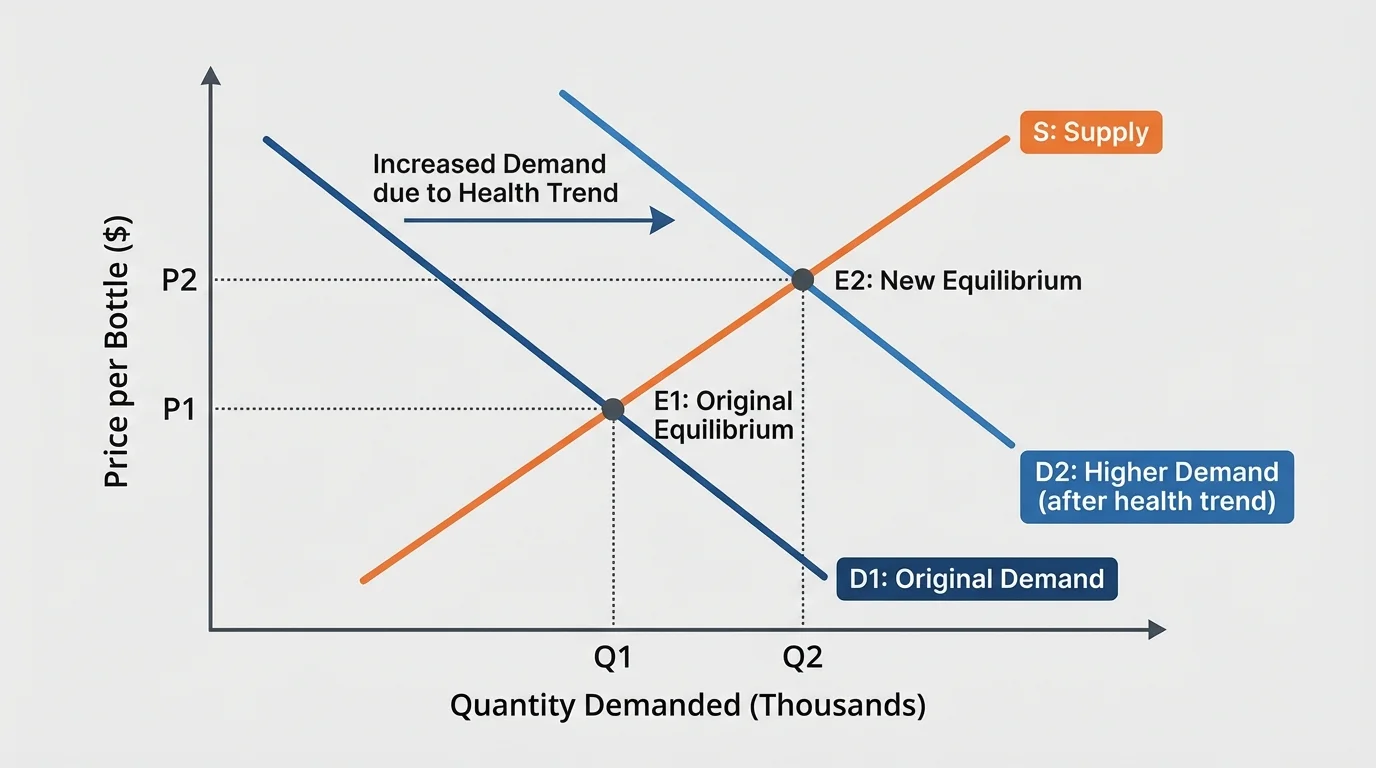
Population changes also affect demand. If more people move into a city, there may be greater demand for housing, food, buses, and schools. If fewer tourists visit a beach town, demand for hotels and souvenir shops may decrease.
Even expectations about the future matter. If people think the price of a game console will rise next month, some may buy it now. If they expect a sale soon, they may wait. Consumer decisions are often about both the present and the future.
[Figure 3] When demand changes, businesses react. If many people want more of a product, businesses may order more supplies, make more goods, hire more workers, or open more locations.
For example, suppose a local taco restaurant becomes popular. More customers line up during lunch, so the owner buys more ingredients, schedules more workers, and maybe adds another cash register. If demand keeps growing, the restaurant might open a second location.
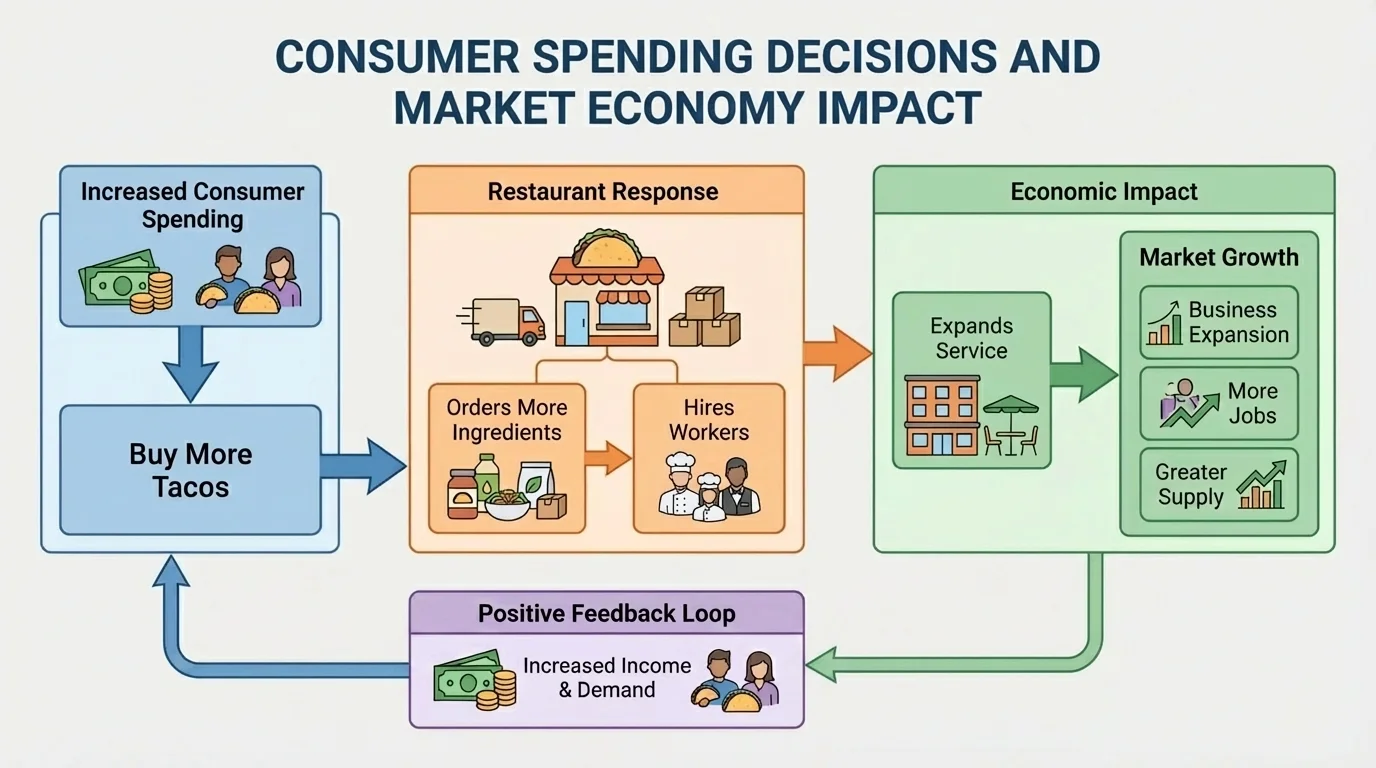
If demand falls, businesses may do the opposite. They may order fewer supplies, reduce the number of products they make, or even close a location. This can affect workers, shipping companies, and farmers or factories that provide materials.
This is why consumer choices matter beyond one purchase. Buying one more taco seems small, but when hundreds of people do the same thing, the business changes its plans. A market economy is full of these connected decisions.
Consumer demand influences production
Production means making goods or providing services. Businesses usually try to produce enough to meet demand without wasting money on extra items that may not sell. Strong demand encourages more production. Weak demand usually leads to less production.
Competition also affects business responses. If one restaurant raises prices too much, customers may choose a different place. If another business offers better service, cleaner stores, or a lower price, consumer spending may shift quickly.
[Figure 4] Consumers and businesses interact across the Western Hemisphere in many different ways. The Western Hemisphere includes countries in North America, Central America, South America, and the Caribbean. In each place, consumers make choices based on income, prices, culture, and local needs.
In the United States and Canada, many consumers spend heavily on technology, transportation, housing, and entertainment. In Mexico, families may shape demand for school supplies, food items, buses, and mobile phone services in growing cities. In Brazil, consumer demand can influence markets for clothing, agricultural products, music events, and digital services. In Caribbean nations, tourist spending can strongly affect demand for hotels, restaurants, and local crafts.
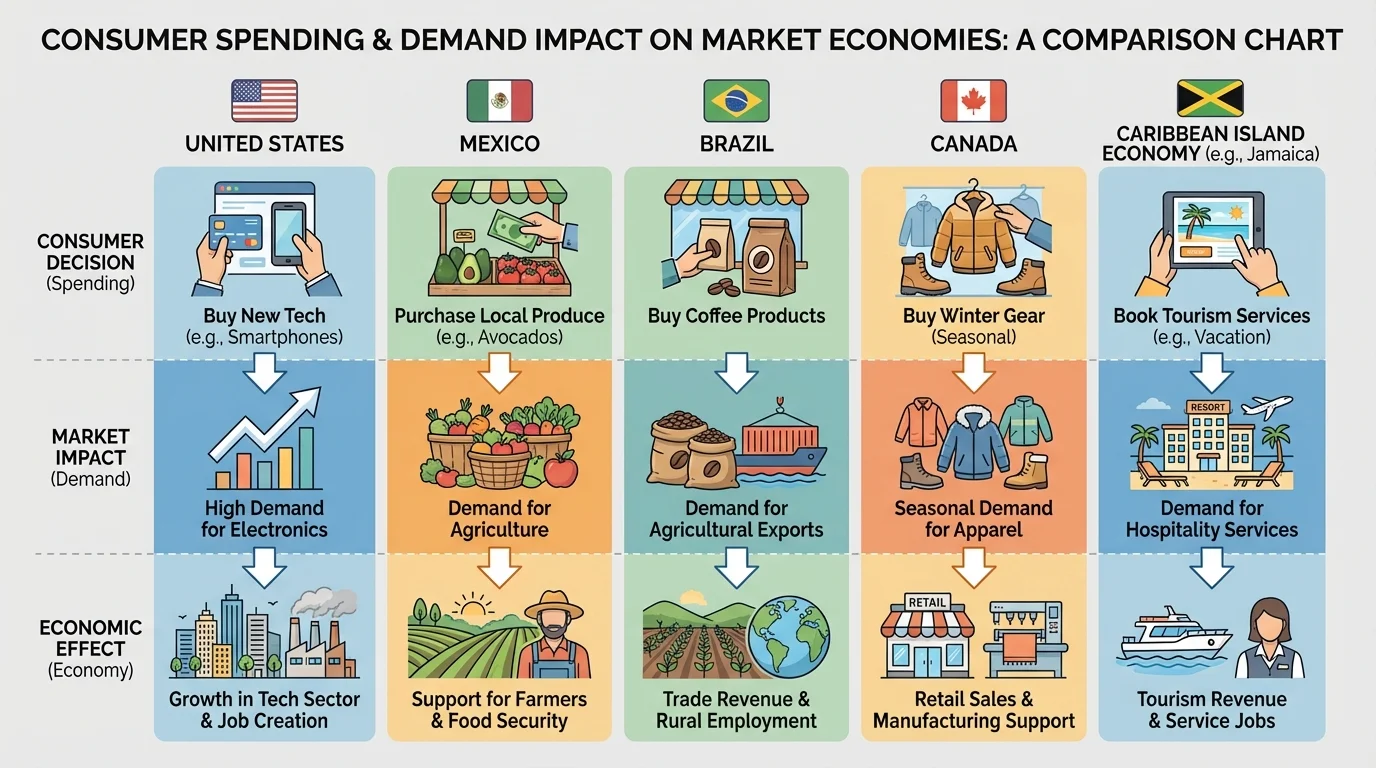
These examples show that demand is not identical everywhere. Climate, geography, income levels, traditions, and trade all help shape what people buy. A winter coat may be in stronger demand in Canada than in tropical islands. Beach tourism may matter much more in the Caribbean than in inland cities.
At the same time, countries in the Western Hemisphere are connected. If people in one country buy more coffee, fruit, cars, or electronics, businesses in another country may benefit if they produce or ship those items. Consumer spending can therefore influence jobs and production far beyond one town or one nation.
When we compare markets across the region, the pattern from [Figure 4] remains the same: consumer choices help tell businesses what to provide, even though the specific products differ from place to place.
Case study: tourism and local businesses
A Caribbean island receives more visitors during winter months.
Step 1: Tourists spend money on hotels, food, and transportation.
Step 2: Local demand for these services rises during the tourist season.
Step 3: Businesses may hire more workers, buy more supplies, and extend hours.
This example shows how consumer spending affects local economies across the Western Hemisphere.
Businesses also learn from consumer feedback. Reviews, repeat purchases, and changing trends help companies decide what to improve. In many countries, local markets and global companies both study consumer demand carefully.
Good consumer decisions can help individuals and families while also affecting the larger economy. When shoppers compare prices, avoid waste, and choose items that fit their needs, they use resources wisely. If many consumers prefer durable products, businesses may produce stronger, longer-lasting goods.
Some consumers care about where products come from. They may choose local produce, fair-trade coffee, or reusable items. When enough people make those choices, businesses may change what they stock. Consumer demand can therefore affect not only prices and production, but also product quality and business practices.
Money is limited, so every spending choice involves trade-offs. Saving, spending, and comparing value are basic personal financial literacy skills that connect directly to how markets work.
For families, planning can make a big difference. Buying during sales, using a list, and avoiding impulse purchases can stretch a budget. In a market economy, smart consumers help businesses understand what people truly value, not just what they buy quickly without thinking.
Sometimes demand changes fast. A new toy may become extremely popular during the holidays. A heat wave can suddenly increase demand for fans and bottled water. A storm warning may cause people to buy extra food, batteries, or fuel.
When demand rises much faster than supply, shortages can happen. Shelves may empty quickly, and prices may rise. When businesses have too much of a product that people no longer want, they may hold sales to clear extra stock. These situations show how closely spending and demand are connected.
If a store expected to sell 200 backpacks but only sold 80, it has more inventory than needed. If it expected to sell 200 umbrellas but demand jumped to 350 during a rainy season, it may run out. Businesses try to predict demand, but markets can change quickly.
| Situation | What Consumers Do | What Businesses May Do |
|---|---|---|
| Price drops | Buy more | Restock quickly or continue sale |
| Trend becomes popular | Show more interest | Increase production and advertising |
| Income falls | Cut nonessential spending | Offer cheaper options |
| Tourism increases | Spend more on services | Hire workers and expand hours |
Table 1. Examples of how consumer behavior and business responses interact in a market economy.
Just as the graph in [Figure 2] shows demand shifting, real markets shift all the time because people's situations and preferences change.
One person's purchase may seem tiny, but market economies are shaped by huge numbers of consumers acting every day. Together, those decisions influence prices, production, jobs, profits, and competition. Businesses that understand consumer demand often succeed. Businesses that ignore it often struggle.
This is one reason personal financial literacy matters. Understanding needs, wants, opportunity cost, and demand helps people make wiser choices with their own money. At the same time, it helps them see how their decisions connect to the bigger economy around them.
When consumers spend, save, compare, and choose, they do more than manage personal money. They help guide the direction of the marketplace.
