What would happen if everyone in a classroom talked at the same time, ran in every direction, and grabbed every toy first? It would feel noisy, unsafe, and unfair. A classroom works best when people know what to do. That is why classes have rules. Rules help children learn, play, and feel safe together.
A classroom is a shared place. Many children and grown-ups use the same room, the same books, the same toys, and the same time for learning. Rules help everyone know how to act. Good rules keep people safe, help people be kind, and make things fair.
When a class has rules, children can listen to a story, take turns with crayons, and walk safely to the door. Rules are not made to be mean. They are made to help the group. When everyone follows the rules, the classroom feels calm and happy.
Rule means something we agree to do. A rule tells us how to act so everyone can learn and be safe.
Choice means picking what to do.
Consequence means what happens after a choice.
Some rules are about bodies, like using walking feet. Some are about words, like using kind voices. Some are about materials, like putting away scissors and blocks when we are done.
A classroom rule should be simple and clear. Children should understand it. A good rule tells what to do, not just what not to do. For example, "Use gentle hands" is clearer and kinder than only saying "No hitting."
Rules can help with many parts of the day. A rule may help during circle time, snack time, cleanup time, or when lining up. A rule should fit the classroom and help the class work well together.
Sometimes teachers and students also talk about expectations. Expectations are the ways people are supposed to act. A rule and an expectation are very close. Both help everyone know what good classroom behavior looks like.
[Figure 1] In a class, children can help make rules together. This is one way to practice democracy. In democracy, people share ideas, listen, and help make decisions. In class, this may happen during a meeting when children talk about what helps everyone learn and play safely. Each child may get a chance to speak, and the teacher helps everyone listen.
Children might say, "Take turns," "Use quiet voices," or "Clean up." The teacher can write these ideas where everyone can see them. Then the class can talk about which rules are most important. Sometimes the class may raise hands to choose, or the class may agree together after talking.
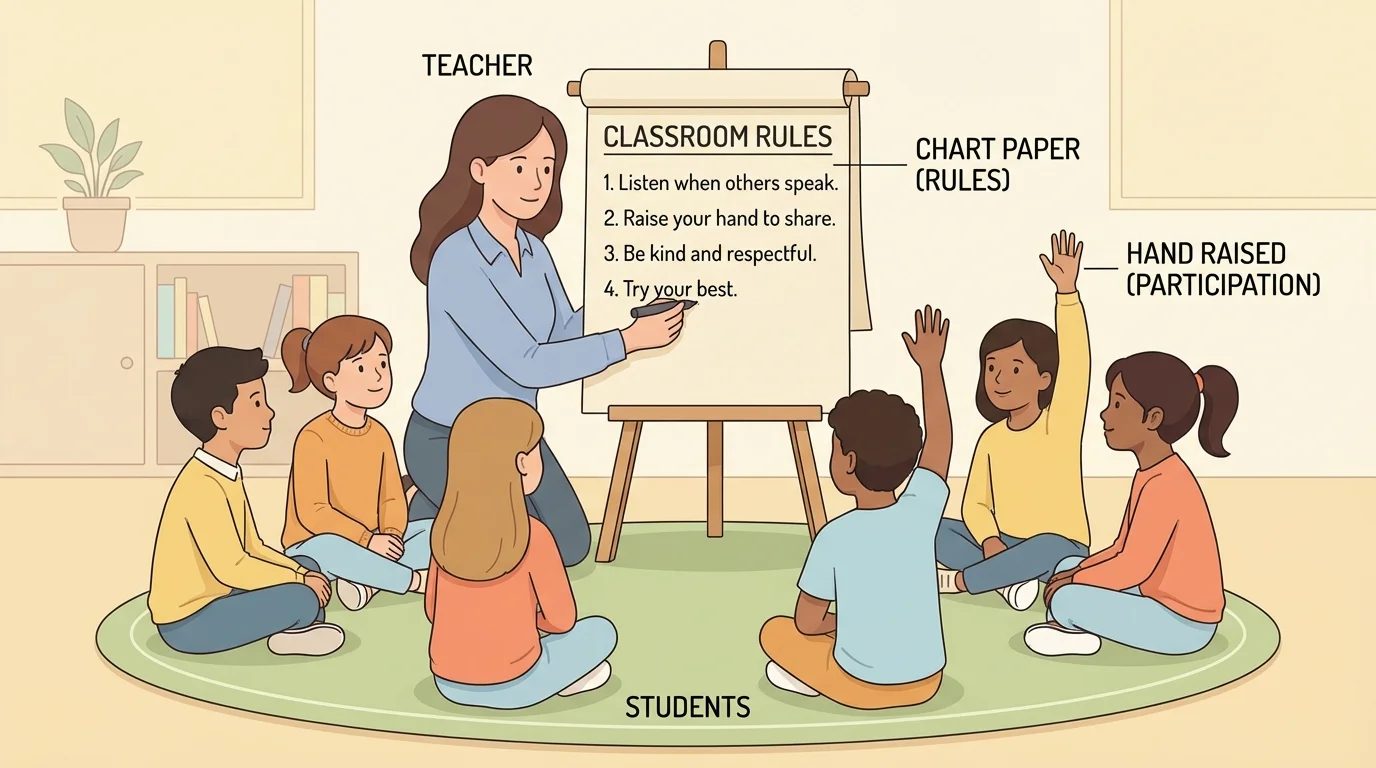
Making rules together is important because children help build the classroom community. When children help choose the rules, they understand them better. They also feel that the rules belong to everyone, not just to the teacher.
Making logical decisions together means thinking about what helps the whole class, not only one person. A logical rule solves a real problem. For example, "Walk inside" helps stop bumps and falls. "Take turns speaking" helps everyone hear and be heard.
Listening is an important part of making rules. In a democratic classroom, people do not shout over each other. They wait, listen, and think. That helps the class make smart and fair choices.
[Figure 2] Good classroom rules are easy to remember and useful every day. These rules include listening when someone is speaking, using gentle hands, walking indoors, sharing materials, and cleaning up after work time.
Here are some examples: Use kind words. Keep hands and feet to yourself. Raise your hand to speak. Take turns. Help clean up. Walk in the classroom. Each rule helps stop a problem before it starts.
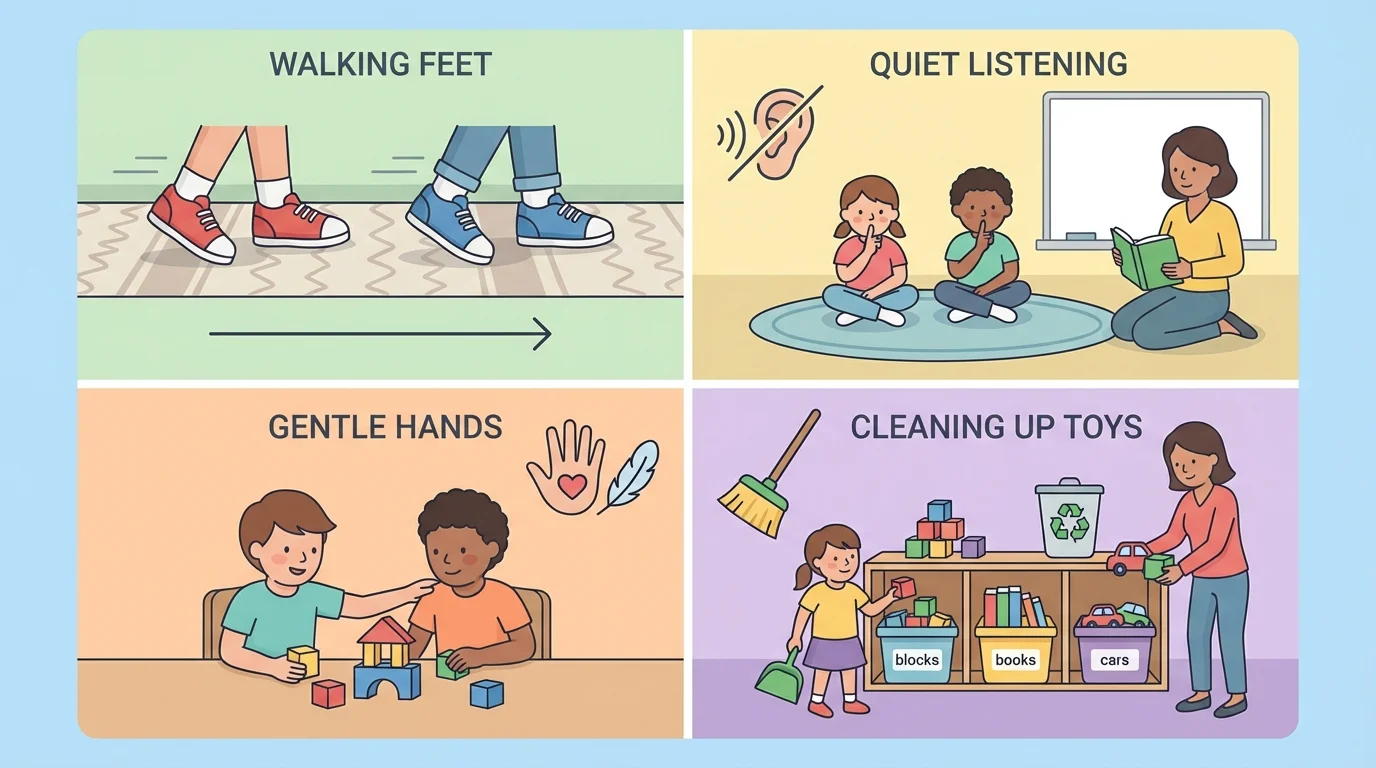
If children run indoors, someone might fall. If children grab, someone may feel sad or angry. If children leave a mess, the room becomes hard to use. That is why rules are helpful. They protect people and the classroom itself.
Rules are not only words on a wall. Rules are actions. A child who waits for a turn is following a rule. A child who puts away paint is following a rule. A child who uses a quiet voice during story time is following a rule.
| Rule | Why It Helps |
|---|---|
| Use kind words | People feel respected and safe |
| Walk inside | Helps prevent accidents |
| Take turns | Makes sharing fair |
| Listen to others | Helps everyone learn |
| Clean up materials | Keeps the room ready to use |
Table 1. Examples of classroom rules and the ways they help the class.
Following rules takes practice. Sometimes children remember right away. Sometimes they need reminders. That is normal. Learning rules is part of learning how to be in a group.
Children show responsibility when they follow rules even when the teacher is helping someone else. They show respect when they listen, wait, and use kind actions. These habits help the whole class.
Routines can make rules easier to follow. For example, if children always put backpacks in the same place, line up the same way, and clean up when a song starts, the day feels smoother. Rules and routines work together.
A class can have different rules in different places. The rule for the rug might be "sit and listen," while the rule for the playground might be "wait for a turn on the slide."
Children can also help each other remember rules in friendly ways. They might say, "It is your turn next," or "Let's walk." Friendly reminders are better than bossy words.
[Figure 3] Sometimes a child forgets a rule or makes a poor decision. When that happens, adults help the child learn from the mistake. A fair response is called a consequence, and the goal is to fix the problem and do better next time, not to shame someone.
If blocks are thrown, the child may need to stop playing with blocks for a little while and help pick them up. If someone hurts a classmate's feelings, the child may need to say sorry and use kinder words. If a mess is made, the child helps clean it. These consequences connect to the action.
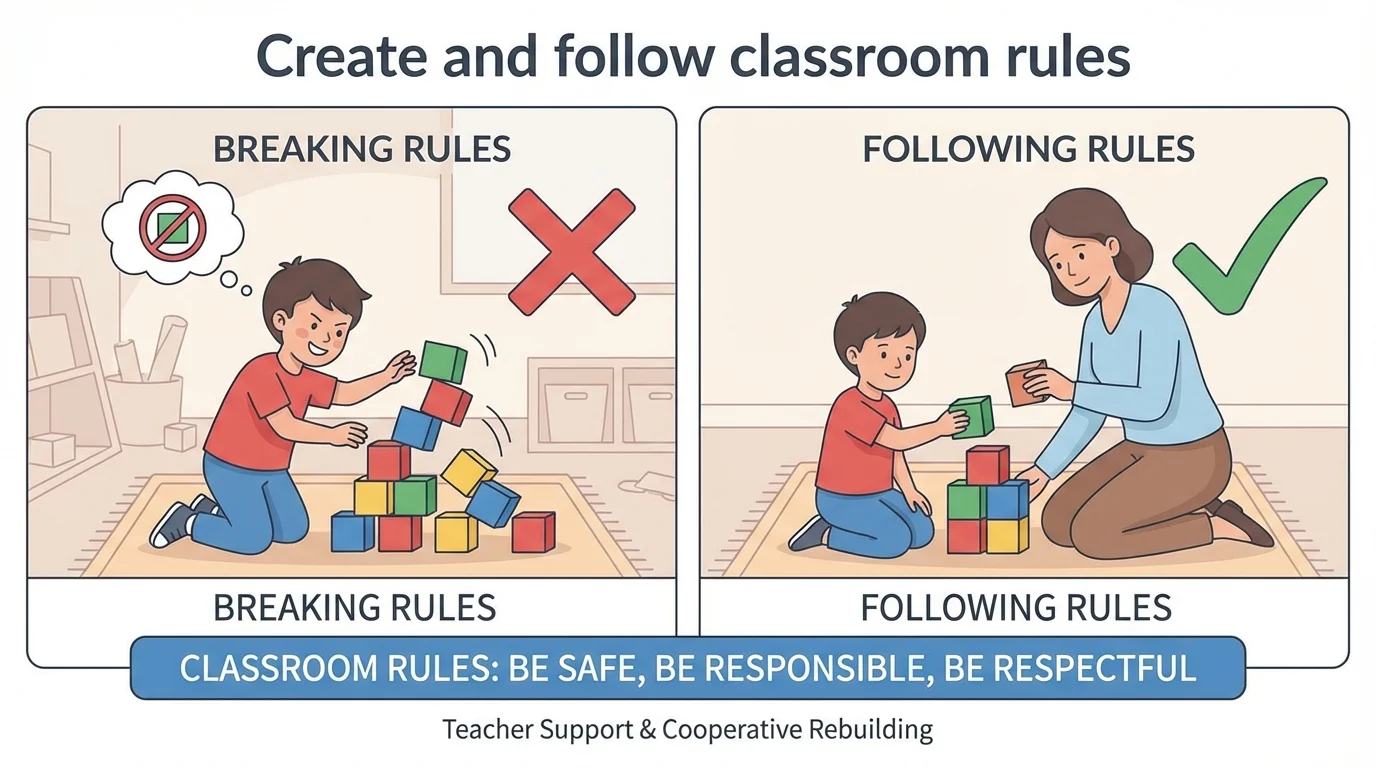
This is part of being fair. Fair does not always mean everyone gets the same thing. Fair means people get what makes sense for the situation. If one child spills water, that child helps wipe it up. That is a logical consequence.
Mistakes are a chance to learn. The class rules still matter, but children can try again. Later, when thinking about fairness, we can remember [Figure 3], which shows that fixing a mistake helps rebuild trust and responsibility.
A good classroom citizen cares about other people. That means thinking, "Will my choice help the class?" A child who follows rules is helping everyone have time to learn, play, and feel included.
Being part of a class also means helping make group decisions. Children can listen to classmates, share ideas politely, and agree on rules that make sense. This is a small but important way to practice citizenship. It shows that every voice matters and every person has a job in the group.
Class meeting example
The class notices that cleanup time is messy and loud.
Step 1: Children talk about the problem.
They say toys are left on the floor and some friends do not know where things go.
Step 2: The class suggests rules.
Ideas include "Put toys in the right bin" and "Clean up when the song starts."
Step 3: The class agrees on the best rules.
The teacher helps everyone choose rules that are clear and fair.
Step 4: Everyone follows the rules.
Cleanup becomes faster, safer, and calmer.
This is how students use democratic ideas to solve a classroom problem together.
When children help create rules and try their best to follow them, the classroom becomes a place where everyone can do well. Rules help people cooperate, make good choices, and care for one another every day.
