Have you ever wanted two things at the store, but only one could go in the cart? That happens to families all the time. Money helps people buy things, but money is not endless. When there is only a small amount, people have to choose carefully.
A need is something people must have to live, stay safe, and be well. Food, water, clothes, and a place to live are needs. A want is something people would like to have but do not have to have right away. As [Figure 1] shows, some things help us stay healthy and safe, while other things are extra things we enjoy.
A coat on a cold day is a need. A new game can be fun, but it is a want. Shoes that fit are a need. A shiny new toy is a want. Candy may taste good, but a healthy snack helps our bodies grow strong.
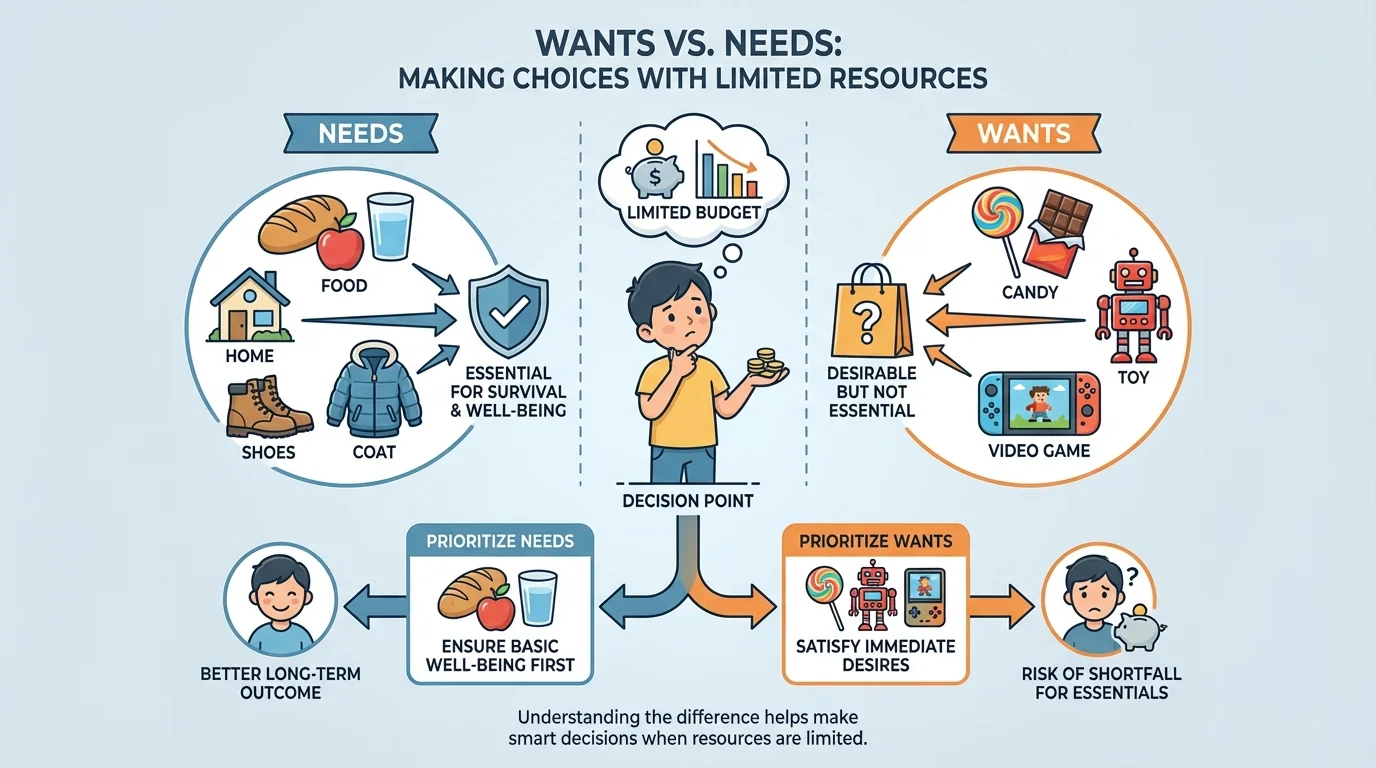
Need means something important for living, safety, and health.
Want means something extra that we enjoy but can wait.
Sometimes an item can feel very important because we like it a lot. But liking something does not always make it a need. This is why it is important to stop and think before buying.
People use the money they earn to pay for many things. They may need to buy food, clothes, or a place to live. This means they may not have enough money left for every toy, treat, or game they see. When money is limited, people make choices.
Limited resources means there is only so much money, time, or things to use. If a family has enough money for one item, they may have to wait for another item. Choosing one thing can mean not choosing something else.
When money is limited, needs usually come first. Families often buy the most important things before they buy extra things. This helps people stay fed, safe, warm, and ready for daily life.
This does not mean wants are bad. Wants can bring joy and fun. A toy, a game, or a sweet treat can be nice. But when there is not enough money for everything, needs should come before wants.
Everyday shopping choices help us practice smart thinking. As [Figure 2] illustrates, when there is only a small amount of money, one item may be the better choice because it helps more. A person might have to pick between two things instead of buying both.
Think about these examples. A healthy snack instead of a candy bar is often the better choice because it helps the body. New shoes instead of a new toy may be the better choice if the old shoes do not fit. A coat instead of a new game may be the better choice on a cold day because a coat keeps a child warm and safe.
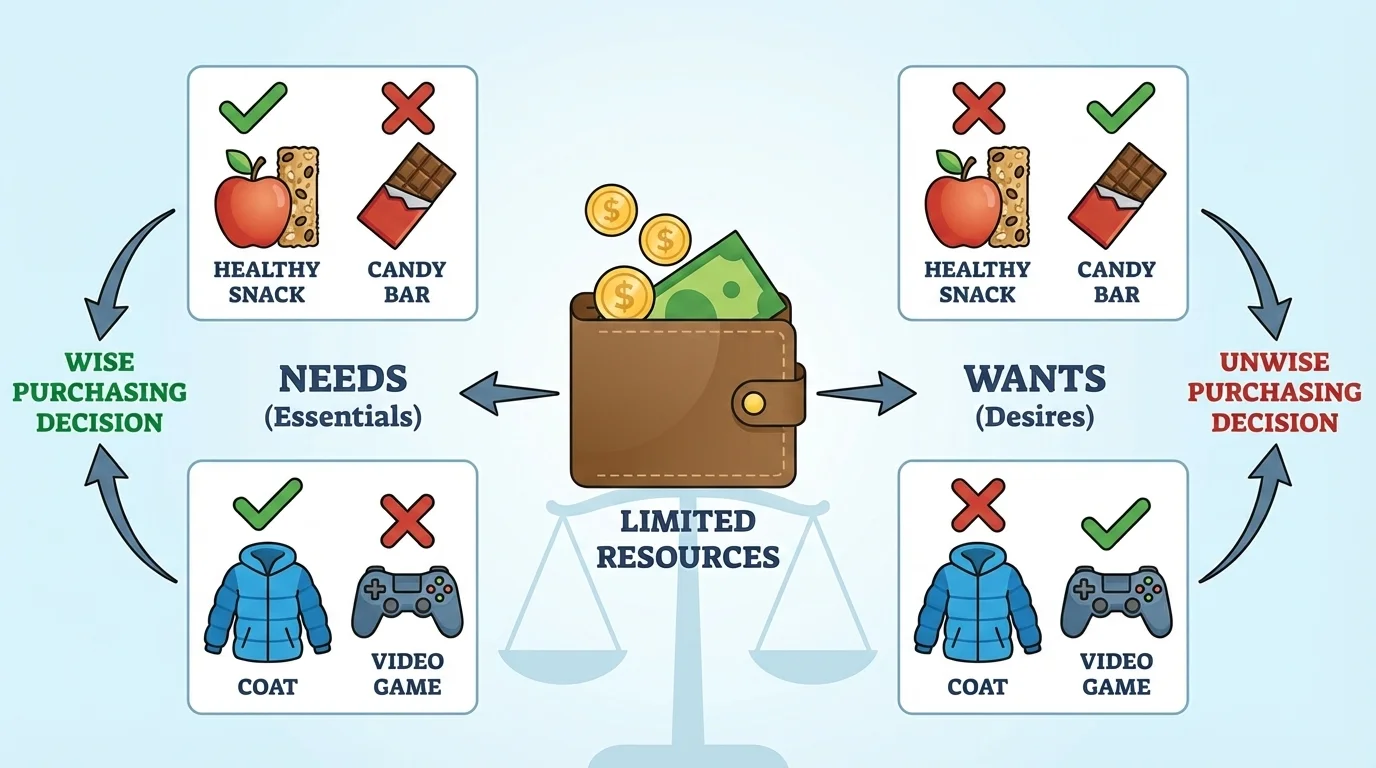
Example choices
Step 1: Ask, "Do I need this now?"
Step 2: Ask, "Will this keep me healthy, safe, or ready?"
Step 3: Choose the item that helps most when you cannot get both.
If a child is hungry after school, a healthy snack is a better first choice than candy. If a coat is missing in winter, the coat matters more than a game.
We can also compare choices in a simple way.
| Choice | Better First Buy | Why |
|---|---|---|
| Healthy snack or candy bar | Healthy snack | Helps the body grow and stay strong |
| New shoes or new toy | New shoes | Protects feet and helps with walking and playing |
| Coat or new game | Coat | Keeps the body warm and safe |
Table 1. Examples of choosing needs before wants when money is limited.
Later, when important things are already bought and there is money left, a family may decide to buy a want. That is a careful way to spend money. We can still enjoy wants, but not always first.
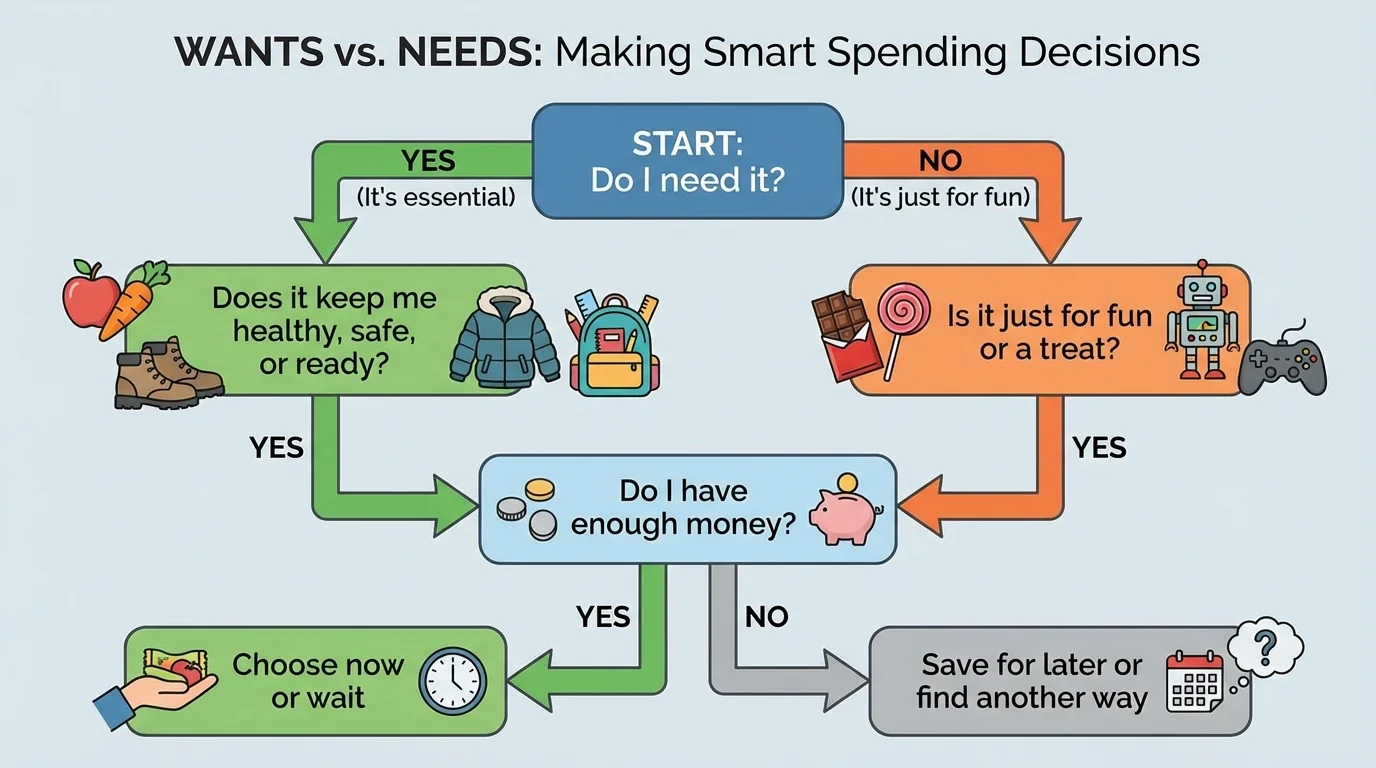
One simple way to decide is to ask three questions, as [Figure 3] shows: Is it a need? Does it keep me healthy, safe, or ready? Do I have enough money for it? These questions help us slow down and think.
If the answer is yes to the need question, it may be a good first choice. If the item is only for fun, it may need to wait. This helps people use money in a smart way.
Some choices change with time. Ice cream may be a want on one day, but warm boots can become a very important need on a snowy day.
When we look back at the shopping pictures in [Figure 1] and [Figure 2], we can see the same rule: buy the important thing first. That keeps people cared for before they spend money on extra things.
Not every family makes the same choice, and that is okay. One family may need to buy groceries first. Another family may need school shoes first. Another family may save money for a doctor visit, a coat, or bus rides.
A purchase is something that is bought. Sound purchasing decisions involve thinking carefully before buying. People ask, "Is this the best thing to buy right now?"
People earn money by working. Then they choose how to use that money. Because money is not unlimited, every purchase is a choice.
Sometimes children may feel sad when a want must wait. That feeling is normal. Waiting does not mean never. It just means a need comes first today.
Smart spending means using money carefully. It means choosing what is most important before choosing what is just for fun. A healthy snack, shoes that fit, or a warm coat are often smart first choices.
When money is limited, people make the best choice they can with what they have. The decision is not about picking the most exciting thing. It is about picking the most helpful thing.
"Buy what you need first, and wants can wait for another time."
That simple idea helps children and adults make wise choices every day. It helps people use the money they earn in a thoughtful way.
