Have you ever seen someone hand over coins or bills and then walk away with a snack, a toy, or a bus ride? That is one of the most important jobs of money. Money helps people get the things they need and want. It makes buying possible.
Money is what people use to pay for things. Money can be coins, bills, or money kept in a bank account and used with a card. When grown-ups work, they often earn money. Then they decide how to use it.
Money is something people use to buy things. Buy means giving money to get something. Earn means getting money for doing work.
Money is useful because people do not have to trade one toy for one apple or one shoe for one sandwich. Instead, they can use money. If a banana costs $1, a person gives $1 and gets the banana.
[Figure 1] People use money to buy goods and services. Goods are things you can touch. A ball, a book, milk, and shoes are goods. Services are jobs people do to help others. A haircut, a car wash, and a bus ride are services.
When you buy a good, you get an object. When you buy a service, you get help or work from a person. Both goods and services can cost money.
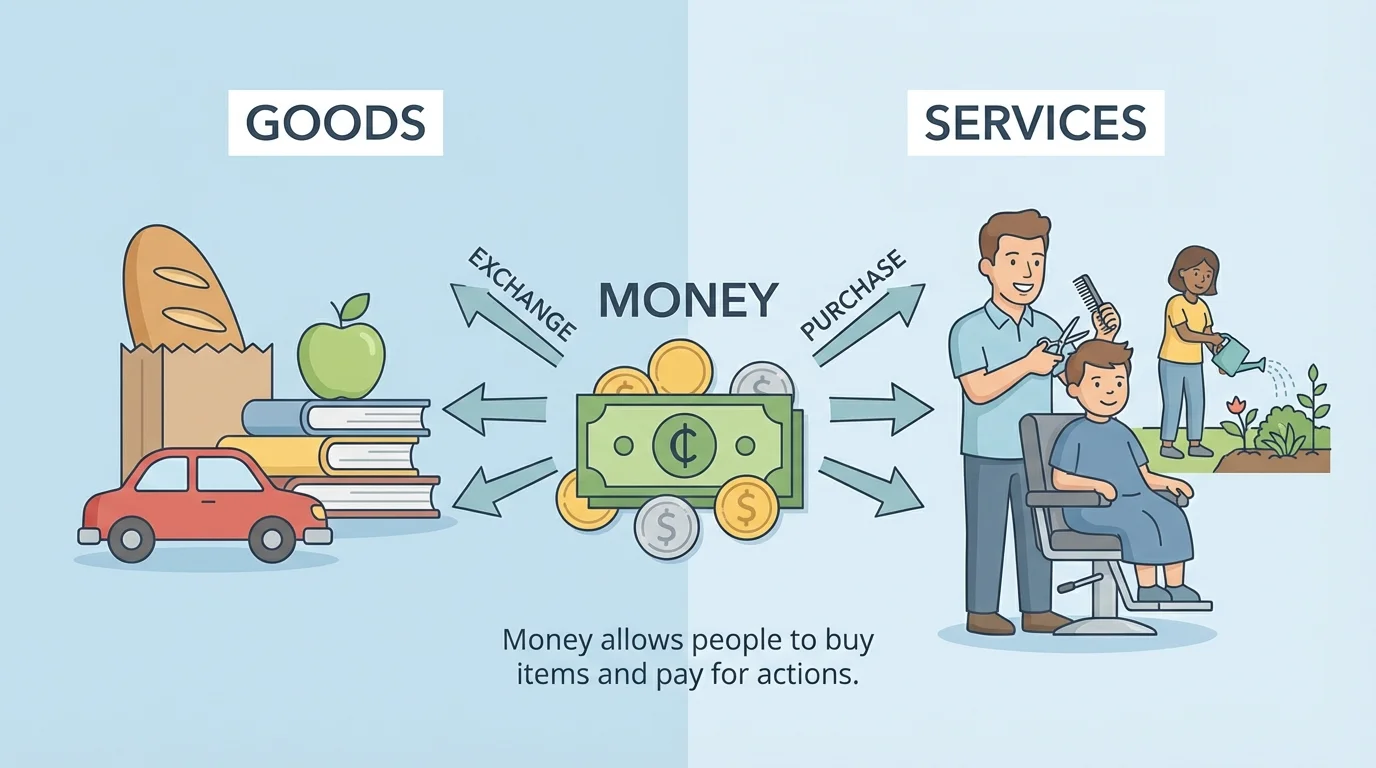
At a store, a family might buy bread and apples. Those are goods. At a barber shop, a person pays for a haircut. That is a service. Money helps people get both kinds of things.
Some things we use every day are services, not objects. Riding on a bus or getting help from a doctor means paying for someone's work and skill.
Even though goods and services are different, people use money for both. That is why money is so important in daily life.
[Figure 2] Buying is an exchange. One person gives money. The other person gives a good or a service. Money moves one way, and the thing you buy comes back the other way.
If a child buys one apple for $1, the child gives $1 to the store. The store gives one apple to the child. The money lets the child buy the apple.
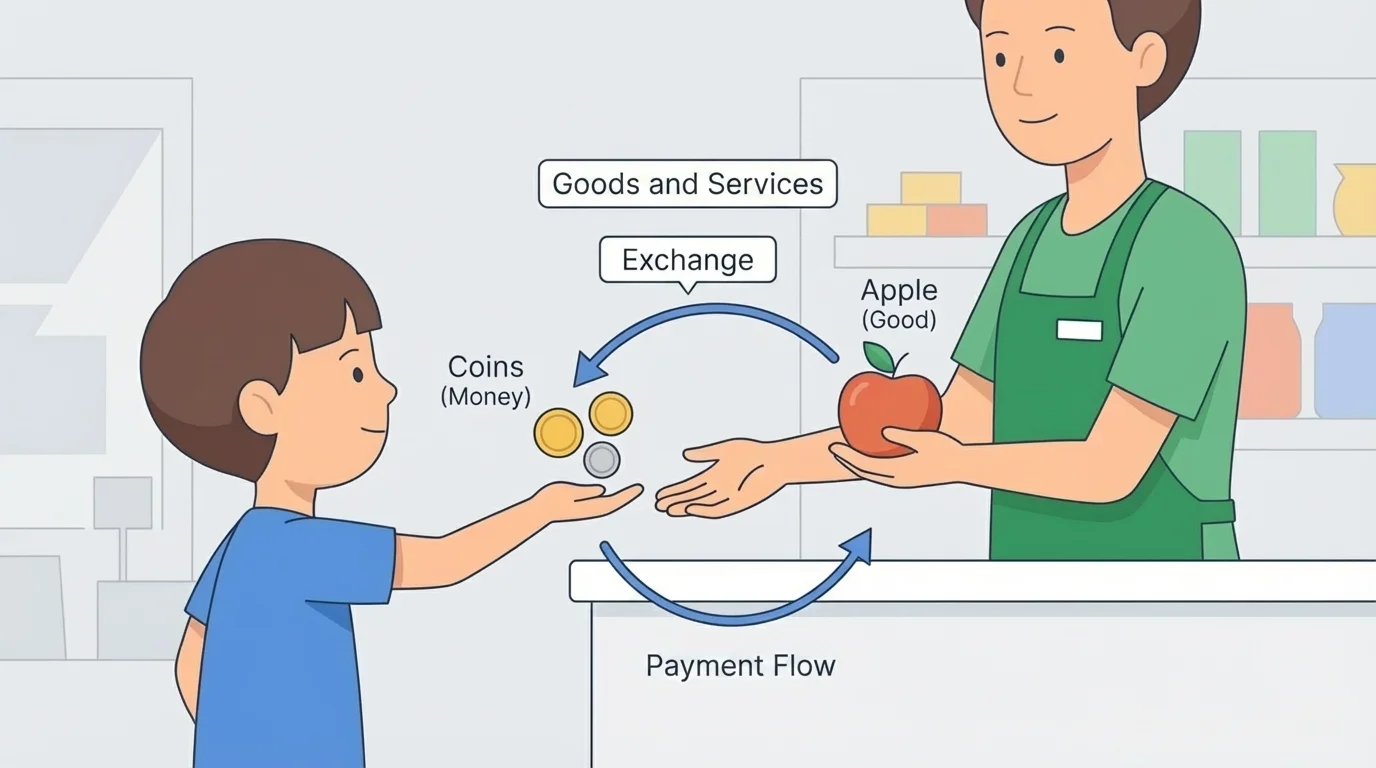
This is why money gives people the ability to buy goods and services. Without money, it would be much harder to get what we need. With money, people can choose what to buy.
Example of buying
Step 1: A parent has money from work.
Step 2: The parent goes to a store.
Step 3: The parent gives money for eggs and milk.
Step 4: The store gives the eggs and milk.
The money makes the exchange happen.
We can see the same idea later when people pay for help instead of objects. As in [Figure 2], money is what allows the exchange to happen.
[Figure 3] People do not always have enough money to buy everything they see. That means they must make a choice about how to use their money. They may choose food first, then save the rest, or buy one thing now and wait for another thing later.
Some things are needs. Food, clothes, and a home are needs. Some things are wants. A new toy or extra candy may be wants. People often use money for needs first.
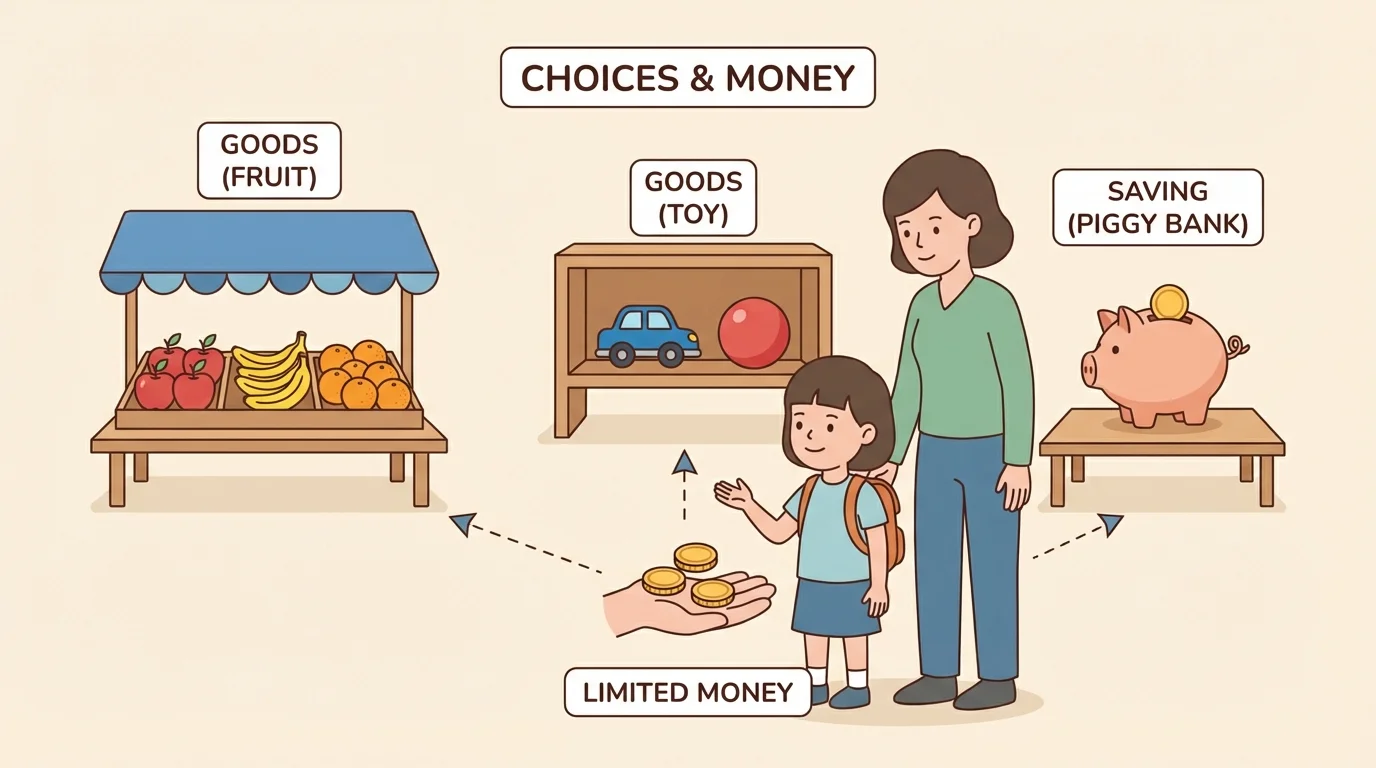
Sometimes people also save money. Saving means keeping money to use later. If someone wants a bigger toy that costs more, they may wait and save instead of spending right away.
Why choices matter
Money is limited, so people think carefully before spending it. They ask, "Do I need this now?" or "Should I save for later?" Making choices helps people use money wisely.
A family might choose to buy fruit, bread, and soap before buying a game. That does not mean games are bad. It means people make decisions about what matters most at the time. The limited coins in [Figure 3] help show why choices are important.
Money is part of many everyday moments. At the grocery store, people buy goods like rice, juice, and bananas. On a bus, people pay for a service that takes them somewhere. At a doctor's office, people may pay for help to stay healthy.
A baker earns money by making bread. A teacher earns money by helping children learn. A firefighter, a bus driver, and a dentist also do services. Then they use the money they earn to buy the things they need and want.
| What is bought? | Type | Example |
|---|---|---|
| Bread | Good | Something you can hold and eat |
| Shoes | Good | Something you can wear |
| Haircut | Service | Work someone does for you |
| Bus ride | Service | Help getting from one place to another |
Table 1. Examples showing the difference between goods and services.
When people earn money and spend it, they are making choices. They think about what to buy now and what to buy later.
Good money habits start with simple thinking. People can ask, "Do I have enough money?" "Is this something I need?" "Should I save my money for later?" These questions help people make careful choices.
You already know that people need food, clothing, and shelter. Money helps people buy many of these important things.
Children may not earn money from a job yet, but they can still learn how money works. They can notice that money helps families buy groceries, pay for rides, and get help from workers. They can also learn that buying one thing may mean waiting to buy something else.
Money is powerful because it gives people a way to buy both goods and services. It helps turn work into choices and choices into the things people use every day.
