What happened when you were a baby? What are you doing right now? What might you do later? These are all questions about time. Time helps us talk about things that already happened, things happening now, and things that will happen later.
The past, present, and future are important time words. [Figure 1] shows one child at different times. Time words tell when something happens. The past means before now. The present means now. The future means later, not yet.
You were smaller in the past. You are listening or playing in the present. You may grow taller in the future. A birthday party from last week is in the past. Snack time right now is in the present. Going to the park later is in the future.
Past means what already happened. Present means what is happening now. Future means what will happen later.
We can use these words every day. If you say, "I ate breakfast," you are talking about the past. If you say, "I am building a tower," you are talking about the present. If you say, "I will take a nap," you are talking about the future.
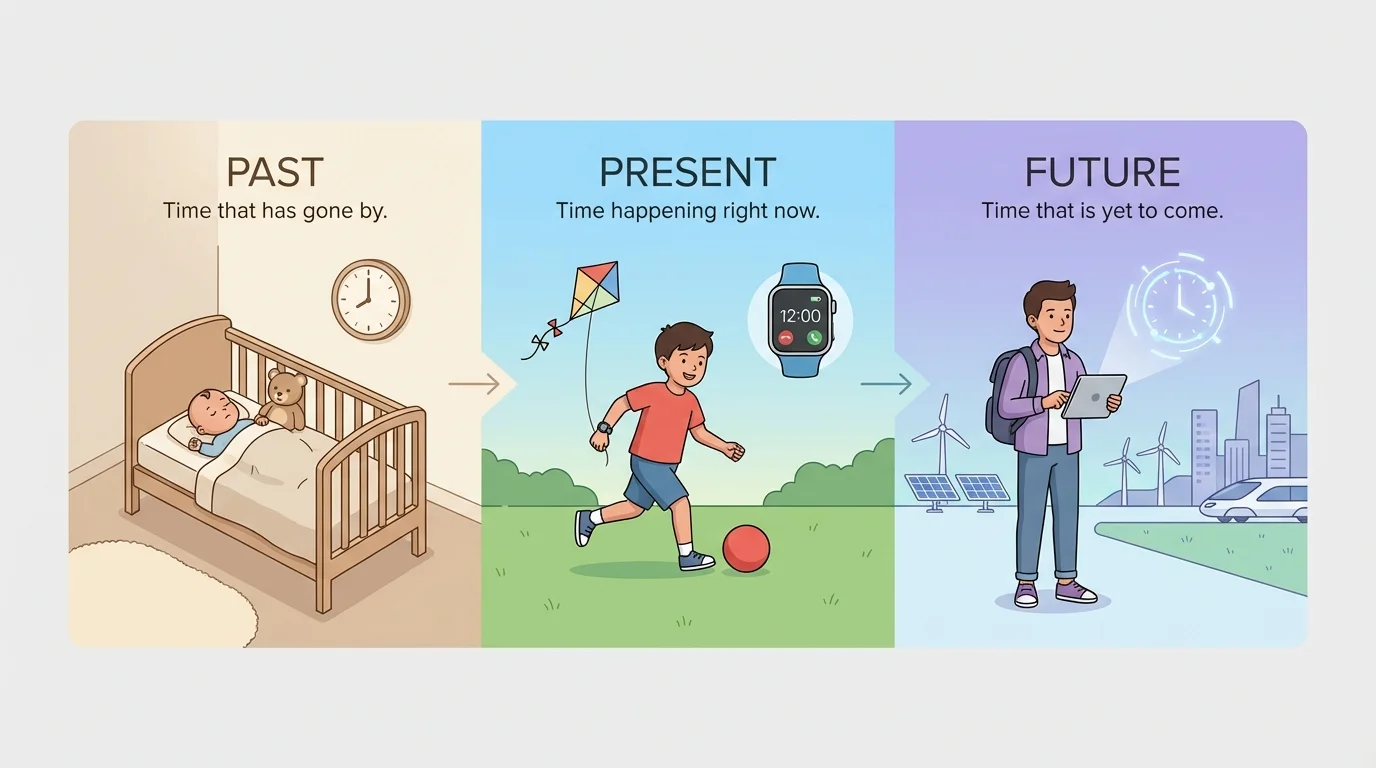
People and things do not stay the same forever. Change happens over time. A baby grows into a child. A tiny plant grows into a flower. A new toy may become old and worn after lots of play.
Your family changes too. In the past, you may have slept in a crib. In the present, you may sleep in a bed. In the future, you may learn new jobs you can do by yourself, like tying shoes or helping set the table.
Baby teeth are a great sign of change over time. Many children lose baby teeth and grow bigger teeth later.
Places can change as well. A tree can start small and grow tall. A classroom may look different after new pictures are put on the wall. Seasons change too. A tree may have green leaves, then fall leaves, then bare branches, then new buds again.
When we notice change, we are learning an important idea in history: things can be different now from the way they were before. The child in [Figure 1] helps us see that one person can look different as time goes by.
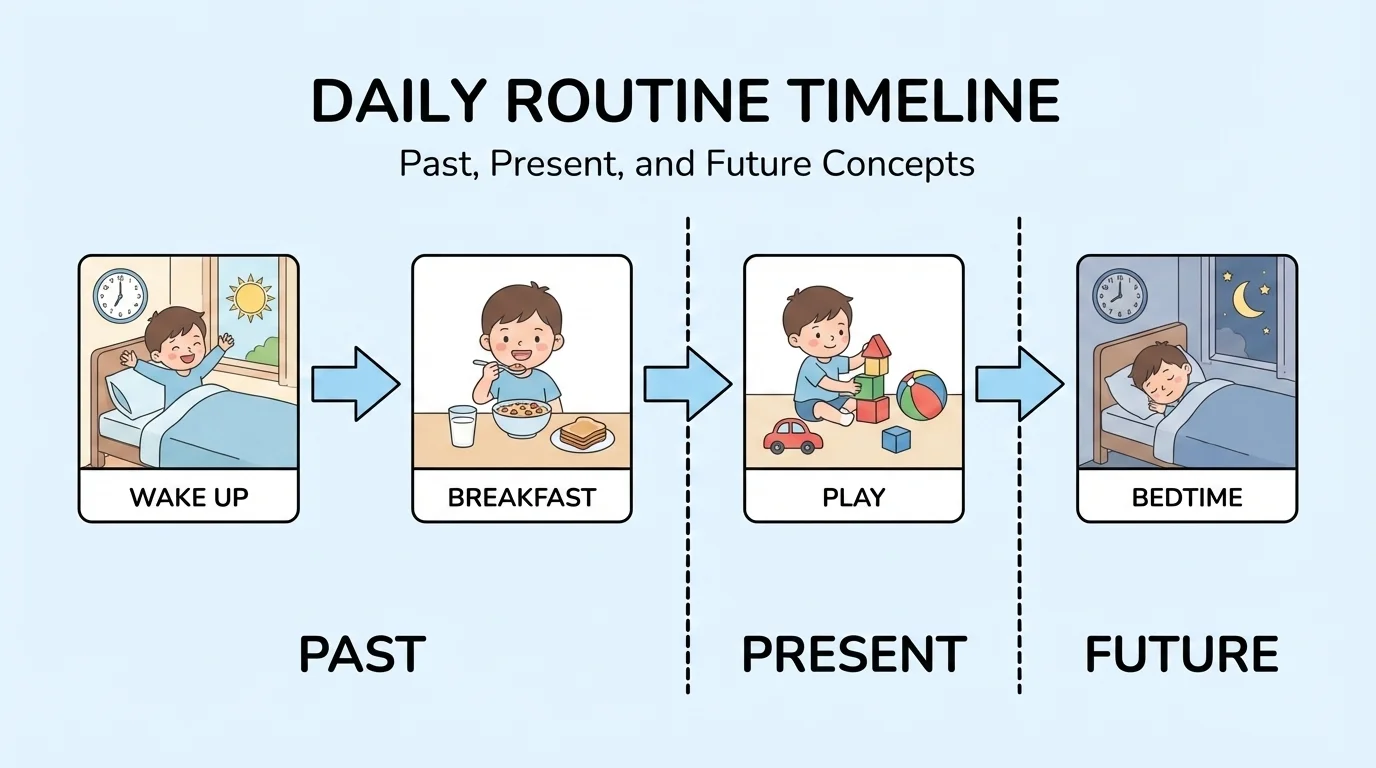
History also helps us put events in sequence, or order. [Figure 2] shows a day of activities in order. We can say what happened first, what happened next, and what happened last.
Think about getting ready in the morning. First you wake up. Next you get dressed. Then you eat breakfast. Last you go to school or start your day. When we put events in order, we understand the story of what happened.
Example of order
Here is a simple day:
Step 1: First, Maya wakes up.
Step 2: Next, Maya brushes her teeth.
Step 3: Then, Maya plays outside.
Step 4: Last, Maya goes to bed.
This is the sequence of Maya's day.
Sometimes we also use the words before and after. Breakfast comes before lunch. Bedtime comes after dinner. These words help us understand when events happen.
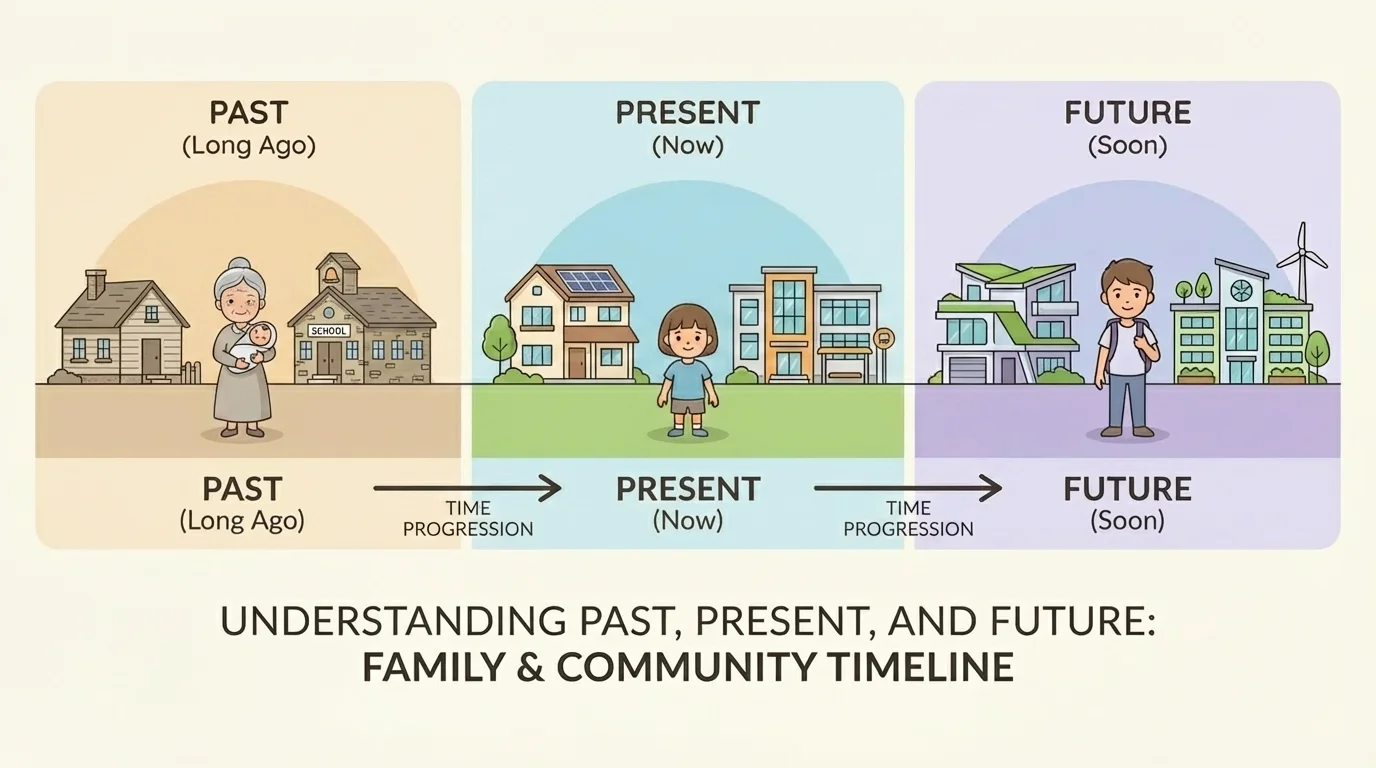
History is learning about what happened before now. Some history is about your own life, and some history is about your family, school, and community. [Figure 3] shows family and community change over time. History looks at long ago and compares it with today.
Old photos are one way we learn about the past. A picture of you as a baby shows what you looked like before. A picture of a grandparent as a child shows a time long ago. Stories told by family members can also help us learn what happened in the past.
How history helps us
History helps us notice change, remember events in order, and understand that people lived before us. Even young children can begin history by talking about baby pictures, family stories, and what happened yesterday.
Schools and neighborhoods change too. Maybe a playground was built before you came to school. Maybe your home had a different paint color in the past. Maybe in the future a new tree will grow in the yard. History helps us think about these changes.
Some time words are easy to use every day. Yesterday is part of the past. Today is the present. Tomorrow is part of the future.
You might say, "Yesterday I visited Grandma." That is the past. You might say, "Today I am painting." That is the present. You might say, "Tomorrow I will go to the library." That is the future.
When you tell a story, it makes sense when events are in order. Using words like first, next, and last helps other people understand your story.
As we saw in [Figure 2], a day can be be placed in order from morning to night. In the same way, your life has times in order too: baby, child now, and older later. And as [Figure 3] shows, families and places change over longer stretches of time.
Learning about past, present, and future helps you understand your world. It helps you talk about memories, describe what is happening now, and think about what may happen later.
