You go to many places every day, and each place has a special job. One place is for resting, one is for learning, and some are for playing, helping, and visiting. When we learn about the places around us, we begin to understand where we belong and how we connect with other people.
We live and learn in different places. Some places are very close, like your home and your classroom. Some places are bigger, like your school, your neighborhood, and your community. These places are all around you, and they are all important.
Your home is where you live. Your classroom is where you learn with your teacher and friends. Your school is the bigger place that has many classrooms. Your neighborhood is the area near your home. Your community is the larger group of people and places that work together.
Home is where a person lives. Classroom is a room where children learn. School is a place with many rooms and many people who help children learn. Neighborhood is the area near where you live. Community is a larger group of people, places, and helpers in the area.
These words help us talk about where we are and how places fit together.
A home is a special place where people rest, eat, sleep, and spend time together. Homes can look different, as shown in [Figure 1]. Some children live in a house. Some live in an apartment. Some live with many family members, and some live with fewer people.
Inside a home, there may be a kitchen, a bedroom, a bathroom, and a living room. A home helps us feel safe and cared for. People at home may cook food, read stories, clean up, and help one another.
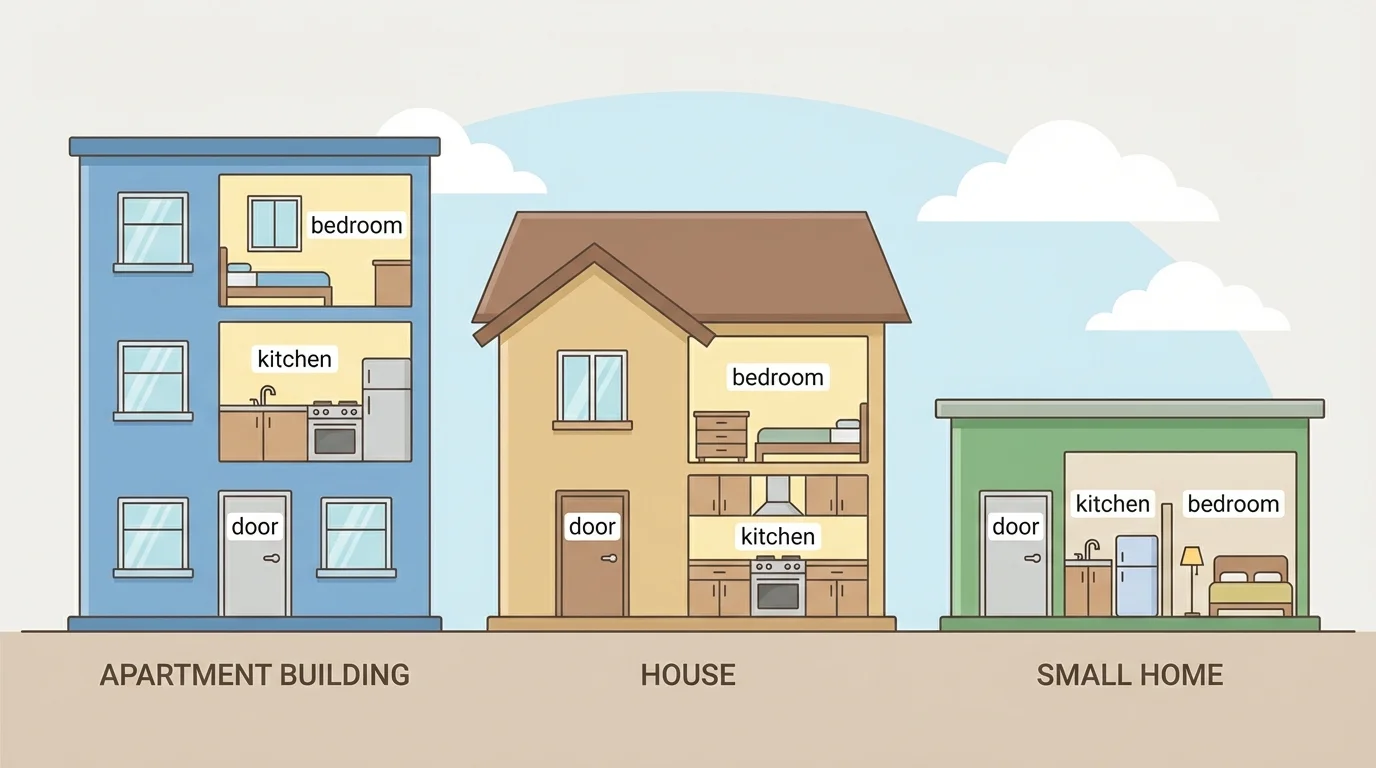
No two homes are exactly the same, and that is okay. What matters is that a home is a place where people live and belong.
Many children around the world live in homes that look different from one another. Some homes are tall apartments in cities, and some are houses near farms, beaches, or mountains.
When children talk about their homes, they can notice rooms, people, pets, and routines. Later, when we think about bigger places, the idea from [Figure 1] still helps us remember that places can look different but still serve the same purpose.
Your classroom is one room inside your school, as shown in [Figure 2]. In the classroom, children listen, sing, build, draw, read, and learn together. The teacher helps students learn and care for one another.
The school is bigger than the classroom. A school may have a playground, an office, a cafeteria, a library, hallways, and bathrooms. Many people help at school, such as teachers, principals, nurses, cooks, and custodians.
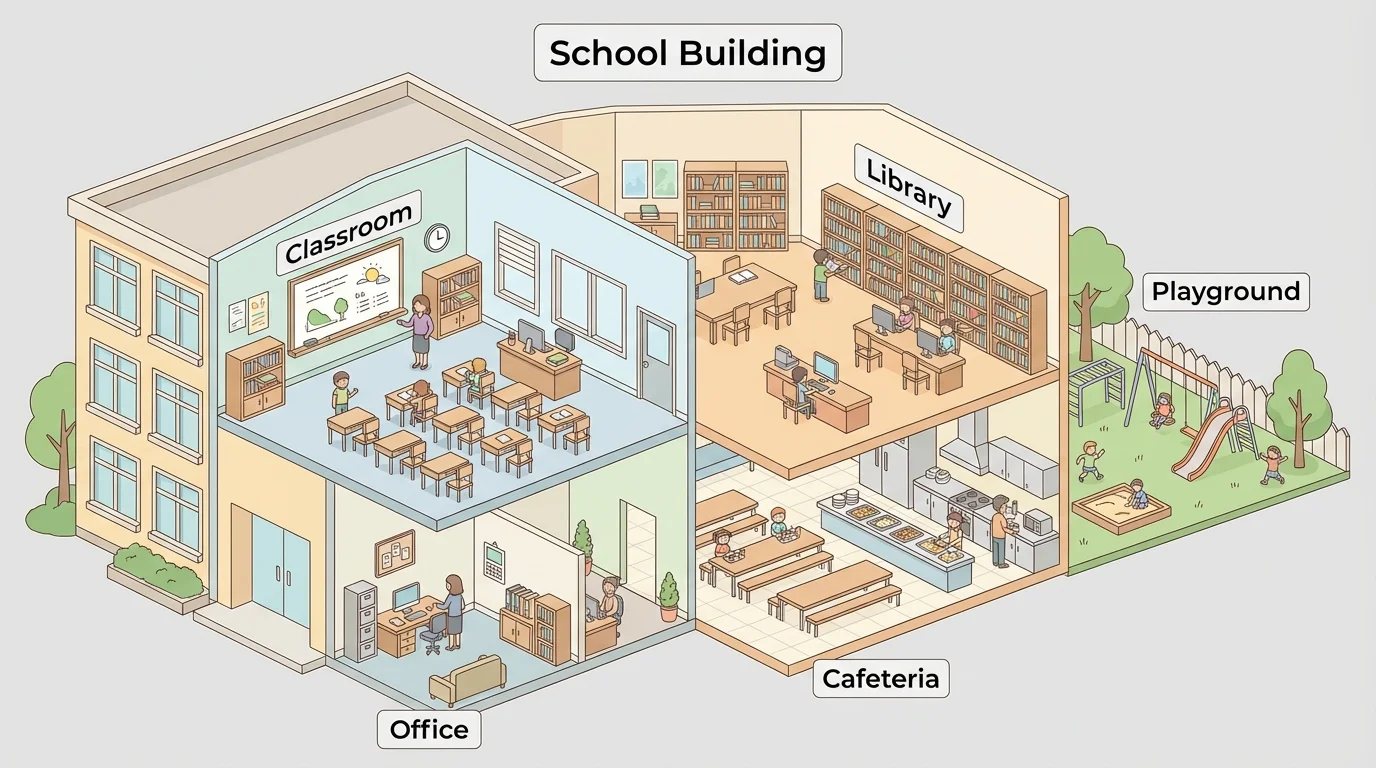
It is helpful to know important places in school. Children learn where to hang their things, where to eat, where to play, and where to go with their class. Knowing the school helps children feel ready and safe.
Places inside places are an important idea in geography. A classroom is part of a school. This helps children understand that a small place can belong inside a bigger place.
School is also a shared place. We take turns, use kind words, and help keep the room clean. When children walk in line, put toys away, and listen to helpers, they are caring for a place that belongs to many people. The relationship in [Figure 2] shows that the classroom is not alone; it is connected to the whole school.
A map can help us see a neighborhood, and [Figure 3] shows a simple one with places near home. A neighborhood is the area around where you live. It may have homes, streets, trees, parks, sidewalks, stores, and other buildings.
People in a neighborhood may walk, ride in cars, push strollers, or ride buses. Children may notice familiar places such as a corner, a mailbox, a crosswalk, or a playground. These places help children know where they are.
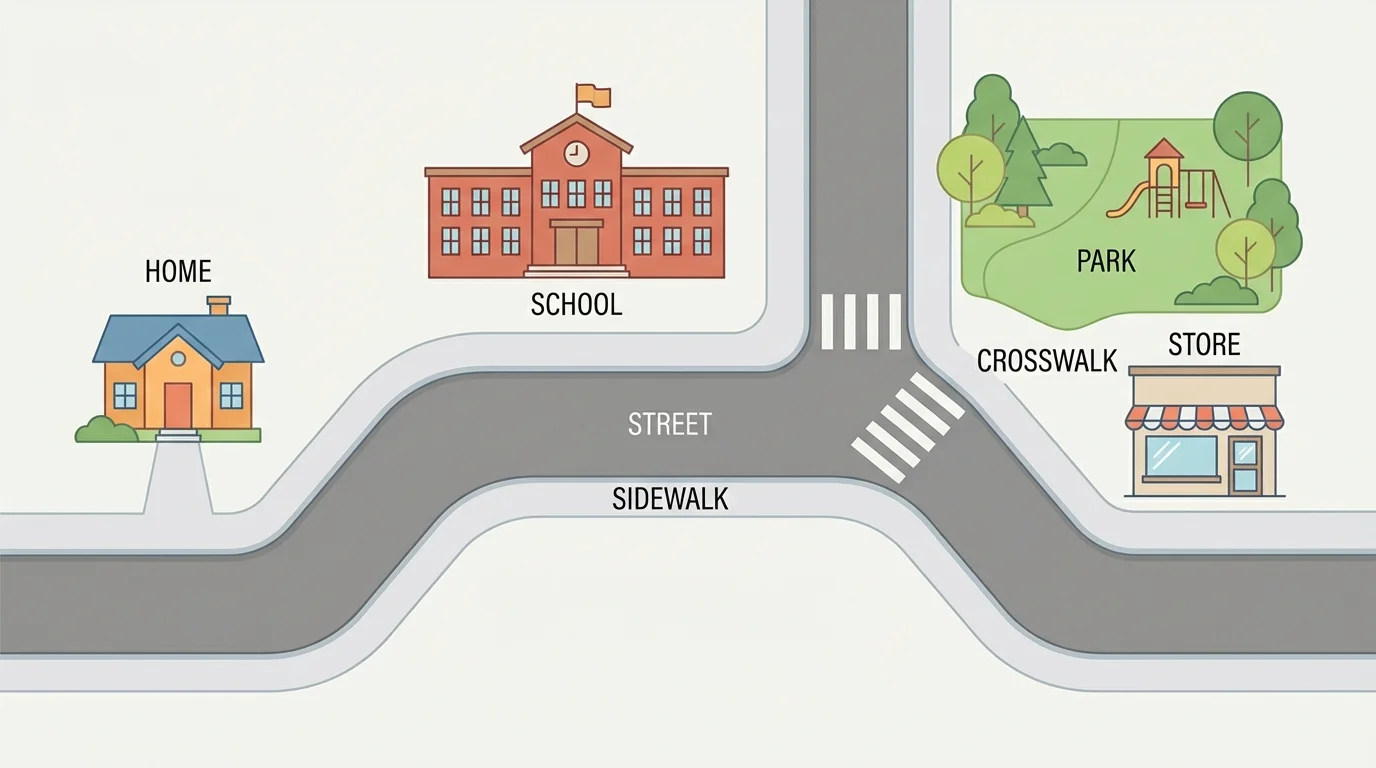
Neighborhoods can be busy or quiet. Some have tall buildings. Some have many yards and open spaces. Some are near rivers or beaches. Even when neighborhoods look different, they are all places where people live and move around.
Children can learn simple location words in the neighborhood, such as near, far, next to, and across. For example, a park may be near a home, and a store may be across the street. Looking again at [Figure 3] helps children see how places can be beside one another and connected by roads and sidewalks.
A community is bigger than just one home or one school. A community includes many people, many places, and many helpers. People in a community live, work, learn, shop, play, and help each other.
Communities have important helpers. Firefighters, police officers, doctors, nurses, teachers, mail carriers, bus drivers, librarians, and store workers all help the community. These helpers make daily life safer, healthier, and easier.
Community example
A child wakes up at home, goes to school, plays at the park, and sees a bus driver and a librarian. This one day shows many parts of a community working together.
Step 1: The child starts at home.
Step 2: The child travels through the neighborhood to school.
Step 3: The child uses places and services in the community, such as the park or library.
Each place and person has a job, and all of them are connected.
Communities can be small towns, large cities, or places in between. Some communities have farms. Some have many stores and tall buildings. All communities include people who share spaces and responsibilities.
Some places fit inside bigger places. Your home is one place where you live. Your classroom is one room. Your classroom is inside your school. Your school is in a neighborhood. Your neighborhood is part of a community.
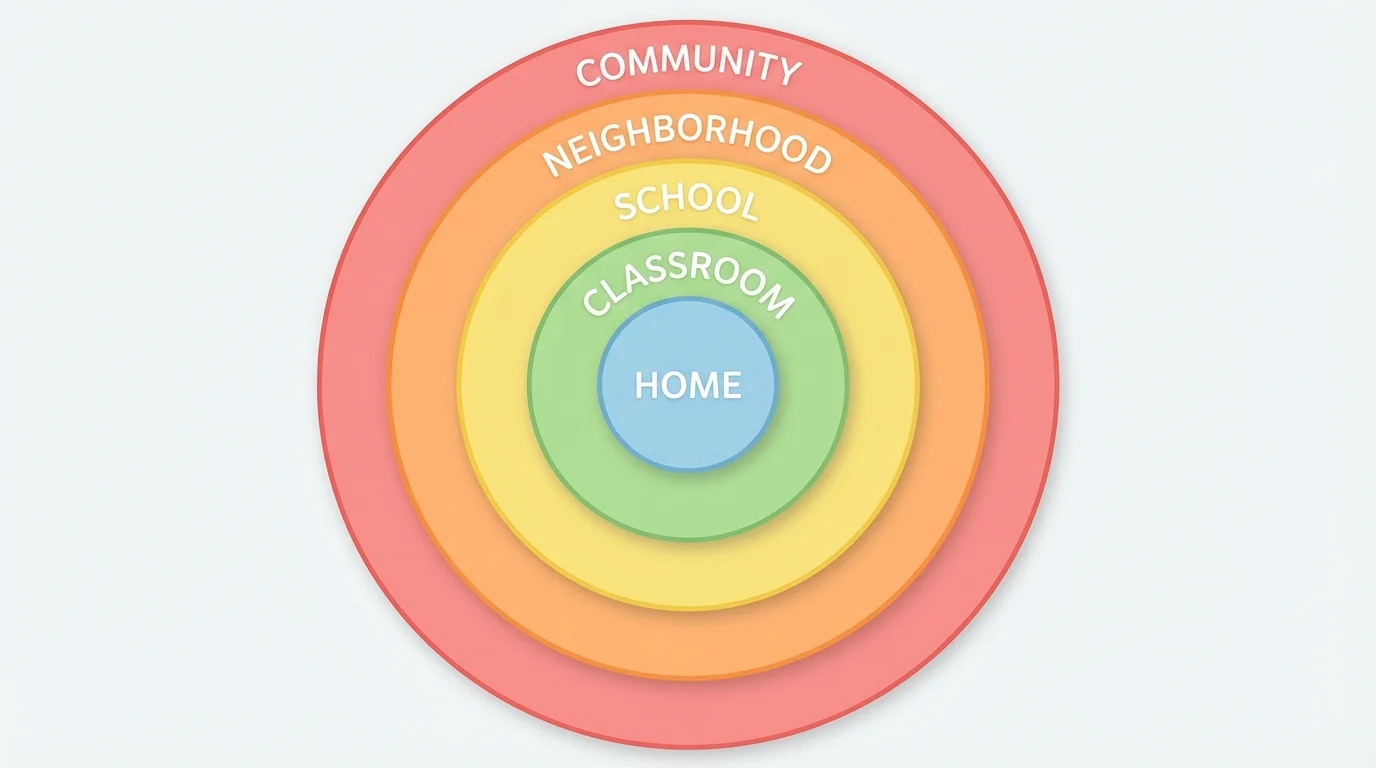
[Figure 4] shows this idea clearly. This way of thinking helps children build spatial understanding. Spatial understanding means knowing where places are and how they connect. It helps children answer simple questions such as: Where am I? What is near me? What place is part of a bigger place?
Children also learn that they move from place to place during the day. They may go from home to school, from classroom to playground, or from neighborhood to library. The order of these places matters. Looking back at [Figure 4] helps children see that daily life happens across connected spaces.
Each place has ways to stay safe and show care. At home, children may put toys away and listen to trusted adults. At school, children may walk carefully, wash hands, and follow directions. In the neighborhood, children may hold a grown-up's hand, stop at the curb, and use the crosswalk. In the community, children can use kind words and respect shared places.
Caring for places also means caring for people. When we clean up, wait our turn, and use gentle hands, we help everyone enjoy home, school, and community spaces.
You already know that places have names and people have jobs. Now you are connecting those ideas: named places are linked together, and people help in each one.
Knowing about home, classroom, school, neighborhood, and community helps children feel confident. They begin to understand where they are, who helps them, and how the world around them is organized.
