Have you ever wanted a toy and a snack at the same time? Sometimes people want many things, but they have to choose. Making choices is part of everyday life. Children and grown-ups choose what to eat, what to wear, and what to buy.
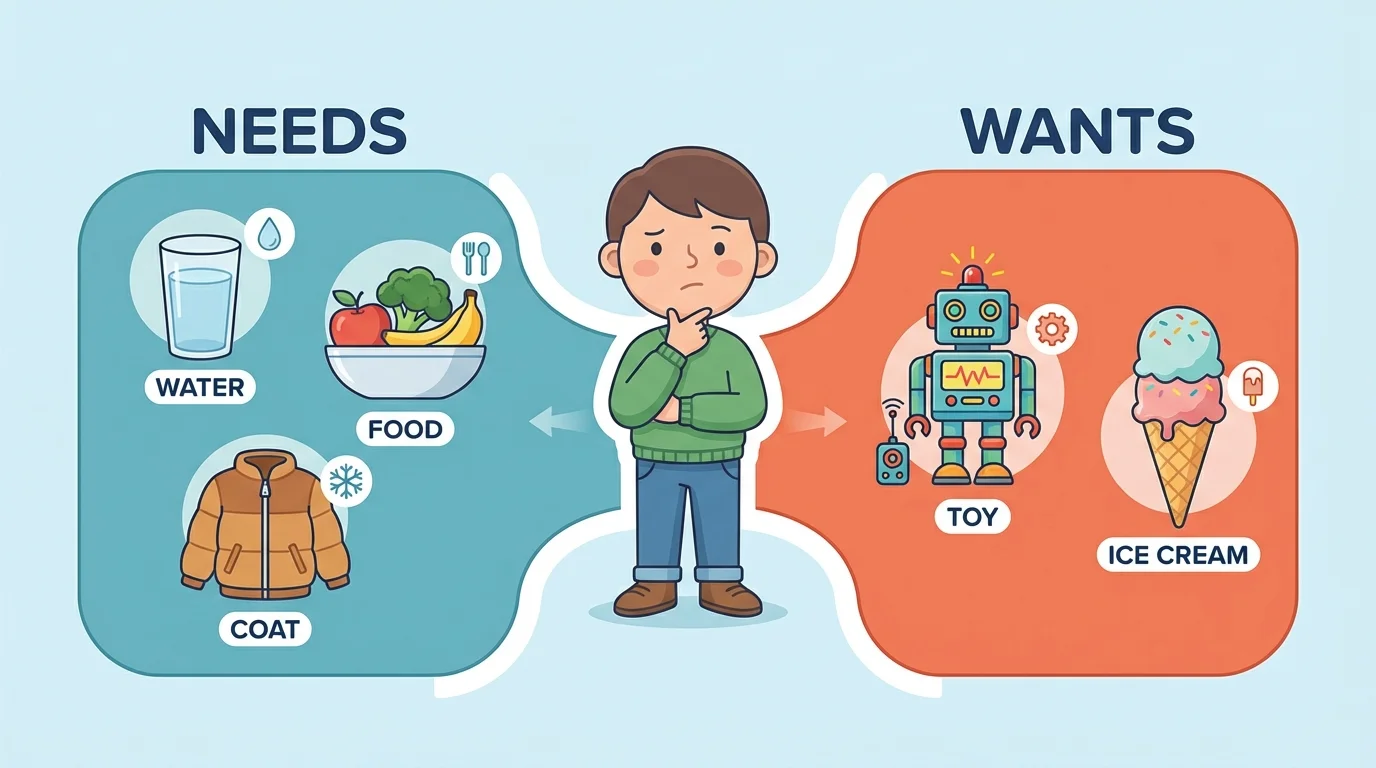
A need is something people must have to live and be well. Food, water, a home, and clothes are needs. A want is something people would like to have, but they can live without it. A toy, a balloon, or a special treat can be wants. This simple idea is easier to see in [Figure 1], where important things and extra things are placed in different groups.
Sometimes one thing can feel very important, but we still ask, "Do I need it, or do I want it?" A warm coat on a cold day is a need. A shiny new hat with stars may be a want. Both can be nice, but needs come first.
Need means something necessary for living, safety, or health.
Want means something extra that a person would like to have.
Choice means picking one thing from two or more things.
Families often make sure needs are met before wants. They may buy milk, bread, and fruit before buying candy or a new game. That does not mean wants are bad. It means people think carefully about what is most important first.
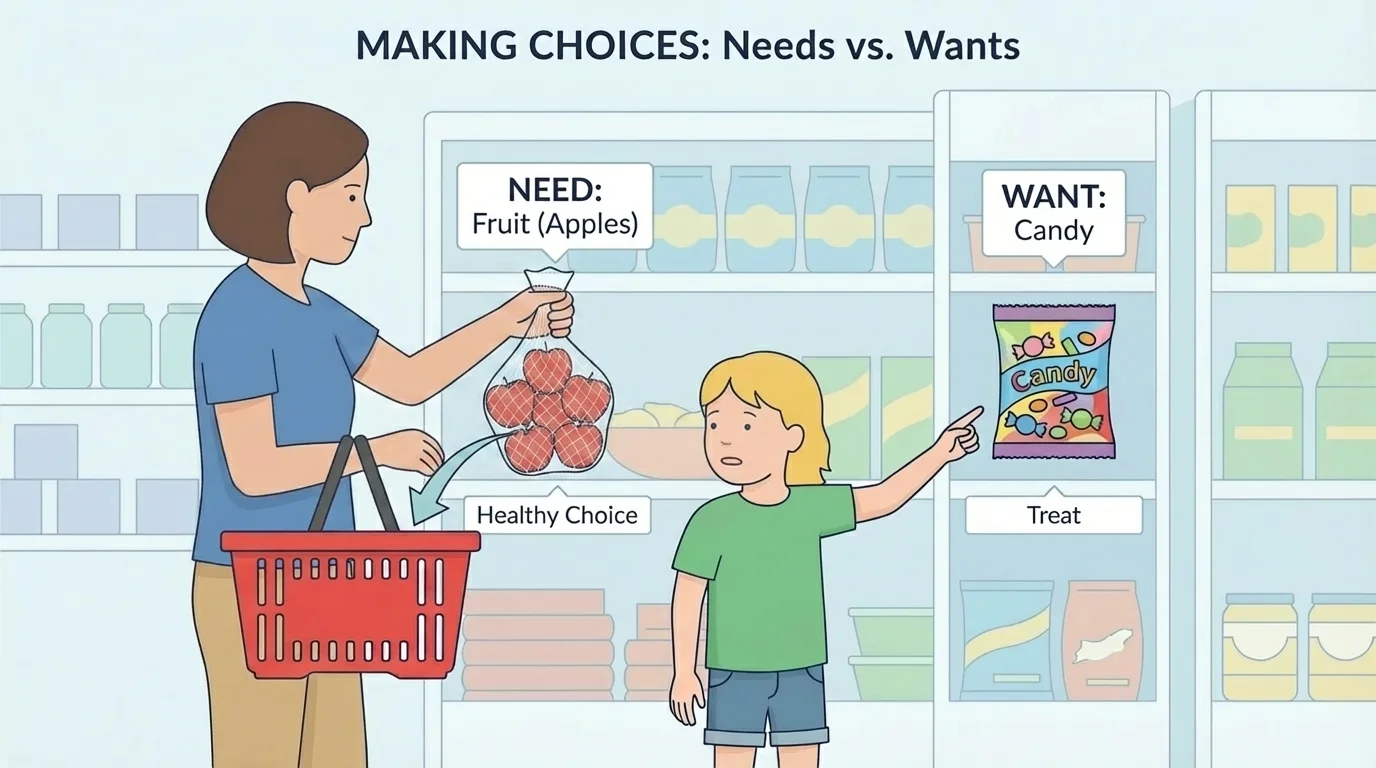
People have many wants, but they cannot always get all of them. This is why they make a choice. As [Figure 2] shows, if a family can pick only one item, they choose the one that helps most. A family may choose apples instead of candy because food that helps the body grow is more important.
Choosing one thing often means waiting for another thing. If a child picks crayons today, the child may wait until another day for stickers. If a family pays for shoes, they may wait to buy a toy. Choosing does not always feel easy, but it helps people use what they have wisely.
Even very young children make economic choices. Picking one snack from two choices is a small example of decision-making.
When people choose, they often ask simple questions. Is it safe? Is it healthy? Do we need it now? Can we wait? Those questions help people make better decisions.
At home, people choose how to use food, time, and money. A family may cook rice and vegetables for dinner instead of buying cookies. A child may choose to wear boots in the rain instead of sandals. These choices help needs get met.
At the store, people look at what they need and what they want. They may buy soap, eggs, and socks first. Then, if they still have enough, they may buy flowers, a toy car, or a sweet drink. In this way, needs and wants are not the same, even though both matter to people.
Choosing means giving up something else. When a person picks one thing, another thing may need to wait. If a family buys healthy lunch food, they may not buy a stuffed animal on that trip. This helps children understand that choices are about deciding what is most important right now.
The same idea happens with time, not just with money. A child may choose to rest when tired instead of playing longer. A parent may choose to wash clothes before watching a show. Good choices help people take care of themselves and others.
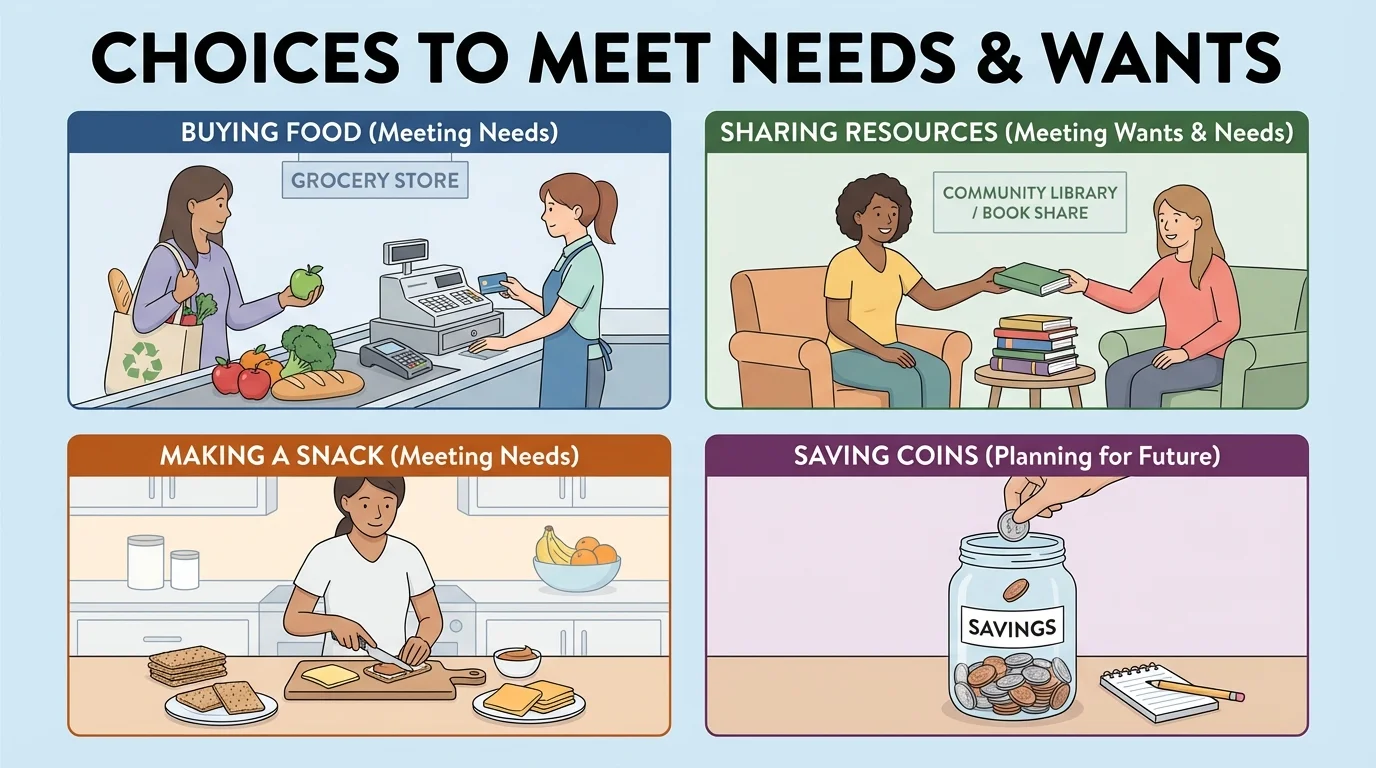
People can meet needs and wants in different ways. Goods, such as food, shoes, and toys, are things people can use or hold. Services, such as a doctor helping a child or a bus driver giving a ride, are things people do for others. [Figure 3] shows several ways people meet needs and wants in everyday life.
One way is to buy things. Another way is to share. A family can share books, food, or crayons. People can also make things, such as a snack, a drawing, or a blanket. Sometimes people save and wait. A child may put coins in a jar and wait before getting a small toy. Sometimes people ask for help from family, friends, teachers, or community helpers.
Everyday examples of choices
Step 1: A child is thirsty.
The child chooses water. Water is a need because the body needs it.
Step 2: The child also wants juice.
The juice can wait. The child gets the need first.
Step 3: Later, the child may have juice if it is available.
This shows that needs often come before wants.
These ways help people solve problems. If a book is too expensive to buy, a family can borrow one from a library. If a child wants a picture for the wall, the child can make one with paper and crayons. People do not meet needs and wants in only one way.
Good choices help people stay safe, healthy, and fair. If someone is hungry, choosing fruit, bread, or soup helps the body more than choosing only candy. If it is cold outside, choosing a coat helps more than choosing dress-up clothes. These choices meet needs better.
Good choices can also help other people. Sharing toys, waiting for a turn, and helping clean up are choices that make life better for everyone. When children learn to think about needs first, they begin to understand how people care for themselves and their families.
You already know that people use things every day. This topic adds a new idea: people often must decide which things to use, buy, share, or wait for.
When you notice choices around you, you can see economics in real life. Buying groceries, saving coins, borrowing a book, and picking boots for a rainy day are all examples of people making choices to get their needs and wants met. The needs-and-wants idea from [Figure 1] helps us understand why some choices come first, and the store choice in [Figure 2] reminds us that choosing one thing may mean waiting for another.
