Have you ever noticed that no two people are exactly the same? One child may love singing, another may love blocks, and another may be very good at helping a friend feel better. That is wonderful. Our families, classrooms, and communities become stronger when people bring different ideas, talents, and experiences.
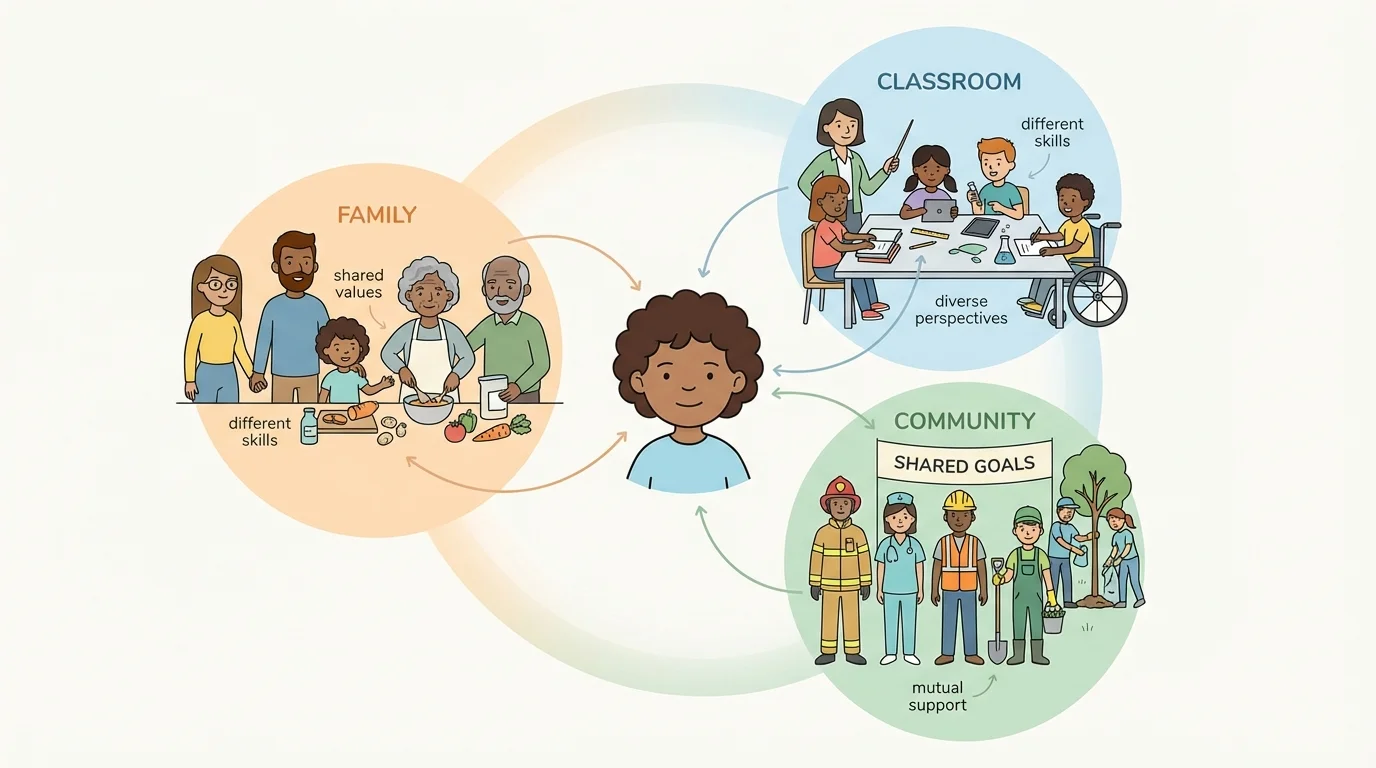
Each child belongs to more than one group. A family is a group of people who care for one another. A classroom is a group of children and teachers who learn together. A community is a bigger group of people who live, work, and help in the same place.
These groups may look different from one another. Some families are big, and some are small. Some children live with parents, grandparents, siblings, or other caring adults. Every family matters. In a classroom, some children may speak a lot, and some may be quiet. In a community, people may have many jobs, such as teacher, doctor, firefighter, cook, or bus driver.
Similarities are ways people are alike.
Differences are ways people are not the same.
Respect means treating other people with kindness and care.
Even when groups are different, everyone can belong. Belonging means knowing, "I am part of this group, and I matter here."
People can be alike and different at the same time. We may have the same favorite snack, like the same story, or enjoy playing outside. We may also have different hair, different skin colors, different homes, different languages, and different ways of moving, learning, or talking.
[Figure 2] Differences are not problems to hide. Differences are part of what makes each person special. A child who uses pictures to communicate, a child who speaks more than one language, and a child who loves to draw all bring something important to the group. Similarities help us connect, and differences help us learn.
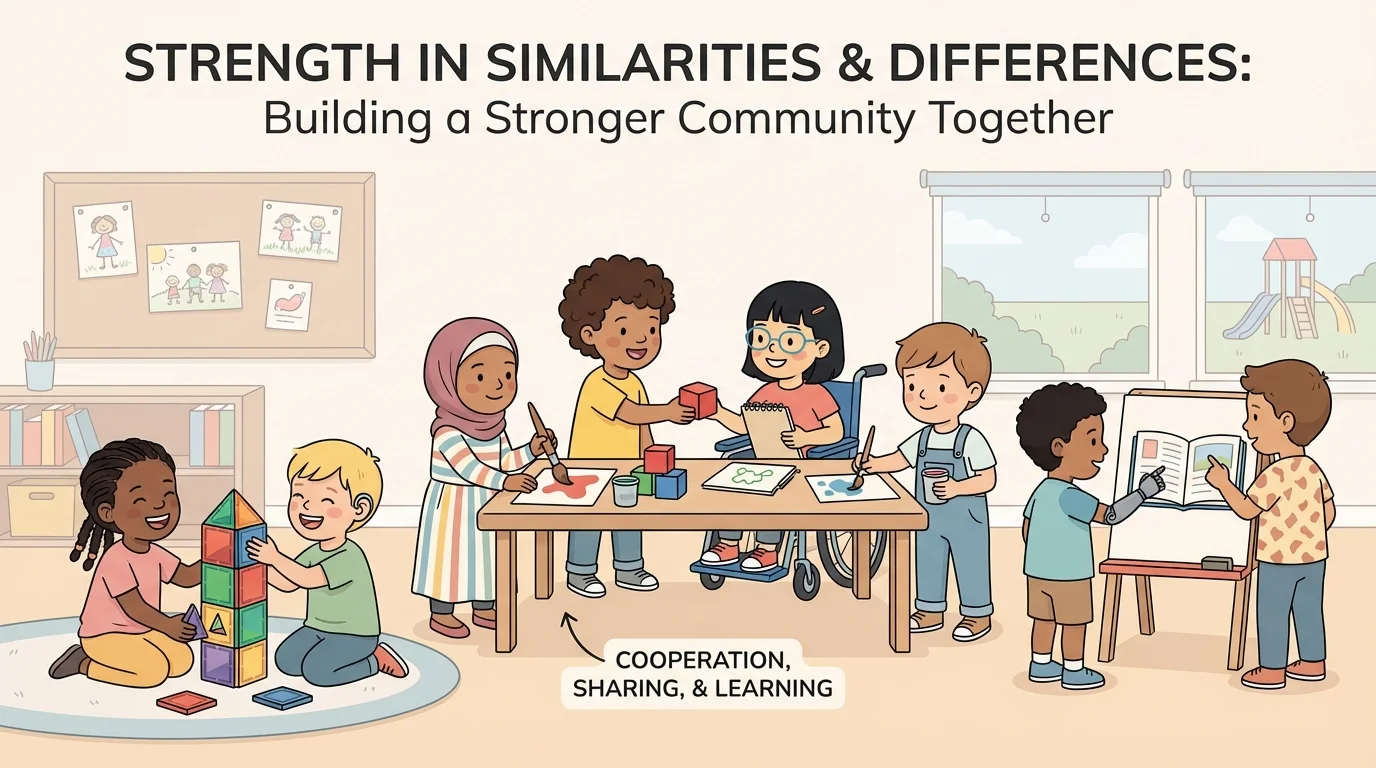
Sometimes we notice a difference first. That is normal. What matters is how we act. We can be curious in a kind way, listen carefully, and remember that every person deserves care and respect.
Children all over the world play, laugh, learn, and need love. People may do these things in different ways, but the need to belong and be cared for is shared by many people.
When we learn about one another, our world gets bigger. We hear new words, taste new foods, listen to new music, and see new ways to solve problems.
Groups are stronger when people help in different ways. In a classroom, one child may be good at cleaning up, another may be good at comforting a sad friend, and another may be good at finding missing crayons. In a family, one person may cook, another may fix things, and another may tell stories that teach important lessons.
Different strengths help a group do more. If everyone did only one thing, many jobs would not get done. But when people work together, they can share ideas, solve problems, and care for one another. This is one way a group becomes stronger.
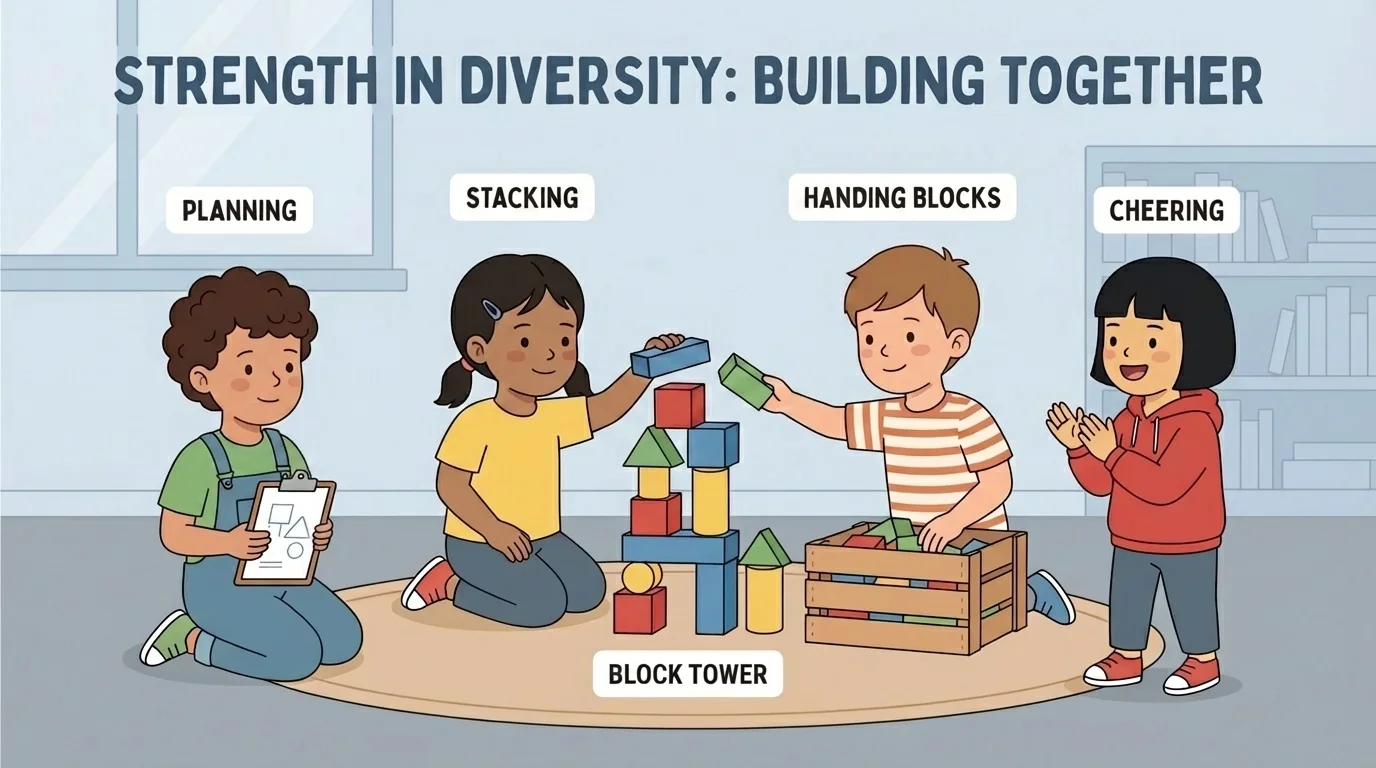
Different strengths build strong groups
Being strong does not only mean being able to lift something heavy. A strong family, classroom, or community is one where people help, include, and respect one another. Strength can mean kindness, patience, courage, listening, sharing, and trying again.
Differences can also teach us new things. If a friend celebrates a holiday you do not know about, you can learn about it. If a classmate solves a problem in a new way, you can learn another way to think. As we saw in [Figure 2], people do not need to look or act the same to play and learn together.
We show respect through our actions. We listen when someone is speaking. We take turns. We use kind words. We ask someone to join our game. We help clean up shared spaces. We are gentle with people and things.
Respect also means noticing what others need. Some people need more time. Some people need quiet. Some people need help opening a container or reaching a shelf. Offering help kindly can make someone feel safe and included.
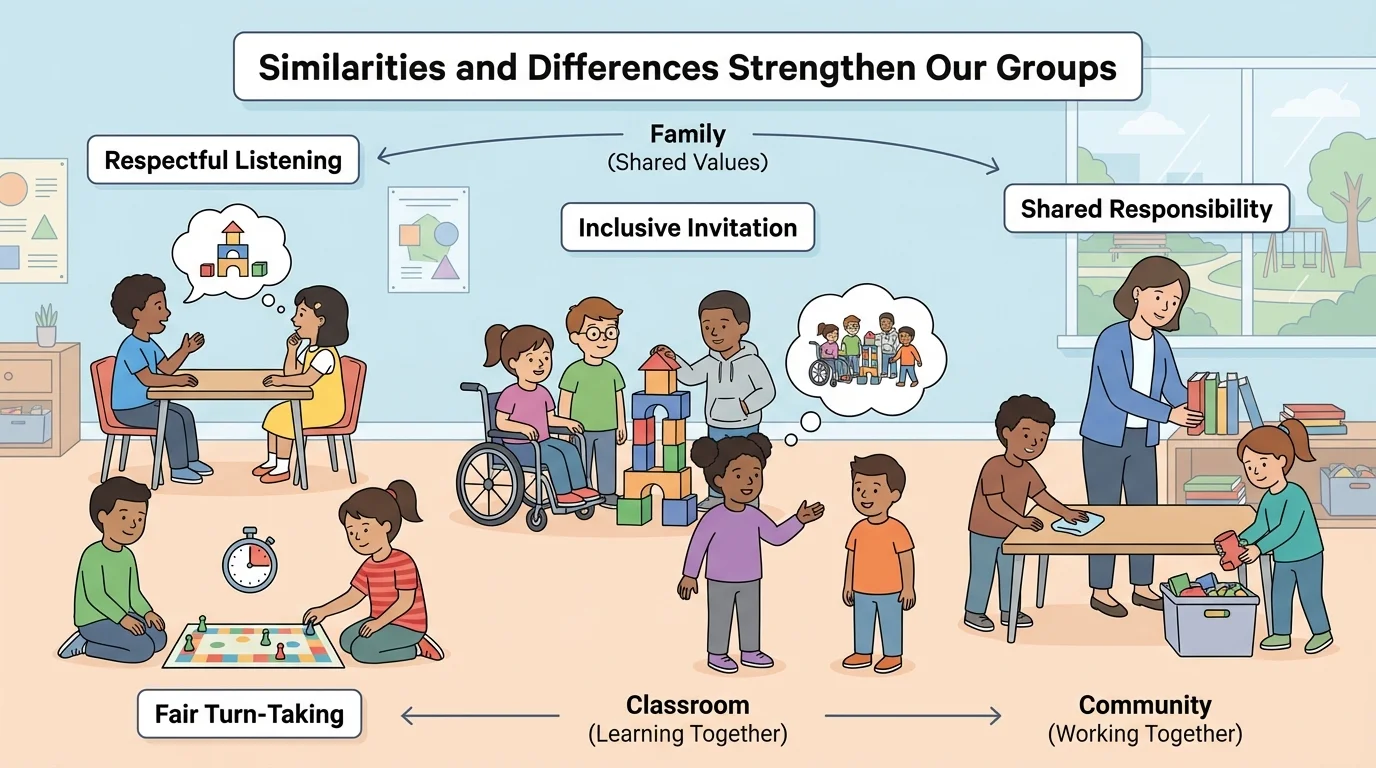
If someone is different from us, we do not laugh or leave them out. We include them. We can say, "Come play with us," or "Can I help?" These small actions can make a big difference.
Everyday examples of respect
Step 1: At home
A child helps set the table while another child puts toys away. They do different jobs, but both help the family.
Step 2: In the classroom
One child shares markers, another passes paper, and another welcomes a new student. The class works better when everyone helps.
Step 3: In the community
Neighbors smile, hold doors, and keep the park clean. These actions help everyone enjoy the community.
Respect does not mean everyone is the same. Respect means everyone is valued. The caring actions in [Figure 4] help show what belonging looks like.
Families, classrooms, and communities grow stronger when people work together. At home, people may share chores and care for one another. At school, children and teachers learn rules that keep everyone safe. In the neighborhood, people help by following rules, being kind, and taking care of shared places.
Sometimes people disagree. That happens in every group. We can still be respectful. We can use calm words, listen, and try to solve the problem fairly. Strong groups are not groups with no problems. Strong groups are groups that keep caring and working together.
| Group | How people may be alike | How people may be different | How that helps the group |
|---|---|---|---|
| Family | They care for one another | Ages, jobs, skills, traditions | Different people can help in different ways |
| Classroom | They learn together | Interests, languages, learning styles | Children share ideas and support one another |
| Community | They share a place | Homes, cultures, work, talents | Many people work together to meet many needs |
Table 1. Ways similarities and differences appear in families, classrooms, and communities.
When we remember that every person matters, we help make our world more welcoming. The teamwork in [Figure 3] reminds us that everyone can bring something important to the group.
"We may be different, but we all belong."
Being kind, including others, and respecting differences are not just nice choices. They help families, classrooms, and communities become happier, safer, and stronger places for everyone.
