Have you ever laughed when someone played with you, then cried when a toy broke? Feelings can change fast. Our feelings help us understand what is happening inside us and around us. When we learn feeling words, we can tell others what we need and we can better care about how other people feel, too.
People have many feelings every day. Some common feelings are happy, sad, mad, scared, excited, and calm. A feeling is how you respond inside to an experience. If you get a hug, you may feel happy. If you hear a very loud sound, you may feel scared.
Emotion is a feeling inside us, like happy, sad, mad, or scared. Cause and effect means one thing happens first, and then something else happens next.
Using words for feelings helps us talk clearly. Instead of only saying "bad," we can say "I feel sad," "I feel mad," or "I feel scared." These words help family members, teachers, and friends understand us.
Some feelings are little, and some feelings are big. All feelings are real. It is okay to have feelings. What matters is learning safe and kind ways to show them.
[Figure 1] We can notice a clue about a person's feelings by looking at the face, body, and voice. A smile may mean happy. Tears may mean sad. A loud voice and tight hands may mean mad. Wide eyes and a still body may mean scared.
Your body can show feelings too. When you are excited, you may jump. When you are calm, your body may be quiet and relaxed. When you are sad, your shoulders may droop. These signs help us understand ourselves and others.
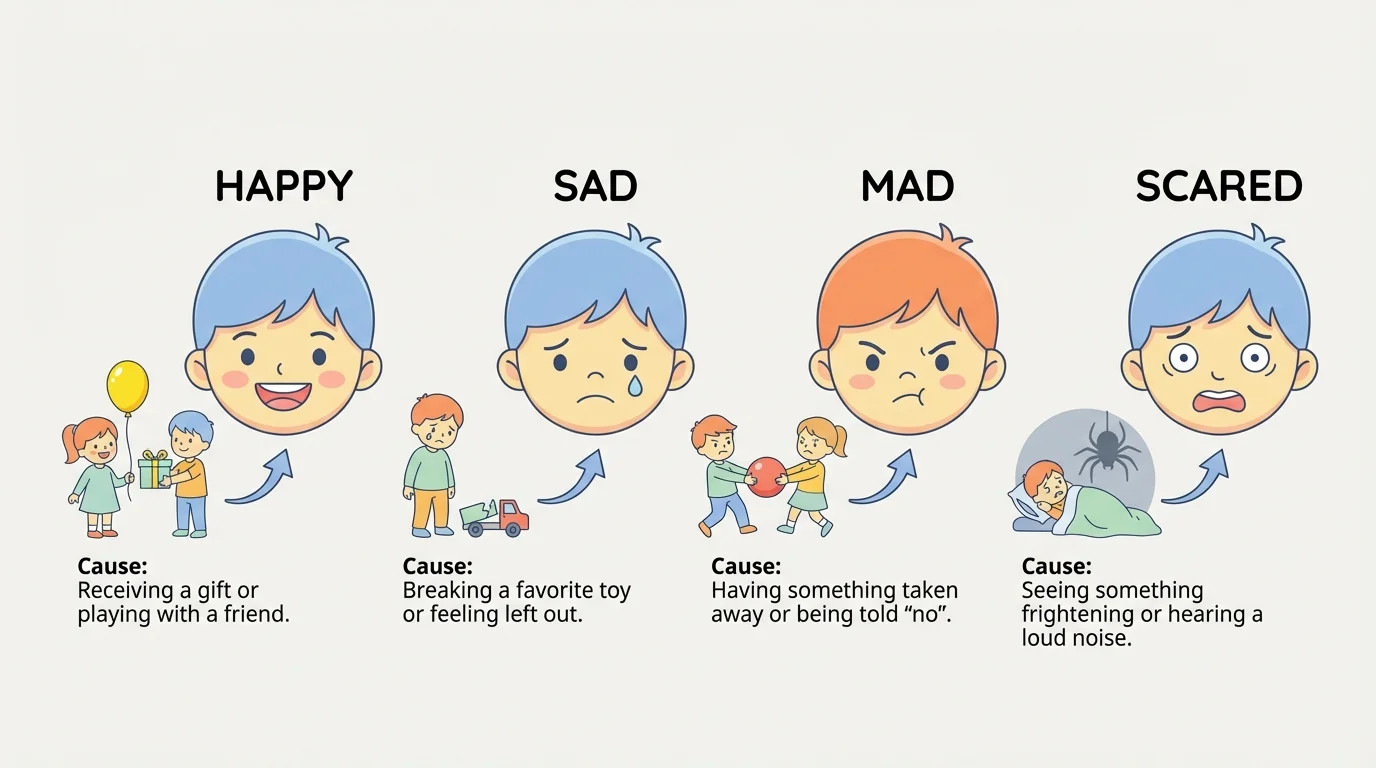
Voices also give clues. A giggle can sound happy. A soft cry can sound sad. A shout can sound mad. A shaky voice can sound scared. We listen and look so we can respond with care.
Even when people feel the same emotion, they may not show it in exactly the same way. One child may get quiet when sad, while another may cry.
Sometimes it is hard to tell how someone feels just by looking. Then we can use words and ask kindly, "Are you okay?" or "How do you feel?" That shows respect.
[Figure 2] A cause is what happens first, and an effect is what happens next. Feelings often have causes, as the figure explains with simple everyday moments. If a block tower falls down, the cause is the tower falling, and the effect may be feeling sad or mad.
Here are some simple cause-and-effect feeling examples. A child gets a surprise sticker and feels happy. A child cannot find a favorite blanket and feels sad. A dog barks loudly and a child feels scared. A child has to wait for a turn and feels mad.
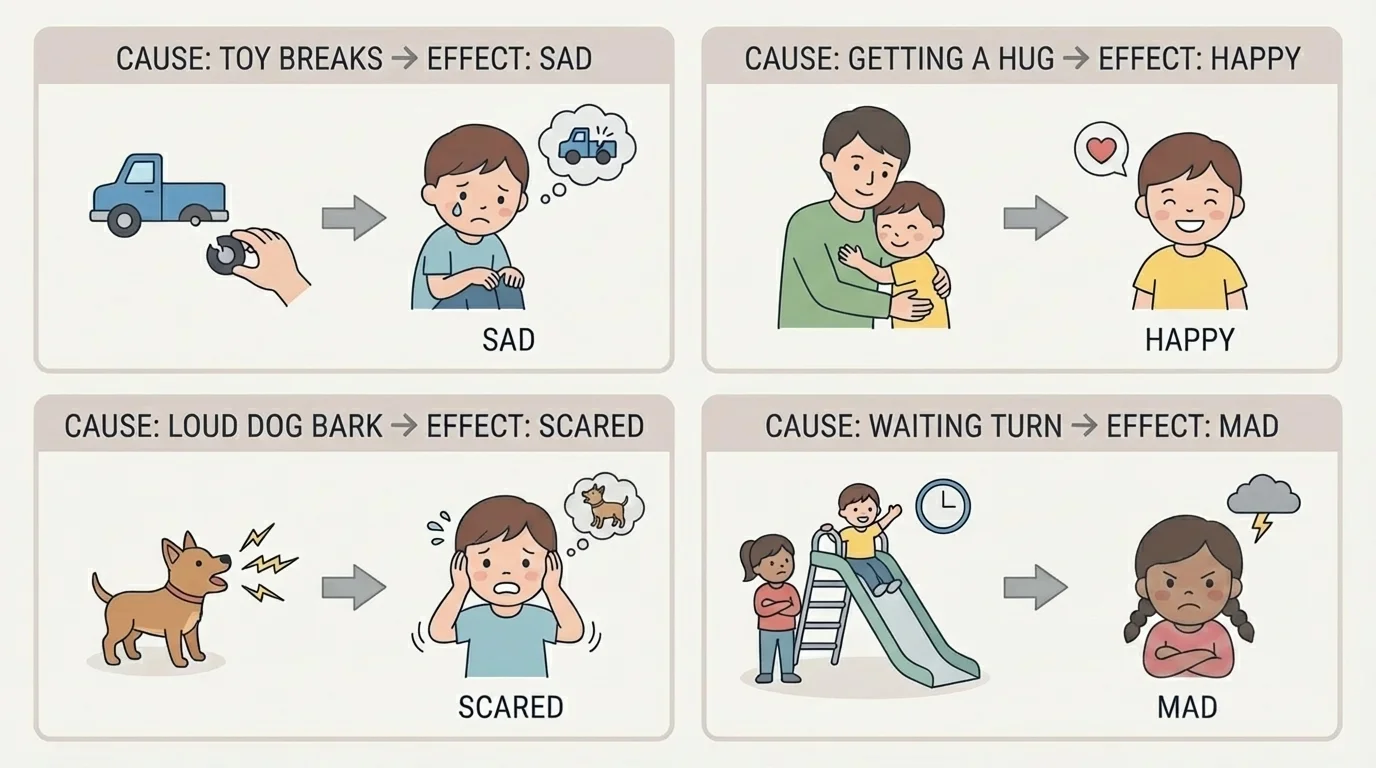
Everyday feeling examples
Step 1: Something happens.
The cup spills.
Step 2: A feeling comes.
The child may feel sad or upset.
Step 3: Words can help.
The child can say, "I feel sad. My drink spilled."
Different people can feel different emotions about the same event. One child may feel excited on the first day at a new place. Another child may feel scared. Both feelings can be true.
Later, when we think about feelings again, [Figure 2] reminds us to ask, "What happened first?" This helps us understand why a person might feel a certain way.
We live with family, and we are part of a community. At home, in school, at the park, and in the neighborhood, people have feelings. When we notice those feelings, we can act with kindness.
Respecting differences means knowing that not everyone feels the same way at the same time. Some people love loud music and feel excited. Some people hear loud music and feel uncomfortable or scared. Some people enjoy meeting new people, while others need more time to feel calm.
| What happens | One possible feeling | Another possible feeling |
|---|---|---|
| Birthday party | Excited | Shy |
| Thunder outside | Scared | Calm |
| Waiting for a turn | Mad | Patient |
| New classroom | Happy | Nervous |
Table 1. Different events can lead to different feelings for different people.
When we understand this, we learn to be patient and caring. If a friend is sad, we can be gentle. If a family member is mad, we can give space and use calm words. If someone is scared, we can stay close and ask an adult for help if needed.
[Figure 3] Big feelings need safe actions. We can learn safe ways to show emotions through calming choices. We can use words, take deep breaths, ask for a hug, hold a comfort item, or go to a trusted adult.
It is okay to feel mad. It is not okay to hit. It is okay to feel sad. It is okay to cry. It is okay to feel scared. It helps to say, "I need help." When we use safe choices, we care for ourselves and others.
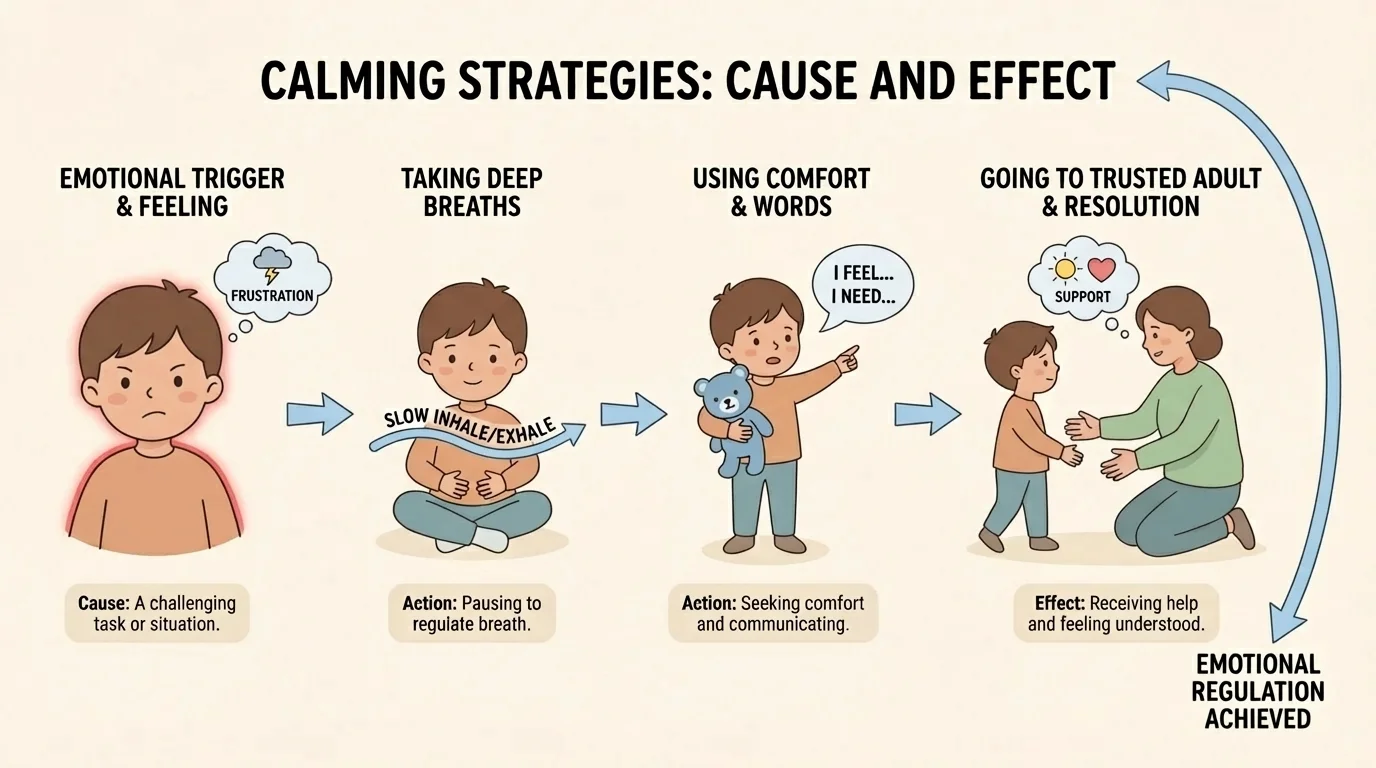
From feeling to action
Feelings happen inside us, but we can choose what to do next. Learning kind actions helps families and communities stay safe. A child can say, "I feel mad," instead of grabbing. A child can say, "I feel scared," instead of hiding without telling anyone.
Trusted adults can help us name feelings. They may say, "You look sad," or "You sound excited." This helps us build a bigger feeling vocabulary and understand our own experiences.
When we think back to face clues in [Figure 1] and calm-down choices in [Figure 3], we see an important idea: we can notice a feeling, name it, and choose a safe response.
