What if nobody followed the rules for one whole day? People might run in the classroom, leave toys on the floor, or cross the street without stopping. That would feel scary and messy. Rules help people know what to do. They help us stay safe, be fair, and care for one another.
A rule is an instruction about what people should or should not do. A rule can be very simple: walk, do not push, listen, or wait your turn. Rules are not meant to spoil fun. Rules help everyone play, learn, and live together.
Rule means something people follow to help a group stay safe and work well together.
Safe means protected from harm.
When people are in a group, they need to know how to act. In a classroom, many children learn together. At home, family members share space. In the community, many people use the same roads, parks, and stores. Rules help each group know what is okay and what is not okay.
[Figure 1] At school, classroom rules help children learn and stay safe. In many classrooms, children use walking feet, quiet voices, and gentle hands. They listen when a teacher speaks and take turns when sharing toys or books. A busy classroom works better when everyone follows the same rules.
Some school rules stop accidents. If children run indoors, they may fall. If they throw toys, someone may get hurt. If they push in line, a friend may tumble down. Rules like keep hands to yourself and walk inside help protect everyone.
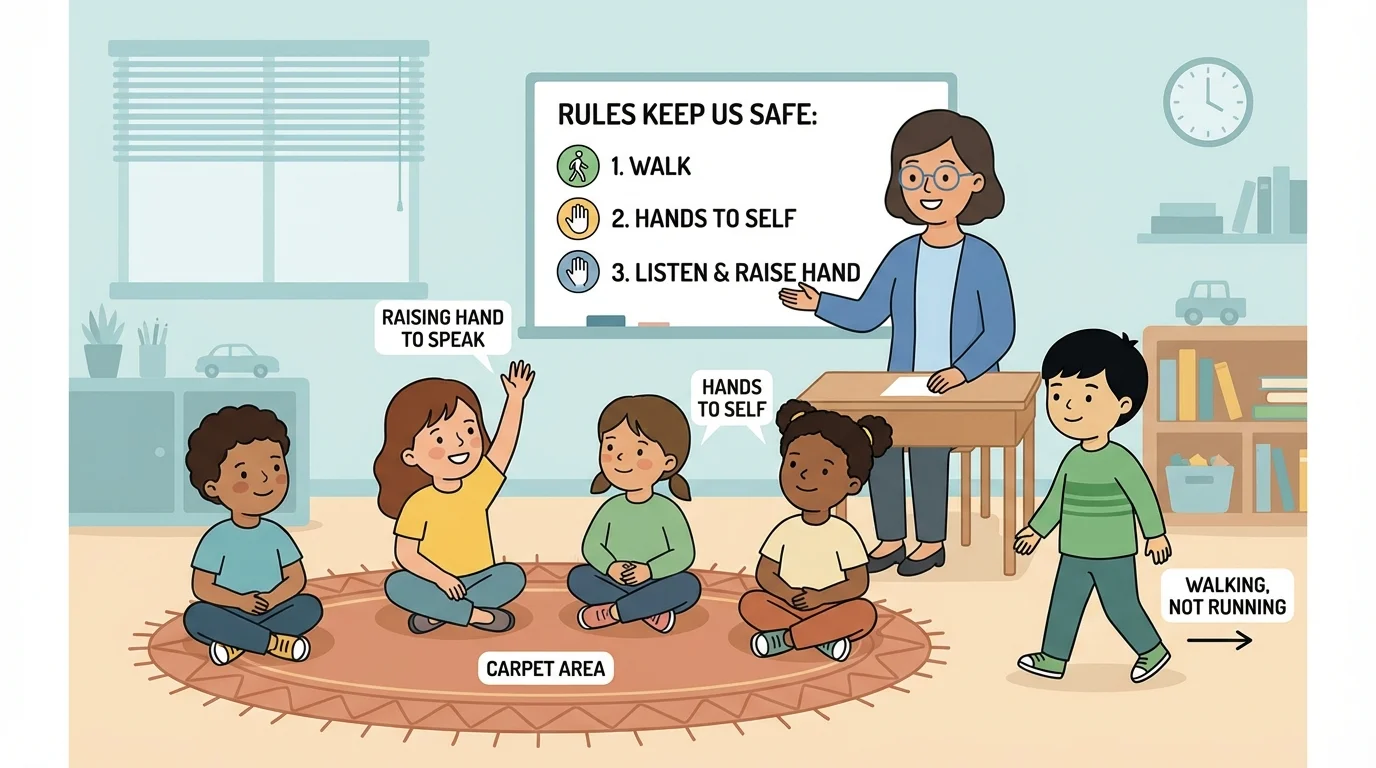
School rules also help learning. When one child talks at a time, others can hear. When children clean up after play, the floor stays clear and safe. When children wait for a turn, everyone gets a chance. These rules are about safety, but they are also about respect.
School example
A class is walking to the library.
Step 1: Children line up.
This helps everyone know where to go.
Step 2: Children use walking feet.
This helps stop falls and bumps.
Step 3: Children keep hands to themselves.
This helps friends feel safe and calm.
The group reaches the library safely because the children follow the rules together.
Later, those same school habits matter again. When children wash hands before snack, sit safely in chairs, and clean up spills, they are still following rules that protect the group. This careful behavior helps the whole class have a better day.
At home, family rules help children stay safe and help the home feel calm. A child may hear rules like: ask before going outside, do not touch the hot stove, pick up toys, and sit while eating. These rules protect children from danger and help the house stay tidy.
Some home rules are about dangerous things. Knives can cut. The stove can burn. Cleaning liquids are not for drinking. Medicines should only be given by a grown-up. Home rules teach children to stop, ask, and wait when something might not be safe.
Other home rules help family members care for each other. Putting toys away keeps people from tripping. Closing doors gently keeps fingers safe. Using kind words helps everyone feel peaceful. Rules at home are one way a family shows love and care.
Very young children are still learning how to notice danger. That is one reason grown-ups make simple rules and repeat them many times.
Children may not always know why a rule exists at first, but the rule still matters. A parent or caregiver often sees danger before a child sees it. Listening to trusted adults helps keep children safe.
[Figure 2] The community is the place where people live, shop, travel, and play. Community rules help many people share spaces safely. Outside, children may hold an adult's hand in a parking lot, stop at the curb, wait to cross, and stay where a grown-up can see them. Safe actions in the neighborhood, at the store, and on the playground include stopping, waiting, and taking turns.
Road rules are very important. Cars, bikes, and buses move quickly. People use signs and signals to know when to stop and when to go. Children learn simple safety rules such as stop, look, and listen. They also learn to ride safely, wear a helmet, and stay near a trusted adult.
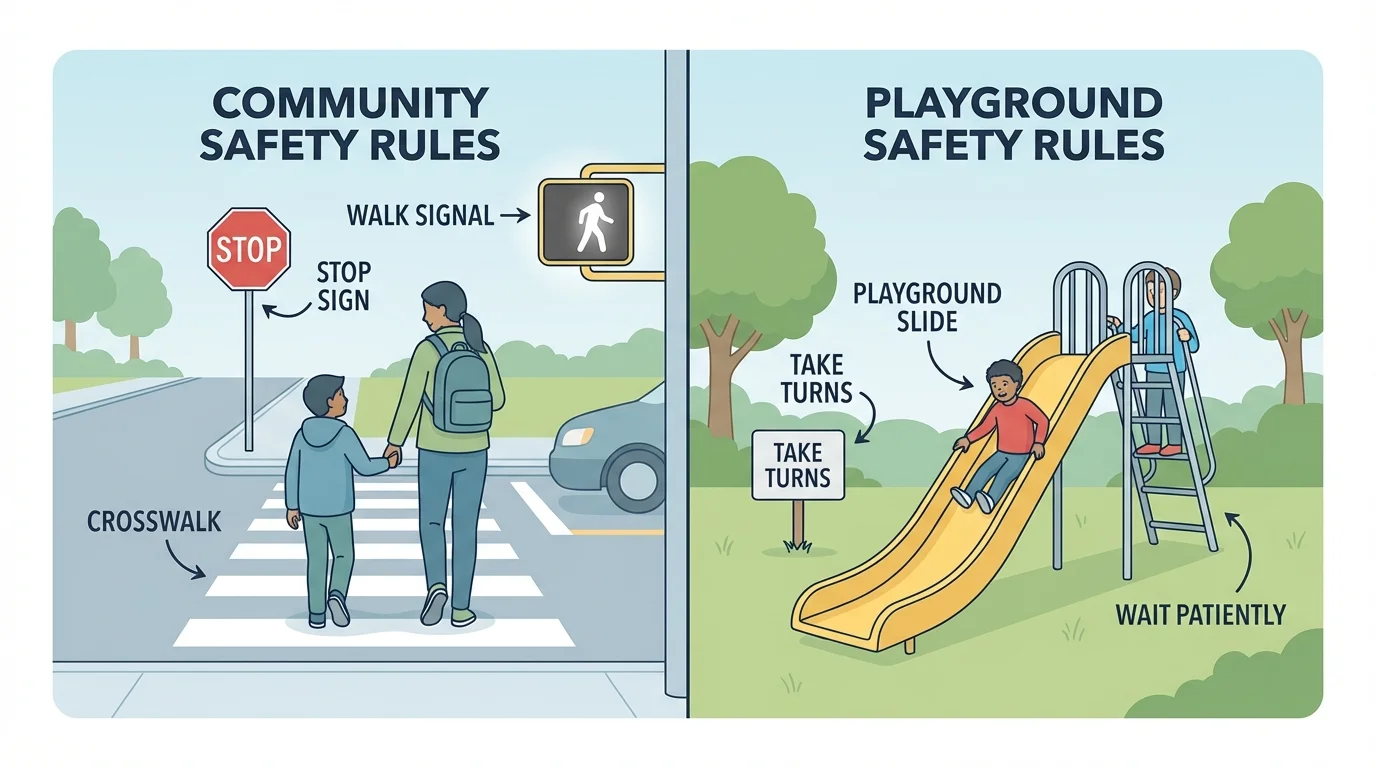
Community rules also help people be fair. At a playground, children wait their turn on the slide. At a store, people stand in line. In a library, people use quiet voices. These rules help everyone enjoy the same place together.
When many people follow the same rules, shared places feel safer and calmer. Careful stopping and turn-taking are good examples of how community rules protect both children and adults.
Rules are not only about saying "no." Rules help groups work well. They help children know what to expect. They help people solve little problems before someone gets hurt. A rule can protect bodies, feelings, and belongings.
Rules help groups work together. When everyone knows the same rules, a group can learn, play, travel, and share space more peacefully. Rules help people take turns, listen, and stay safe.
Following rules also shows kindness. When a child waits for a turn, that child is thinking about others. When a child walks carefully past a friend, that child is helping keep the friend safe. Rules and kindness often work together.
Safety rules are often made by adults such as parents, teachers, crossing guards, and other helpers. These adults want children to be protected. They understand dangers that children are still learning about.
Sometimes a rule may feel hard. A child may want to run fast, grab a toy, or climb too high. But stopping to listen can prevent harm. Safe choices help children grow, learn, and have fun in better ways.
Families, classes, and neighborhoods are all groups. Groups work better when people know what to do and try to do it.
As children grow, they learn more rules and also begin to understand more reasons for them. The big idea stays the same: rules help protect people and help groups live and work together well.
