Have you ever seen how a playgroup works best when everyone feels welcome? A class is a little community. In our class, we meet many people and families. Some people are African American, Latino, Asian American, Hawaiian or Pacific Islander, Indigenous Peoples, LGBTQ people, or people from religious minorities. Our world is big and beautiful, and [Figure 1] shows that many kinds of children and families can learn and play together.
Every person matters. Some people have different skin colors, hair, foods, names, languages, clothes, holidays, or family traditions. Some children live with a mom and dad, some with one parent, some with grandparents, some with two moms, and some with two dads. We can be curious, kind, and respectful when we meet someone whose life is different from our own.
Respect means treating people with kindness and care. Fairness means giving everyone a chance to belong and be included.
A child can say, "Hello," "What is your name?" or "Do you want to play?" These simple words help people feel safe and seen. When we listen and smile, we show that other people are important.
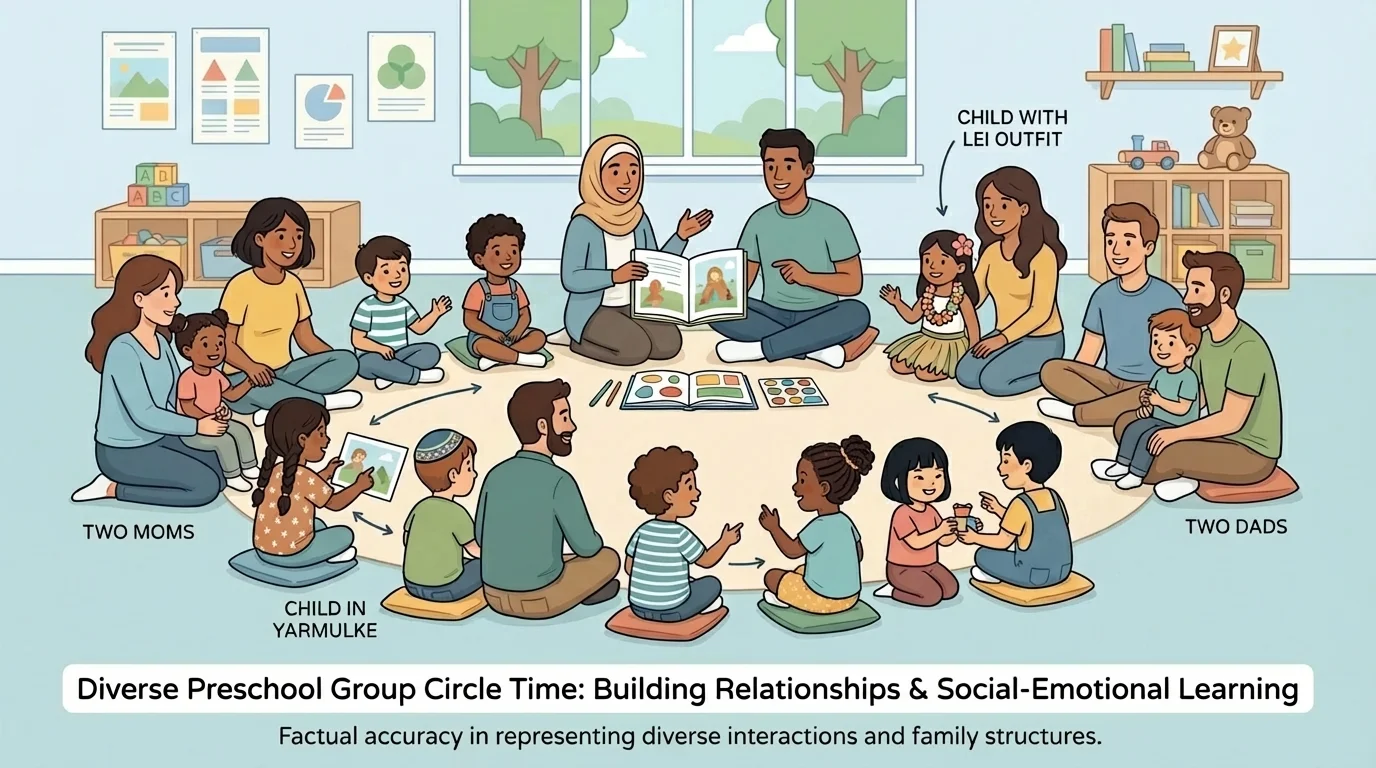
Our class may have children who look different from one another. One child may have curly hair, another straight hair. One child may speak English at school and Spanish at home. Another may hear Chinese, Tagalog, or Navajo with family members. A child may celebrate Christmas, Diwali, Eid, Passover, Lunar New Year, or another special day. These differences are part of who people are.
When we show interest, we pay kind attention. We can listen when someone talks about a family meal, a song, a holiday, or a story from home. We do not laugh at differences. We do not say mean words. We learn that different does not mean bad. Different can be new, special, and wonderful.
Children can notice differences very early, but they can also learn early that kindness and inclusion make everyone stronger together.
If a classmate brings a food you have not seen before, you can say, "That looks interesting." If a friend has a name that is new to you, you can try to say it carefully. Saying a person's name the right way is a loving and respectful act.
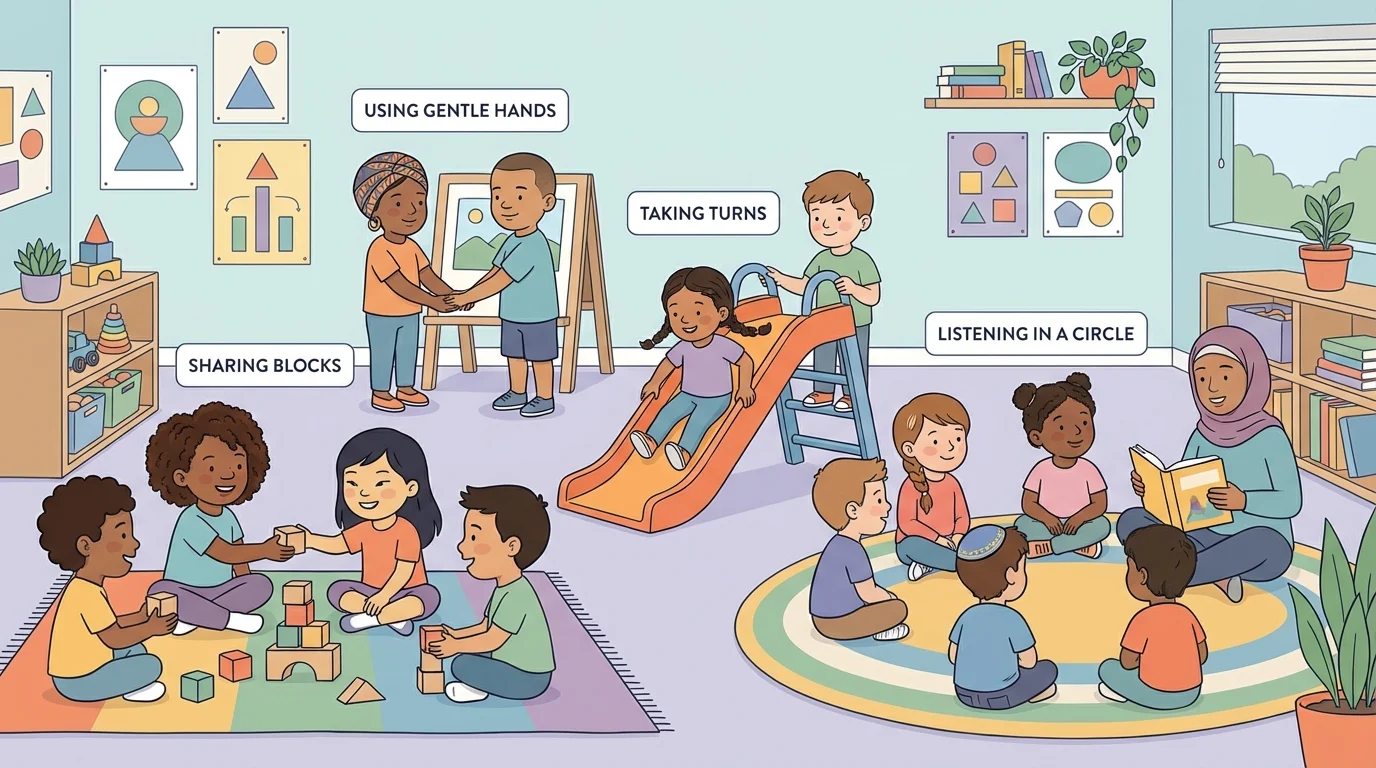
Groups need rules so everyone can work and play well. In a classroom, [Figure 2] shows rules like sharing, listening, taking turns, and using gentle hands. These rules help each child feel safe. They also help everyone belong.
A rule is not just about stopping problems. A rule can help us care for one another. When we wait for a turn, another child gets a chance. When we listen, another child knows their words matter. When we share crayons or blocks, we make room for friendship.
How rules build community
Rules help a group do things together. In a caring classroom, rules are for everyone. They remind us to be safe, fair, and kind so each person can join in.
Kind rules also help us welcome people from different backgrounds. We can have rules such as "Use kind words," "Invite others to play," and "Do not make fun of names, clothes, foods, or families." These rules protect people's feelings and help the whole group work effectively.
Sometimes a child may wear special clothing for religious reasons. Sometimes a child may talk about a powwow, a church service, a mosque, a temple, or another gathering. We do not need to know everything right away. We can listen with respect and learn with care.
You can show care in many small ways. Look at the person who is speaking. Smile. Use a friendly voice. Ask simple questions like, "What do you like to play?" or "Can I sit with you?" These actions help build a relationship, which means a connection between people.
You can also notice things you share. Maybe you both like drawing, dancing, trucks, dolls, books, or balls. Finding something in common helps friendship start. But friendships can also grow when we enjoy learning about things that are not the same. As we saw earlier in [Figure 1], a group can include many kinds of children and still feel like one caring class.
Friendly words in action
Step 1: Meet someone new
A child says, "Hi, my name is Maya."
Step 2: Show interest
Another child says, "Hi, Maya. Do you want to build with blocks?"
Step 3: Keep the friendship growing
Later, the child says, "I saved you a block," or "You can play with us."
These small actions help trust and friendship grow.
Respect also means we let people tell their own stories. If a classmate says, "This is my grandma," or "These are my two dads," we can answer kindly. If a child says they celebrate a holiday you do not celebrate, you can listen and say, "Tell me about it."
Being kind does not mean we all have to be the same. It means we care about each other. Rules and respect work together. Like the children sharing and listening in [Figure 2], we make space for everyone when we use our classroom rules.
Sometimes someone is not included in a game or a group. A child may be left out because of how they look, what language they speak, what they wear, who is in their family, or what they believe. This is unfair. [Figure 3] shows a caring choice: one child notices another child alone and invites them in.
If you see someone left out, you can help. You can say, "You can play with us." You can make room at the table. You can hand them a toy. You can tell a teacher, "They need a friend." Helping someone belong is a strong and kind action.
Everyone has feelings. When we include others, we help them feel safe, happy, and important.
If someone says unkind words, a trusted adult can help. Children are still learning. A teacher can remind the class about fairness, kind speech, and safe rules. We learn not to tease, exclude, or make fun of people for being different.
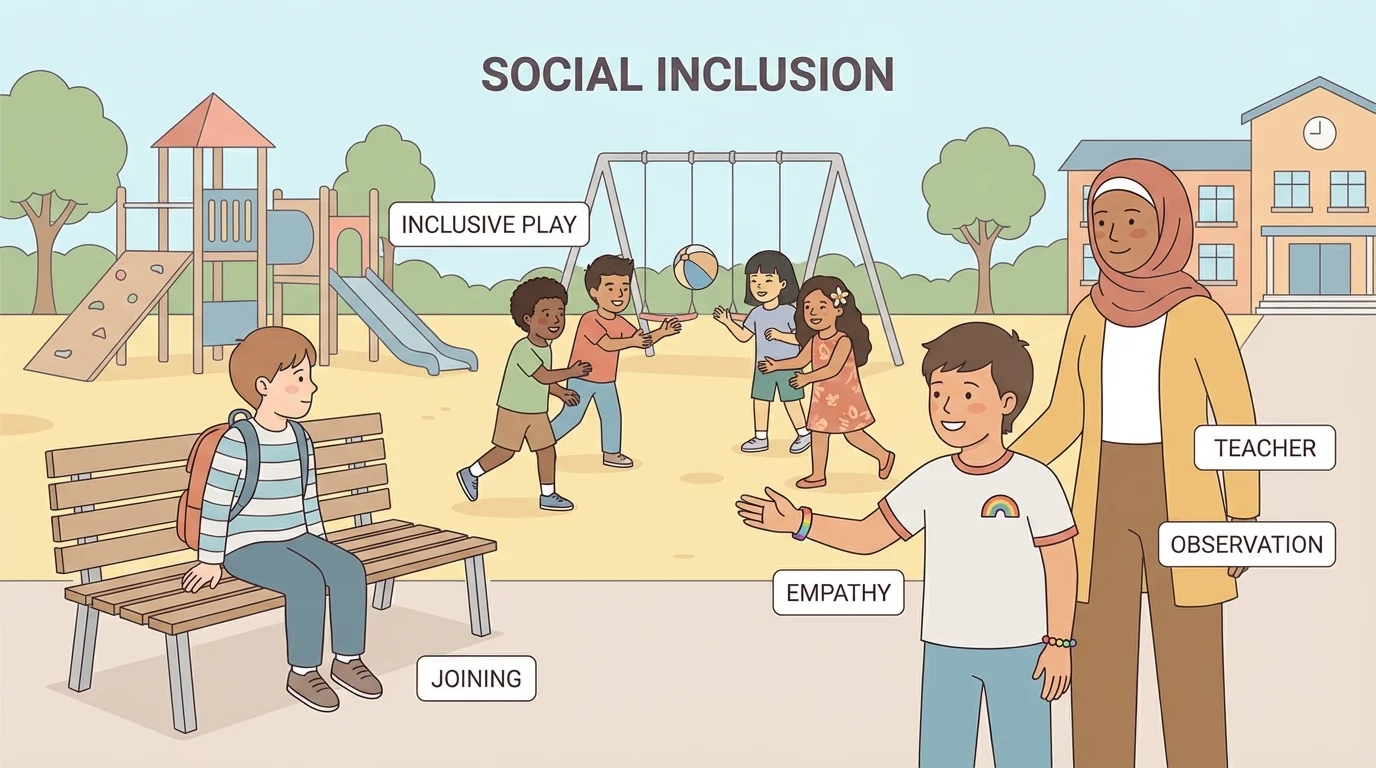
On the playground, at snack time, or in circle time, there are many moments to help someone belong. The caring invitation in [Figure 3] matters because one small act can change a lonely moment into a friendly one.
Friendships grow slowly, like plants. We help them grow with kind words, sharing, listening, and honesty. We keep learning about one another. Maybe your friend teaches you a new greeting, a new song, or the name of a holiday. Maybe you teach them a game from your home. This is how people learn from one another.
It is good to be open to friendships with many kinds of people. A class is stronger when no one is pushed away. A community is stronger when people care about fairness and respect. Children can learn this early, and it helps them in school, at home, and in the wider world.
"There is room for everyone to belong."
When we greet others, listen well, and invite people to join, we help our group work better. We build a classroom where everyone can learn. That is part of being a good citizen in a group: following kind rules and helping every person feel welcome.
