Have you ever heard thunder after seeing lightning, or waved to someone far away and seen them wave back? The world is full of parts working together. In nature, clouds, rain, soil, and plants are connected in systems. A flashlight, a hand, a pair of eyes, and a message can work together too. When many parts work together to do a job, they form a system.
A system is a group of parts that work together. The parts can be in nature, like the sun, water, air, and land. The parts can also be in things people make, like a bell, a string, and a cup phone. Each part has a job, and the jobs fit together.
When one part changes, the whole system can change. If a toy car loses a wheel, it does not roll well. If a plant does not get water, it cannot grow well. Systems need their parts to work together in the right way.
System means a set of parts that work together to do something. Part means one piece of a system. Communicate means to send or share information, such as a sound, a light signal, a word, or a warning.
We can find systems all around us. Some are natural, and some are designed by people. Looking at both helps us understand how the world works.
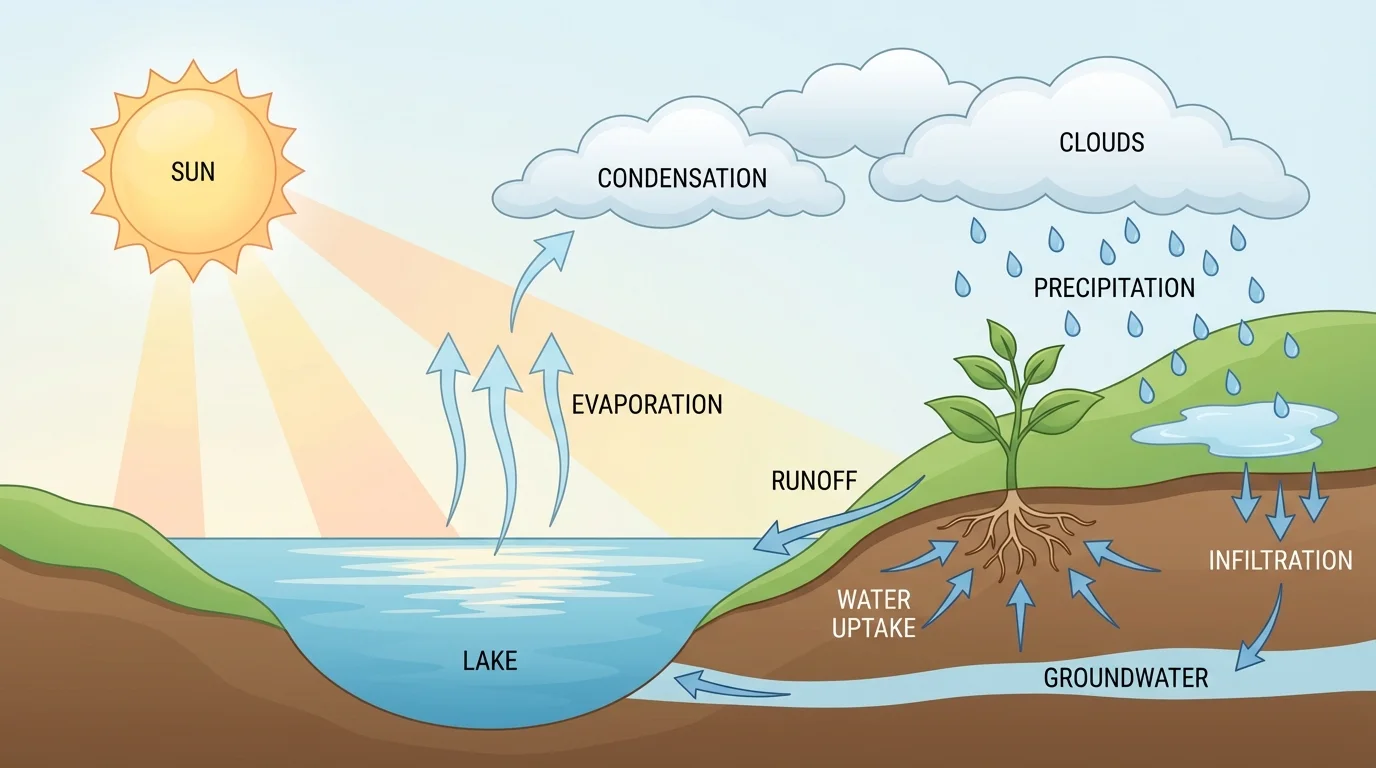
Nature has many systems with parts that depend on one another, as [Figure 1] shows with sun, water, clouds, rain, and plants. The sun warms water on the ground. Water goes up into the air. Clouds form. Rain falls. Plants drink the water from the soil. This is a natural system because many parts work together.
Weather is also a system. Air moves as wind. Clouds move in the sky. Rain can fall on land and fill puddles and streams. The land, water, air, and sky affect one another. If there is little rain, the ground may become dry. If there is a lot of wind, clouds may move quickly.
Living things have systems too. Your body uses eyes to see, ears to hear, legs to move, and a brain to help all the parts work together. A bird uses wings, feathers, and eyes to fly and find food. In every case, the parts help the whole system do its job.
Some flowers open when sunlight shines on them and close when it gets dark. That means the flower and the sunlight are part of a natural system that works together through the day.
Later, when we look at messages sent by light or sound, remember the natural systems in [Figure 1]. They teach us an important idea: one part alone is not enough. The parts must connect and work together.
People and animals communicate in many ways. A dog barks. A bird sings. A person waves a flashlight. These actions send a message from one place to another.
Light signal means light used to send information. A lighthouse sends a bright light so ships know where the shore is. A traffic light uses red, yellow, and green to tell cars and people what to do. The light is not just shining. It is carrying a message.
Sound signal means sound used to send information. A school bell tells children it is time to go in. A siren warns people to be careful. A drumbeat can be a signal too. Sound travels through air, and people or animals can hear it.
Light and sound as messengers
Light and sound are useful because they can travel over a distance. A person does not always need to be right next to you to share information. A flash of light can be seen from far away, and a sound can be heard from far away. That is why many tools use light or sound to communicate.
Different signals work best in different places. A flashlight works well when it is dark and someone can see it. A bell works well when people are listening. Choosing the right kind of signal is part of good design.
A communication device has parts that work together. The sender is the person or part that starts the message. The signal is the light or sound that carries the message. The receiver is the person or part that gets the message.
[Figure 2] There is also a path. The path is where the light or sound travels. Sound may travel through air, water, or a tight string. Light may travel through air from a flashlight to someone's eyes. If the path is blocked, the message may not arrive.
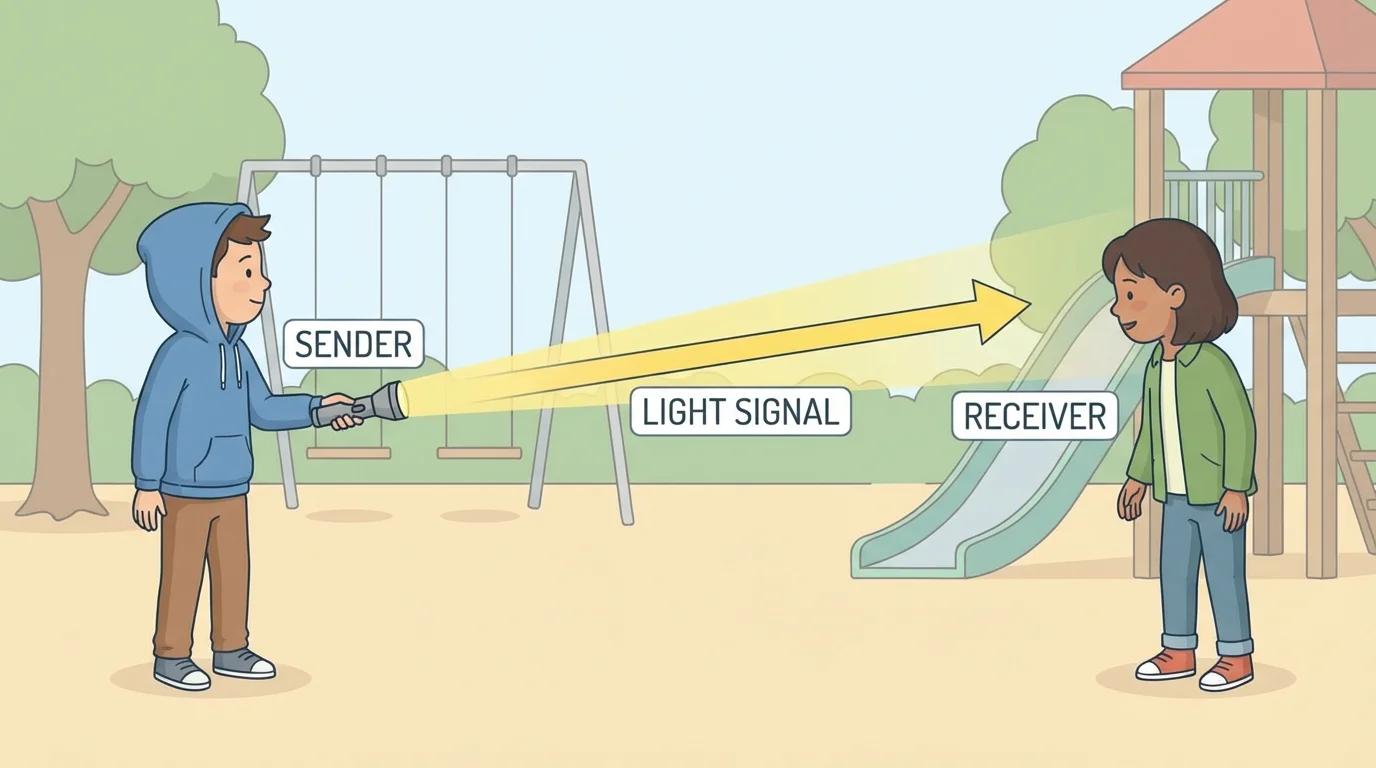
Think about a flashlight signal. One child turns the flashlight on and off. That child is the sender. The light beam is the signal. The air is part of the path. The other child sees the blink and becomes the receiver. If the flashlight batteries are weak, the system may not work well.
A bell works in a similar way. The bell makes sound. The sound moves through the air. Someone hears it. Just like in [Figure 2], the message needs all the parts: something to start it, a signal to carry it, and someone to receive it.
People can use simple tools and materials to make devices that communicate over a distance. A device does not have to be big or fancy. It only needs parts that work together well.
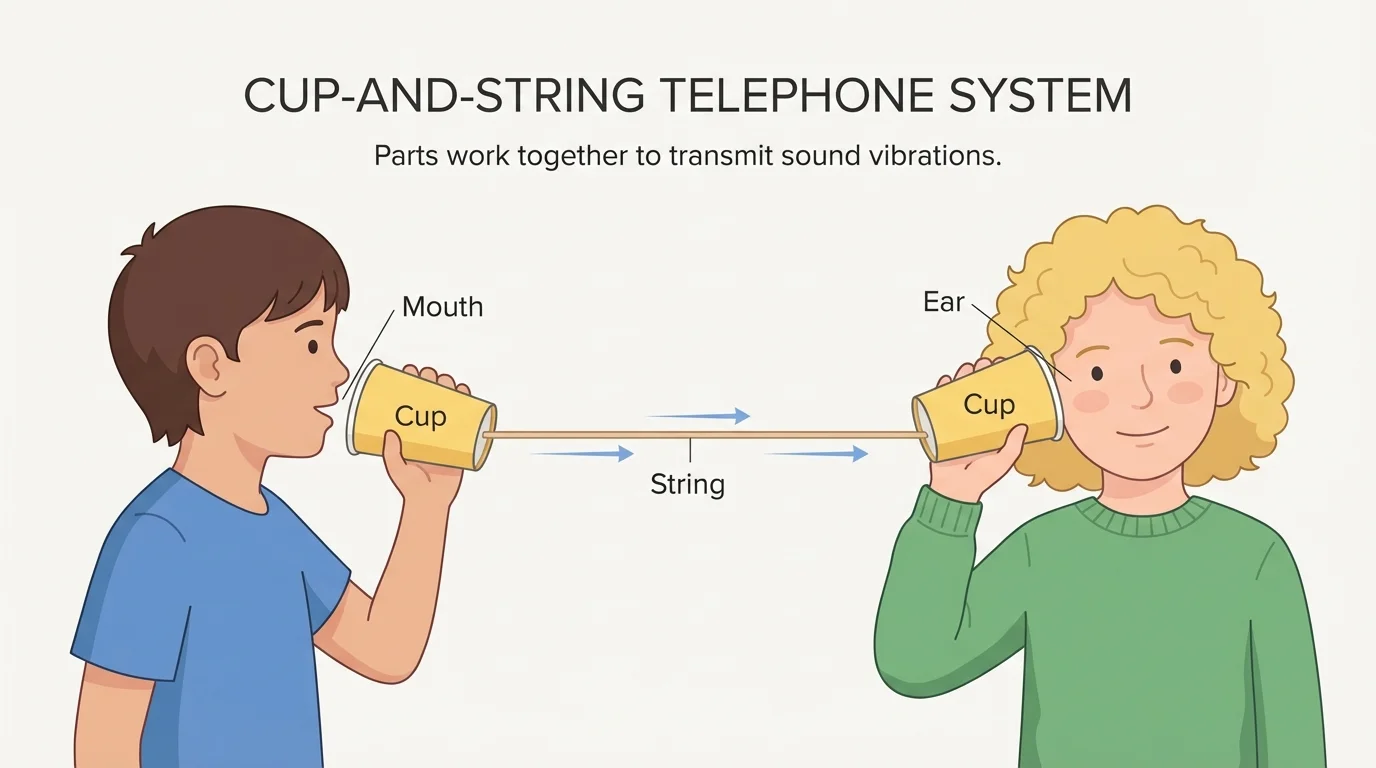
[Figure 3] One simple device is a cup-and-string phone. Two cups are connected by a string. One person speaks into a cup. Sound makes the cup move a tiny bit. The movement travels along the string. The other cup moves, and the listener hears the sound. If the string is tight, the vibrations travel more effectively, and the sound is heard more clearly.
Another simple device uses light. A flashlight can send short and long flashes. A mirror can reflect sunlight to another person far away. In each design, the materials matter. The cup must be firm enough to vibrate. The string must be connected well. The flashlight must shine clearly.
Real-world example: Making a message travel
Step 1: Choose the sender.
One child speaks into a cup or shines a flashlight.
Step 2: Choose the signal.
The signal can be sound in a cup phone or light in a flashlight signal.
Step 3: Keep the path clear.
The string should be tight for sound, or the light path should not be blocked.
Step 4: Check the receiver.
The other child listens carefully or watches for the light.
When all the parts work together, the message can travel across a room or playground.
The cup phone in [Figure 3] helps us see that a device is a system. If the string is loose, one part is not doing its job well, so the whole system works less well. Good design means choosing parts that fit the job.
Changing one part can change the whole system. In weather, less rain can mean drier soil and thirsty plants. In a flashlight device, dead batteries mean little or no light. In a cup phone, a broken string means the sound cannot travel well.
Sometimes changing one part makes the system work better. A brighter flashlight can be seen more easily. A tighter string can carry sound more clearly. A quieter place can help a listener hear a message.
You already know that objects can be made of different materials. Materials matter because some are better for some jobs. A smooth mirror reflects light well. A strong string helps carry vibrations better than a floppy one.
This is why engineers and builders test ideas. They may try different cups, strings, or lights to see which parts help the system do its job best. Nature changes too, and those changes can affect how land, water, air, plants, and animals work together.
Many things in everyday life are systems that use light or sound to communicate. Traffic lights help drivers and walkers. Doorbells tell someone a visitor is at the door. Alarms warn people of danger. Lighthouses help guide boats. Walkie-talkies send sounds over long distances using technology.
Animals use communication systems too. Fireflies flash light to send signals. Frogs croak to call to each other. Birds sing to share messages. These are natural examples of signals traveling from one living thing to another.
When we study systems, we learn to look for the parts, the jobs of the parts, and how the parts connect. That helps us understand both the natural world and the designed world. Whether it is rain helping a plant grow or a flashlight helping a friend see a signal, the big idea is the same: parts work together to make something happen.
