Why does a bird have a beak, a turtle have a shell, and a chair have four legs? Their parts are not random. Their shapes help them work. In nature and in things people build, the way something looks is often connected to what it needs to do. A long, thin stem reaches for sunlight. A wide chair seat helps a person sit. A strong bridge holds weight because of its shape and the way its parts are put together.
A structure is something made of parts. A plant is a structure. An animal body is a structure. A house is a structure too. Each structure has a function, or job. The shape of the parts helps with that job.
Shape is the form of something, such as round, flat, long, wide, or pointed.
Stability means staying balanced and not tipping over easily.
Function means the job something does.
Think about a spoon and a fork. They are both useful, but their shapes are different because their jobs are different. A spoon has a bowl shape for scooping. A fork has points for picking up food. In the same way, a duck's foot and a cat's paw are shaped differently because they do different jobs.
When we look carefully, we can ask, "What is this part shaped like?" and "How does that shape help?" These questions help us understand both living things and designed objects.
[Figure 1] Plants and animals have external parts that help them live. These parts can help them get food, move, stay safe, get water, or protect their babies. Their shapes match what they need to do in their habitats.
A bird's beak is a good example. Some birds have short, strong beaks for cracking seeds. Some have long beaks for reaching into flowers or mud. Ducks have wide feet that help them paddle through water. Tigers have sharp claws to grab and hold. Turtles have hard shells to protect their bodies.
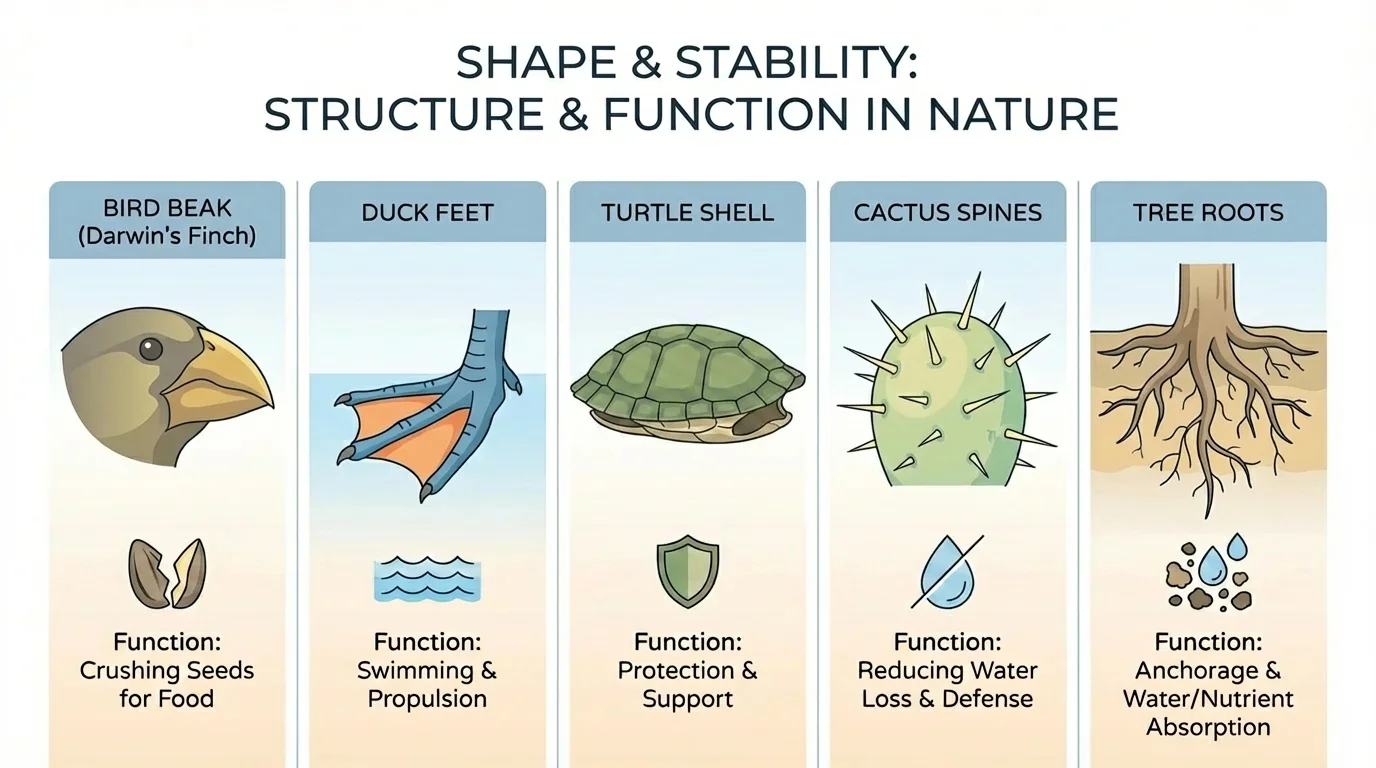
Plants also have special outside parts. A cactus has sharp spines. These help protect it from animals that might eat it. Tree roots spread into the ground and help keep the tree standing. A stem holds leaves up so they can get sunlight. Some leaves are broad and flat, which helps them catch more light.
Flower petals can be bright and shaped to attract pollinators like bees and butterflies. Seeds may have wings or fluff so the wind can carry them. These shapes are helpful. They are not just interesting to look at. They help the plant survive and make more plants.
Some burr seeds have tiny hooks that catch on animal fur. This helps the seeds travel to new places where they can grow.
When we compare plants and animals, we see the same big idea again and again: outside parts are built for jobs. The beak, shell, root, spine, and leaf each have a shape that helps the living thing meet its needs.
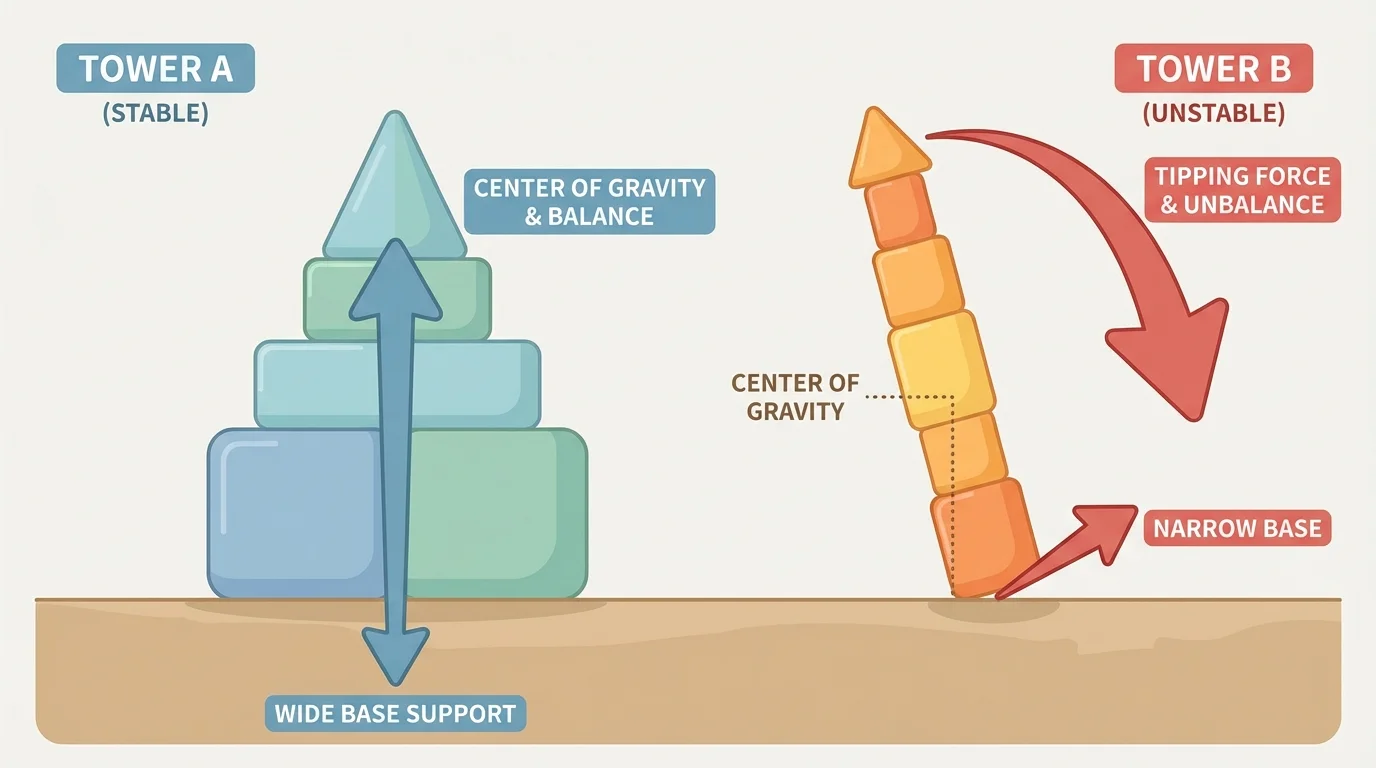
[Figure 2] Some structures need to move, and some need to stay still. When something must stand safely, stability is very important. A structure with a wide bottom can often be steadier. A structure that is balanced is less likely to tip over.
Think about a stool, a table, or a block tower. If the bottom is flat and the weight is spread out, it usually stands better. If one side is too heavy or the bottom is very tiny, it may wobble or fall. Tall things can stand well too, but they need support.
Plants show stability too. A sunflower stands up because its stem supports it. A tree stands because its trunk is strong and its roots hold it in the soil. If the roots are weak, the tree may fall more easily in wind. This is another way that shape and parts connect to function.
People use these ideas when building. A chair needs legs placed so it does not tip. A playground slide needs a strong frame. A house needs walls and a roof that stay in place. Later, when we think about designs from nature, we can remember [Figure 2]: shape is not only about looks; it also helps keep a structure safe and steady.
How shape helps stability
A structure is often more stable when its parts support each other. Wide bases, strong corners, and balanced weight help objects stay up. In living things, roots, trunks, stems, shells, and legs all help provide support.
Even soft things can be designed for stability. A shoe has a flat bottom to help a person stand and walk. An umbrella has ribs that spread out to hold the fabric. The parts work together so the object can do its job.
[Figure 3] People sometimes study plants and animals and then copy useful ideas from them. This is called mimicking nature. When humans copy a helpful natural structure, they can design something that solves a problem.
For example, burrs can stick to fur because of tiny hooks. People used that idea to create hook-and-loop fasteners. Duck feathers help water roll off, so people design raincoats and boots that keep water out. A turtle's shell can inspire helmets because a hard outside can protect what is inside.
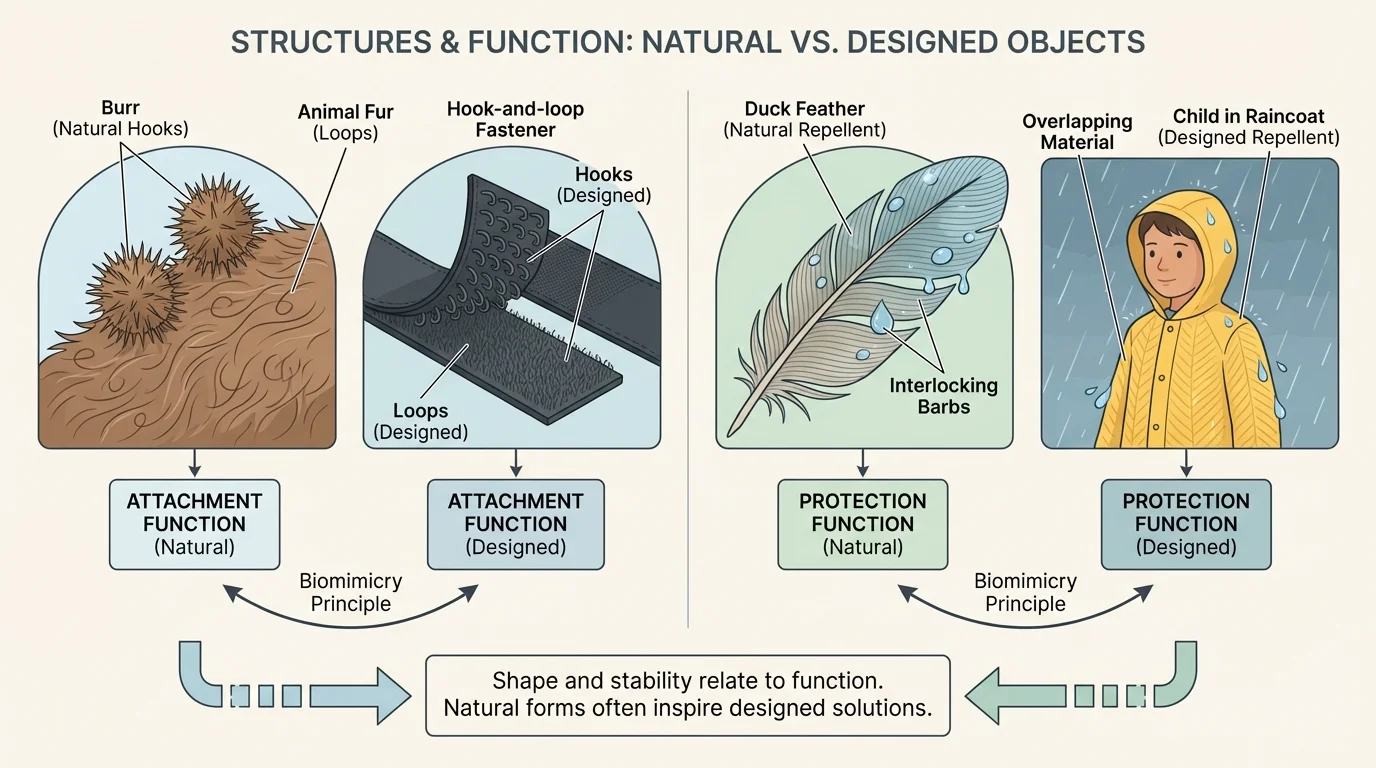
A designer might ask, "What problem do I want to solve?" Maybe the problem is keeping hands safe while gardening, staying dry in rain, or carrying heavy things. Then the designer can look at nature. Are there claws that grip, shells that protect, or leaves that shed water?
Nature-inspired design example
Problem: A child wants gloves that help pick up slippery garden tools.
Step 1: Look at nature.
A gecko and some insects can grip surfaces well with special feet.
Step 2: Copy the helpful part.
The glove could have a textured outside that helps the hand hold tools better.
Step 3: Check the shape and stability.
The glove should fit the hand, bend easily, and help tools stay steady instead of slipping.
The design works best when the shape matches the job.
Nature gives many smart ideas. The goal is not to copy everything exactly. The goal is to notice what works and use materials to build a helpful solution.
Many objects around us have shapes that fit their functions. A bowl is curved to hold food. A cup has sides that keep liquid in. A backpack has straps so it can stay on shoulders. A bicycle helmet is rounded and strong to protect a head.
We can compare natural and designed objects side by side.
| Natural object or part | How its shape helps | Designed object | How its shape helps |
|---|---|---|---|
| Bird beak | Gets food | Spoon | Scoops food |
| Turtle shell | Protects body | Helmet | Protects head |
| Duck foot | Pushes through water | Swim fin | Helps move in water |
| Tree roots | Hold plant steady | Wide table legs | Help the table stay stable |
Table 1. Comparison of natural structures and designed objects with similar functions.
These comparisons help us see patterns. As we saw earlier in [Figure 1], living things have parts shaped for jobs. Human-made objects often follow the same idea. Good designs usually have a shape that helps them work well and stay safe.
A good design is useful. It should do the job it was made to do. It should also be safe, strong enough, and stable enough. If a birdhouse falls over, it is not a good home for birds. If rain boots let water in, they are not doing their job well.
When people make something, they think about materials too. Soft fabric may be good for a raincoat. Hard plastic may be better for a helmet. The material and the shape work together. A strong material in a poor shape may still not work well. A good shape with a weak material may also fail.
You already know that living things need food, water, air, and shelter. Their outside parts help them get these needs. Designed objects can help people meet needs too, such as staying safe, carrying things, or keeping dry.
When we study shape and stability, we become better observers. We notice that every part can have a reason. We can ask why a leaf is broad, why a shell is curved, why a ladder has steps, or why a bridge has supports. These questions help us understand both nature and design.
