Have you ever seen a bird fly to a nest with food in its beak? That tiny trip is a big clue. It tells us something important: many animal parents do things to help their babies live and grow. Scientists learn about these clues by reading, watching, and listening carefully. You can do that too.
To obtain information means to get facts and ideas. We can get science information from a storybook about animals, a photo with labels, a short video, a nature poster, or a teacher reading aloud. When we use these sources, we are learning from media and text.
Good science readers and watchers pay attention to details. They notice who is there, what is happening, and what happens again. If a video shows a mother duck leading ducklings to water, that gives us information. If a book says penguin parents keep eggs warm, that also gives us information.
Parent means a mother or father animal, or a grown-up that cares for young. Offspring means the babies or young ones. Behavior means something a living thing does, such as feeding, guarding, carrying, or keeping warm.
We can learn from more than one source. A book might tell us that fox parents bring food to their kits. A picture might show the fox carrying food. A video might show the kits waiting at the den. When sources match, they give stronger information.
Some sources are made for young readers. These might have big pictures, simple labels, and short sentences. A chart, a nature magazine for children, a classroom poster, or a kid-friendly science video can all help us learn.
Different sources help in different ways. A book can explain with words. A picture can help us see body parts or actions. A video can show movement over time. When we put these together, we understand more.
| Source | How It Helps |
|---|---|
| Book | Gives facts in words |
| Picture | Shows what something looks like |
| Video | Shows actions and movement |
| Chart | Helps compare examples |
Table 1. Different sources of information and how each one helps us learn science.
When we read or watch, we can ask simple questions: What is the parent doing? What is the baby doing? How does that action help the baby stay safe, warm, fed, or close?
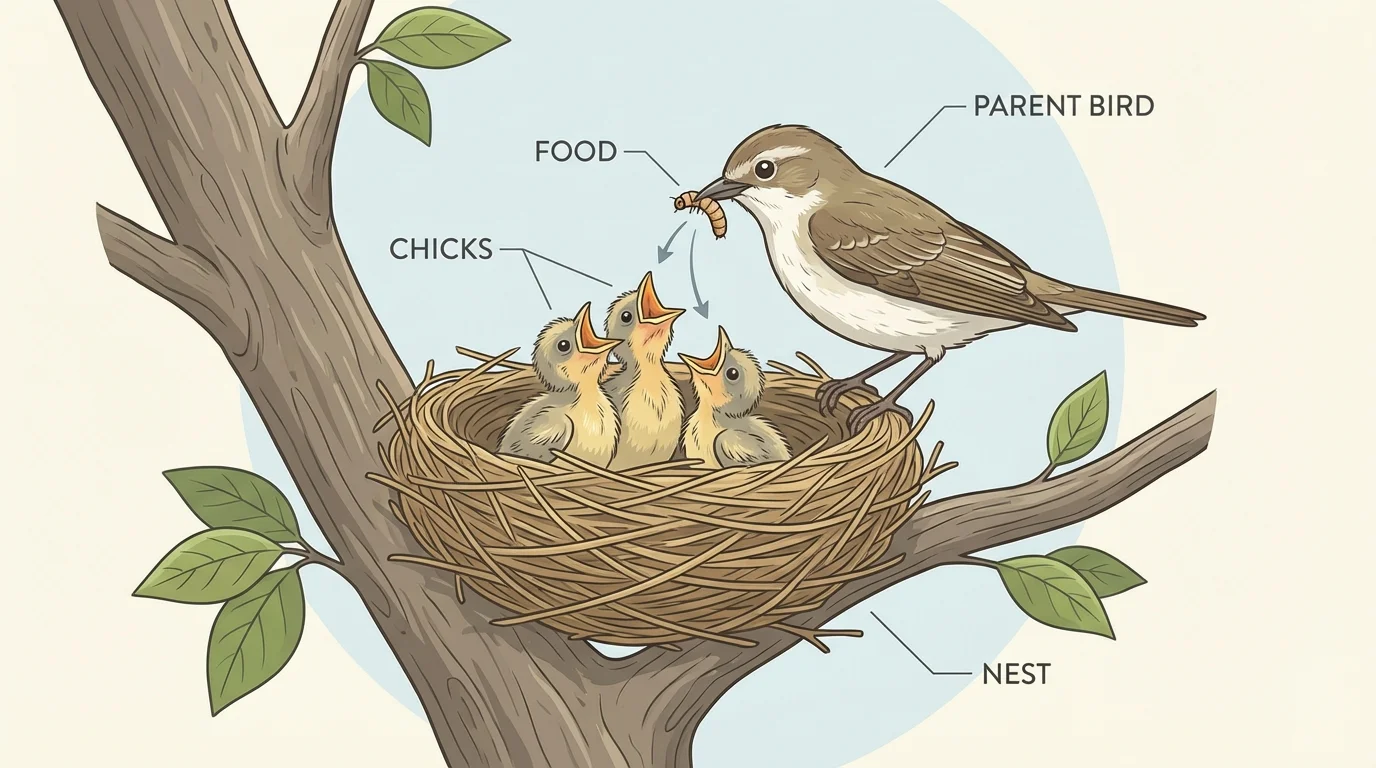
[Figure 1] In the natural world, many offspring need help. Some are too small to find food. Some cannot stay warm by themselves. Some need protection from danger. Parent actions help meet these needs.
A mother cat carries her kittens by the scruff so they can move to a safer place. A deer stays close to her fawn. A penguin parent keeps an egg warm. A bird parent brings worms or seeds to hungry chicks. These are all kinds of behaviors that help young animals survive.
Not all parent behavior looks the same. Some parents feed their young many times each day. Some hide their babies. Some lick, clean, or carry them. Some stay nearby and watch for danger. The action may be different, but the job is similar: helping the young stay alive.
Helping babies survive
Young animals need basic things: food, warmth, safety, and care. Parent behavior often helps with one or more of these needs. When we read or watch carefully, we can connect the action to the need it helps meet.
Sometimes offspring also have helpful behaviors. Ducklings follow their mother. Baby monkeys hold on to an adult. Chicks open their mouths for food. These actions help them get care from the parent.
[Figure 2] A pattern is something that happens again and again. In science, patterns help us notice what is common. When many animals feed, guard, warm, or stay near their young, we can say there is a pattern in how parents help offspring survive.
We do not need every animal to do the exact same thing. We are looking for repeated ideas. One parent may carry babies. Another may feed babies. Another may protect babies. The pattern is that parents often act in ways that help their young live and grow.
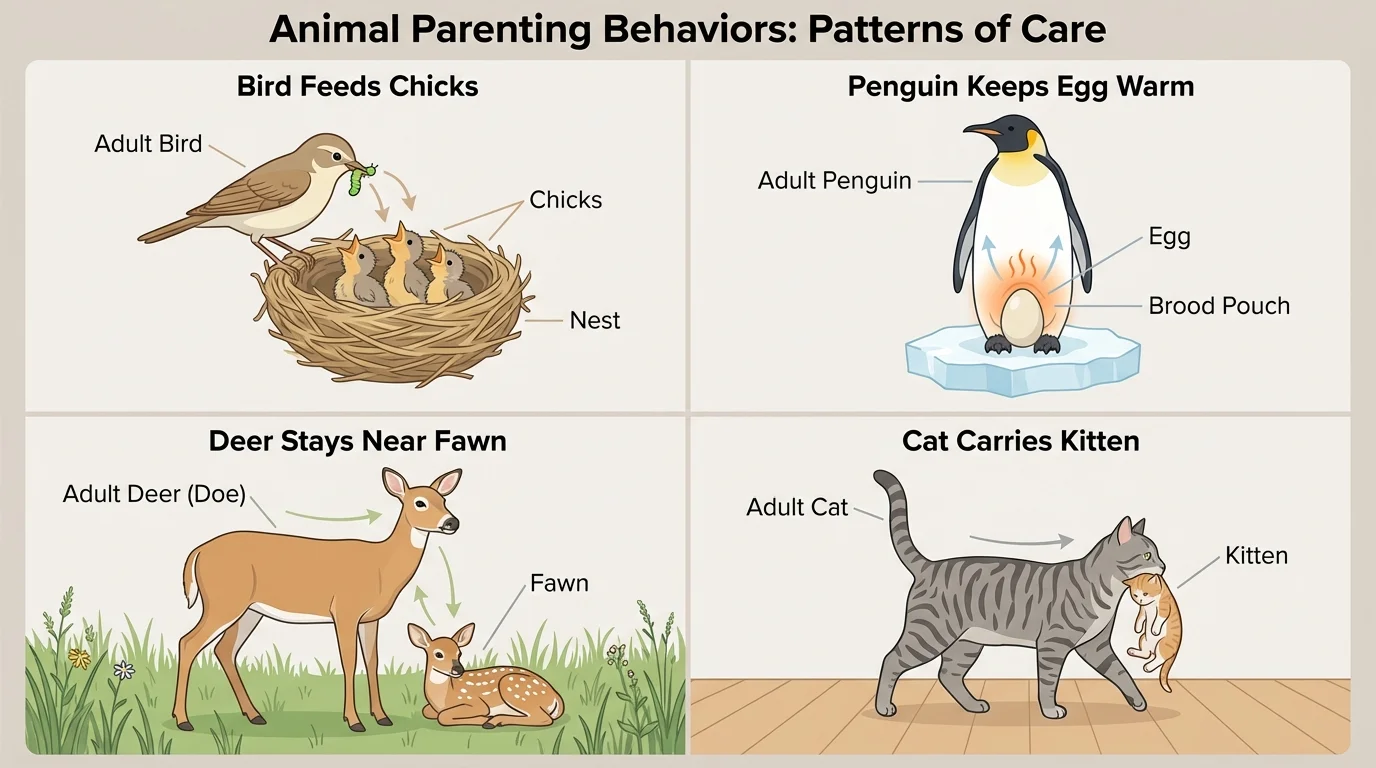
We can also notice patterns in offspring behavior. Many young animals stay close, follow, call for help, or wait to be fed. Those actions also help survival. A pattern tells us, "This is not just happening one time. It happens in many cases."
Later, when you think back to the bird nest in [Figure 1], you can connect it to the bigger pattern. That one bird family is one example of a larger science idea.
Some penguin parents take turns caring for an egg. One keeps the egg warm while the other goes to find food. That teamwork helps the chick survive in a very cold place.
Patterns can come from nature close to home too. You might see squirrels carrying food, ducks leading ducklings, or a dog staying near puppies. Careful observation helps us find the same kinds of clues in everyday life.
Suppose a book says, "Mother rabbits line the nest with soft fur." A picture shows tiny baby rabbits tucked inside. From these sources, we learn that the fur helps keep the babies warm. That is evidence that parent behavior helps offspring survive.
Suppose a video shows a hen calling to chicks when food is nearby. The chicks come quickly. Now we have information about both parent and offspring behavior. The call helps the chicks find food and stay close.
Using more than one source
A child reads a page about sea turtles and then watches a short video.
Step 1: The child reads that baby sea turtles move quickly toward the ocean after hatching.
Step 2: The child watches a video and sees the hatchlings moving together across the sand.
Step 3: The child puts the ideas together and says, "Moving quickly helps the babies reach the water."
This is using text and media to get information about survival.
Sometimes not all young animals get the same care. Some animals care for their babies for a long time, and some for a short time. Even so, we can still notice patterns of feeding, protecting, warming, leading, and staying near.
[Figure 3] Science helps us understand the natural world, but we can also use information to learn about the designed world, which means things people make. People design objects to help children stay safe.
A crib keeps a baby in a safe sleeping space. A car seat helps protect a child in a car. A helmet protects a rider's head. A seat belt helps keep a person safe. These are not animal behaviors, but they show a similar idea: caring actions and helpful designs can protect the young.
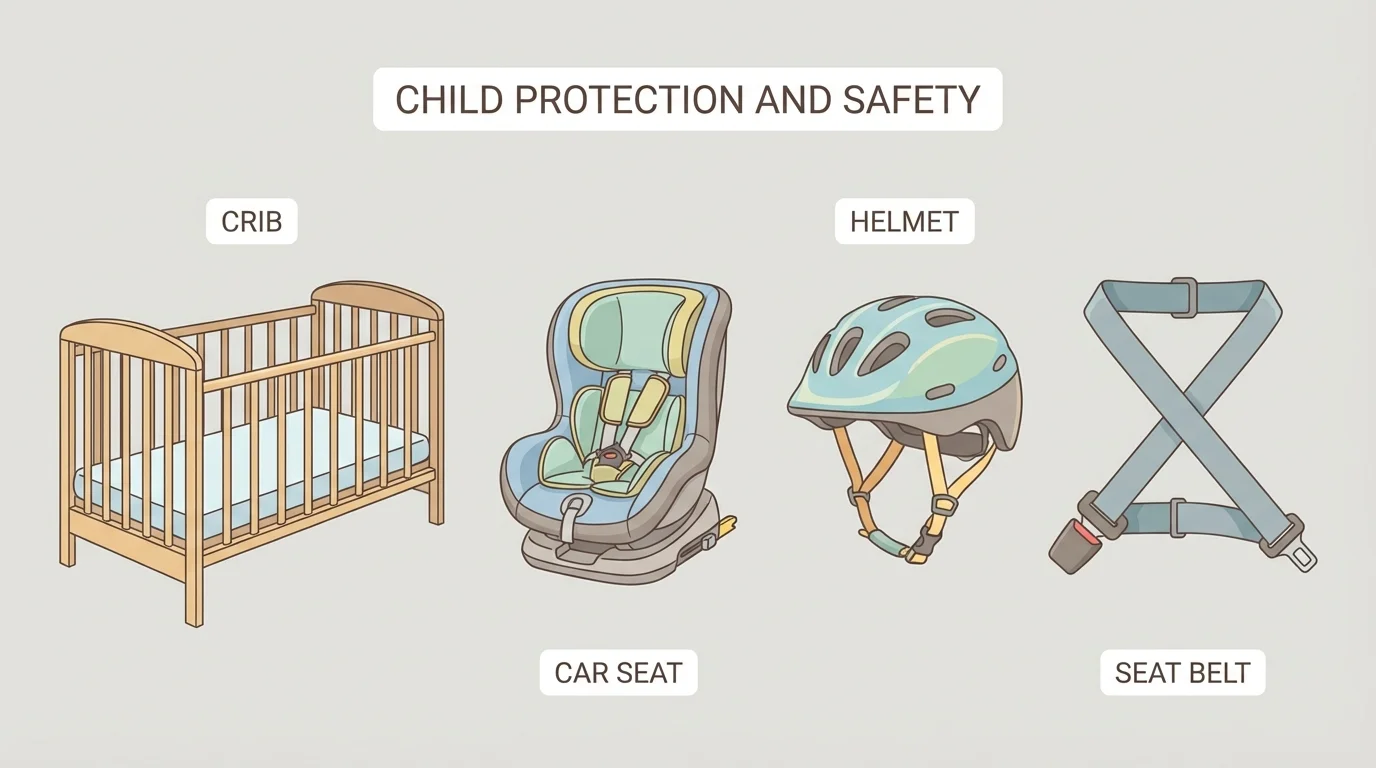
When we compare nature and human designs, we see a pattern of protection. Birds build nests. People build cribs. Parent animals stay close to babies. Adults use car seats and hold hands near busy streets. Both the natural world and the designed world give us examples of helping the young survive and stay safe.
Evidence is information that helps show that an idea is true. In science, evidence can come from words, pictures, videos, and observations. If a page says a parent penguin keeps an egg warm, and a photo shows the egg tucked against the parent, that is evidence.
A guess is different. If we say, "Maybe the penguin likes standing there," that is only a guess unless we have information to support it. Science learning means using evidence, not just making up ideas.
You already know that living things need food, water, air, and shelter. Young living things need these too, and they often need extra help from parents or caregivers.
Good evidence answers questions like these: What do we see? What do the words say? What action happens again? How does the action help? Those questions help us move from noticing to understanding.
When we learn patterns from texts and media, we can better understand animals around us. If we see a nest, we know an adult bird may be caring for chicks. If we see ducklings following a duck, we know staying close is important.
We can also make wise choices. We leave wild animal babies alone because a parent may be nearby. We use safety tools because people have designed them to protect children. The protection pattern we saw earlier in [Figure 3] helps us connect science learning to everyday life.
Reading, viewing, and listening carefully are important science skills. They help us gather facts, notice patterns, and explain how living things and human-made things work in the world.
