Have you ever seen a puddle disappear after the sun comes out, or watched a big storm change the playground in one afternoon? Earth is full of changes. Some changes happen rapidly, which means very fast. Other changes happen slowly, over many days, years, or even longer. Our planet is always changing, even when the changes are too small to notice right away.
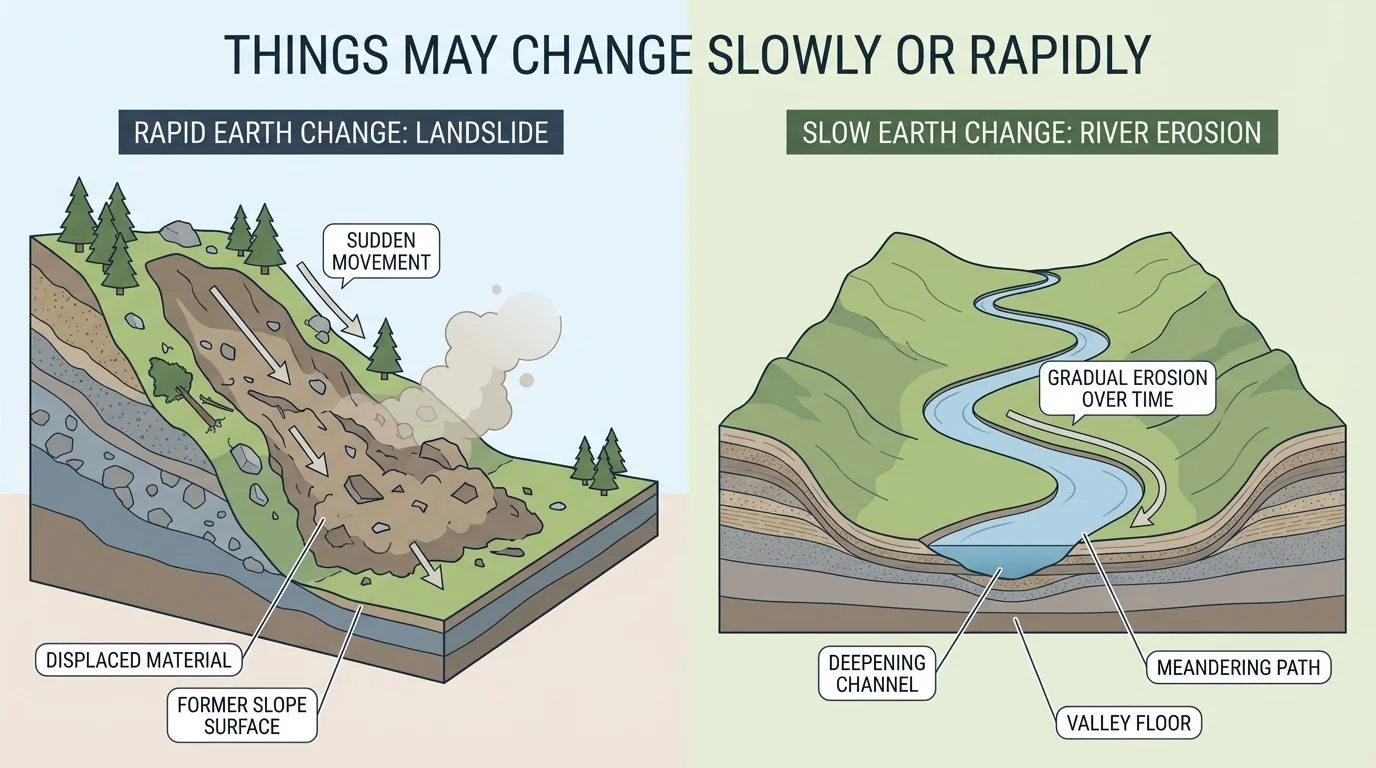
Some Earth changes happen in just seconds, minutes, or days. Others take a very long time. The comparison in [Figure 1] shows that Earth can change in both ways. A landslide can move rocks and soil very quickly. A flood can cover land in a short time. But a river making a valley happens bit by bit over many years.
A Earth event is something that happens on Earth and changes it. An earthquake, a storm, and a volcanic eruption are fast Earth events. Wearing away rock, depositing sand on a beach, or forming a canyon are slow Earth events. Fast does not always mean big, and slow does not always mean small. Even tiny drops of water can change rock if they keep moving for a long time.
We can think about Earth changes the way we think about growing. You may not notice your height change in one day, but after many months, you are taller. In the same way, land can look almost the same each day, but after many years it can look very different.
Rapid change is a change that happens very quickly.
Slow change is a change that happens over a long time.
Evidence is information that helps us know something happened.
Looking for evidence helps us understand what kind of change happened. Broken branches after a storm are evidence of a fast change. Smooth pebbles in a stream are evidence of a slow change because moving water rubs the rocks again and again.
The sky changes too. Clouds can move quickly. Rain can start suddenly. A windy day can blow leaves and dirt from one place to another. These are changes children often notice right away. A strong storm may quickly knock down tree branches or make a stream rise.
Other sky-related changes are slower. The seasons change over time. Days become warmer or cooler little by little. A place may have many rainy days in one season and then become drier later. Watching weather each day helps us notice patterns, and patterns help us understand slow changes.
Some rocks in deserts are shaped by wind carrying tiny bits of sand. Each tiny hit is small, but after a long time the rock can look very different.
When people get ready for storms, they use information from weather reports, radar pictures, and what they see outside. Using different sources helps people make safe choices. That is one reason learning about Earth changes is important in real life.
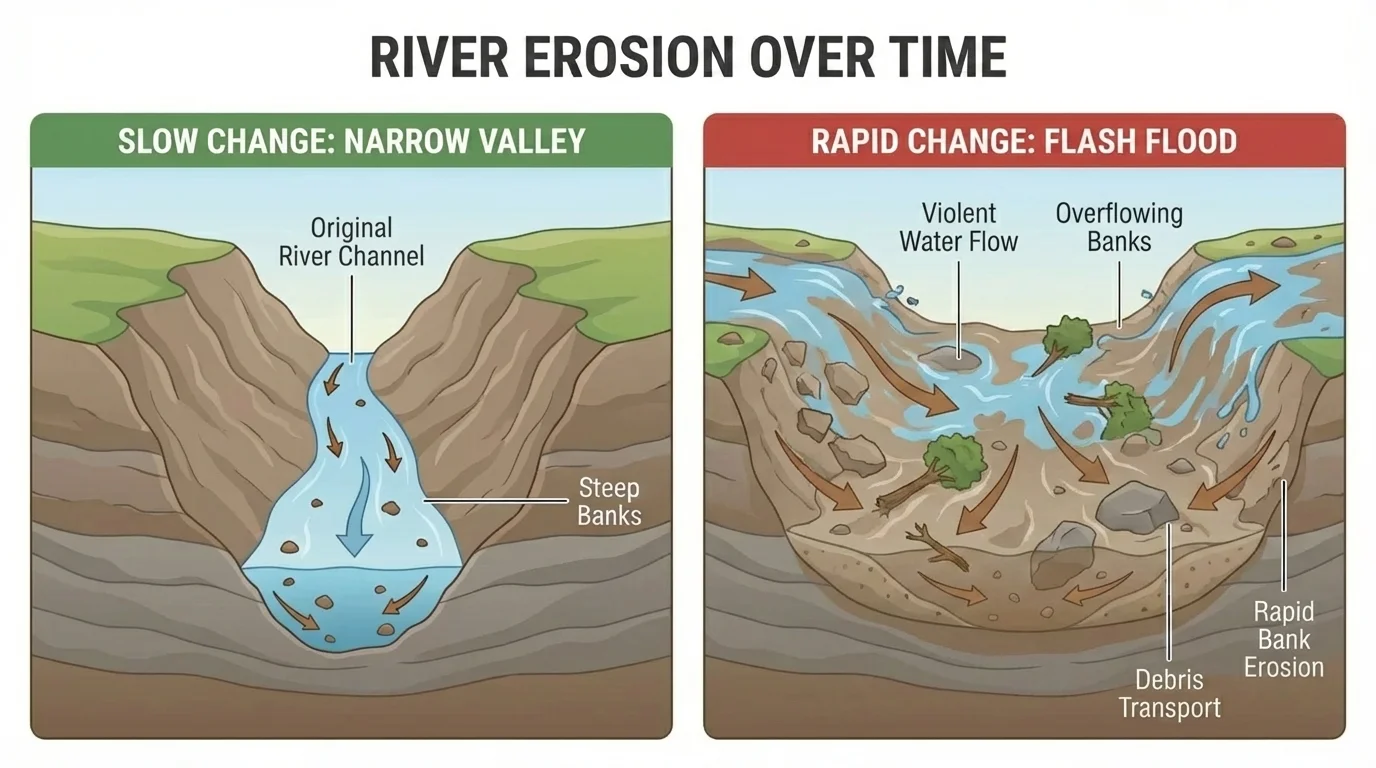
[Figure 2] Land does not stay exactly the same. Erosion is when water, wind, or ice moves bits of soil and rock from one place to another. A river can carry tiny pieces of land away. At first the change may be hard to see, but over a long time the river can make the land lower, wider, or smoother.
Waves can change a beach. They may wash sand away from one place and leave it in another place. Wind can move dry sand too. On a hill, heavy rain can loosen soil so that it slips down quickly. That is a fast change. So, the same place can change slowly most of the time and then change rapidly during one strong event.
Rocks can also break into smaller pieces. Water can seep into a crack in a rock. If the water freezes, it can push the crack wider. Later the rock may break apart. This often happens slowly, one small step at a time.
Small changes can add up
One wave, one raindrop, or one windy day may not do much. But when the same thing happens over and over, the land can change a lot. Slow change is powerful because it keeps going.
If you visit a stream many times, you might notice that some banks look different after many weeks. Plants may grow, soil may wash away, and little rocks may move. These are clues that Earth is always changing, even when the change is quiet.
Water is one of the most important forces that change Earth. Rain falls quickly, but the work it does can be fast or slow. A huge rainstorm may cause flooding in a short time. Gentle rain over many days may slowly soak the ground and help move tiny bits of soil.
Ice changes land too. When water freezes, it turns into ice. Ice can help crack rocks. In cold places, ice and melting water can shape the ground again and again. This is another example of slow change that becomes important over time.
Real-world example: after a storm and after many years
Step 1: A strong storm brings heavy rain in one afternoon.
Water rushes down a hill and moves mud and small rocks. This is a rapid change.
Step 2: After the storm, small streams keep flowing in the same area.
They carry tiny bits of soil little by little. This is a slow change.
Step 3: After a long time, the ground may have a new path or a deeper ditch.
The place changed in both fast and slow ways.
The same idea helps us understand why sidewalks crack, why beaches look different in different seasons, and why some hills become rounder over time. Water does not have to be huge to matter. Repeated small actions can create big results.
We can connect this idea back to [Figure 1]. The quick landslide and the slowly shaped valley are both real Earth changes. They happen at different speeds, but both leave evidence that we can observe.
[Figure 3] Scientists and students use more than one source of information to understand Earth. We can look outside and observe with our eyes. We can study photographs from before and after an event. We can read a weather report or a news story. We can use a simple map to see where something happened. When several sources tell the same story, our evidence becomes stronger.
For example, suppose a playground has a new muddy area. One source of information is what you see: wet ground and moved soil. Another source is a class photo from last week showing the ground looked different. A third source is a weather report saying there was heavy rain. Putting these clues together helps explain the change.
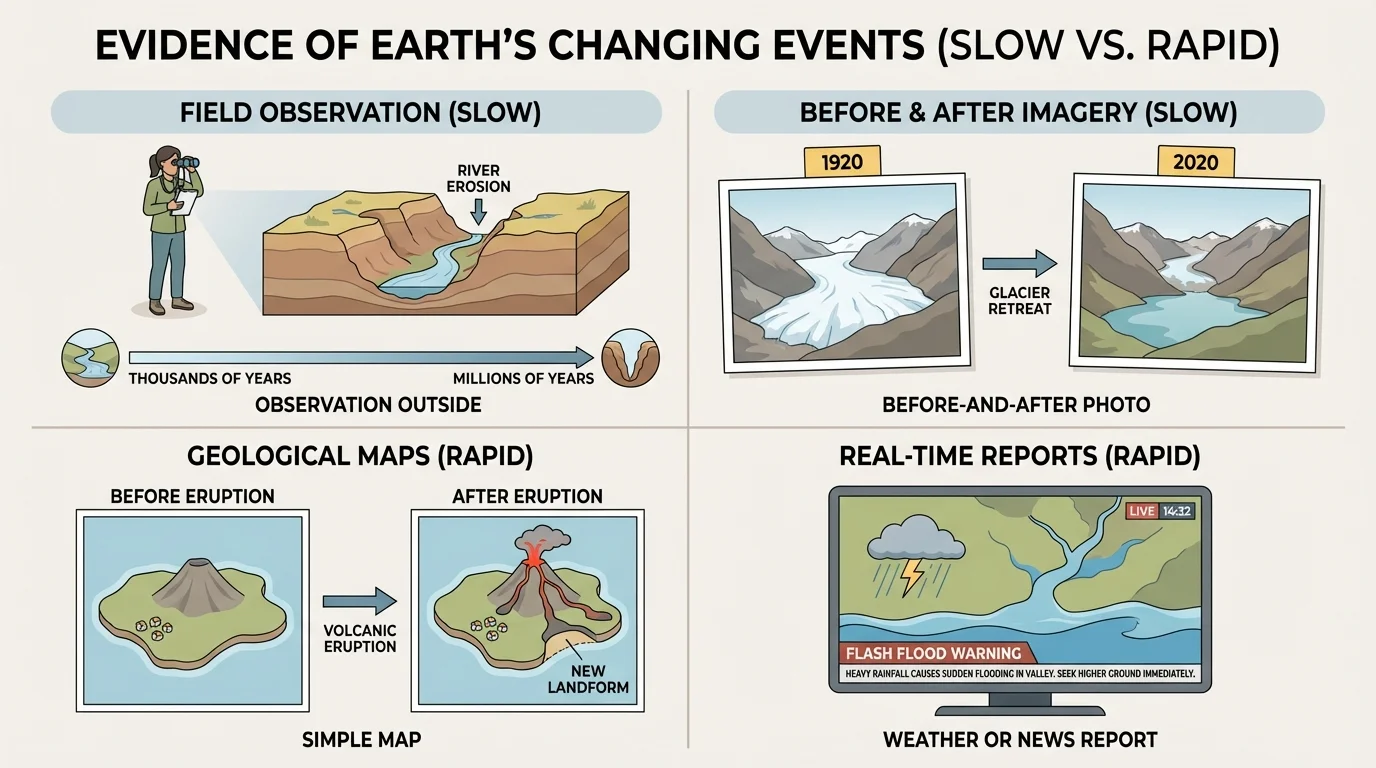
People also learn from family stories, books, and trusted videos. A grandparent might tell a story about a flood that happened long ago. A book might show how a canyon formed slowly. A photo might capture a volcano erupting quickly. Using several sources helps us avoid guessing.
Good observers look carefully, notice details, and compare what they see now with what they saw before.
Later, when we think again about [Figure 2], we can use different sources to understand river changes: a map of the stream, photos from different times, and direct observation of the water moving soil. That is how evidence helps us learn whether a change was rapid or slow.
Understanding Earth changes helps people stay safe and make smart choices. If a place floods quickly, people need warnings and plans. If a beach slowly loses sand, people may decide how to protect buildings. If wind and rain slowly wear away land, builders may choose strong places for roads and homes.
This learning also helps us appreciate nature. A canyon, a smooth pebble, or a sandy beach is a sign that Earth has been changing for a long time. A storm-damaged tree or a pile of fresh rocks at the bottom of a hill reminds us that change can happen fast too. Earth is active, powerful, and always at work.
