Have you ever seen the same thing happen again and again, like puddles forming after rain or trash collecting in the same corner of a playground? That is an important scientific idea: events have causes, and those causes can make patterns we can observe. When we look carefully, we can learn not just what happened, but why it happened.
A cause is why something happens. An effect is what happens because of the cause. One small action can lead to a result, as [Figure 1] shows in a simple everyday example. If a cup tips over, water spills out. The tipped cup is the cause. The puddle is the effect.
We see cause and effect all the time. If someone forgets to water a plant, the leaves may droop. If the sun shines and warms a puddle, the puddle gets smaller. If many feet run across muddy ground, the ground becomes packed and hard. Science helps us notice these links.
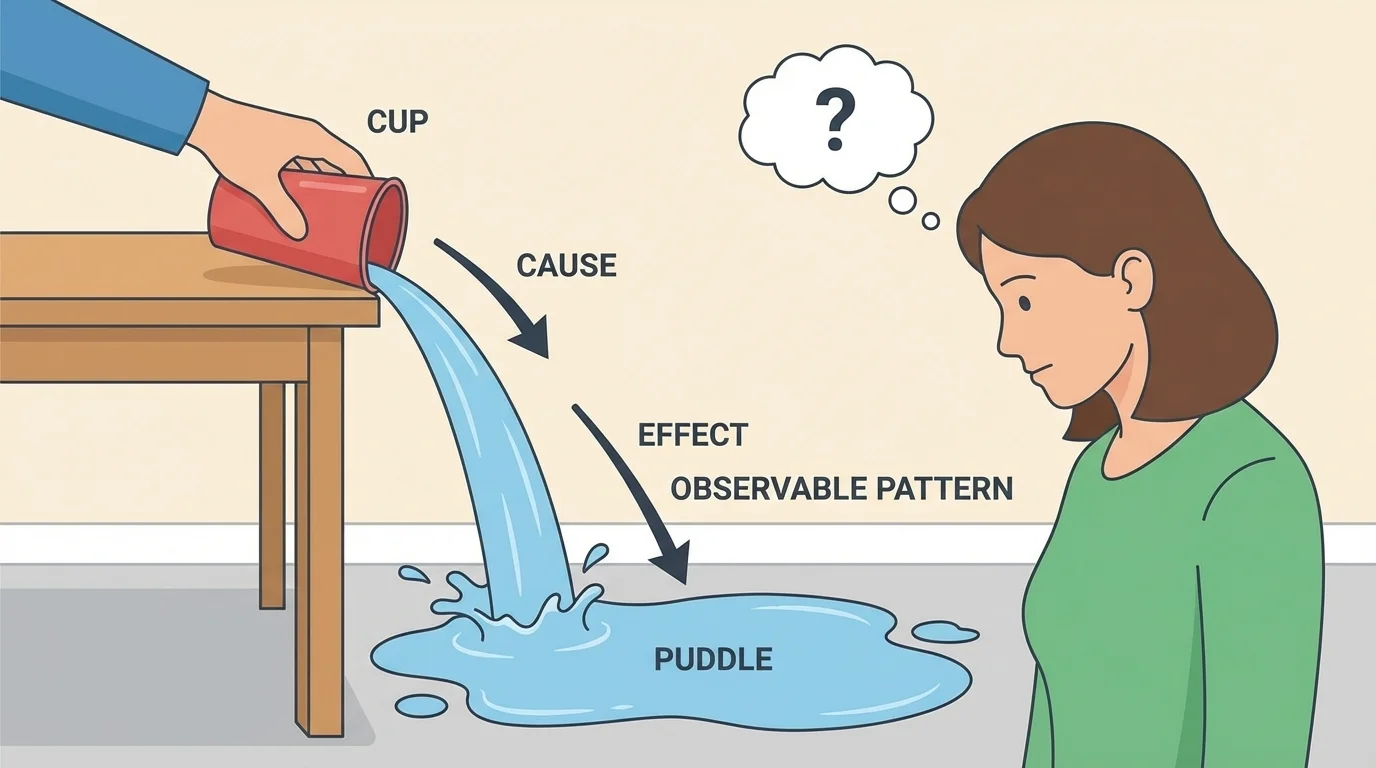
Sometimes a cause happens once. Sometimes the same cause happens many times. When it repeats, we often begin to see a pattern. A pattern is something that happens in a way we can notice again and again.
Cause and effect means one thing happens and then another thing happens because of it. A pattern is something that repeats in a way we can observe.
Patterns can be seen with our eyes, heard with our ears, or measured by counting. If birds visit the same tree every morning, that is a pattern. If the classroom recycling bin fills up every week, that is also a pattern.
Some patterns happen in nature. Rain often makes the ground wet. Sunny days can dry it again. Plants in a garden may grow taller when they get water and light each day. Leaves may fall more in some seasons than others.
Some patterns happen because of what people do. If people leave lights on, more energy is used. If people throw paper away instead of reusing or recycling it, trash cans fill faster. If water is left running while people soap their hands, more water is wasted.
We call these observable patterns because we can notice them. We may not always count with numbers, but we can still compare: more trash, less water, greener plants, or more exposed soil.
Some school gardens grow better after children make a watering plan. The regular care creates a regular pattern of healthy growth.
When scientists study patterns, they ask careful questions. What keeps happening? What changed first? What happened next? These questions help us find the cause.
Our world gives us natural resources. These are things from nature that living things use. Water, air, soil, sunlight, rocks, and plants are natural resources. People need them, and other living things need them too.
People use water to drink, wash, and grow food. We use soil to grow plants. Trees can give shade, homes for animals, and wood for building. Clean air helps people and animals breathe.
Because natural resources are important, it matters how we use them. Careful use can help a place stay healthy. Careless use can lead to problems that happen over and over.
| Natural resource | How people use it | What can happen if it is not cared for |
|---|---|---|
| Water | Drinking, washing, watering plants | Less water available |
| Soil | Growing gardens and trees | Bare ground or weak plant growth |
| Plants and trees | Food, shade, animal homes | Fewer habitats and less shade |
| Clean air | Breathing | Harder for living things to stay healthy |
Table 1. Examples of natural resources, how they are used, and what may happen when they are not protected.
When we watch how a place changes over time, we can often connect the changes to a cause. A dry garden may tell us it is not getting enough water. A messy park may tell us trash is not going into bins.
People can make patterns in the environment, as [Figure 2] illustrates. If litter is dropped in the same park again and again, more trash appears in that area. The repeated action causes a repeated result.
If children and adults walk across the same patch of grass every day, the grass may wear away and a dirt path may appear. If a faucet drips day after day, water is lost again and again. If no one picks up trash near a stream, the streamside may become dirty in a pattern we can clearly see.
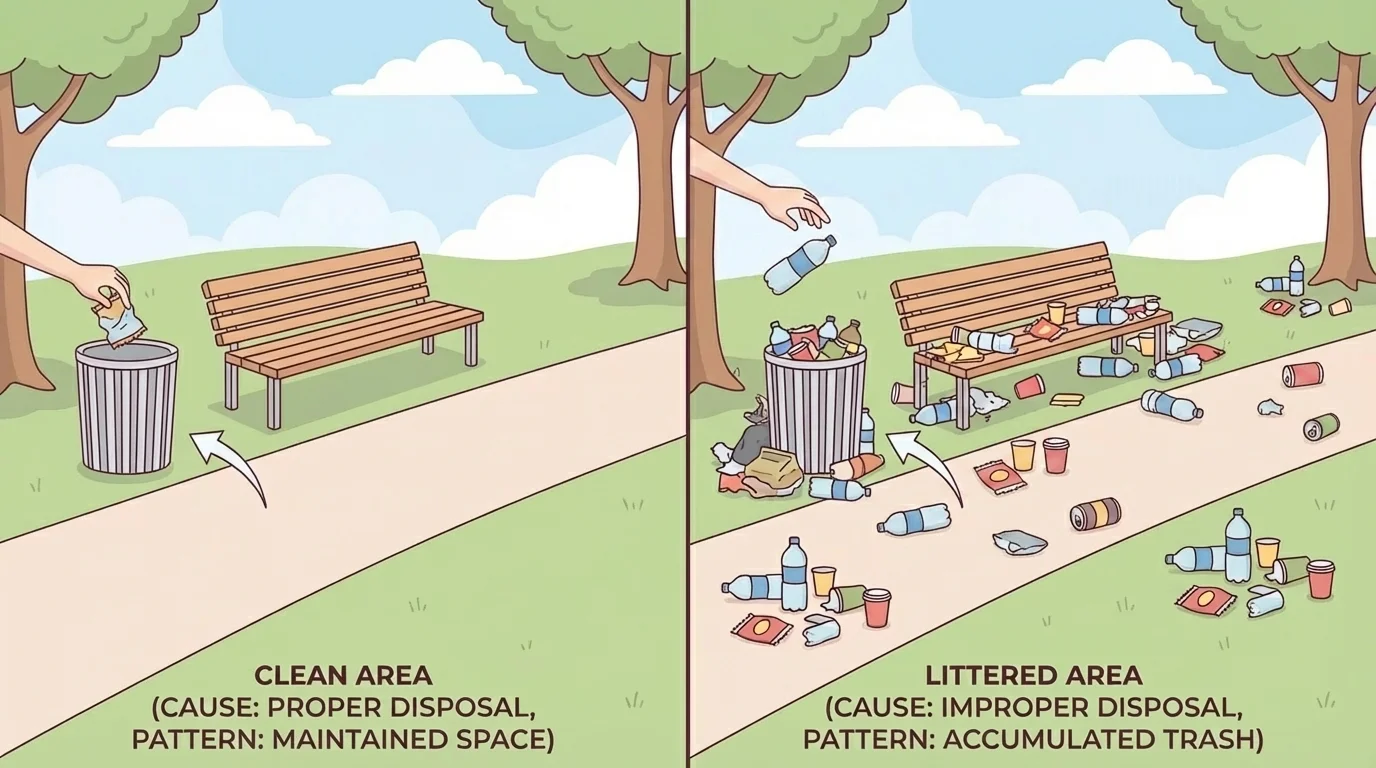
These patterns help us understand causes. A pattern is like a clue. If one part of the playground always has wrappers on the ground, we can ask: Is there no bin nearby? Is the bin too full? Are people forgetting to use it?
Repeated causes make repeated results. When the same action happens many times, the same kind of effect often happens many times too. That is why scientists and engineers pay attention to patterns. Patterns help them find problems and think of ways to fix them.
Not all human effects are harmful. If people plant flowers every spring, a pattern of blooms may appear each year. If a class waters a garden carefully, plants may grow in a strong, healthy pattern. Good actions can make good patterns.
When we understand a cause, we can think of a solution. A solution is a way to help solve a problem. Helpful solutions can change patterns in good ways.
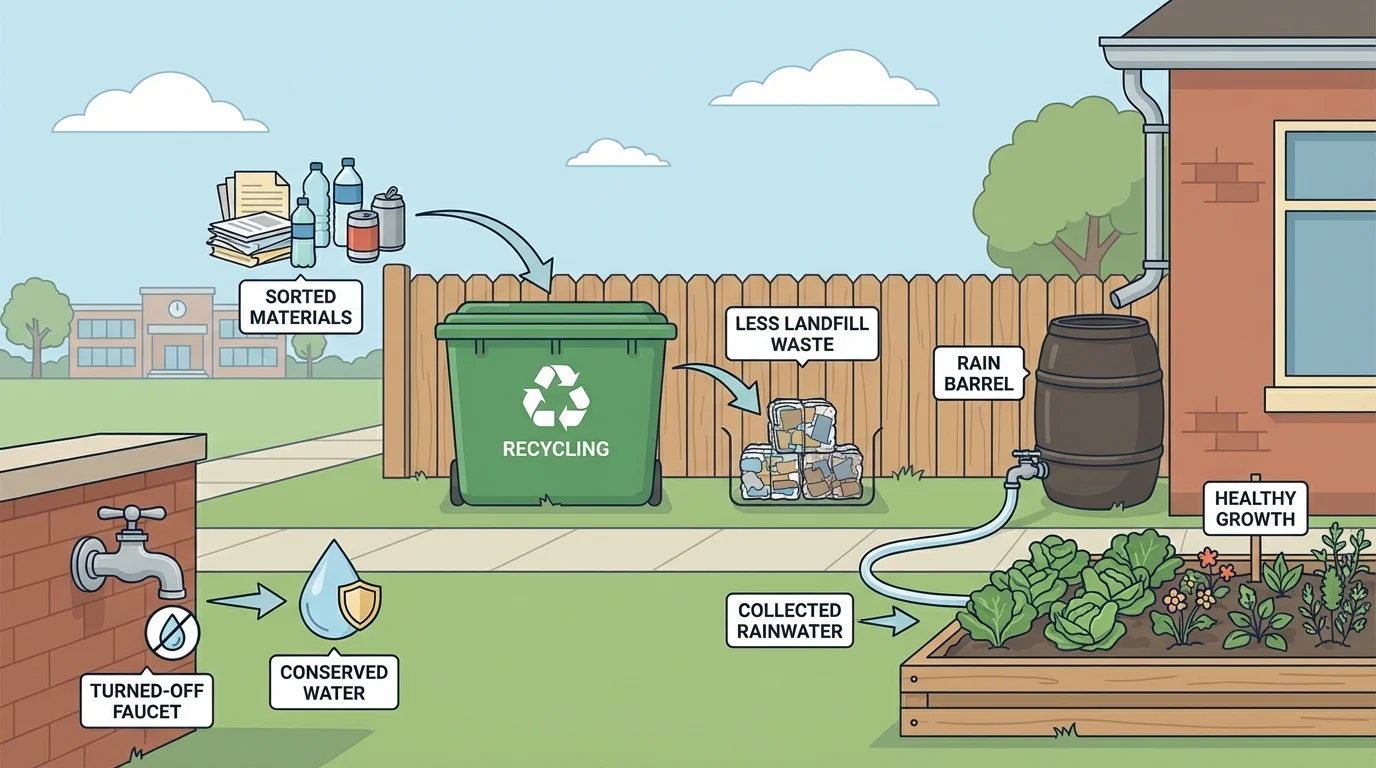
[Figure 3] shows simple ideas for a schoolyard and neighborhood. If trash gathers where there is no bin, adding a bin may help. If paper is thrown away too quickly, a reuse box for one-sided paper may help. If a garden dries out, a watering schedule may help. If people forget to turn off a faucet, a sign by the sink may remind them.
Some solutions protect water. We can turn off water while soaping hands. We can fix leaks. We can collect rainwater for plants where it is safe and allowed. Some solutions protect soil and plants. We can stay on paths, plant grass or flowers in bare places, and avoid pulling up plants.
Other solutions help reduce waste. We can recycle bottles, cans, and paper if our community collects them. We can use both sides of paper. We can bring a reusable water bottle instead of using many throwaway ones.
Local environment example
A school notices that the garden near the playground looks dry and weak by the end of each week.
Step 1: Observe the pattern
The plants droop again and again on hot days.
Step 2: Think about the cause
The garden may not be getting enough water.
Step 3: Design a solution
The class makes a simple watering plan and checks the soil.
Step 4: Look for a new pattern
After regular watering, the plants grow better and the soil stays moist more often.
The changed pattern gives evidence that the solution helps.
Engineers and problem-solvers often work this way: notice a problem, look for a cause, try a solution, and observe what happens next. We can do this in small ways in our classroom, school, and home.
Plants and animals also depend on resources, and their lives often follow patterns based on what is available, as [Figure 4] shows. Birds may gather where there is water. Worms may be found in moist soil. Grass grows better where it has light, water, and space.
If a place has what living things need, more of them may live there. If a place is dry, trampled, or full of trash, fewer plants and animals may be able to live well there. This is why changes in the environment can also change where living things are found.
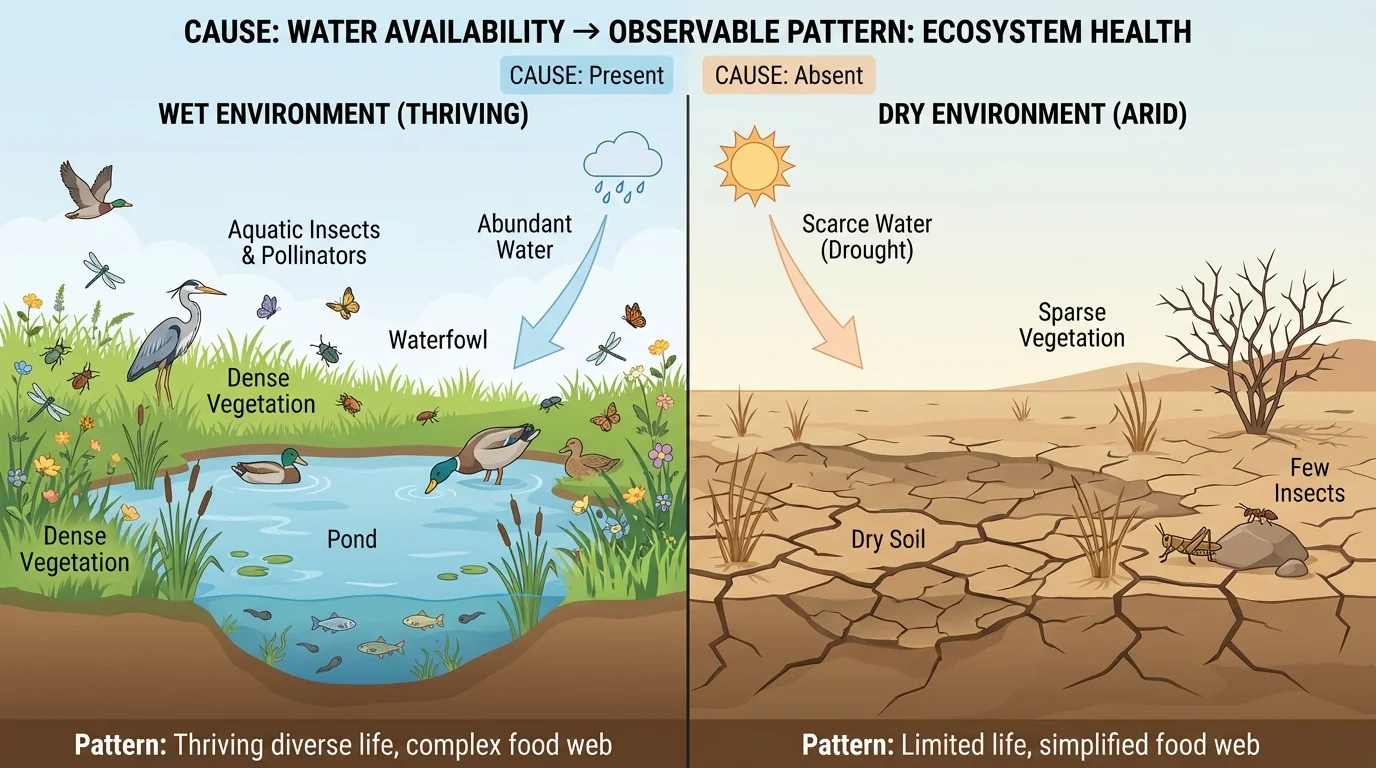
This is connected to a habitat. A habitat is a place where a living thing gets what it needs to live. When people protect water, soil, and plants, they help protect habitats too.
Plants need water, light, air, and space to grow. Animals need food, water, air, and shelter. When these needs change, we often see changes in where living things can live.
Think about a tree near a puddle and a tree in dry, packed soil. The places are different, so the pattern of life around them may be different too. You may see more insects, birds, or green plants where resources are easier to find.
Our local environment includes places close to us, such as a yard, park, sidewalk, school garden, or pond. We can look for causes and patterns in these places every day.
Maybe one corner of the playground is always muddy after rain. Maybe one flower bed grows better than another. Maybe leaves collect by the fence when wind blows. Maybe the recycling bin fills up faster on art day. Each pattern tells us something about what is happening.
Earlier, [Figure 2] shows how repeated littering can create a messy pattern in one area. In the same way, repeated care can create a cleaner pattern. A nearby bin, a class reminder, and regular cleanup can help a park or schoolyard stay cleaner and healthier.
We also saw in [Figure 3] that simple solutions can protect resources. Turning off faucets, reusing paper, and planting in bare soil are small actions, but when many people repeat them, a new and better pattern can appear.
Science helps us be careful observers. We notice what happens. We look for what caused it. Then we think about how to care for the natural resources that people, plants, and animals all share.
