A huge tree can fall in one stormy night, but a canyon can take many, many years to form. Nature is full of changes that happen at different speeds. Scientists are careful observers. They do not guess wildly. They look for clues, compare what they see, and use those clues to explain what happened.
When scientists study nature, they make a observation. An observation is something we notice using our senses or tools. We might see muddy water, hear thunder, feel wind, or look at a photograph taken earlier. Each observation is a clue.
Evidence is information that helps show whether an idea is true. An account is a clear explanation of what happened. When we use evidence to make an account, we are telling what happened and why we think so.
One clue is helpful, but several clues are even better. A person might see a puddle after rain. A weather report might say a storm passed by. A photo might show dark clouds. Together, those sources help us explain why the ground is wet.
Sources can include books, pictures, videos, maps, weather reports, or what people saw themselves. Using several sources helps us make a stronger explanation because the clues can fit together.
Some changes on Earth happen very quickly, as shown in [Figure 1]. A strong storm can flood a street in a short time. An earthquake can shake the ground in seconds. A volcano can send out hot rock and ash quickly. A landslide can move rocks and soil down a hill fast.
Rapid events may happen in only a few seconds, minutes, or days. Even though they happen fast, they can change the land, water, plants, and buildings around them.
If we want to explain a flood, we can gather evidence from several places. We can look at rain totals, see photos of high water, notice mud left on the ground, and read reports from people nearby. These clues help us say that heavy rain caused water to rise quickly.
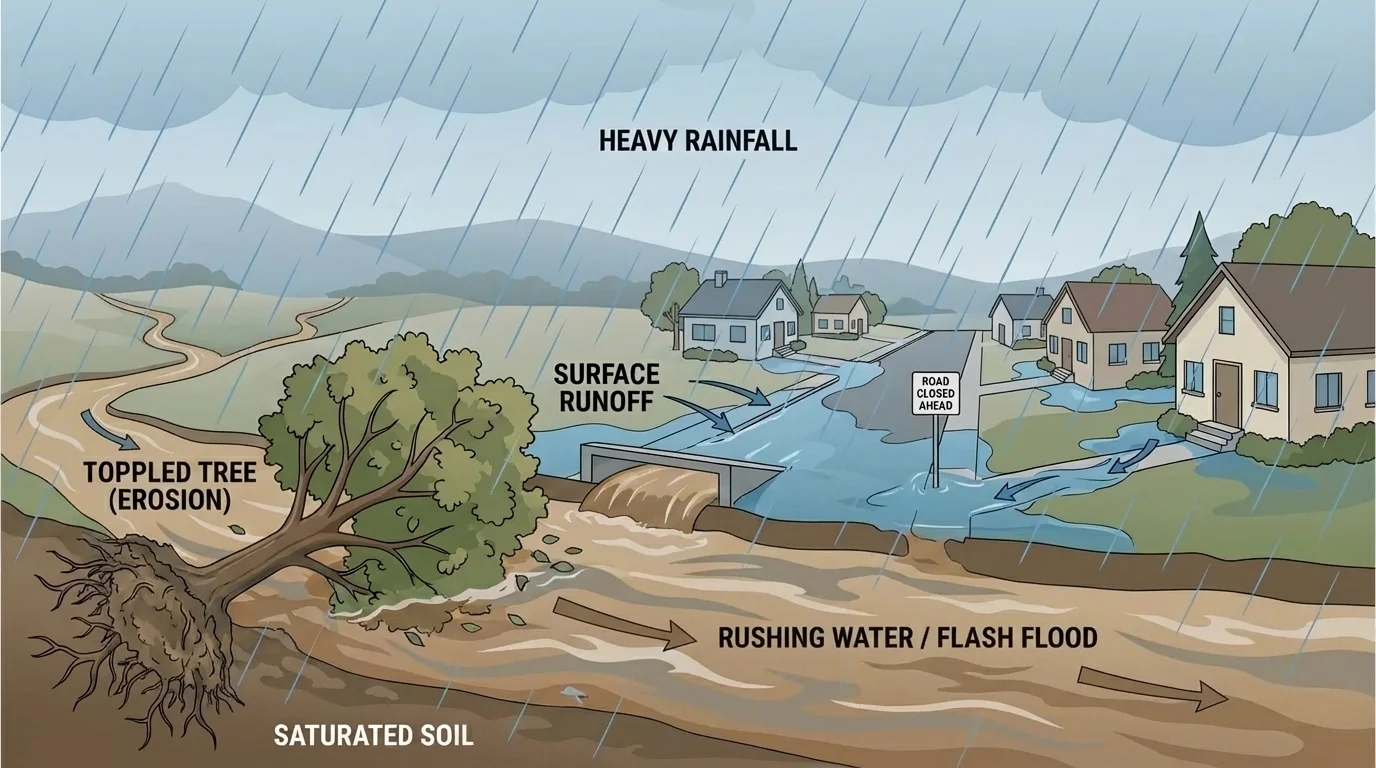
A quick Earth event can leave signs behind. Broken branches, moved rocks, cracked ground, and deep puddles are signs that something happened fast. Scientists and community helpers look at these signs to understand the event.
Some earthquakes are so quick that people may only feel shaking for a short moment, but that short moment can still change roads, walls, and the ground.
When we explain a fast change, we do not just say, "A flood happened." We try to tell how we know. We might say, "The water rose quickly because there was heavy rain, the creek overflowed, and photos show water covering the road." That is an evidence-based explanation.
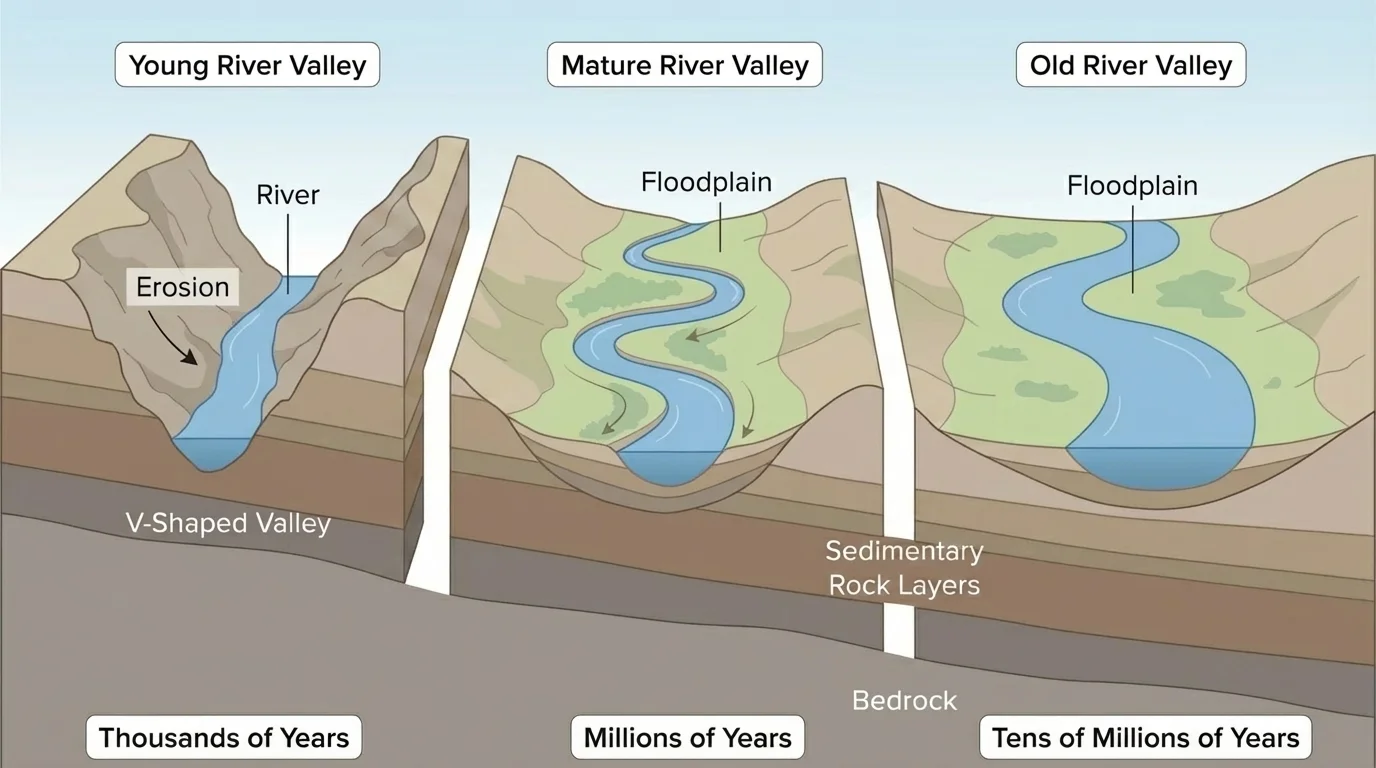
Other Earth changes happen slowly, as [Figure 2] shows with water shaping land over a long time. A river can wear away rock little by little. Wind can move tiny bits of sand again and again. Waves can slowly change the shape of a beach. Rain and ice can crack rocks, and then the pieces break apart over time.
These slow changes may be hard to notice in one day. But if we compare the land over months or years, we can see the difference. A hill may become smoother. A stream bank may move. A path may wash away a little more each year.
To understand slow change, scientists often compare old and new evidence. They might use photographs from different years, maps, measurements, and notes from people who studied the place before. By comparing several sources, they can explain how the land changed.
For example, if a beach becomes narrower, one source might be a picture from last year. Another source might be a picture from this year. Another source might be notes saying strong waves hit the shore many times. Put together, the evidence supports the idea that waves slowly carried sand away.
Slow does not mean weak. Water can look soft, but over a long time it can change hard rock. Wind can seem gentle, but over many days it can move a lot of sand. That is one of nature's amazing patterns.
Fast and slow changes can both be important. A rapid event can change Earth in a short time, while a slow process can shape Earth over many years. Scientists study both kinds of change by gathering evidence and looking for patterns.
Later, when we compare fast floods with slow changes caused by rivers, [Figure 2] helps us remember that even small changes can add up over time.
Good explanations often come from more than one source, not from just one clue. A map can show where a river is. A photo can show muddy water. A video can show heavy rainfall. A person's notes can tell when the storm started. These different clues work together, as shown in [Figure 3].
Sometimes one source is incomplete. A picture may show water on the road, but not what caused it. A weather report may tell us about heavy rain, but not what happened in one neighborhood. When we use both, we understand more.
Scientists ask questions such as: What do all the sources agree on? What happened first? What signs were left behind? Which explanation fits the evidence best?
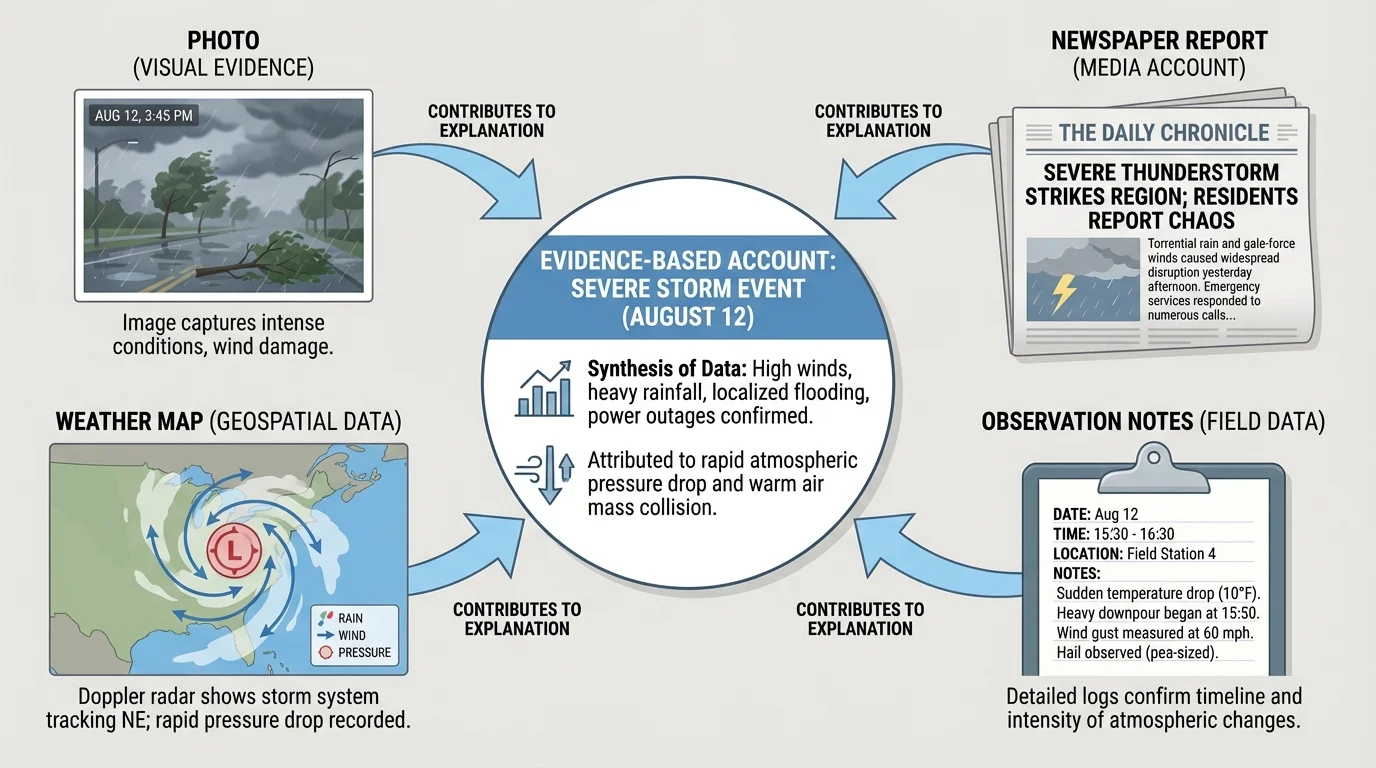
This process involves using evidence from different sources. Evidence is stronger when it comes from several places that match. If a video, a photo, and a weather report all show a storm, then our explanation becomes more believable.
Example: Explaining a muddy playground
Step 1: Gather clues.
A student sees puddles and mud. A teacher says it rained during the night. A weather app shows a storm in the area.
Step 2: Put the clues together.
The puddles, mud, and weather report all match.
Step 3: Build the account.
An evidence-based account is: "The playground is muddy because rain fell overnight and the water stayed on the ground."
That same kind of careful thinking helps us understand much bigger events too, including floods, beach changes, and cracked rocks.
Scientists also use observations from several sources to explain how materials change. A material is what something is made of, such as wood, metal, glass, ice, or clay. We can watch a material before, during, and after a change, as shown in [Figure 4].
Some materials change when they are heated, cooled, bent, cut, or mixed. Ice can melt into liquid water. Liquid water can freeze into ice. A piece of paper can be cut into smaller pieces. Clay can be shaped into a new form.
If we are explaining melting ice, we can use several observations: first the ice is hard, later there is a puddle, and the cup feels colder. If we also have a photo from the beginning and another from the end, we have more evidence for our explanation.
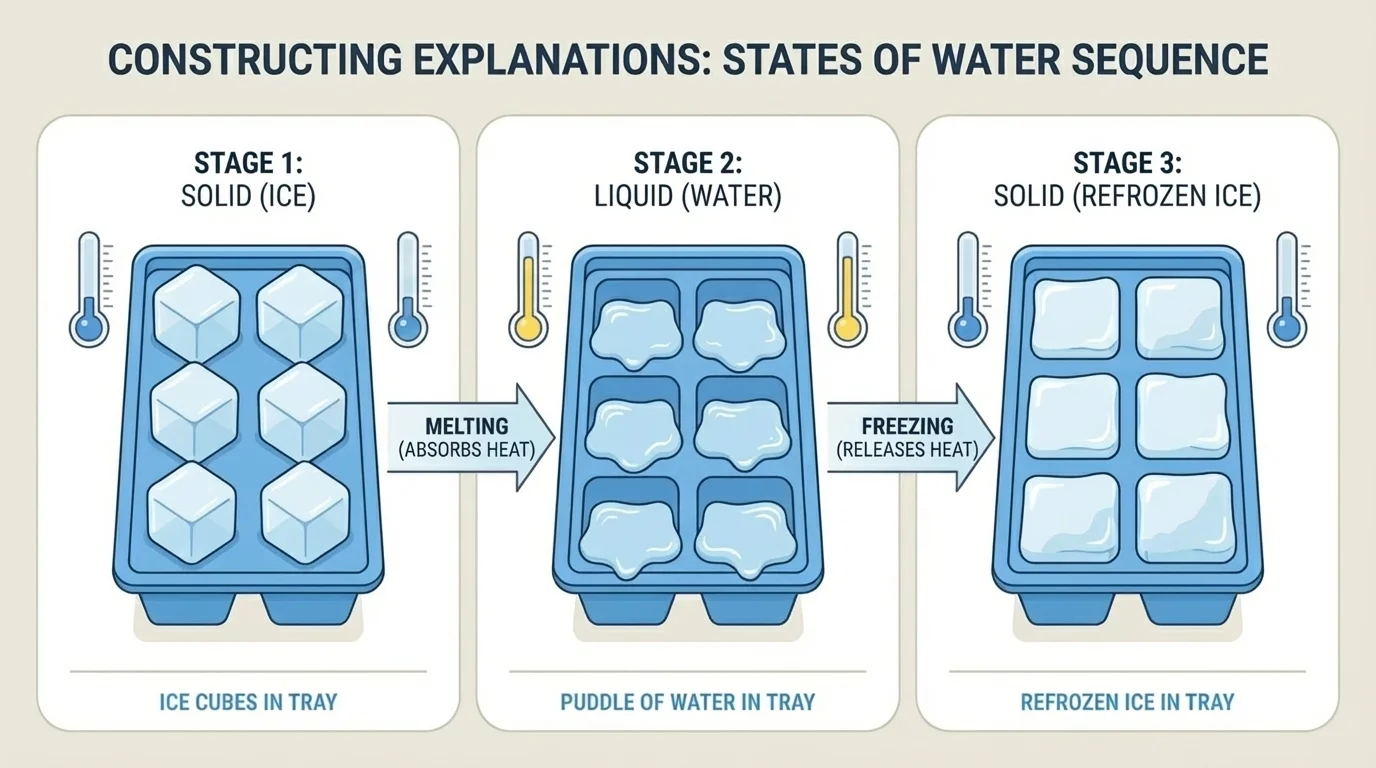
When a material changes, we can describe what stayed the same and what changed. Ice and liquid water are both water, written as \(\textrm{H}_2\textrm{O}\). The shape changes, but it is still the same substance. That is a useful scientific idea.
Another example is breaking a crayon. The pieces are smaller, but the material is still crayon wax. Careful observations help us explain that some changes affect size or shape, while others affect state, like solid to liquid.
You already know that solids keep their shape better than liquids. That helps explain why ice cubes hold a shape at first, but melted water spreads to fit the container.
Much later in the lesson, when we think again about watching changes over time, [Figure 4] reminds us that a sequence of observations can tell a clear story.
A natural phenomenon is an event or process that happens in nature, such as rain, a flood, a landslide, or a river wearing away rock. To explain a natural phenomenon, we gather clues and connect them.
A strong account often has three parts. First, say what happened. Second, tell the evidence. Third, explain how the evidence supports the idea. For a slow change, we might say, "The stream bank changed shape over time because photos from two years, water marks, and soil movement all show that flowing water wore the bank away."
We can use this pattern for fast events too. "The road flooded quickly because heavy rain fell, water rose near the curb, and neighbors reported the storm starting in the morning." The account is clear because it is based on evidence, not just opinion.
Scientists look for matching clues. When several observations support the same idea, the explanation becomes stronger. If the clues do not fit together, scientists keep asking questions and looking for more information.
As we saw earlier with storms and maps in [Figure 3], matching clues from different sources help us build better explanations.
People use evidence-based explanations every day. Meteorologists study storms to warn families about floods. Park workers watch rivers and cliffs to keep people safe. Builders study land and water to decide where roads and buildings should go.
Families also use this kind of thinking. If a backyard is washing away, they may compare pictures from different months, look at where rainwater flows, and ask neighbors what happens during storms. Those clues can help them decide how to protect the yard.
Learning to observe carefully helps us become thoughtful problem-solvers. We learn to ask, "What do I notice?" "What other sources can help?" and "What explanation fits the evidence?" That is how scientists make sense of the natural world.
