A forest after a storm, a fish tank in a classroom, and even a bicycle at the playground all have something important in common: they are systems. A system is not just a pile of parts. It is a group of parts that connect and affect one another. When one part changes, other parts often change too. Understanding systems helps us explain what happens in nature and how people can solve problems when environments change.
A system is a set of parts that work together as a whole. The parts of a system are called components. The ways the parts affect one another are called interactions. If you know the components and the interactions, you can understand how the system works.
Think about a bicycle. Its components include wheels, pedals, a chain, handlebars, and brakes. These parts interact. When you push the pedals, the chain moves. When the chain moves, the wheels turn. When you squeeze the brakes, the wheels slow down. The bicycle works because its parts are connected in useful ways.
A classroom can also be seen as a system. Students, desks, lights, books, and rules are all parts of that system. If the lights go out, reading becomes harder. If the class changes its rules, student behavior may change too. In every system, it helps to ask two questions: What are the parts? and How do the parts interact?
System means a group of connected parts that work together.
Components are the parts of the system.
Interactions are the actions or connections between the parts.
Scientists often study systems by looking for patterns. They notice what goes in, what comes out, and what changes inside. For example, a plant system takes in sunlight, water, and air. It grows leaves, roots, and flowers. If one needed part is missing, the whole system may not work well.
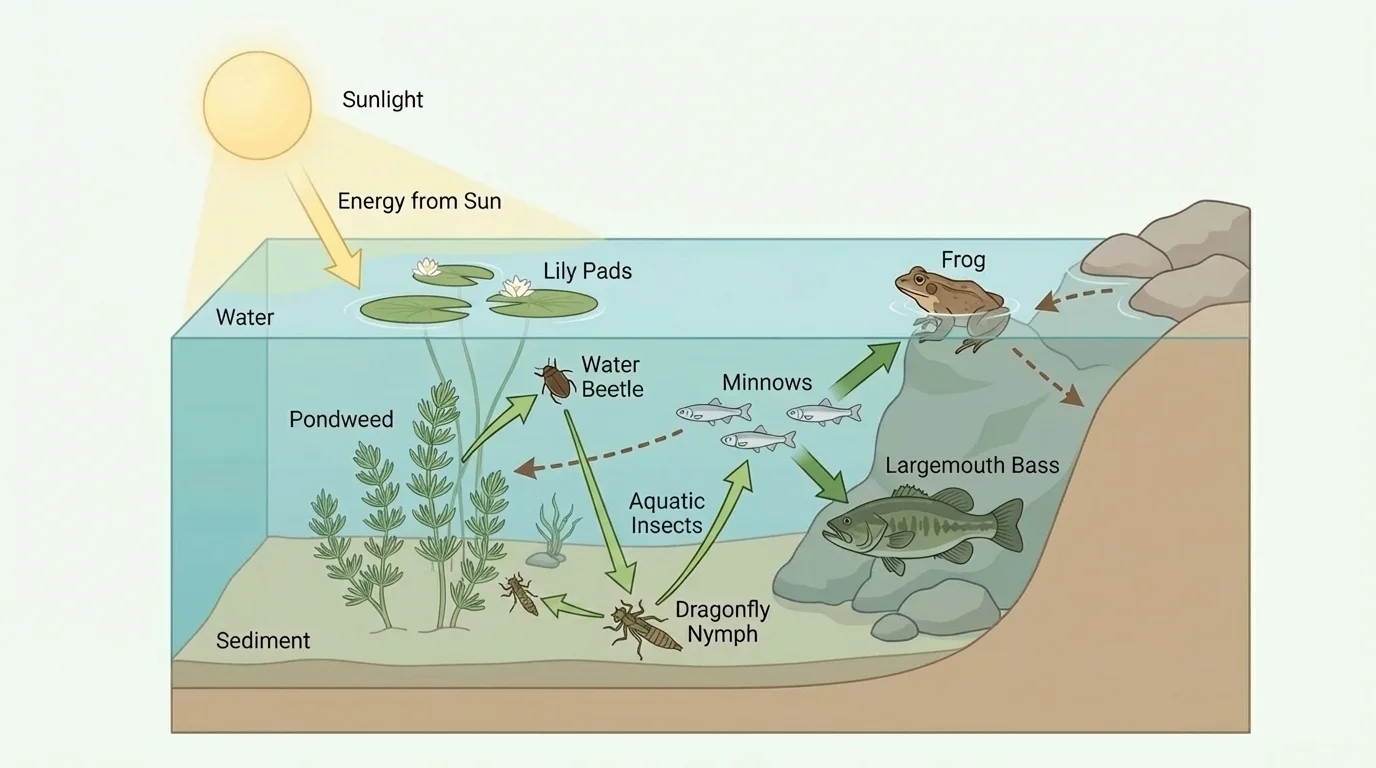
Nature is full of systems. A ecosystem is a natural system made of living things and nonliving things that interact. In a pond ecosystem, fish, frogs, insects, plants, water, rocks, air, and sunlight all work together, as [Figure 1] shows. The pond is not just water with animals in it. It is a connected system in which each part matters.
Plants use sunlight, water, and air to make food. Insects may eat the plants. Frogs may eat the insects. Fish may hide near water plants. Birds may drink from the pond or hunt near it. Even mud at the bottom can matter because it helps hold nutrients and gives some organisms a place to live.
Some components of an ecosystem are living, like trees, rabbits, and mushrooms. Other components are nonliving, like water, soil, temperature, and sunlight. Both kinds are important. If a pond has clean water but no plants, many animals may not have enough food or shelter. If there is plenty of food but the water becomes too warm, some fish may not survive.
Systems in nature can be large or small. A rotting log is a small system where fungi, insects, worms, air, water, and dead wood interact. A forest is a larger system with trees, streams, birds, deer, and weather. The same big idea works for both: a system can be described by its parts and their interactions.
Some beavers change whole ecosystems by building dams. Their dams slow water, create ponds, and make new habitats for many other organisms.
When scientists study an ecosystem, they do not just list the organisms. They also look at who eats whom, where organisms live, how water moves, and how weather affects the habitat. That helps them see the system as a whole.
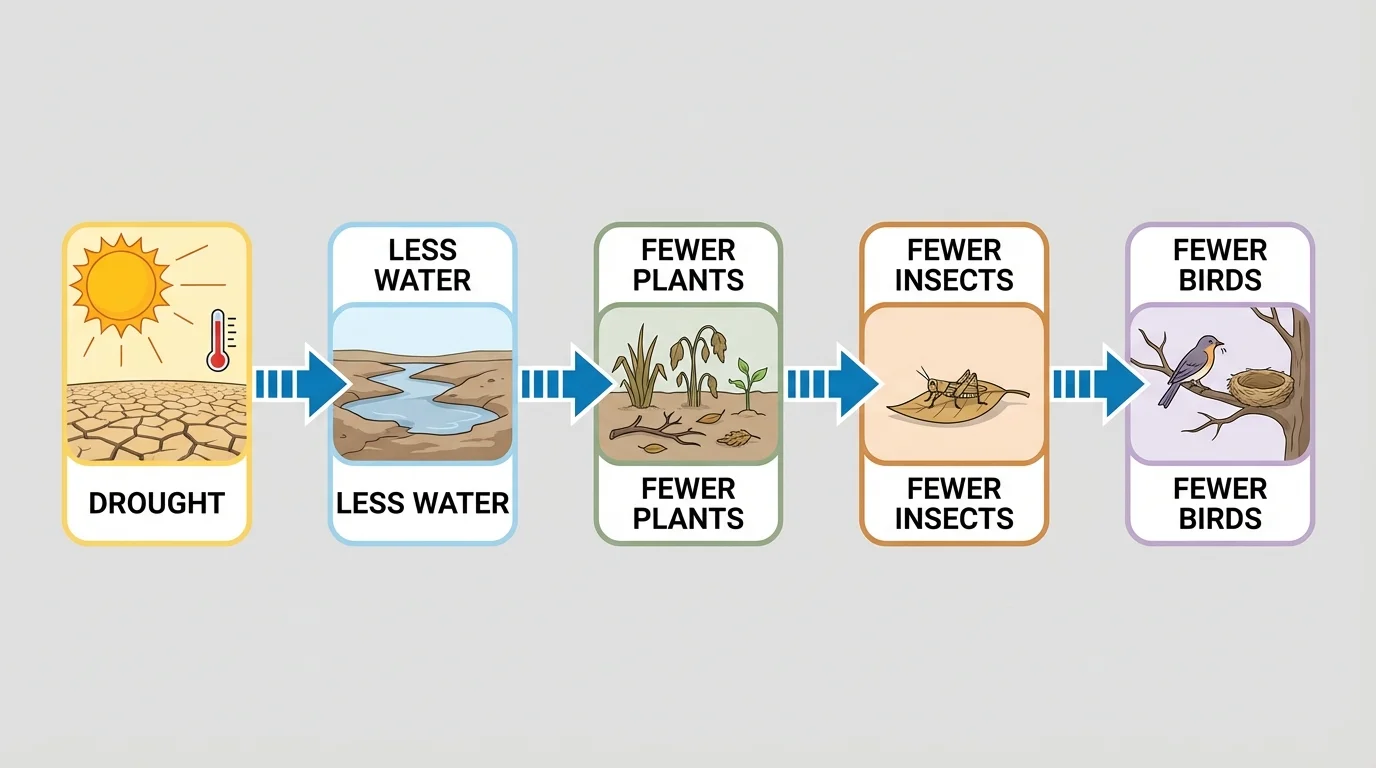
One powerful idea about systems is that a change in one component can spread through the whole system, as [Figure 2] illustrates with drought and food chains. In nature, this happens all the time. A small change can sometimes lead to many other changes.
Suppose a habitat gets much less rain than usual. With less water, fewer plants may grow. With fewer plants, some insects may have less food. With fewer insects, birds that eat those insects may also struggle. A change in rain can affect plants, animals, and shelter across the whole habitat.
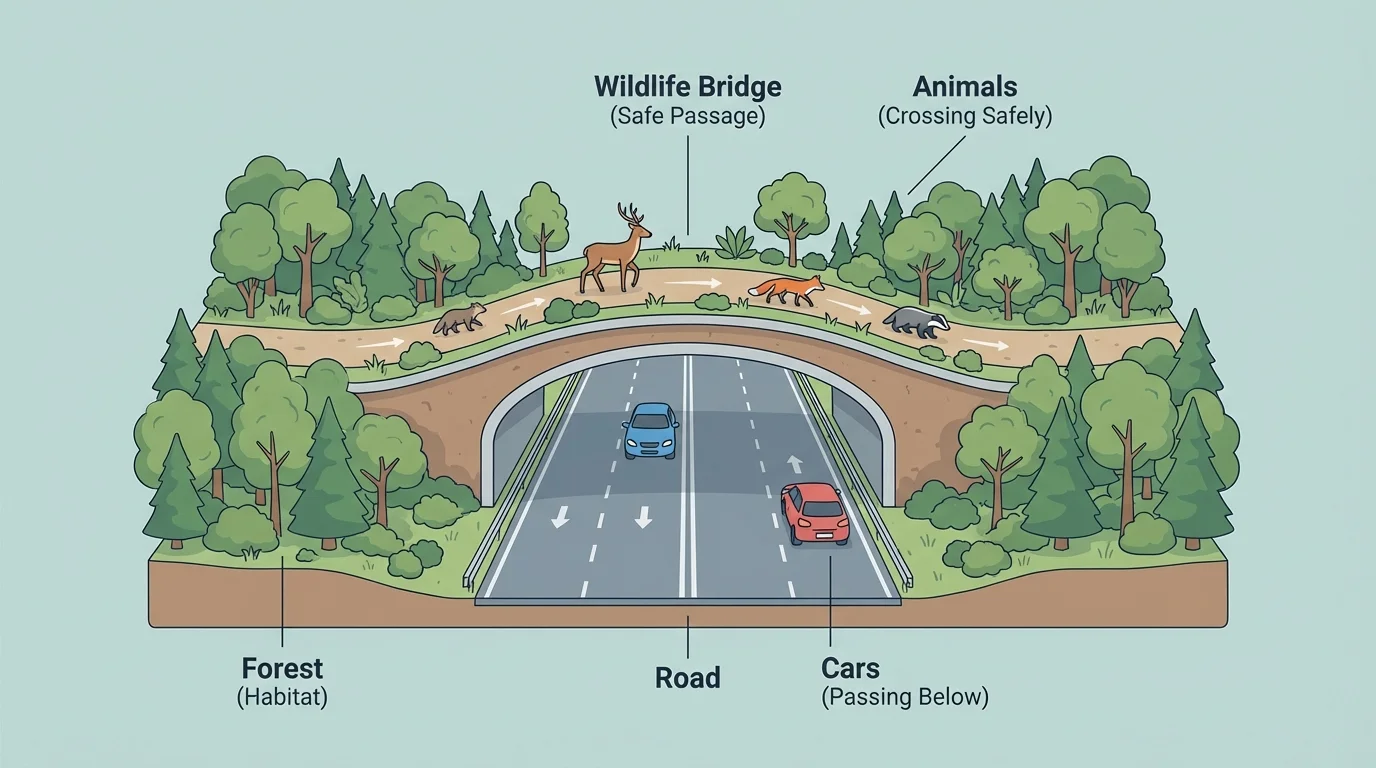
Roads can also change systems. If a new road cuts through a forest, animals may have trouble crossing safely. Some may get hit by cars. Others may stop moving to places where they find food, mates, or nesting areas. That can reduce the number of animals in one part of the forest and change the whole pattern of life there.
Sometimes the change comes from a new organism. If an organism moves into a place where it did not live before, it may compete with native organisms for food or space. If it has no natural predators there, it may spread quickly. Then the interactions in the system change, and some organisms may have a harder time surviving.
This is why scientists pay close attention to cause and effect. They ask what changed first, what happened next, and which parts of the system were affected. Looking carefully at parts and interactions helps them explain why populations grow, shrink, or move.
An environment is everything around an organism, including living and nonliving things. Environments can change because of weather, fire, floods, building, pollution, or changes caused by other organisms. When the environment changes, organisms must respond.
Some organisms move to a new place. Some find new food. Some survive because they already have traits that help them in the new conditions. Others may not survive well if the change is too great. For example, if a sunny field becomes shaded by growing trees, plants that need lots of light may decrease, while shade-loving plants may do better.
Animals depend on habitat for food, water, shelter, and space. If one of these is missing, survival becomes harder. A rabbit needs plants to eat and places to hide. A bird may need specific trees for nesting. A fish may need cool, clean water with enough oxygen. Organisms are part of systems, so they are affected by changes in many connected parts.
Why systems matter in survival
Organisms do not live alone. A hawk depends on prey, prey depend on plants or smaller animals, and plants depend on sunlight, water, and soil. When one part changes, survival can become easier for some organisms and harder for others. Thinking in systems helps us understand why.
Sometimes people can help when environments change. But to help well, we need to know which parts of the system are causing the problem and how a solution might affect the rest of the system.
When scientists or communities try to solve a problem in nature, they ask whether the solution is effective, meaning whether it works well. To decide, they make a claim and support it with evidence. A claim is a statement that answers a question, such as, "This solution helps animals survive environmental change." To judge that claim fairly, we must look at what happens in the system over time.
Imagine a road that divides a forest. A possible solution is a wildlife crossing, such as a bridge covered with soil and plants that lets animals cross above the cars. This solution can be effective if more animals reach food and mates safely, as [Figure 3] shows. The key is not just that the bridge exists. The key is whether the interactions in the system improve.
Another example is planting native plants in a school garden after a dry period or after land has been disturbed. Native plants are plants that naturally grow in that area. They may provide better food and shelter for local insects and birds than plants from faraway places. If pollinators return and more birds use the area, that is evidence the solution is helping.
A good claim uses observations. You might compare what happened before and after the solution. Were there more insects? More nests? More safe animal crossings? More shade or water for organisms that needed it? Those details help us decide whether the solution really works.
Case study: Helping butterflies in a changed habitat
A field near a school was mowed so often that many wildflowers disappeared. Fewer butterflies were seen there.
Step 1: Identify the system parts.
The components include butterflies, flowering plants, sunlight, soil, and people caring for the field.
Step 2: Identify the interactions.
Butterflies drink nectar from flowers. Caterpillars feed on certain plants. People affect the habitat by mowing.
Step 3: Test a solution.
The school plants native flowers and leaves one section unmowed for longer.
Step 4: Make a claim using evidence.
If more butterflies and caterpillars appear after the change, students can claim the solution is effective because it restored food and shelter in the system.
Not every solution works equally well. A solution may help one organism but accidentally hurt another. For example, adding bright lights near a pond might help people see at night, but it may disturb some animals. That is why system thinking is important: it helps us look for effects on many parts, not just one.
Later, when we think again about the pond in [Figure 1], we can see why a good solution must fit the whole ecosystem. Helping only one species without thinking about food, shelter, water, and other organisms may not solve the real problem.
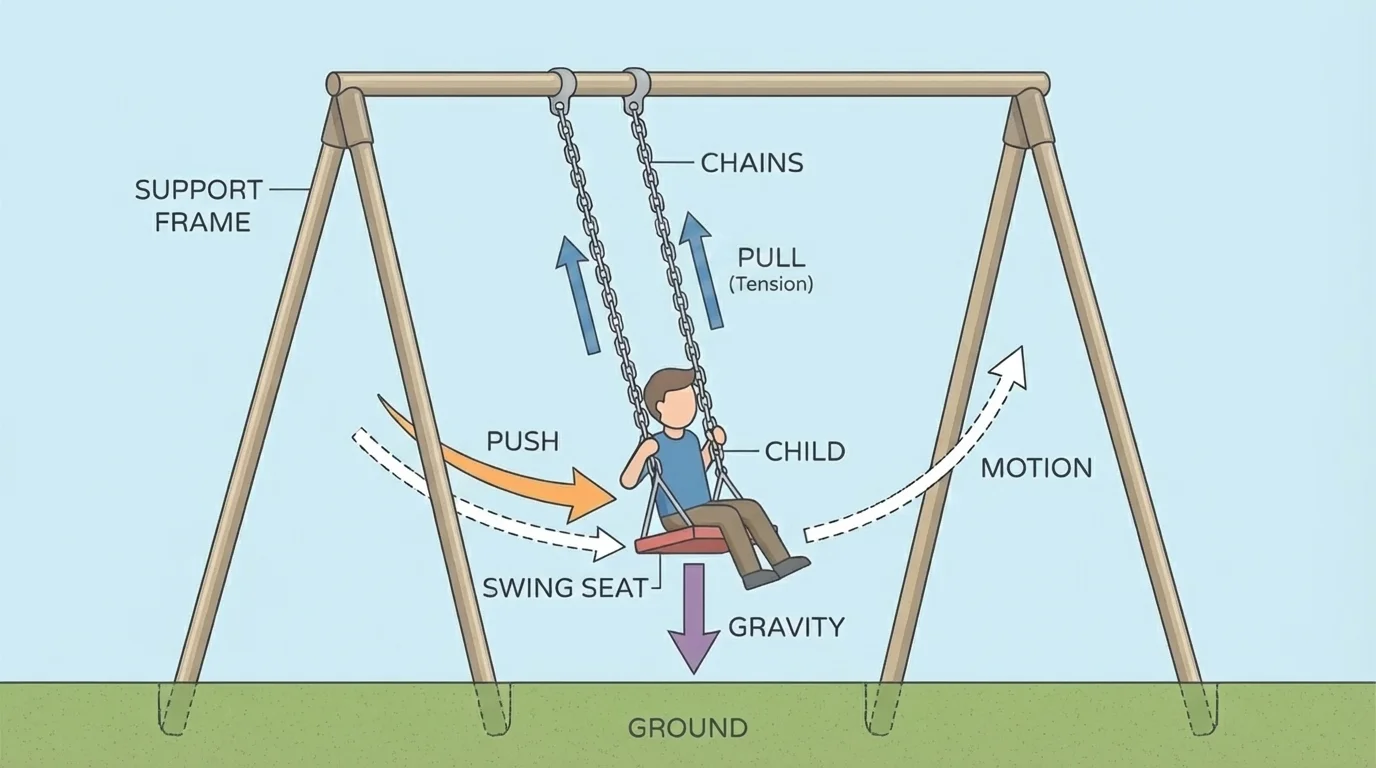
Systems are not only found in living things. Physical systems also have components and interactions. In a swing system, the seat, chains, rider, and ground all interact, and forces such as pushes and pulls move the swing, as [Figure 4] shows.
If a child pushes the swing, the swing moves. The chains pull on the seat. Gravity pulls the rider downward. The ground supports the swing set. These are interactions between parts of a system. If one part changes, such as a loose chain or a stronger push, the movement changes too.
This idea connects to living systems. In both kinds of systems, the parts do not act alone. Something happens because of relationships between the parts. In a forest, animals and plants interact. On a playground, seats, chains, and forces interact. System thinking helps us explain both.
You can even compare systems side by side.
| System | Some Components | Some Interactions |
|---|---|---|
| Pond | Fish, plants, water, insects, sunlight | Eating, hiding, growing, using sunlight |
| Bicycle | Pedals, chain, wheels, brakes | Turning, moving, slowing |
| Swing | Seat, chains, rider, frame | Pushing, pulling, swinging |
| Garden | Soil, seeds, water, insects, sunlight | Growing, pollinating, absorbing water |
Table 1. Examples of systems, their components, and the interactions between parts.
As we saw with the wildlife crossing in [Figure 3], understanding interactions helps people design better solutions. The same thinking works whether the system includes animals, machines, or moving objects.
To understand a system well, scientists often ask questions such as these: What are the parts? Which parts are living and nonliving? What goes into the system? What comes out? Which parts depend on each other? What changes when one part is removed, added, or damaged?
They also look for patterns over time. If a stream gets polluted, do fish numbers drop? If trees are planted near a river, do more birds return? If students stop watering a garden during hot weather, which plants wilt first? Patterns help scientists make stronger claims.
Cause and effect means one event helps produce another event. In systems, causes and effects often move through several connected parts rather than staying in just one place.
A useful way to think about systems is to notice inputs and outputs. Inputs are things that enter the system, such as sunlight, water, food, or a push. Outputs are results, such as growth, movement, waste, or energy transfer. If the inputs change, the outputs may change too.
For example, if a plant receives less water, it may grow more slowly. If a swing gets a bigger push, it moves higher. In both cases, changing one part of the system changes what the system does.
Communities all over the world use system thinking to solve environmental problems. In dry places, people may plant trees or bushes that hold soil in place and provide shade. This can help reduce erosion, keep moisture in the ground, and create habitat for birds and insects.
Near rivers, people sometimes protect the edges with native plants. The roots help hold the soil. The plants also cool the water with shade, which can help fish. This is often more effective than thinking only about one part, like the water, without considering the land beside it.
In cities, green roofs and small gardens can give insects and birds more places to live. These spaces may also cool the area a little and soak up rainwater. A small change in one place can improve several conditions within the system at once.
Case study: A hotter playground habitat
A school notices that very few insects live near a large blacktop area during hot months.
Step 1: Identify the problem in the system.
The blacktop becomes very hot, and there are few plants, little shade, and little water.
Step 2: Propose a solution.
The school adds native plants in containers, a small water source, and shaded areas nearby.
Step 3: Observe the results.
Over time, more insects visit the area, especially near the plants and water.
Step 4: Make a claim.
Students can claim the solution is effective because it improved key parts of the habitat system: food, water, and shelter.
Good solutions are often based on matching the needs of organisms to the parts of the system. If a bird needs nesting spots, planting flowers alone may not be enough. If a pond needs cleaner water, adding fish without fixing pollution will not solve the real problem.
You can use system thinking in everyday life. If a class pet seems unhealthy, you can check the system: food, water, temperature, light, and space. If a garden is not growing well, you can examine soil, sunlight, water, insects, and plant type. Instead of guessing, you look at the parts and interactions.
System thinking also helps with teamwork. In a group project, each person is like a component. The way people share materials, listen, and divide jobs are interactions. If one person does not do a job, the whole group is affected. That is another reminder that parts in a system depend on each other.
When you understand systems, you become better at asking smart questions. Which part changed? What interacted with it? What happened next? What evidence shows that a solution helped? These questions help scientists, engineers, teachers, gardeners, and students make sense of the world.
"When one part changes, the whole system can respond."
Seeing the world as systems helps us understand both nature and human-made objects. It shows why living things need the right habitat, why environmental changes matter, and why strong solutions must fit the connections among all the parts.
