Why does a fish live in water, but a squirrel lives in a tree? That is a big science question. Living things do not live just anywhere. They live in places that help them get what they need. Scientists often use a model to help show these relationships. [Figure 1] A model can be a picture, a map, a drawing, or even a small object. It helps us notice important parts of living things and the places that meet their needs.
When we look at nature, we can ask: What does this plant need? What does this animal need? What does a person need? Then we can ask: Which place gives those things? A model helps us put those ideas together in a clear way.
A model is a simple way to show something real. It is not the real forest, pond, or desert. It is a helpful copy that lets us study the important parts. A model may show a rabbit near grass, a bird in a tree, or a child near a home and garden. It leaves out tiny details and keeps the main ideas.
Scientists use models because the world is full of many connected parts. A model can show that a bird needs air, water, food, and a safe place to rest. A model can also show that a tree needs sunlight, water, air, and space to grow.
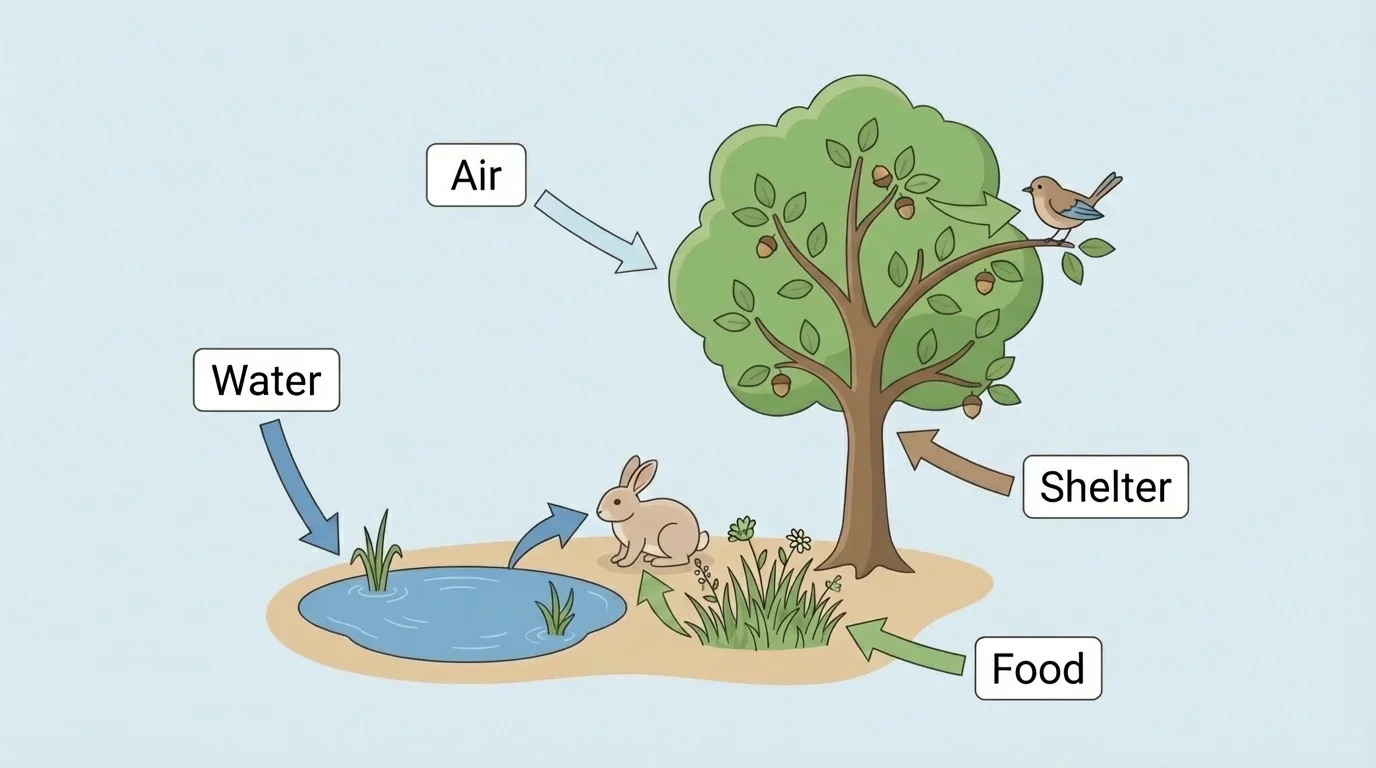
Habitat is the place where a plant or animal lives. A habitat gives living things what they need to live and grow.
Relationship means a connection. In nature, relationships show how living things and places fit together.
Some models are drawings with arrows. Some are maps. Some are made with blocks, paper, or clay. No matter what they look like, models help us answer questions about the natural world.
Every living thing has needs. A plant needs water, air, sunlight, and space. Many plants also need soil. An animal needs water, air, food, shelter, and space. Humans are animals too, so people need water, air, food, and a safe place to live.
A green plant makes its own food using sunlight. That is why many plants grow in sunny places. A deer cannot make its own food, so it must find plants to eat. A frog needs water and also land nearby. Its place must help with both.
When we talk about needs, we are not talking about wants, like a favorite toy or a color of shirt. We mean the things a living thing must have to stay alive.
Needs and places work together. A place is a good home for a living thing only if that place helps meet its needs. If a place has no water for a fish, the fish cannot live there. If a place has no sunlight for a sunflower, the sunflower cannot grow well there.
This is why not all plants and animals live in the same place. Different living things need different kinds of homes.
A habitat can be a pond, forest, desert, ocean, field, garden, or backyard. Each habitat is special. Each one has different amounts of water, sunlight, plants, and shelter.
In a forest, tall trees give shade and homes for birds, squirrels, and insects. In a pond, water helps fish, frogs, ducks, and water plants. In a desert, there is very little rain, so only some plants and animals can live there well. Cactuses store water, and some desert animals rest in shade during the hottest part of the day.
People live in places that meet human needs too. Homes give shelter. Farms and stores provide food. Wells, pipes, or sinks provide water. Parks and schoolyards give space to play and learn.
| Place | What it has | Who can live there |
|---|---|---|
| Forest | Trees, shade, water, shelter | Birds, deer, squirrels |
| Pond | Water, mud, plants | Fish, frogs, ducks |
| Desert | Dry land, lots of sun, little water | Cactuses, lizards |
| Home or town | Shelter, water, food nearby | People, pets |
Table 1. Different places provide different resources for living things.
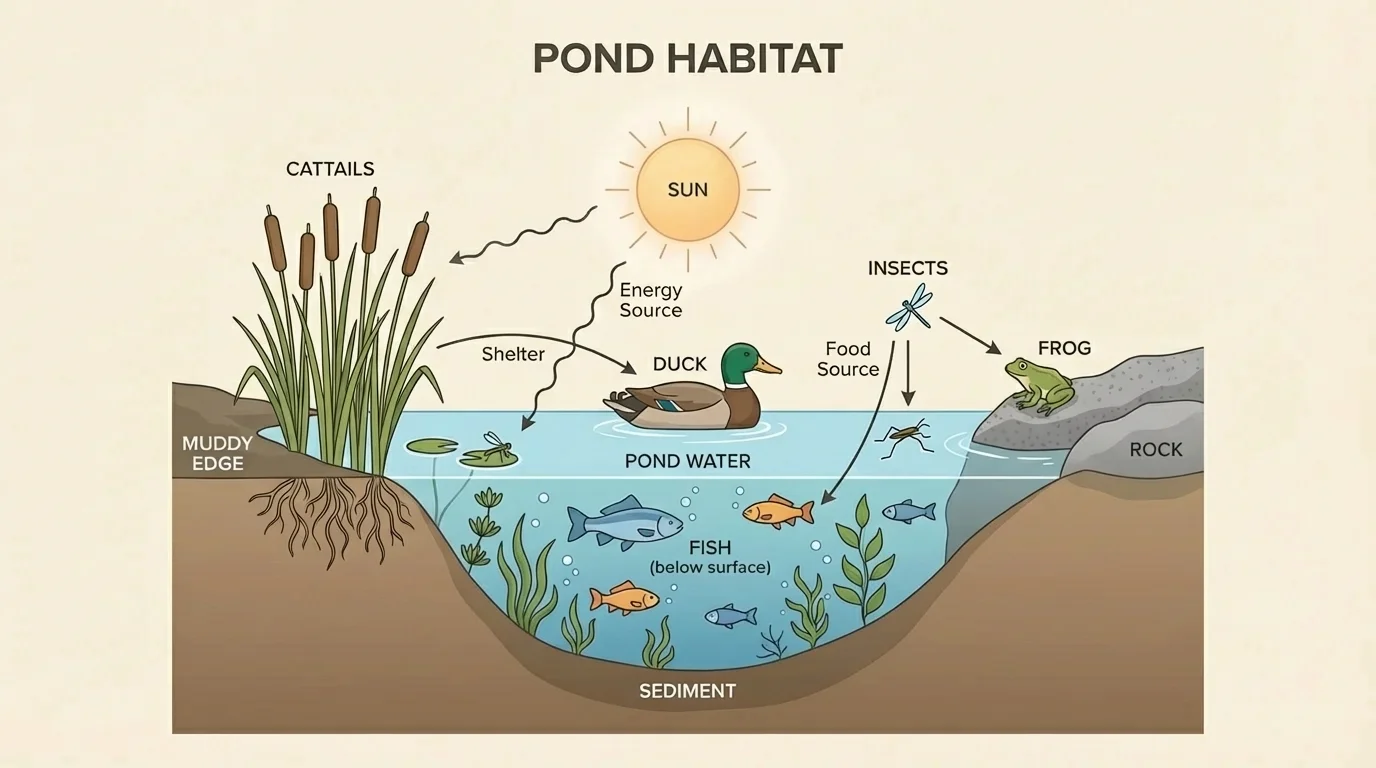
[Figure 2] A habitat model of a pond helps us see many relationships at once. The pond has water, plants, sunlight, and muddy edges. These parts help different living things survive.
Fish live in the water and breathe in the water. Frogs use the water, but they may also rest on rocks or land near the pond. Ducks swim on the water and may eat plants or small animals nearby. Pond plants grow because they get water and sunlight.
The pond model also shows shelter. Small fish may hide among plants. Frogs may hide near reeds or mud. When we look at the whole model, we can tell that the pond is not just water. It is a place where many needs are met.
Real-world example: reading a pond model
Step 1: Look for the living things.
You might see fish, frogs, ducks, insects, and plants.
Step 2: Look for the things they need.
You might see water, sunlight, plants for food, and places to hide.
Step 3: Match the living thing to its needs.
A fish needs water. A duck needs water and food. A pond plant needs sunlight and water.
This is how a model helps us explain relationships in nature.
Later, when we think about another place, we can compare it to the pond. For example, as we saw in [Figure 2], frogs do well where there is water nearby, but animals that need very dry land may not do as well there.
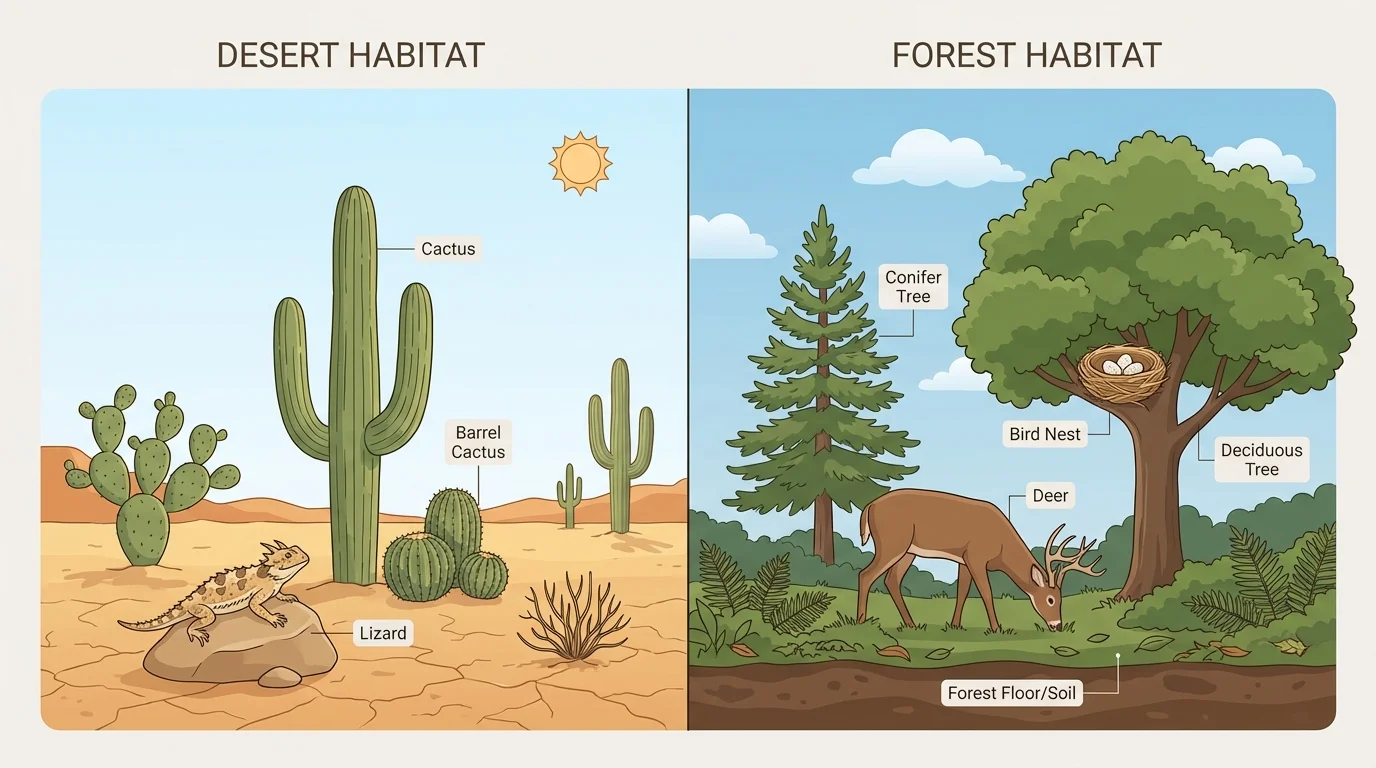
[Figure 3] Different habitats meet needs in different ways. It compares a desert and a forest. Both are habitats, but they are not the same. The desert is hot and dry. The forest has more trees, shade, and often more water.
In a desert, a cactus can live well because it can hold water. A lizard may hide under a rock to stay cooler. In a forest, a deer can find plants to eat, and a bird can build a nest in a tree. A habitat matters because it helps living things survive.
Some seeds can wait a long time for rain. When rain finally comes, the seeds can begin to grow in the desert.
This does not mean one habitat is better than another. It means each habitat fits different living things. The same idea works for people too. People build homes and communities in places that help meet their needs.
Humans are part of nature. People need clean water, air, food, and shelter. People also change habitats. A person may plant a tree, build a birdhouse, or make a garden. Those changes can help living things.
Some changes can hurt habitats. If trash gets into a pond, animals may get sick. If many trees are cut down, birds and squirrels may lose shelter. If a place becomes too dry or too crowded, some living things may have trouble finding what they need.
Scientists and communities can use models to think before making changes. A model can help us ask, "If we remove this tree, what animals may be affected?" or "If we protect the pond, what living things may be safer?"
Living things grow, move, or change, and they need resources from their environment. The environment is everything around a living thing.
When we care for habitats, we help plants, animals, and people too.
Scientists use models to describe, explain, and share ideas. A model does not need to be fancy. It just needs to show the important parts clearly. A good model helps us answer questions about needs and places.
For example, if a class looks at a habitat model and sees no water, they can predict that fish would not live there. If they see tall trees and nests, they may predict that birds could live there. If they see sunshine, soil, and water, they may predict that many plants could grow.
That is the power of a model. It helps us see connections. It helps us understand why a cactus grows in one place, why a frog lives near water, and why humans build homes where they can get what they need. The comparison in [Figure 3] reminds us that different places support different living things because different places provide different resources.
