Have you ever looked around your neighborhood and noticed how many people are busy helping others every day? A baker pulls warm bread from an oven. A bus driver takes people where they need to go. A barber cuts hair. A farmer grows food. All of these people work in different jobs, and their work helps the whole community.
A business is a place where people work to make something or do something for others. People work at businesses to earn an income. Income is money people earn from their jobs. They use that money to buy things they need and want, like food, clothes, and toys.
In a community, there are many kinds of businesses. Some businesses make things people can buy and take home. Other businesses do jobs to help people. Both kinds are important. They help families meet their needs, learn, travel, eat, and stay healthy.
Goods are things you can touch and hold, like bread, books, and shoes.
Services are jobs that people do for others, like teaching, cutting hair, or fixing a bike.
When we learn about businesses, we can ask a simple question: "Does this business make a thing, do a job, or both?" That question helps us identify what businesses produce in our local area.
Goods and services are the two big groups we use to talk about what businesses produce, as [Figure 1] shows. A good is an object. You can carry it, eat it, wear it, read it, or use it. A service is an action. Someone helps you by doing work.
If you buy an apple, the apple is a good. If a dentist checks your teeth, that is a service. If you get a ride on a bus, the ride is a service. If you buy a backpack, the backpack is a good.
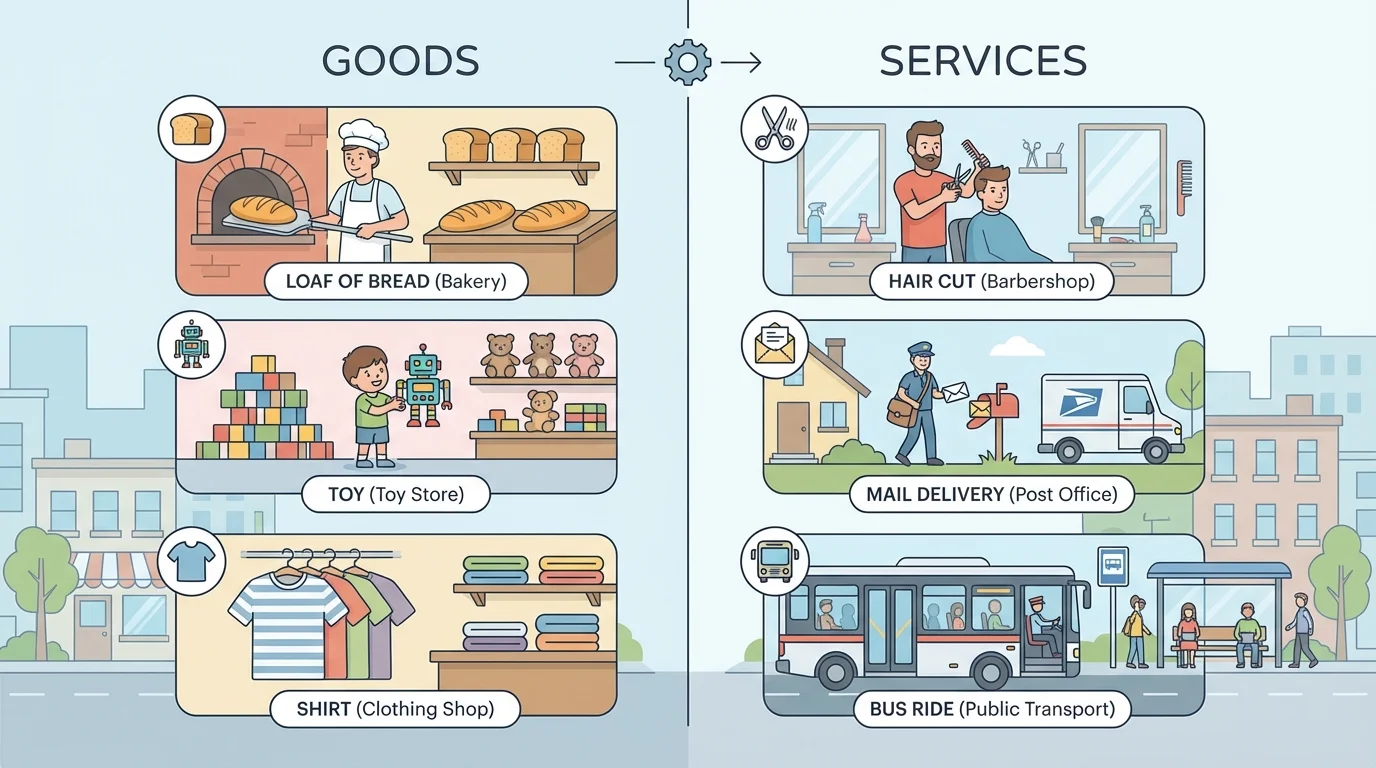
Sometimes it is easy to tell the difference. A sandwich you eat is a good because it is a thing. A cook making the meal for you is providing a service. Thinking about touch can help: if you can hold it, it is usually a good. If someone is helping by doing work, it is usually a service.
Many businesses in one small town can be very different. One business may grow food, another may fix cars, and another may help people learn to read.
People in first grade already know many local businesses. Grocery stores, schools, farms, barber shops, clinics, restaurants, libraries, and repair shops are all part of community life.
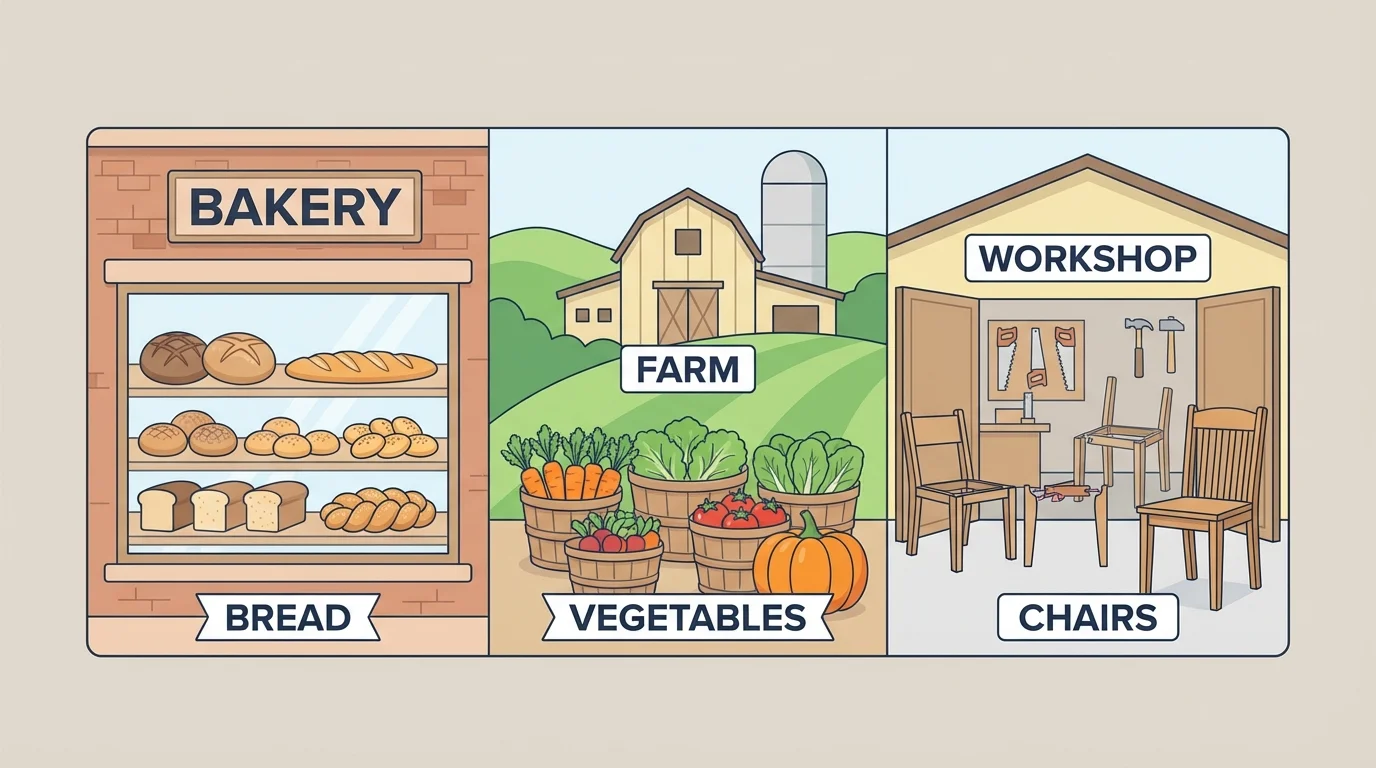
Some businesses make or grow things people can buy, as [Figure 2] illustrates. These businesses produce items that people use at home, at school, or at work.
A bakery makes bread, rolls, cookies, and cakes. These are goods because you can hold them and eat them. A farm grows fruits and vegetables and produces milk or eggs. These are also goods. A furniture maker builds tables and chairs. A clothing business makes shirts, pants, and coats.
Even a store can be connected to goods. A grocery store sells apples, cereal, and juice. The store may not grow or make every item, but it provides goods to families in the community. When people need food, school supplies, or soap, stores help them get those goods.
As we saw in [Figure 2], businesses that make goods often use tools, machines, land, or ovens to create products. Workers in these jobs may bake, build, sew, plant, or pack items for customers.
Examples of businesses that make goods
Step 1: Think about the item.
Bread, carrots, books, and shoes are things people can hold.
Step 2: Ask where the item comes from.
Bread comes from a bakery. Carrots come from a farm. Books come from a publisher or printer. Shoes come from a factory.
Step 3: Decide what the business produces.
These businesses produce goods because they make or grow objects.
Workers at these businesses do different jobs. A baker mixes dough. A farmer plants seeds. A factory worker helps make products. Each worker earns income for the work they do.
Other businesses help people by doing jobs for them. These businesses provide services. The work may help people stay safe, learn, travel, or solve problems.
A teacher provides a service by helping children learn. A doctor or nurse provides a service by caring for people who are sick. A barber or hairstylist provides a service by cutting and styling hair. A mechanic provides a service by fixing cars. A bus driver provides a service by taking people from one place to another.
Some services happen in places we visit often. At a school, teachers, principals, and librarians help students. At a post office, workers help mail letters and packages. At a library, librarians help people find books and learn new things.
| Business | What it produces | Type |
|---|---|---|
| Bakery | Bread and cakes | Goods |
| Farm | Fruits and vegetables | Goods |
| Barbershop | Haircuts | Services |
| School | Teaching | Services |
| Repair shop | Fixing bikes or cars | Services |
Table 1. Examples of local businesses and whether they produce goods or services.
A service is important even though you cannot put it in a bag and carry it home. A haircut, a music lesson, or a bus ride is still something valuable that people need.
Why services matter
Services help a community run smoothly. Without services, people would have a harder time learning, traveling, staying healthy, or getting help when something breaks.
Some people work outside, and some work inside. Some help many people each day, and some help one person at a time. All of these jobs matter in a community.
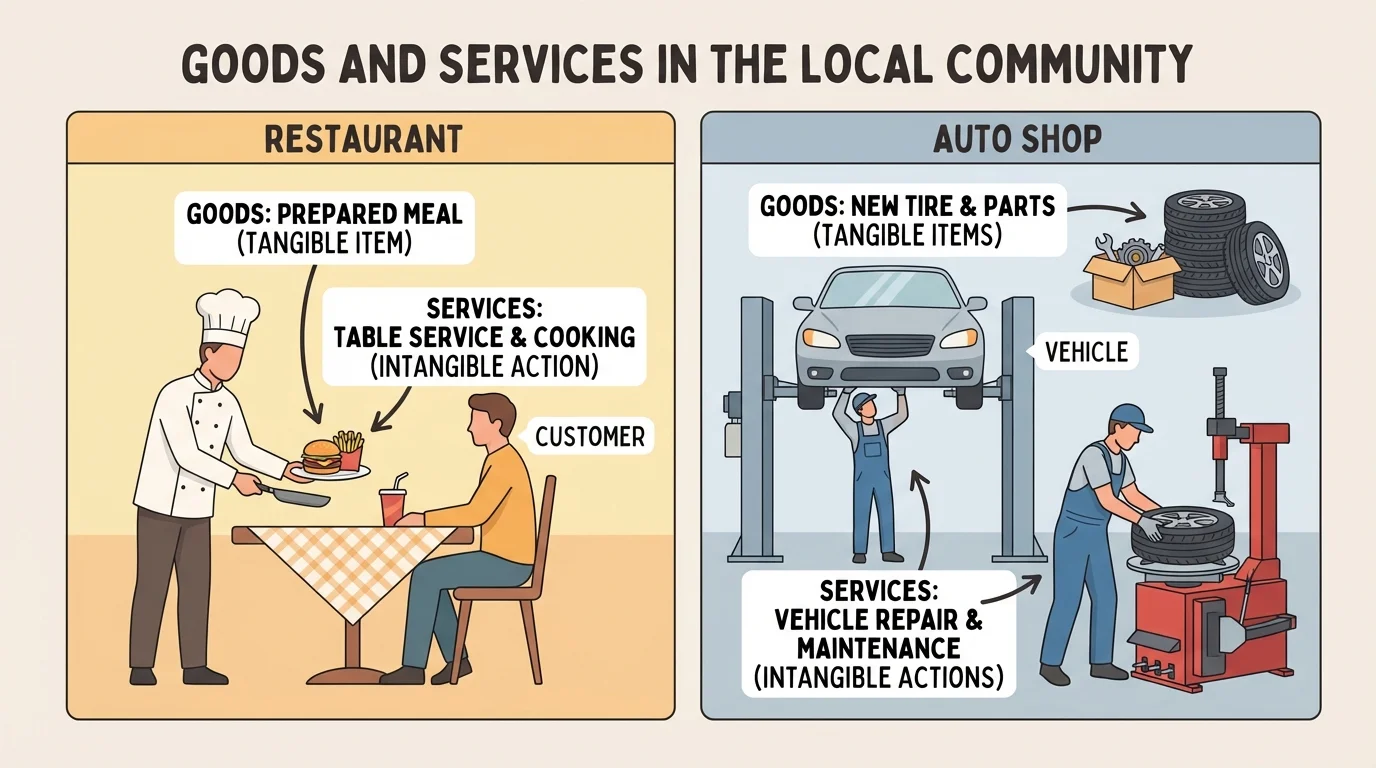
Some businesses produce both goods and services, as [Figure 3] shows. This is an important idea because not every business fits into only one group.
A restaurant gives you food, which is a good. But the restaurant also cooks the meal and serves it to you, which is a service. An auto shop may sell a new tire, which is a good, and also put the tire on the car, which is a service.
A flower shop can sell flowers, which are goods. Workers may also arrange the flowers into a bouquet for a special day, which is a service. A pet store may sell pet food and toys, but workers may also groom pets. That means one business can help in more than one way.
Later, when you look around your community, remember [Figure 3]. It helps us notice that a business may make an item, do a job, or do both at the same time.
People have different jobs because communities have many different needs and wants. No one job does everything.
When we identify what businesses produce, we learn more about the work people do every day and how that work supports families.
A community needs many kinds of businesses because people need many kinds of help. Families need food, clothing, homes, rides, health care, and learning. One business cannot do all of that.
Businesses also help each other. A restaurant may buy food from a farm. A school may buy books from a store. A bakery may need a mechanic to fix a delivery truck. Workers and businesses are connected.
When people earn income from their jobs, they can buy goods and services from other local businesses. This keeps the community active and strong. It means people work, earn money, and use that money to meet needs and wants.
Classifying local businesses
Step 1: Listen to the business name.
Think of a bakery, barber shop, school, and farm.
Step 2: Ask what the business gives to people.
A bakery provides bread. A barbershop provides haircuts. A school provides education. A farm provides food.
Step 3: Sort each one.
A bakery and a farm mostly produce goods. A barbershop and a school mostly provide services.
Every worker has a role. Some workers make products. Some workers help people directly. Together, they make the community a good place to live.
You can identify businesses in your community by looking closely at what they produce. Ask, "What do people get from this place?" The answer helps you decide whether the business produces goods, services, or both.
A grocery store gives families food and other products. A clinic helps people feel better. A library helps people borrow books and learn. A construction company builds houses and buildings. A cleaning business helps keep places neat and safe.
When you notice businesses around you, you are also noticing jobs. Every job is important because it helps someone. Some jobs may look very different, but all workers are part of the community.
