Sometimes the bravest thing you can do is say, "I need help." If a friend is being mean, a sibling keeps upsetting you, or someone online says unkind or scary things, you do not have to fix it all by yourself. Big problems can need big help, and safe grown-ups are there to help you.
A relationship problem is a problem between people. It might happen with a friend, a brother or sister, a cousin, a teammate, or someone you talk to online. Some problems are small and can be solved with kind words. But some problems feel so big that your body and heart tell you, "This is too much for me."
When you ask for help, you are showing good judgment. That means you know when to get support from a trusted adult. Asking for help is not tattling when someone is hurting you, scaring you, or not stopping.
Relationship problem means trouble between people, like arguing, mean words, threats, or someone not respecting your feelings. Safe means protected from harm. A trusted adult is a grown-up who listens, cares, and tries to help keep you safe.
If someone says, "Don't tell," but the problem makes you feel scared, confused, hurt, or unsafe, you should tell a safe grown-up anyway. Safe grown-ups want to know when something is wrong.
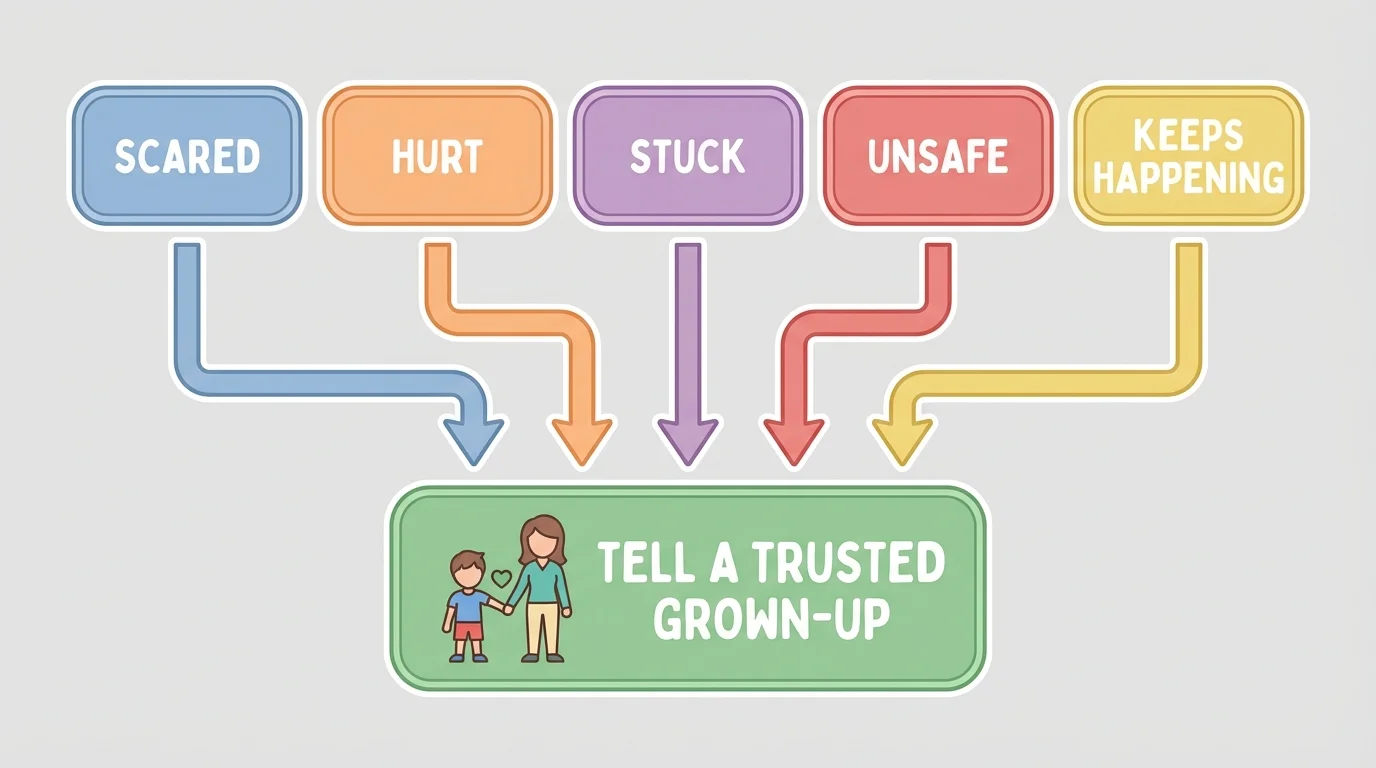
There are clues that tell you a problem may be too big to solve alone, and [Figure 1] shows an easy way to notice those clues. You may need help if you feel scared, if the same problem keeps happening, if kind words did not work, or if someone is breaking safety rules.
You also need help if someone is yelling at you, calling you names, threatening you, touching you in a way that is not okay, trying to trick you online, or telling you to keep a secret that feels wrong. Your feelings matter. If your tummy hurts from worry, if you want to cry, or if you feel frozen and do not know what to do, that is a sign to get help.
Another clue is when you tried to solve the problem in a calm way and nothing changed. Maybe you said, "Please stop," and the person kept going. Maybe you left the chat, but the person kept messaging. Maybe you told a sibling, "I don't like that," and they laughed and did it again. When a problem does not stop, it is time to ask for help.
Your feelings are important clues
Feelings help you notice when something is wrong. Feeling upset for a moment can happen in everyday life, but feeling scared, trapped, or very confused is different. Those feelings can be a signal to go to a safe adult.
You do not need to be completely sure before asking for help. If something unsafe might be happening, it is okay to ask a grown-up to help you figure it out.
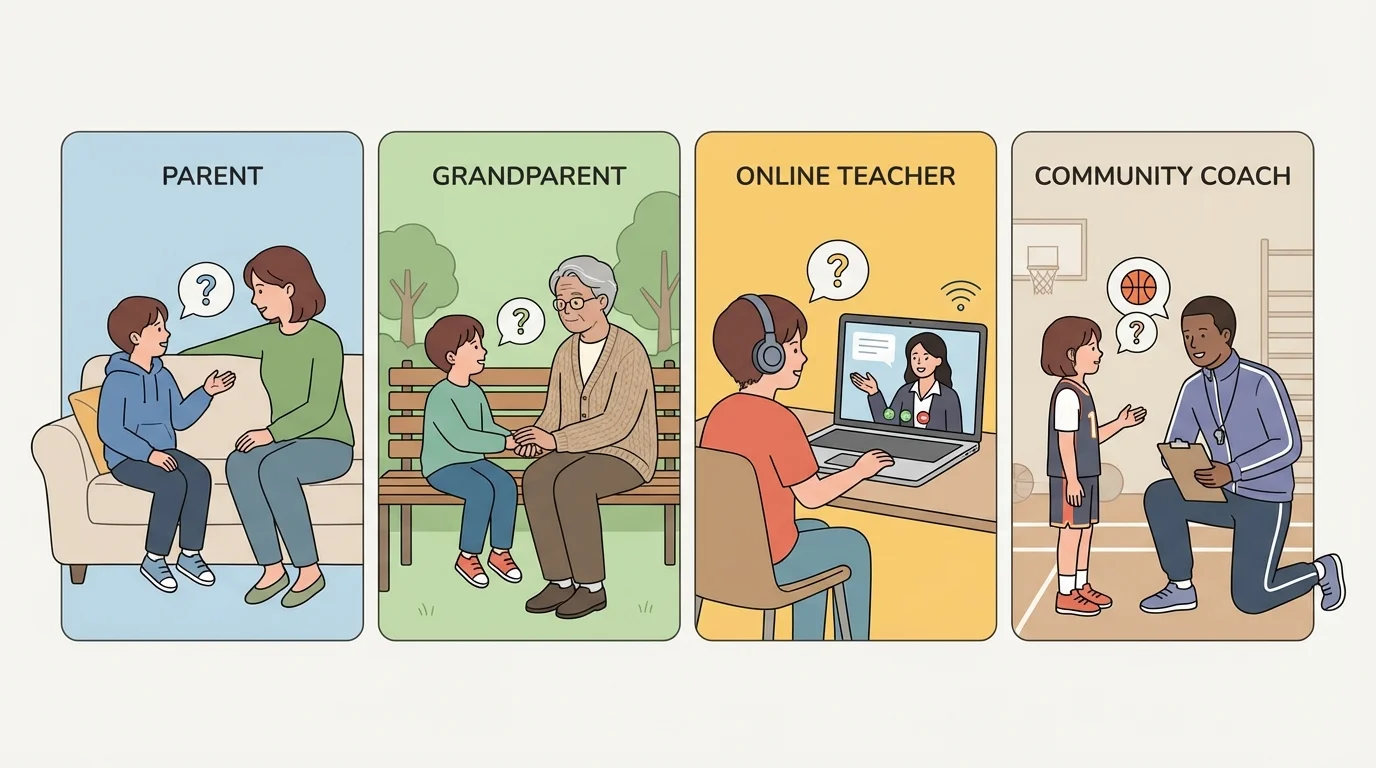
Safe helpers can look different in different families. A safe grown-up might be a parent, grandparent, aunt, uncle, caregiver, online teacher, school counselor from your online school, coach, club leader, or a neighbor your family knows well.
Choose a grown-up who listens, stays calm, and wants to protect you. A safe grown-up does not laugh at your problem or blame you for it. They take your words seriously.
It is smart to know more than one helper. Sometimes the first grown-up is busy, misses your message, or does not understand right away. You can tell another safe person. Keep telling safe grown-ups until someone helps you.
If you are online and a problem happens in a game, chat, or message, you can also leave the chat, block the person with a grown-up's help, and show the messages to an adult. Saving the message can help a grown-up understand what happened.
Many children think they have to solve people problems alone first. But safe adults expect children to ask for help with problems that feel too big, too scary, or too confusing.
Just like the helpers shown in [Figure 2], your safe team can have people at home and people outside your home.
Using a simple help plan can make asking easier. You do not need fancy words. Short, clear words work best.
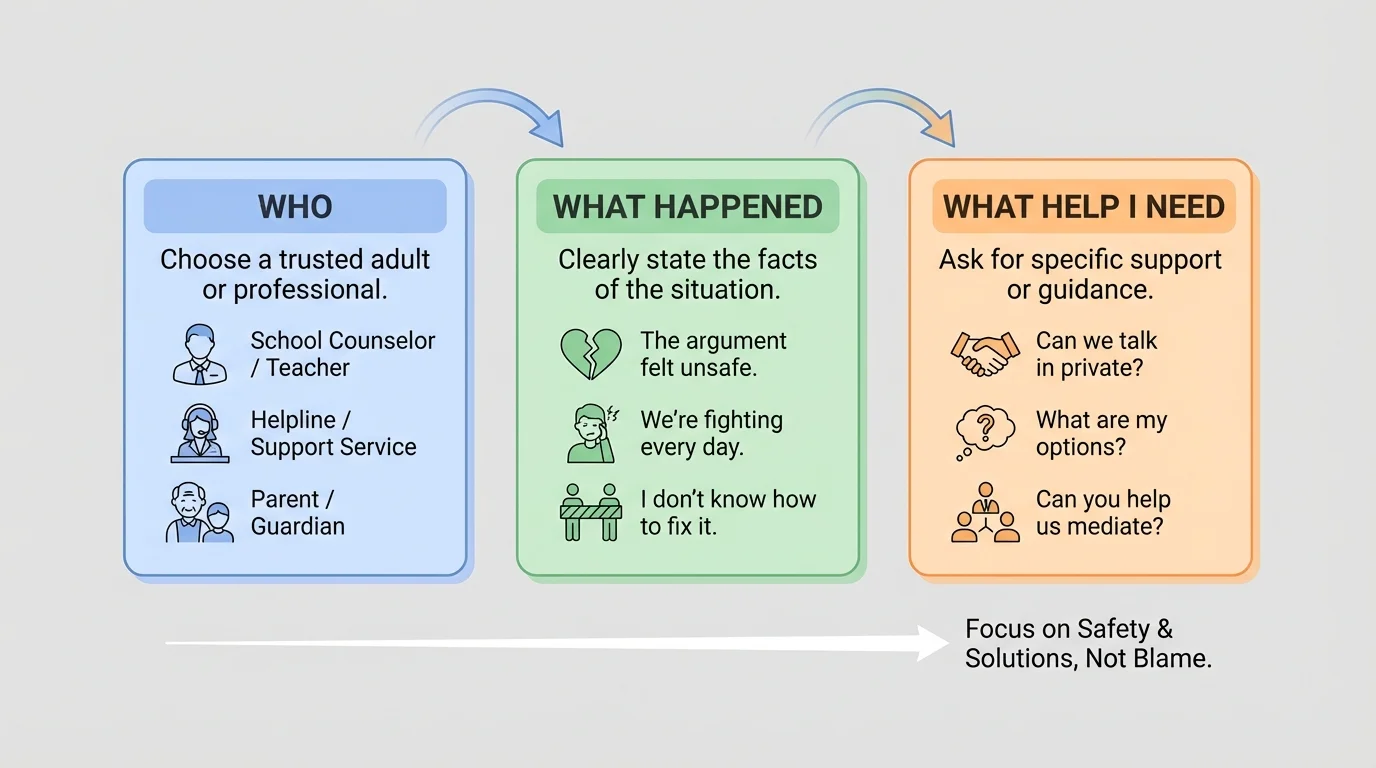
Try three parts: who, what, and help. First say who the problem is with. Next say what happened. Then say what help you need.
You can say things like: "I need help with my brother. He keeps calling me names and won't stop." Or: "I need help with someone in a game chat. They are saying scary things." Or: "I told my friend to stop being mean, but it keeps happening."
Simple asking-for-help script
Step 1: Get to a safe grown-up.
Walk to them, call them, or send a message that says, "I need help now."
Step 2: Say what happened.
Use plain words: "Maya keeps leaving me out and sending mean messages."
Step 3: Say how you feel.
"I feel sad and worried."
Step 4: Ask for the help you need.
"Can you stay with me and help me fix this?"
If talking feels hard, you can write it down, text a safe adult, or show them the messages. Some children find it easier to start with, "Something happened and I need help telling it." That is a good way to begin.
The speaking steps in [Figure 3] also work when you feel nervous, because they help you say one small part at a time.
Some problems are not "wait and see" problems. When you feel in danger, tell a safe adult right away and keep telling until one helps.
Get help right away if someone threatens to hurt you, tells you to hurt yourself, asks for private pictures, tries to meet you alone, hits or pushes you, touches you in a not-okay way, or makes you feel very unsafe. You should also get help right away if a grown-up or older child tells you to keep a secret about something unsafe.
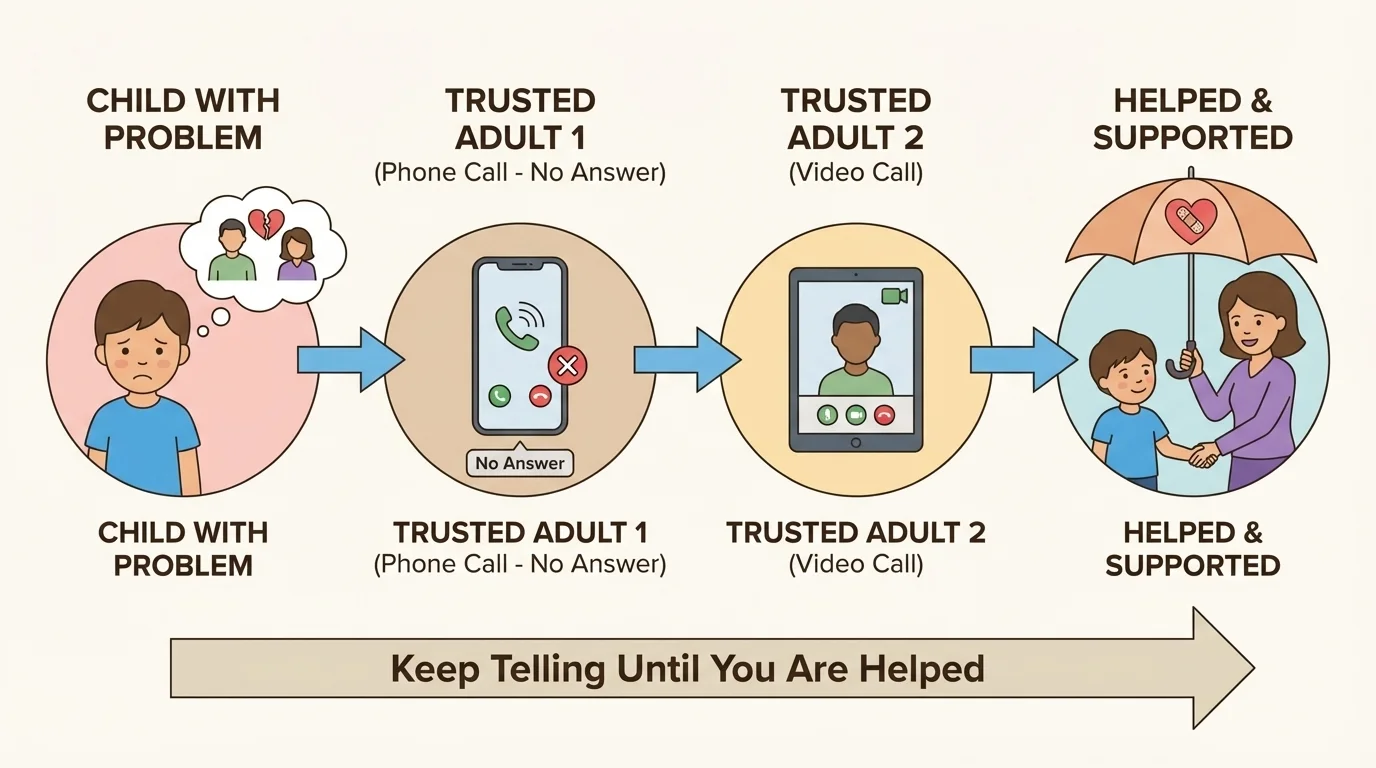
If you cannot find one helper, go to the next helper. Call another adult in your safe team. If there is immediate danger, the adults around you should contact emergency services. Your job is to get to safety and tell.
"If it feels scary, unsafe, or too big, tell a safe grown-up."
You are never being "bad" for telling about harm. Safety comes first.
Here are some times when asking for help makes sense. If a friend on a video call keeps making fun of you after you say stop, ask for help. If a sibling takes your things and threatens you, ask for help. If someone in an online game sends mean or creepy messages, ask for help. If a cousin says, "Don't tell," after doing something that scares you, ask for help.
These are not problems you must carry alone. The clues from [Figure 1] help you notice when the problem is stuck, hurtful, or scary, and then you can use your words from [Figure 3] to ask for support.
Example: mean game chat
You are playing a game online. Another player says mean things and tells you not to tell anyone.
Step 1: Leave the chat or game if you can.
Step 2: Tell a safe grown-up and show the messages.
Step 3: Ask the grown-up to help block and report the person.
This keeps you safer and helps stop the problem.
If you ask one adult and they do not help enough, remember the rule from [Figure 4]: keep telling another safe adult until you get help.
A help plan is a small list you remember. You can think: "My safe people are Mom, Grandpa, and my online teacher. My words are: 'I need help. This is happening. I feel scared.'" Keeping a plan in your mind helps you act faster when you are upset.
Try This: Pick warning signs you want to remember: scared, hurt, stuck, or keeps happening. Then pick two or three safe grown-ups. Last, practice one asking sentence in a calm moment, like: "I need help with a relationship problem."
When you know your helpers and your words, you are more ready. Safe adults, like the ones shown in [Figure 2], can help you solve problems, make a safety plan, and help you feel less alone.
