Your brain is busy all day. It listens, thinks, remembers, and helps you solve problems. Your body helps your brain do that job. When you sleep well, eat nutritious foods, drink water, move around, and take calm breaks, you are giving your body and brain what they need to work together.
Healthy habits are good choices you make again and again. They help you grow, play, learn, and stay well. Some healthy habits are going to bed on time, eating breakfast, drinking water, washing your hands, moving your body, and taking a quiet break when you feel upset.
Your brain needs fuel, rest, and care. When you have good habits, it can be easier to listen during an online lesson, finish your work, and stay calm if something feels hard. When healthy habits are missing, you may feel tired, grumpy, or restless. Learning can feel harder then.
Habit means something you do often. Energy is the power your body and brain use to work and play. Mood is how you feel, like happy, calm, sad, or frustrated.
Think about a day when you felt strong and ready. Maybe you slept well, ate a good breakfast, and had time to stretch before your lesson. Those small things can make a big difference. A bedtime routine, shown in [Figure 1], is one example of a healthy habit that supports learning.
Sleep helps your brain rest and get ready for a new day. A bedtime routine helps your body know it is time to slow down. When you get enough sleep, you can pay attention better, remember more, and feel calmer.
If you stay up too late, the next day may feel extra hard. You might yawn, forget directions, or get upset more quickly. Sleep is not just for your body. It helps your brain learn, too. Balanced meals, as shown in [Figure 2], are another healthy habit that can help you learn.
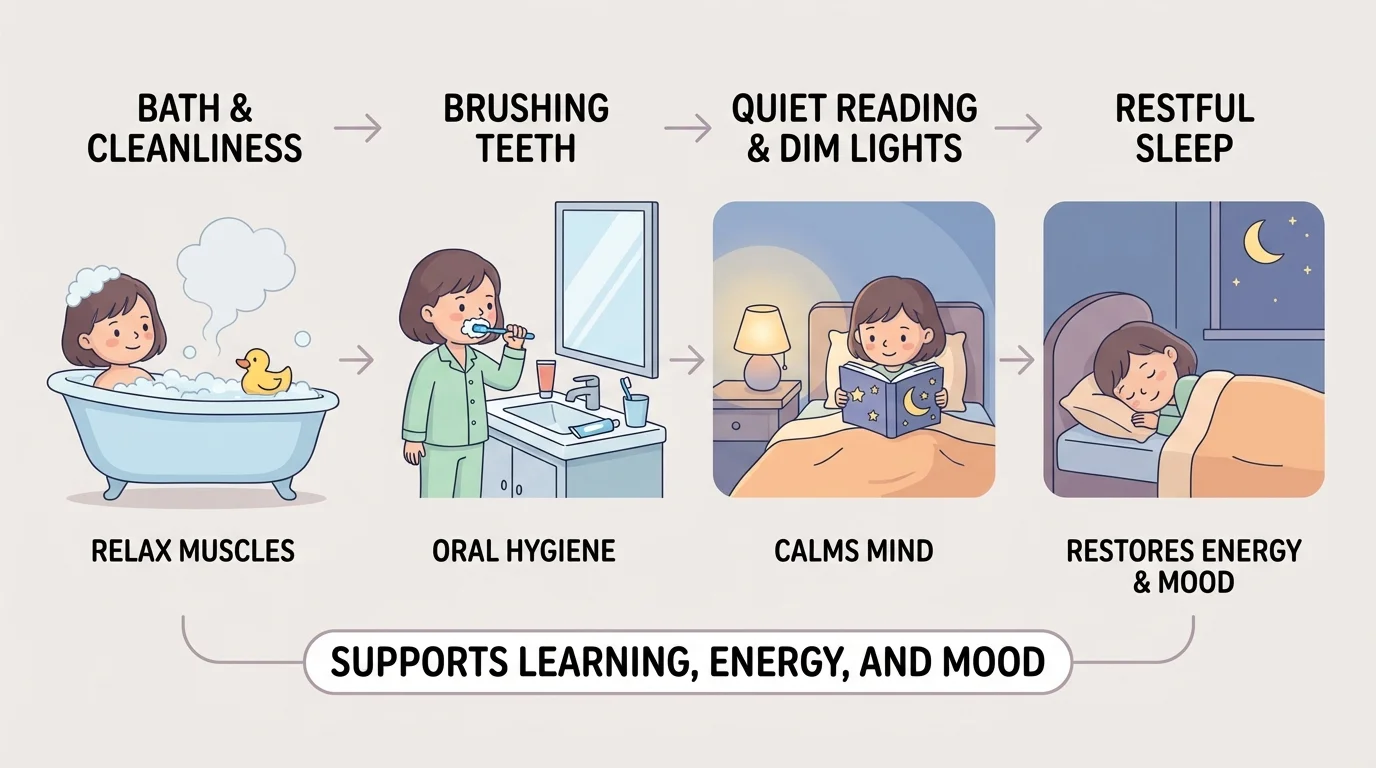
Here are simple bedtime steps you can try: pick a bedtime, put away screens, brush your teeth, read or listen to a calm story, and go to sleep in a quiet room. Doing the same steps each night makes bedtime easier.
While you sleep, your brain helps strengthen memories from the day. Good sleep can help tomorrow's learning feel easier.
If you have an early online class, going to bed on time matters even more. Later in the day, when schoolwork feels tricky, think back to the sleep routine in [Figure 1]. The calm steps before bed help build a calmer morning, too.
Your body gets energy from food. Balanced meals help your brain stay ready to learn. Breakfast is especially helpful because it gives your body fuel after sleeping all night.
Good choices can include fruit, vegetables, grains, and protein-rich foods. A simple breakfast might be oatmeal and fruit, yogurt and a banana, or eggs and toast. Drinking water matters, too. Water helps your body stay hydrated so you can feel better and focus during lessons.
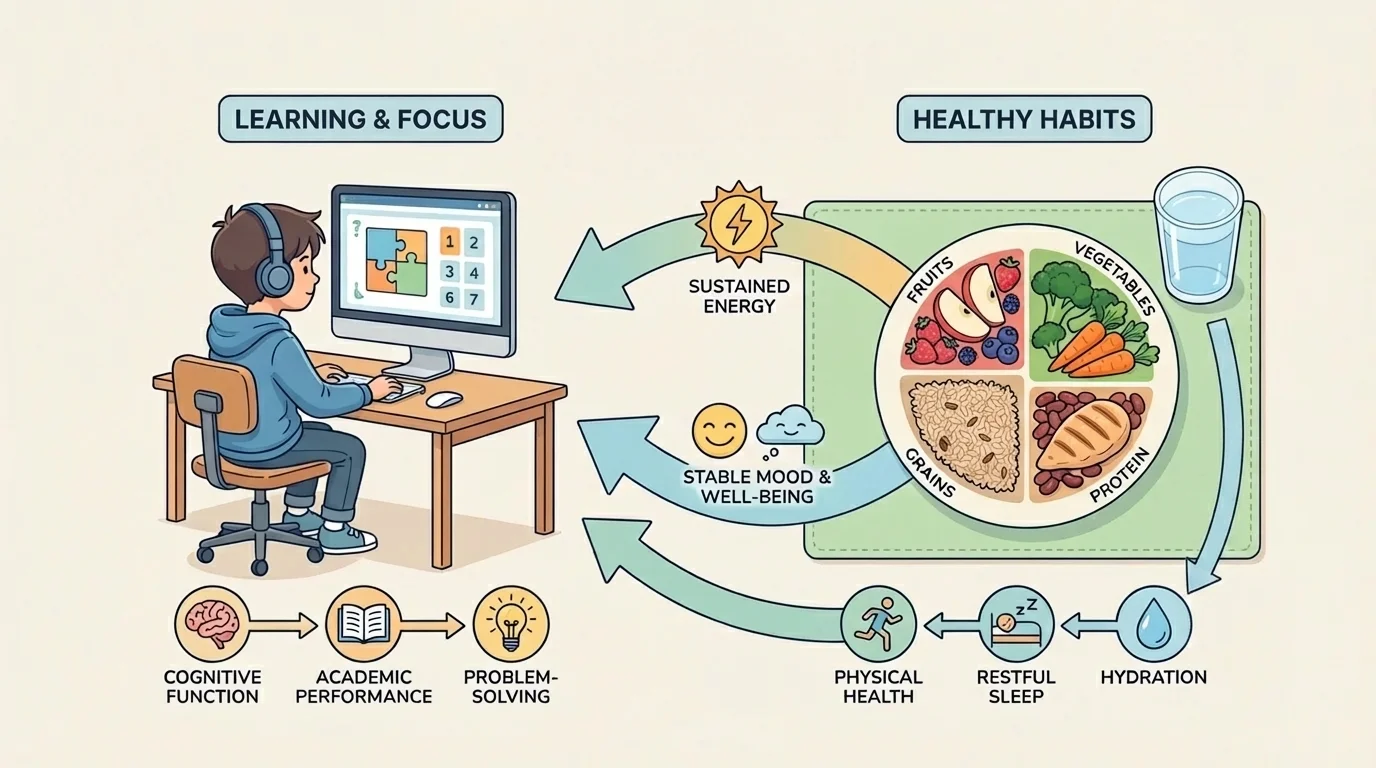
If you skip meals or do not drink enough water, you may feel slow, hungry, or cranky. It may be harder to focus on reading, listening, or directions. A healthy snack later could be apple slices, crackers and cheese, or carrot sticks.
Food is fuel for learning
Your brain needs steady fuel, not just quick treats. Sugary snacks may feel exciting for a short time, but then your energy can drop. Movement ideas, shown in [Figure 3], are another way to help your body and brain stay ready to learn. Meals and snacks with a mix of healthy foods help your body keep going longer.
Keep a water bottle nearby during online learning if you can. The plate and drink in [Figure 2] remind you that healthy food and water are everyday tools for learning, not just things for special days.
Physical activity means moving your body in healthy ways. Movement can wake up your brain. It helps many children feel more alert, more cheerful, and more ready to learn.
You do not need a hard workout. Simple movement helps: stretching, dancing to one song, walking outside with a grown-up, tossing a ball, or doing a few jumps. Short movement breaks between lessons can help your body reset after sitting.
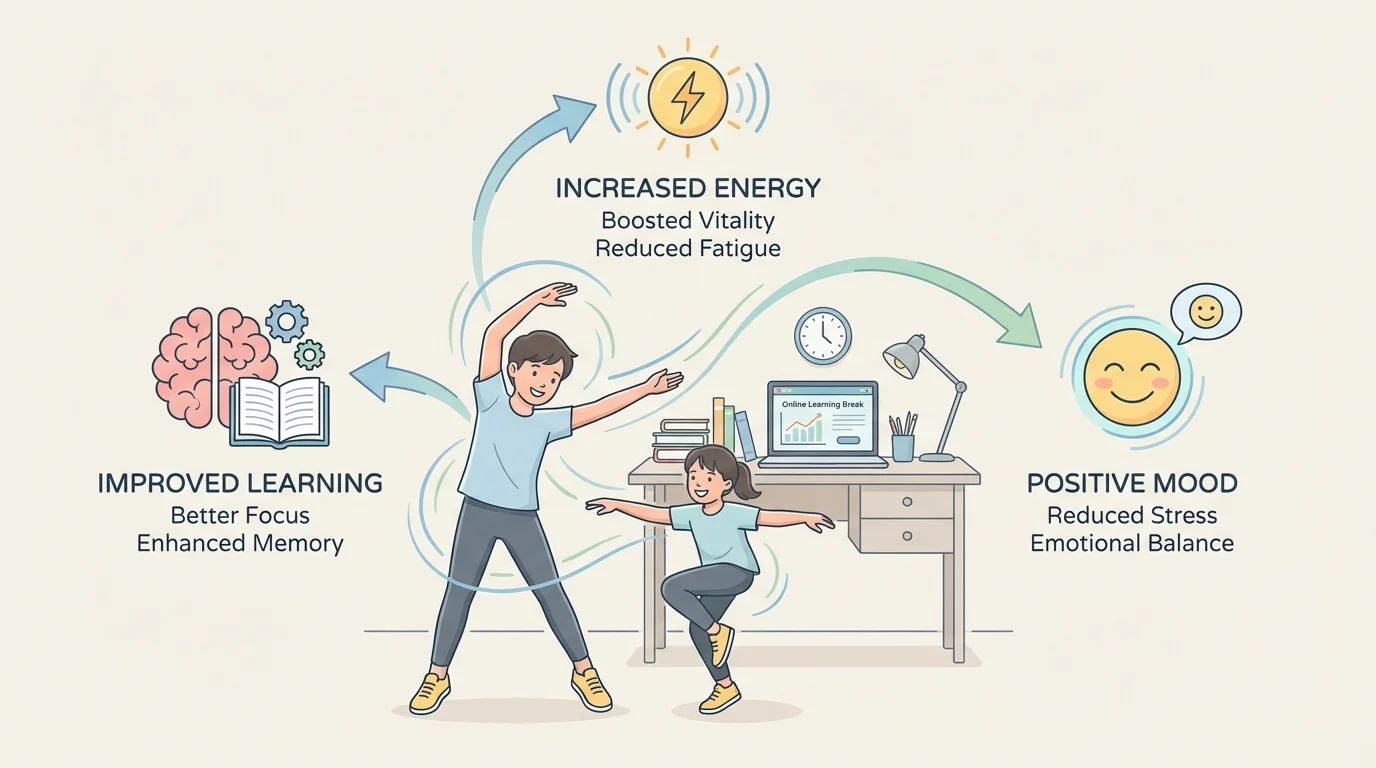
When your body has not moved much, you may feel stiff or extra wiggly. Then it can be hard to sit and listen. A short break to move can help you come back with better focus.
Try This: A quick movement break
Step 1: Stand up safely beside your chair.
Step 2: Reach your arms high, then touch your knees.
Step 3: March in place or dance for a short song.
Step 4: Take a deep breath and sit back down.
This quick break can help your body feel ready again.
Later, when you notice your body feeling sluggish, remember the movement ideas in [Figure 3]. Even a small stretch break can support learning.
Your feelings matter. When you feel worried, angry, or very upset, learning can feel harder. Calm habits help your brain settle down. You can take a deep breath, hug a stuffed animal, sit in a quiet spot, draw, or talk to a trusted adult.
Mood can change during the day. That is normal. Healthy habits often help your mood stay steadier. Sleep can help you feel less grouchy. Food and water can help you feel less cranky. Movement can help you feel less stuck.
"Small healthy choices can help big feelings feel smaller."
If an online assignment feels frustrating, try this: pause, breathe in slowly, breathe out slowly, get a sip of water, and ask for help. Taking care of your feelings is part of taking care of your learning.
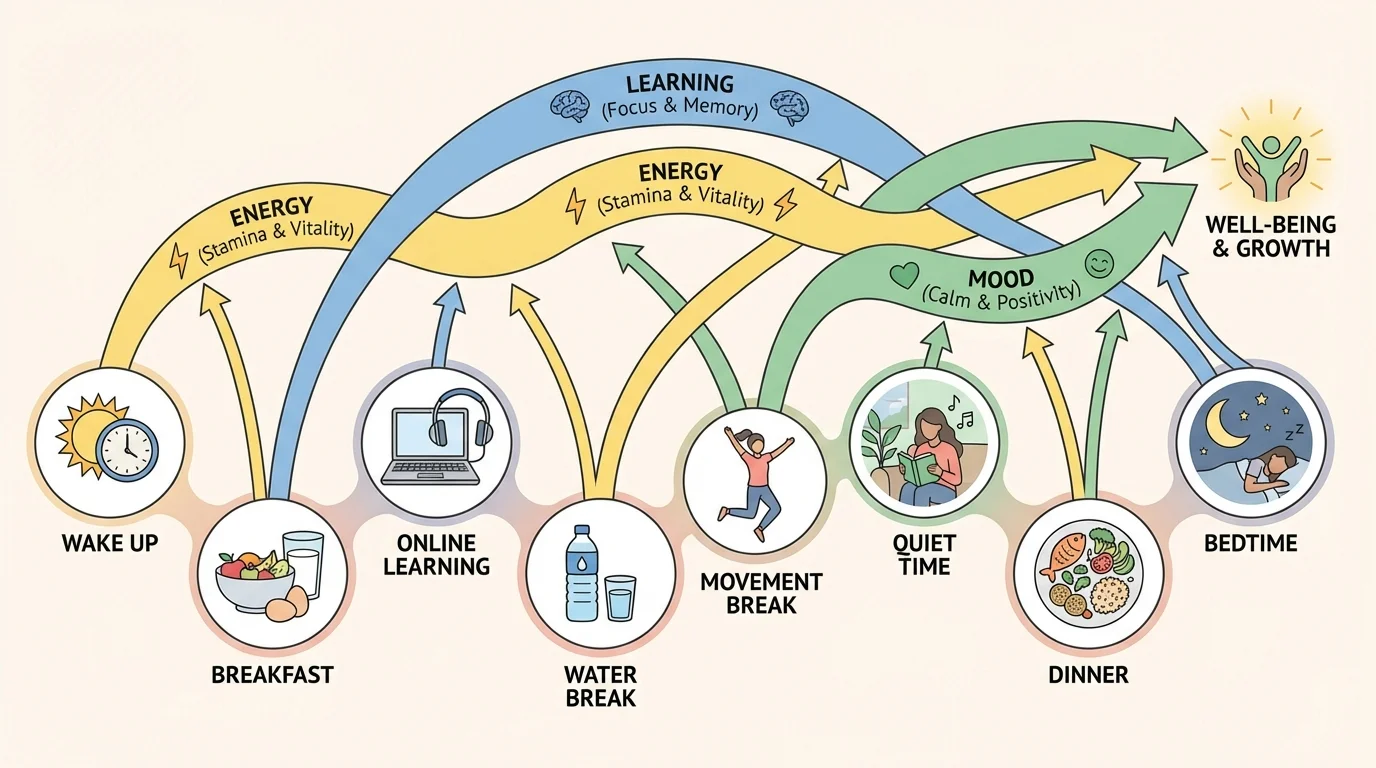
A simple healthy daily routine can make home learning feel smoother. You do not have to be perfect. You just need simple steps you can do most days. [Figure 4] shows one example.
One way your day might go is this:
Wake up and get dressed. Eat breakfast and drink water. Join your online lesson. Take a movement break when class is done. Eat lunch. Do schoolwork. Have a snack and water. Play or move. Have dinner. Do a calm bedtime routine.
Try This: Make one healthy choice today
Step 1: Choose one habit, like drinking water in the morning.
Step 2: Ask a grown-up to help you remember.
Step 3: Do it again tomorrow.
Small habits grow when you practice them often.
The routine in [Figure 4] shows that healthy habits fit all through the day, not only at one time.
Healthy habits matter because they change how your day feels. If you sleep too little, you may be too tired to listen well. If you skip breakfast, your tummy may rumble during reading time. If you do not drink enough water, you may feel unwell or get a headache. If you sit too long, your body may feel jumpy or stiff.
But when you rest, eat, drink water, move, and calm your feelings, learning often feels easier. You may have more patience, more focus, and more smiles. That is why healthy habits help with learning, energy, and mood.
You already know some healthy habits from everyday life, like washing your hands and brushing your teeth. The same idea is true here: making good choices again and again helps your body and brain stay strong.
You do not need to change everything at once. Pick one healthy habit and practice it. Then add another. Little steps can help you have a better day.
