Some people wait for motivation, confidence, or the "right time" to grow. That usually does not work. Real personal growth is less like magic and more like training. Athletes improve by reviewing performance, setting targets, and working with coaches. Musicians do the same. The same idea applies to your life: if you want to become more organized, more confident, more responsible, or better at relationships, you need a strategy.
A personal growth strategy is not about becoming perfect. It is about becoming more aware of who you are, what you want, and what helps you improve. When you build that strategy on reflection, goals, and support systems, you stop drifting and start making choices on purpose.
Growth can feel random when you only notice big moments: a bad grade, an argument, a missed deadline, a great performance, or a strong week of healthy habits. But your life is mostly shaped by small repeated choices. If you do not stop to examine those choices, you can repeat the same patterns for months.
A good strategy helps you answer practical questions: What am I doing well? What keeps getting in my way? What do I want to improve first? Who can help me? How will I know if I am making progress? Those questions turn growth from a vague idea into a process you can actually use.
Personal growth strategy is a plan for improving how you think, act, relate to others, and manage your life. It usually includes reflection, clear goals, daily or weekly actions, and support from other people.
Reflection means looking honestly at your experiences, thoughts, emotions, and behavior so you can learn from them.
Support system means the people, tools, and resources that help you stay encouraged, accountable, safe, and on track.
This kind of strategy matters because your choices affect real outcomes. If you learn to reflect well, you catch problems earlier. If you set useful goals, you waste less energy. If you build support, you recover faster from hard days. Without those pieces, people often rely on emotion in the moment. That can lead to quitting too soon, avoiding hard conversations, or making plans that fall apart after a week.
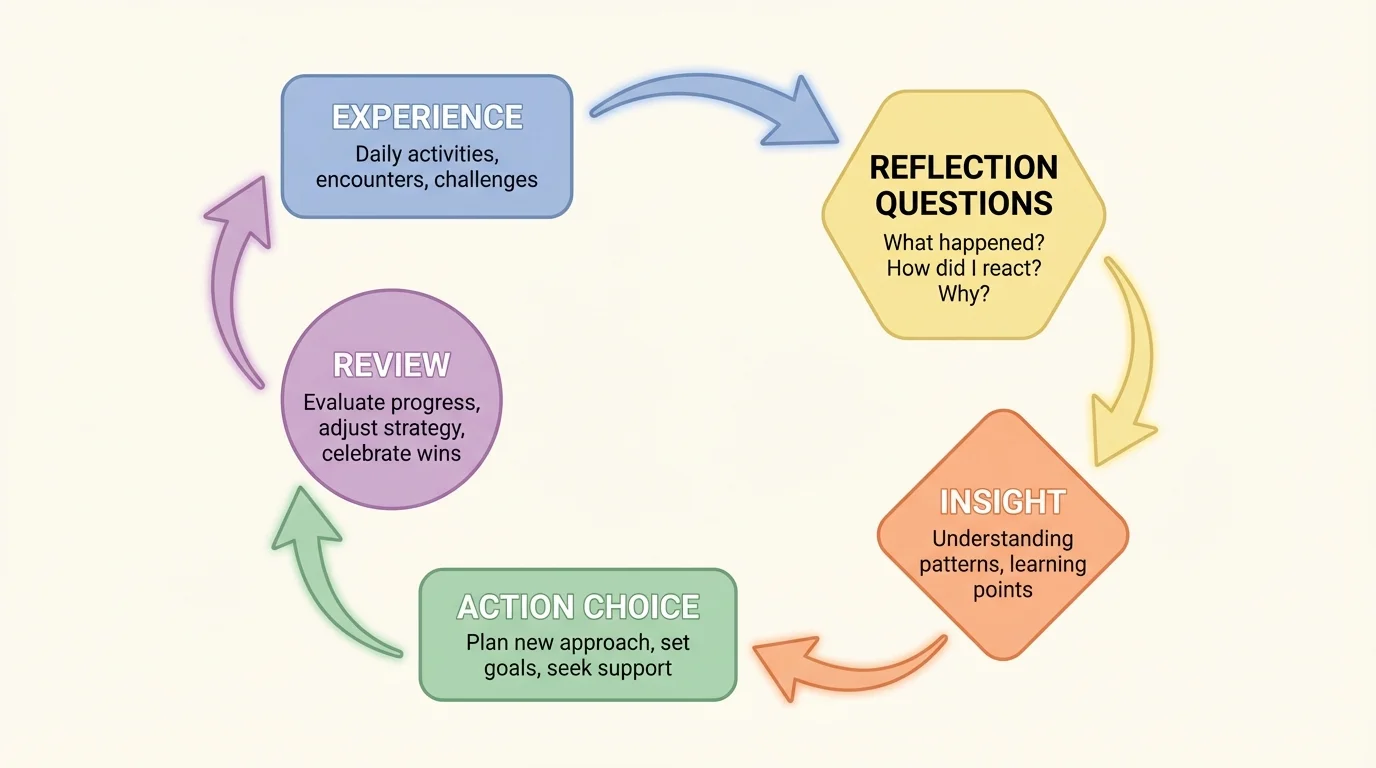
[Figure 1] Self-awareness starts with reflection, and reflection works best when it becomes a repeated cycle. Instead of only asking, "Was my day good or bad?" ask what happened, why it happened, what you felt, and what you want to do next time.
Reflection is not the same as overthinking. Overthinking traps you in replaying problems without action. Reflection looks for patterns and lessons. It is honest, specific, and useful.
A simple reflection method is to check four areas: strengths, challenges, values, and patterns. Strengths are what you already do well. Challenges are areas where you struggle. Values are what matters to you, such as honesty, independence, health, creativity, faith, or family. Patterns are behaviors that repeat, such as procrastinating when work feels overwhelming or shutting down during conflict.
Try asking yourself questions like these: What gave me energy this week? What drained me? When did I feel proud of myself? When did I feel disappointed? What situations bring out my best behavior? What situations make me react badly? What kind of person am I trying to become?
Reflection works when it leads to decisions. The point is not to create a perfect diary entry. The point is to notice what is true and use that information. If you realize you are always late starting assignments because your phone is next to you, the insight matters only if it leads to a change, such as charging your phone across the room during work time.
You do not need long writing sessions every day. A short weekly check-in can be enough. For example, maybe you notice that you speak sharply to your siblings or friends when you are already stressed. That is useful information. It tells you that your real issue might not just be communication. It may also be sleep, workload, or emotional regulation.
Reflection also helps you separate identity from behavior. Saying "I handled that poorly" is more useful than saying "I am terrible." The first statement gives you something to improve. The second makes change feel impossible. As the reflection cycle in [Figure 1] illustrates, experience becomes insight only when you look at it clearly and choose a next step.
One practical rule is this: reflect on facts, feelings, and choices. Facts are what happened. Feelings are your emotional response. Choices are what you did or can do next. Keeping those separate can stop you from making everything feel like a personal failure.
[Figure 2] Reflection tells you where you are. A goal-setting process tells you where you are going. Clear goals are easier to act on than vague wishes.
A weak goal sounds like this: "I want to do better in school," "I need to be healthier," or "I should be less awkward." Those ideas may be real, but they are too broad. You cannot build a solid plan from a blurry target.
A stronger goal is specific, measurable, and realistic. Instead of "I want to do better in school," try "For the next four weeks, I will start math assignments the day they are posted and ask for help within 24 hours if I get stuck for more than 20 minutes." Instead of "I need to be healthier," try "I will walk for 20 minutes after lunch on Monday, Wednesday, and Friday, and go to sleep by 10:30 p.m. on school nights."
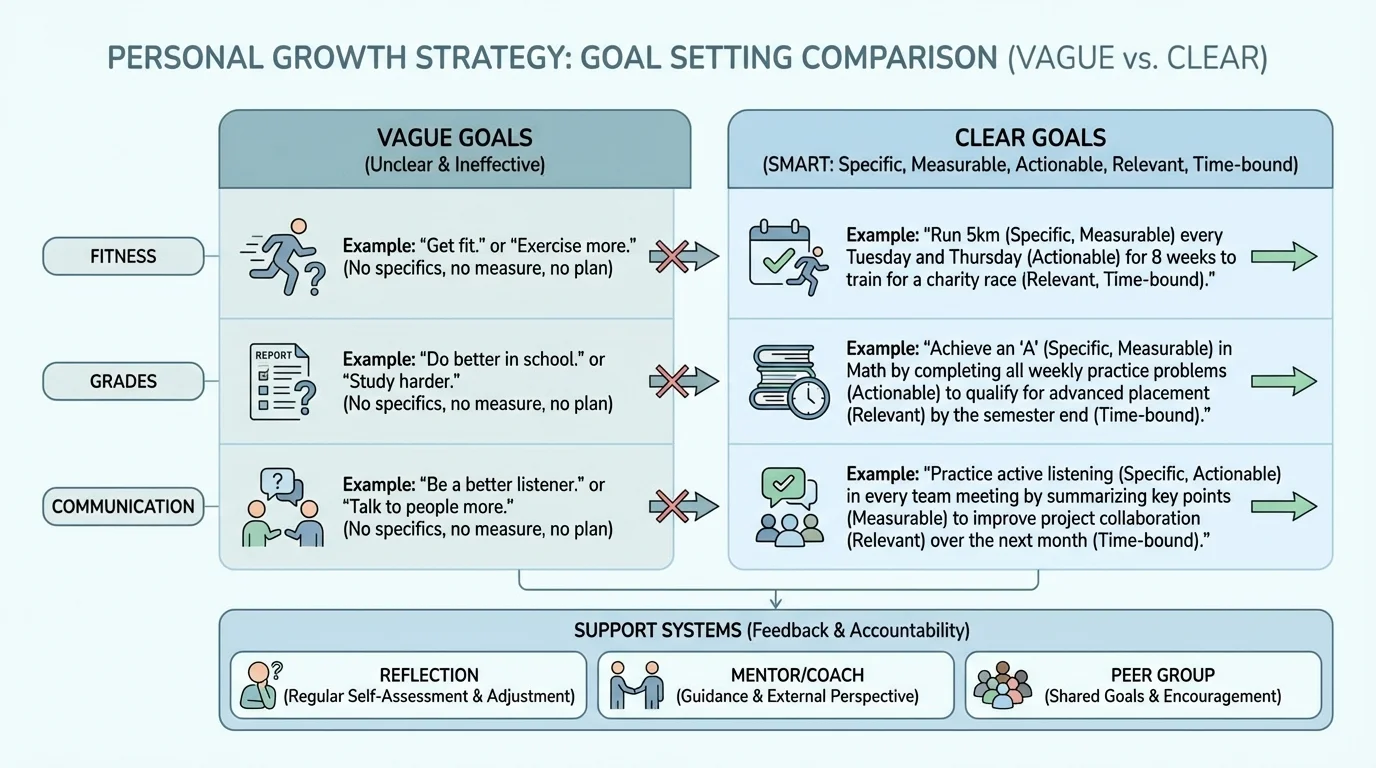
Good goals usually answer five questions: What exactly do I want to improve? Why does it matter to me? What action will I take? How will I measure progress? When will I review it?
If your goal is too big, shrink it. A useful goal should stretch you, not crush you. For example, if you struggle with public speaking on video calls, a realistic first goal might be: speak once during each weekly group session or community meeting, not "become completely confident immediately."
Turning reflection into a goal
You notice that you often miss deadlines because you avoid tasks that feel confusing.
Step 1: Name the real issue.
The issue is not laziness. The issue is avoidance when work feels unclear.
Step 2: Write a goal you can see and measure.
"For the next two weeks, I will spend the first 10 minutes of each assignment figuring out directions, listing questions, and sending one message for help if I am still confused."
Step 3: Choose a sign of progress.
You will track how many assignments you start on time and how often you ask for help before the deadline.
This goal is useful because it targets the actual pattern.
Goals should connect to values, not just pressure. If your goal exists only because someone else wants it for you, your effort may collapse when motivation drops. But if the goal connects to something you care about, such as independence, trust, future opportunities, or peace of mind, it becomes easier to protect.
This is where intrinsic motivation matters. It means doing something because it fits your own values, interest, or purpose, not only because of rewards or fear. External pressure can start action, but internal meaning is usually what helps you continue.
A goal without a plan often turns into guilt. Planning means deciding when, where, and how you will act. The more specific your plan is, the less energy you waste deciding in the moment.
Start by breaking one goal into smaller actions. If your goal is to improve your emotional control during conflict, your plan might include pausing before replying, muting notifications for five minutes when upset, writing a draft before sending a message, and checking whether your response matches your real point.
You can think of progress as small repeated gains. If a habit improves by just a little each week, that adds up. A simple way to picture this is with small increases over time. No math-heavy tracking is required, but the idea is that repeated actions matter more than one intense day.
Create checkpoints. A checkpoint is a time when you review whether your plan is working. Weekly checkpoints are often best because they are frequent enough to catch problems but not so frequent that they become annoying. Ask: What did I actually do? What helped? What got in the way? What needs to change this week?
You do not need to improve everything at once. Trying to fix your sleep, grades, friendships, exercise habits, confidence, and stress all in the same week usually backfires. Pick one or two priorities first.
Make your environment help you. If you want to read more, keep the book where you sit at night. If you want to reduce doom-scrolling, log out of the app or move it off your home screen. If you want to remember deadlines, use digital reminders and one calendar instead of relying on memory.
Another practical idea is to plan for obstacles before they happen. If you know you get discouraged when progress is slow, decide in advance what you will do. For example: "If I miss one planned workout, I will restart the next day instead of waiting until next week." This protects you from the common mistake of turning one slip into a full stop.
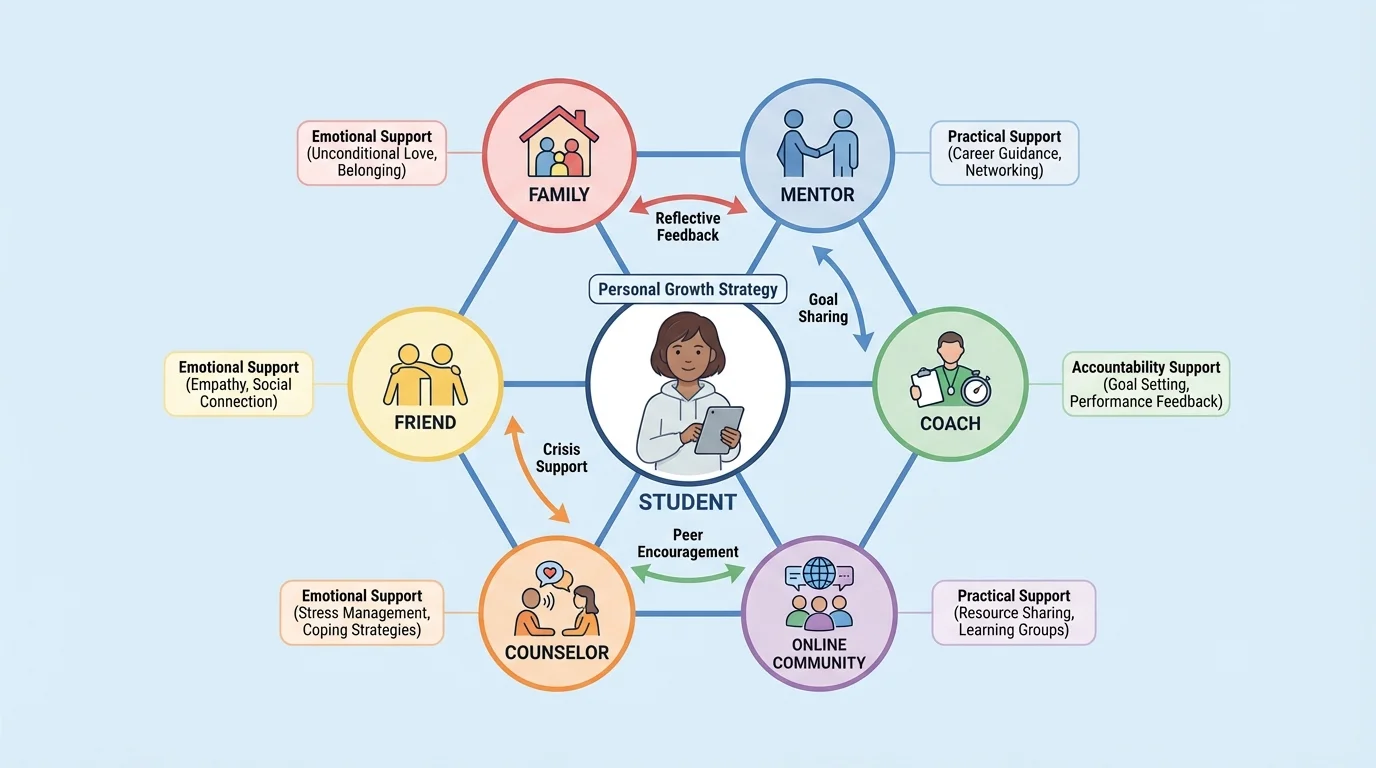
[Figure 3] No one grows well in total isolation. Different kinds of support matter, and they often work best together. One person may encourage you emotionally, another may give practical advice, and another may simply hold you accountable.
Your support system can include a parent, guardian, older sibling, coach, youth leader, therapist, counselor, employer, trusted friend, tutor, or mentor. A mentor is especially valuable because they can offer guidance based on experience, not just opinion.
Not every supportive person plays the same role. Some people are good for encouragement. Some are good for honesty. Some are safe listeners. Some are skilled problem-solvers. Knowing the difference helps you ask the right person for the right kind of help.
It also matters to choose people who are trustworthy. A strong support person respects your privacy, wants your growth, and does not push you toward risky or harmful choices. If someone turns your struggles into gossip, pressure, or control, that is not healthy support.
Many students need help learning how to ask. Try simple, direct language: "I am trying to improve how I manage deadlines. Could you check in with me every Friday?" or "I want to get better at staying calm in difficult conversations. Can I practice what I want to say with you first?" Clear requests are easier for people to respond to than vague statements like "Help me do better."
Accountability makes goals more real. Accountability means someone else knows what you are trying to do and may check whether you followed through. This is not about being controlled. It is about reducing the chance that you quietly quit when things get hard.
Support can also come from systems, not just people. A planner, reminder app, shared calendar, habit tracker, study timer, or online support group can strengthen your follow-through. In the support map in [Figure 3], those tools fit alongside people because both can make your plan more stable.
If you are dealing with something serious, such as ongoing anxiety, unsafe situations, self-harm thoughts, abuse, or depression, personal growth is not just about self-discipline. It is also about getting qualified help. Reaching out in those situations is not weakness. It is a wise and necessary step.
Every growth plan runs into problems. You will have weeks when you lose focus, react badly, get tired, feel embarrassed, or stop trying. That does not mean the plan failed. It means you are human.
The skill you need here is resilience, which means recovering, adapting, and continuing after difficulty. Resilience is not pretending everything is fine. It is facing what happened and still moving forward.
When a setback happens, ask three questions: What happened? What was under my control? What is my next useful move? These questions stop you from getting stuck in blame or shame. Maybe you missed a deadline because you spent too long avoiding a confusing assignment. Your next useful move is not "I am hopeless." It may be "I will message for clarification tonight and finish the first part before breakfast."
People often overestimate what they can change in a few days and underestimate what they can change in a few months. Small actions repeated consistently can completely change how capable you feel.
Sometimes the right response is to adjust the goal. If your plan was too ambitious, change it. If your support system is weak, strengthen it. If the goal still matters but the method is failing, keep the goal and replace the method. Flexibility is not the same as giving up.
A useful way to think about this is to focus on trends, not isolated moments. One bad conversation does not erase progress in communication. One lazy afternoon does not erase a month of stronger habits. Look for overall direction.
Suppose you realize through reflection that you often feel stressed because you leave tasks until the last minute. Your goal becomes: "For the next three weeks, I will begin each major task within 24 hours of receiving it." Your plan is to check your task list at 4:00 p.m., work for 25 minutes, and text your accountability partner when you start. Your support system includes a friend who checks in twice a week and an adult who helps you break down larger assignments.
Or maybe your reflection shows that you avoid difficult conversations and then let resentment build. Your goal becomes: "When I am upset, I will wait 10 minutes, write my main point, and communicate directly within one day." Your plan includes drafting messages before sending them and practicing with a trusted adult. Your support system includes someone who helps you calm down and someone who gives honest feedback on your wording.
Another example: you notice that your confidence drops because you compare yourself constantly online. Your growth strategy may include limiting certain accounts, replacing 20 minutes of scrolling with a skill-building activity, and checking in weekly on your mood and focus. In that case, the support system might include a parent, a mentor, and a healthier online community built around art, coding, fitness, volunteering, or another genuine interest.
Personal growth check-in model
Step 1: Reflect.
Ask: What went well this week? What felt hard? What pattern did I notice?
Step 2: Choose one goal.
Pick the area that would make the biggest positive difference right now.
Step 3: Plan small actions.
Decide exactly what you will do, when you will do it, and what tool or reminder you will use.
Step 4: Add support.
Tell one trusted person what you are working on and what kind of check-in would help.
Step 5: Review and adjust.
At the end of the week, keep what worked and change what did not.
This process works because it is realistic. It does not depend on feeling inspired every day. It depends on noticing, choosing, acting, and adjusting.
A strong growth strategy is repeatable. You can use the same framework whether you are improving time management, stress control, health habits, communication, or responsibility.
Here is a practical framework: reflect weekly, set one priority goal, break it into actions, connect it to your values, build support, and review honestly. Then repeat. Over time, this creates evidence that you can trust yourself to grow.
| Part of the strategy | Main question | Practical example |
|---|---|---|
| Reflection | What is really happening? | "I keep delaying work when instructions feel unclear." |
| Goal | What do I want to improve? | "I will ask for clarification within 24 hours." |
| Plan | What exact action will I take? | Use a reminder and spend 10 minutes identifying questions. |
| Support | Who or what will help me follow through? | A mentor, a parent, and a task app. |
| Review | What should I keep, change, or restart? | Keep the reminder, shorten the task block, ask for help earlier. |
Table 1. A practical framework for building and reviewing a personal growth strategy.
There is no perfect version of you waiting to appear overnight. Personal growth is built through attention, effort, and support. The more honestly you reflect, the more clearly you can choose. The more clearly you choose, the more likely you are to act. And the more support you build around those actions, the more likely you are to keep going when life gets difficult.
"You do not rise to the level of your goals. You fall to the level of your systems."
— James Clear
That idea matters because goals point you in a direction, but systems help you move. Your strategy becomes powerful when reflection, goals, and support systems work together instead of separately.
