Have you ever been in a group chat where everyone says, "We should do something," but nothing actually happens? Then one person steps in, sets a deadline, assigns tasks, and keeps everyone updated. Suddenly the project moves forward. That difference is not magic. It is leadership, and in real life, leadership effectiveness often depends on three things: taking action, thinking ahead, and keeping people connected.
Leadership is not just about being "in charge." In daily life, you might lead a volunteer event, help organize a family responsibility, manage a gaming group, coordinate a social media project, or work with coworkers at a part-time job. In all of these situations, people notice whether you act early, prepare well, and communicate clearly. If one of those is missing, even a confident leader can struggle.
Leadership effectiveness means how well a person helps a group reach a goal, solve a problem, or handle a challenge. An effective leader does not just give directions. That person helps people understand what needs to happen, feel motivated to do it, and trust that the process makes sense.
When leadership is effective, tasks get completed, stress stays lower, and people are more willing to cooperate again in the future. When leadership is weak, confusion spreads fast. Deadlines get missed, people repeat the same work, and frustration builds. In online settings especially, weak leadership can be hard to fix because people are not physically together to quickly sort things out.
Leadership effectiveness is the ability to guide people toward a goal in a way that produces useful results, builds trust, and helps the group function well.
Initiative is acting without waiting to be told every step.
Planning is deciding in advance what needs to happen, when it needs to happen, and who will do it.
Communication is sharing information clearly, listening carefully, and making sure people understand.
A leader can be energetic but ineffective if they rush ahead without direction. A leader can be organized but ineffective if they never speak up. A leader can be friendly but ineffective if they talk a lot without making decisions. That is why assessing leadership means looking at behavior, not just personality.
Initiative is often the first thing people notice in a leader. It shows up when you spot a need and respond instead of waiting. For example, if a community group needs someone to organize donations, a person with initiative creates the sign-up form, checks what supplies are needed, and gets the process started.
Good initiative matters because most group problems begin with hesitation. People may care, but they are unsure who should begin. A leader who acts responsibly helps the group move from talking to doing. This can save time, reduce uncertainty, and create momentum.
But initiative is not the same as impulsiveness. Strong initiative includes awareness. If you take over everything without checking with others, people may feel ignored or confused. Poor initiative can look like this: announcing a plan in a chat, making decisions for everyone, and then disappearing when questions come up. That is action without responsibility.
To assess whether initiative improves leadership, ask questions like these:
Consider two teens helping with a neighborhood fundraiser. One notices that volunteers keep signing up for the same time slots and immediately creates a shared schedule. The other says, "Someone should fix this," but never acts. The first person shows leadership through initiative. Now imagine a third person who changes the whole event plan without asking anyone. That person acts quickly, but not effectively. So initiative helps leadership only when it is paired with judgment.
Case study: Initiative that helps vs initiative that hurts
Step 1: A youth sports team needs a parent sign-up list for snacks and transportation.
One player notices the confusion and creates a simple online form with dates and clear options.
Step 2: The player sends the form to the team leader and asks, "Does this match what you want before I share it with everyone?"
This shows action and respect for the group.
Step 3: Compare that with someone who posts random assignments in the group chat without checking availability.
The second person also acted fast, but their initiative created frustration.
Effective initiative solves a problem without creating a new one.
A useful habit is to think, What is the next helpful step I can take right now? That question keeps initiative practical instead of dramatic.
Planning is what makes leadership dependable. If initiative starts the engine, planning gives the trip a route. A leader who plans well does more than hope things work out. They break a goal into steps, estimate time, prepare for obstacles, and make responsibilities clear.
Many leadership failures are not caused by laziness. They are caused by vague thinking. For example, saying "Let's post the campaign video this weekend" sounds fine, but it leaves out key details: Who edits it? Who writes the caption? Which platform is it going on? What time will it be posted? What happens if the file is not ready?
Good planning usually includes:
Planning also builds fairness. When tasks are clearly assigned, one person is less likely to do all the work while others assume someone else handled it. This matters in home and school settings, family responsibilities, community service, and jobs.
A common mistake is micromanagement. This happens when a leader plans every tiny detail so tightly that other people have no room to contribute. Effective planning gives structure, but it does not choke teamwork. People need to know the goal and their role, not feel controlled every second.
Planning is not prediction; it is preparation. You cannot control every outcome, but you can reduce preventable problems. A good plan leaves room for change. Instead of pretending nothing will go wrong, an effective leader asks, "If this step fails, what will we do next?"
Imagine you are leading a small online fundraiser for an animal shelter. A weak plan sounds like: "Let's promote it soon." A strong plan sounds like: "Tonight we finalize the flyer, tomorrow we post it, by Friday we check responses, and on Saturday we send reminders." The second version gives the group something they can actually follow.
To assess planning in leadership, look at outcomes and process together. Did the leader think ahead? Did the group understand the timeline? Were there avoidable surprises? A leader should not be judged only by whether everything went perfectly. Sometimes unexpected problems happen. The real question is whether the leader prepared well enough to reduce confusion and respond effectively.
Communication is the part of leadership people experience most directly. Even a smart plan fails if nobody understands it. Communication includes speaking, writing, listening, asking questions, checking for understanding, and choosing the right tone and platform.
In online life, communication matters even more because people cannot always see facial expressions, body language, or quick reactions. A short message like "Handle it" might sound efficient to one person and rude or confusing to another. Effective leaders reduce that uncertainty by being specific and respectful.
Strong leadership communication is usually:
Listening is a major part of communication. Some leaders talk constantly but miss important information. If a team member says they cannot finish a task by tonight, ignoring that message does not make the problem disappear. A good leader listens promptly, adjusts the plan if needed, and keeps the group informed.
Many team conflicts begin not with disagreement about the goal, but with different assumptions about who was doing what. Clear communication prevents small misunderstandings from turning into bigger trust problems.
To assess communication, ask: Did the leader explain the goal clearly? Did they respond to questions? Did they update people when plans changed? Did their tone keep people engaged, or did it make people shut down?
Suppose you are coordinating a volunteer cleanup day. A weak communicator sends one message: "Be there in the morning." A stronger communicator says: "Please join the cleanup at 9:00 a.m. at Riverside Park. Bring gloves if you have them. I'll post weather updates by 7:30 a.m. Reply tonight if you need a ride." The second message prevents confusion before it starts.
Strong leadership sits at the intersection of initiative, planning, and communication. If one area is weak, the whole leadership effort becomes less effective. A leader with initiative but no planning creates rushed action. A leader with planning but no communication creates silent confusion. A leader with communication but no initiative may sound supportive while nothing actually moves forward.
You can think of these three qualities as a chain. [Figure 1] Initiative starts action, planning organizes action, and communication coordinates action. If one link breaks, the group feels it. That is why leadership should be assessed as a combination of behaviors, not as a single trait like confidence or charisma.
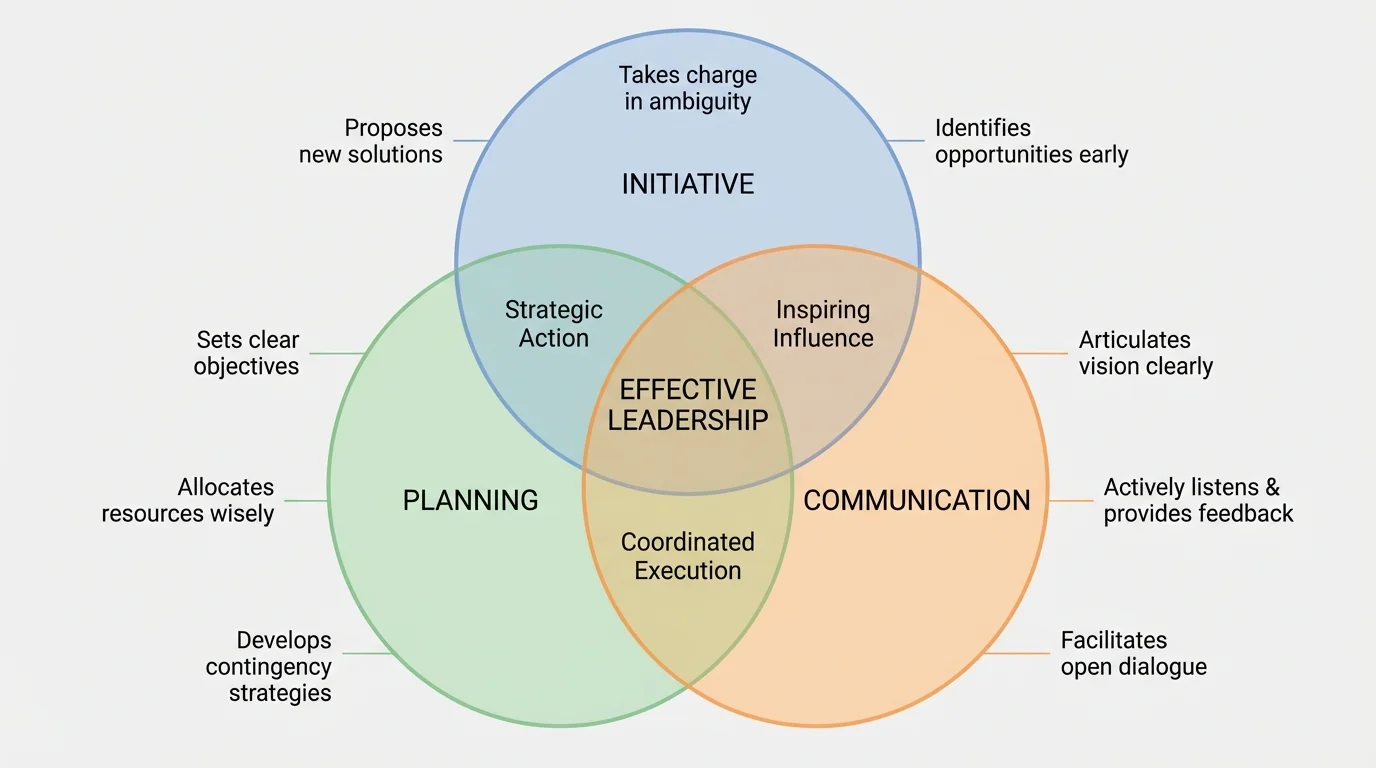
For example, a student leading a digital awareness campaign may take initiative by starting the project, use planning to schedule posts and divide tasks, and use communication to keep volunteers updated. If they skip planning, posts may be late. If they skip communication, volunteers may stop responding. If they skip initiative, the campaign may never begin at all.
This is also why some people seem "natural leaders" at first but struggle over time. They may have one strong quality, such as confidence in speaking, but without the other two, their leadership becomes inconsistent. As we saw in [Figure 1], effectiveness grows when the three qualities support each other instead of working alone.
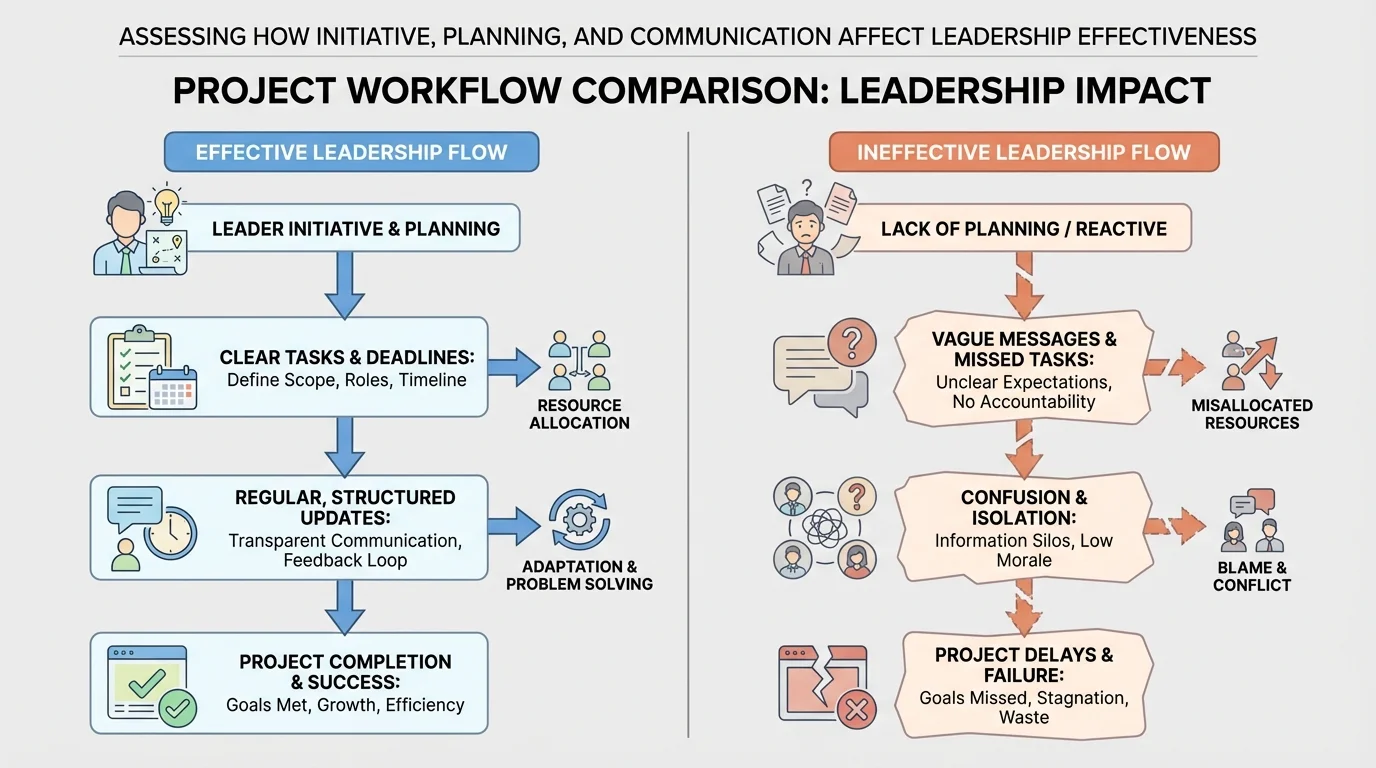
[Figure 2] When you assess leadership, do not focus only on whether people liked the leader. Focus on evidence. The pattern of decisions, follow-through, and messages often reveals leadership quality more clearly than popularity in a simple workflow comparison. A leader can be friendly and still ineffective. A leader can be quiet and still highly effective.
Here is a practical checklist you can use in real situations:
Use that checklist in situations like these:
Watch for warning signs. Weak initiative looks like constant waiting. Weak planning looks like chaos, repeated last-minute decisions, and preventable problems. Weak communication looks like unclear instructions, missing updates, or people doing the wrong task because they never understood the goal.
Also watch for overcorrection. Too much initiative can become controlling. Too much planning can become micromanagement. Too much communication can become message overload, where important updates get buried in unnecessary chatter. Leadership effectiveness is not about doing the most; it is about doing what helps the group function best.
| Leadership quality | When it is effective | When it is weak or overused |
|---|---|---|
| Initiative | Starts helpful action early | Waits too long or acts without involving others |
| Planning | Creates structure and reduces confusion | Stays vague or becomes overly controlling |
| Communication | Keeps people informed, heard, and aligned | Leaves people confused or floods them with mixed messages |
Table 1. Comparison of effective and ineffective uses of initiative, planning, and communication in leadership.
Later, if you need to explain why one leader was more effective than another, this kind of evidence gives you stronger reasons than saying, "They seemed better." You can point to actions, decisions, and group results.
You do not need to wait for a formal title to build leadership. You can practice it in small ways every week. Leadership improves through habits.
Try This: Before your next group responsibility, send one message that answers four questions: What is the goal? Who is doing what? When is it due? How should people ask for help? This single habit strengthens planning and communication immediately.
Try This: If you notice a problem, take one helpful first step before mentioning it. For example, instead of saying, "The sign-up system is messy," say, "I made a clearer version—can I share it?" That builds initiative with respect.
Try This: At the end of a project, ask yourself three questions: What went well? What confused people? What would I change next time? Reflection is how leadership gets sharper.
A simple leadership routine you can use
Step 1: Identify the goal.
State it in one sentence. If you cannot explain the goal clearly, your group will struggle too.
Step 2: Choose the first action.
Take one useful step that gets the project moving.
Step 3: Build a short plan.
List the tasks, deadlines, and who is responsible.
Step 4: Communicate early.
Send clear instructions and invite questions before confusion spreads.
Step 5: Check in and adjust.
Update the group, solve problems, and own mistakes instead of hiding them.
If you are shy, remember that effective leadership does not require being the loudest person. Calm, clear, reliable behavior often earns more trust than dramatic confidence. People usually prefer a leader who is organized and respectful over one who is exciting but chaotic.
Even good leaders make mistakes. A deadline may be unrealistic. A message may be unclear. A volunteer may stop responding. Leadership effectiveness includes recovery, not perfection.
When something goes wrong, strong leaders do three things. First, they acknowledge the issue clearly. Second, they adjust the plan. Third, they communicate the update quickly. For example: "We missed today's post because the video file was incomplete. I'm moving the release to tomorrow at 6:00 p.m. Jordan is checking the final edit tonight." That response is much better than silence.
Accountability matters here. Accountability means taking ownership of your role and your results. It does not mean blaming yourself for everything. It means being honest about what happened and doing your part to fix it. Groups trust leaders more when they admit mistakes and respond responsibly.
"People may forget what you said, but they will remember whether they could rely on you."
Leadership is especially important for the future because the habits you build now carry into adult life. Employers, community organizations, and families all need people who can notice problems, create order, and keep others informed. These are not just "school skills." They are life skills.
If you want to assess leadership well, look beyond style. Ask whether the person took initiative at the right time, planned in a way that made success more likely, and communicated so people could actually act. That is what makes leadership effective in the real world.
