Sometimes the hardest part of a problem is that it involves more than one person. Maybe you want to use the tablet, but your brother wants it too. Maybe two friends want different times for a video call. Maybe your family is deciding what to do first on a busy day. A choice that seems good for one person might not work well for everyone. That is why learning how to compare choices is such an important life skill.
When a problem affects more than one person, you are not just asking, "What do I want?" You are also asking, "What helps the group?" and "What is fair?" Being able to think this way helps people solve problems peacefully. It also helps you build trust. When others see that you care about their needs too, they are more likely to listen to you.
A problem that affects only you might be simple. For example, if you are choosing between an apple or a banana for your snack, that is mostly your choice. But if there is only one last banana and two people want it, the problem changes. Now the choice affects more than one person.
Shared problems happen every day at home and in your community. They can happen when people share time, space, toys, screens, attention, or plans. If you rush and pick the first idea, someone may feel left out, upset, or treated unfairly. If you stop and compare possible solutions, you have a better chance of finding one that works well for everyone.
Solution means a way to fix a problem. Fair means being reasonable and kind to everyone involved, not just one person. Consequence means what happens after a choice is made.
Good decision-makers do not always pick the fastest answer. They look at different choices and think about what may happen next. That is called careful thinking.
To compare solutions means to look at two or more ideas and notice how they are the same and how they are different. Then you decide which one is best for the situation.
For example, say two children want to sit in the same cozy chair during reading time at home. One solution is that the child who complains more loudly gets the chair. Another solution is taking turns. Another solution is sharing the chair if that is safe and comfortable. These are all possible solutions, but they do not all work equally well.
When you compare choices, think about more than what sounds fun in the moment. Ask whether the choice is safe, kind, fair, and realistic. A good solution should help fix the problem instead of making a new one.
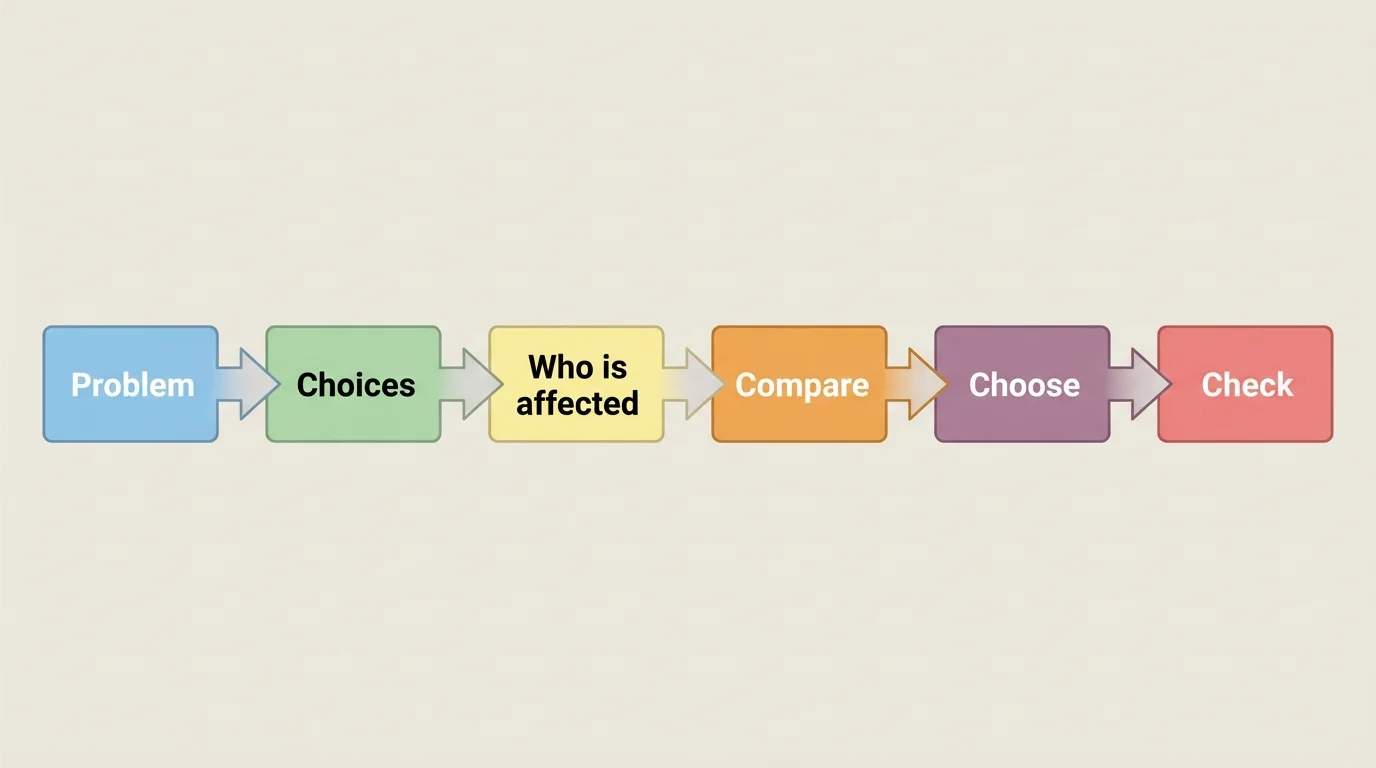
You can use a simple decision-making process, as [Figure 1] shows, to slow down and think clearly when a problem affects more than one person. This helps you move step by step instead of reacting too fast.
Step 1: Stop and breathe. If you feel upset, take a moment first. Calm minds make better choices.
Step 2: Name the problem. Say it clearly. For example: "We both want the same device at the same time."
Step 3: Think of at least two possible solutions. More choices give you more chances to find a good one.
Step 4: Ask who is affected. Think about everyone in the problem, not just yourself.
Step 5: Compare the choices. What is good about each one? What is not so good?
Step 6: Choose the best solution you can right now.
Step 7: Check what happened. If the choice did not work, you can try a different one.
This is not about finding the perfect answer every time. Sometimes there is no perfect answer. The goal is to find the best possible answer for the people involved.
Example: One tablet, two people
Step 1: Name the problem
"I want the tablet now, and my sister wants it now too."
Step 2: Think of solutions
Possible ideas: one person keeps it, take turns, set a timer, or find a different activity for one person.
Step 3: Compare them
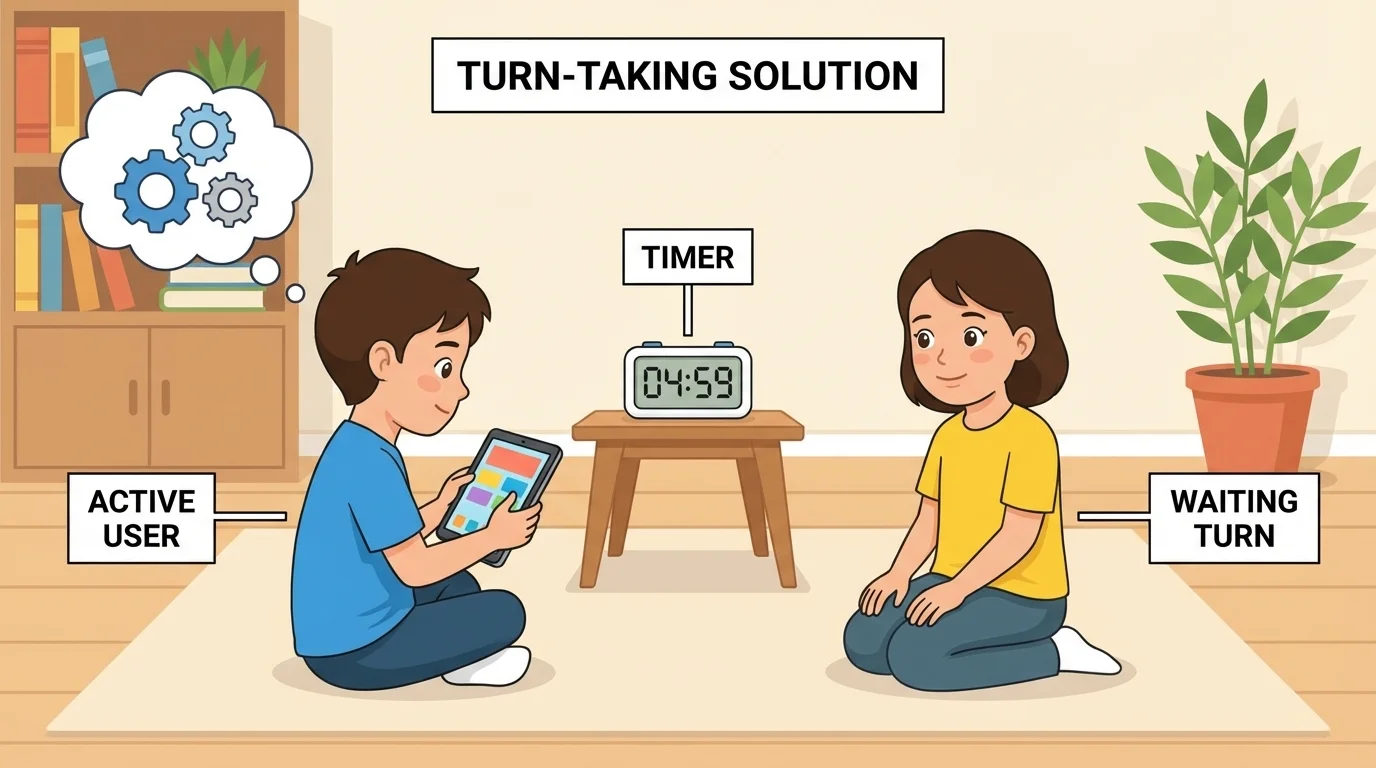
If one person keeps it every time, that is not fair. Taking turns with a timer gives each person a chance.
Step 4: Choose and check
Use a timer and switch when time is up. Later, ask, "Did that work for both of us?"
Notice that the best solution is often the one that is fair and easy to follow. Clear plans help people know what to expect.
When you are not sure which choice is best, use a simple checklist. This kind of thinking, shown in [Figure 2], helps you look at each idea in the same way.
Ask these questions: Is it safe? Is it fair? How will people feel? Does it follow family or community rules? Will it really solve the problem? Can we do it right now?
These questions are helpful because some solutions only look good at first. For example, yelling might get attention fast, but it hurts feelings and often makes the problem bigger. A calmer choice may take longer, but it usually works better.
| Question | Good sign | Warning sign |
|---|---|---|
| Is it safe? | No one gets hurt | Someone could get hurt |
| Is it fair? | People are treated reasonably | Only one person always wins |
| How will people feel? | People feel heard | People feel ignored or upset |
| Does it solve the problem? | The problem gets smaller | A new problem starts |
Table 1. Questions you can use to compare possible solutions.
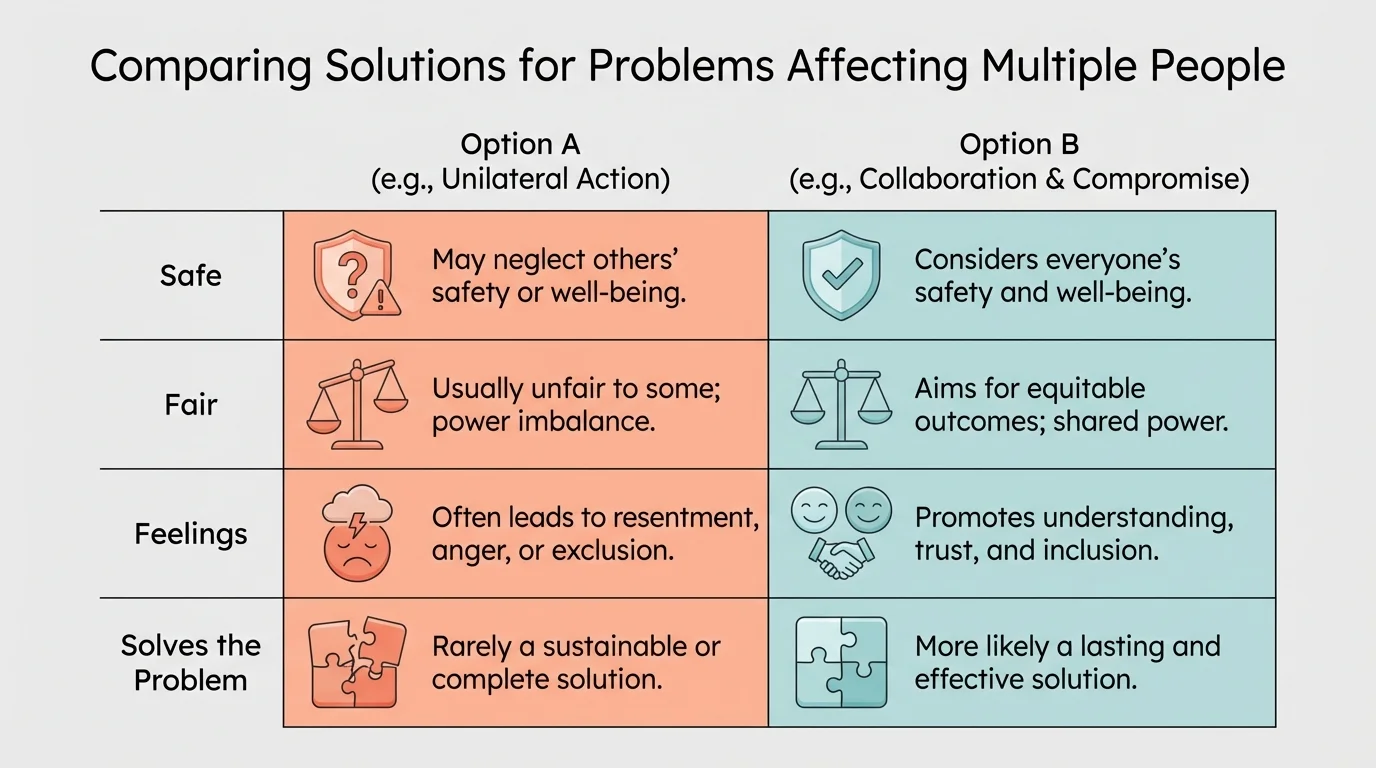
You do not need to make a huge list every time. Even thinking through two or three of these questions can help you make a wiser choice.
Here are some everyday situations where comparing solutions matters.
Online game problem: Two friends both want to be team leader in an online game. One possible solution is that one friend decides every time. Another is taking turns being team leader in each game. Another is letting the person who started the game decide. Taking turns often supports compromise because both players get a chance.
Family schedule problem: You want quiet time for reading, but someone else wants to watch a loud show. Possible solutions include using headphones, moving to a different room, or setting a quiet time first and show time later. Comparing these choices helps you see which one works for both people.
Video call problem: One cousin is free in the morning, but another is free later. A fair solution might be choosing a middle time, or switching times on different days so no one is always the one who must change.
Community problem: You and a neighbor both want to use the same sidewalk chalk space. A better solution than arguing is dividing the space into parts or taking turns with larger sections.
Many adult jobs use this same skill every day. Doctors, team leaders, and family members often compare choices by thinking about what helps the most people and causes the least harm.
[Figure 3] That means you are practicing a real grown-up life skill right now. The better you get at it, the easier it becomes to solve problems calmly.
Sometimes the best answer is a compromise. A compromise means each person gives a little so everyone can move forward.
Compromise does not mean the problem disappears like magic. It means people agree on a plan that is good enough and fair enough for now. One person may go first today, and the other person may go first tomorrow. One person may get a longer turn now, and the other person gets a longer turn next time.
If both people insist on getting everything they want, many shared problems stay stuck. But if both people are willing to bend a little, the problem often becomes easier to solve.
This is why taking turns is such a powerful tool. It is simple, fair, and easy to understand. Taking turns gives each person a clear chance.
"Fair does not always mean everyone gets the same thing right now. Fair means everyone matters."
That idea can help you when you feel disappointed. A fair choice may still mean waiting, changing plans, or sharing. But it should not mean one person is ignored all the time.
Not every possible solution is a good one. If an idea is unsafe, mean, or breaks an important family rule, do not choose it just because it is easy.
For example, grabbing, hitting, threatening, calling names, or hiding someone else's things are not acceptable solutions. They may give one person power for a moment, but they do not solve the problem in a healthy way.
This is where the consequence matter. An unkind choice can lead to hurt feelings, broken trust, and bigger problems later. A thoughtful choice may take more effort at first, but it usually leads to better results.
When to ask for help
If people are too upset to talk, if someone may get hurt, or if the problem keeps happening again and again, a trusted adult should help. Asking for help is a smart solution, not a failure.
You can say, "We have tried to solve this, but we need help finding a fair plan." That shows responsibility.
Try this in real life: when a shared problem comes up, pause before speaking. Count slowly to three in your mind. That tiny pause can stop a big argument.
Try this too: use simple words. Say, "We both want this." "Let's think of two ideas." "Which idea is fair?" Short, calm sentences help everyone focus on the problem instead of blaming each other.
You can also remember these three big checks: safe, fair, and works. If a solution is not safe, not fair, or does not really work, keep looking.
As you keep practicing, comparing solutions becomes easier. You learn to think about yourself and others at the same time. That is a strong, caring, and smart way to solve problems.
