Your body works a little bit like a team. Your brain, muscles, heart, stomach, and feelings all work better when they help one another. If one part of the team is tired, hungry, stiff, or stressed, the whole team can have a more difficult day. That is why healthy routines matter so much. A routine is something you do regularly, and good routines help you feel stronger, calmer, and more ready for learning, play, and family time.
A routine is a pattern you follow again and again. Healthy routines are not about being perfect. They are about giving your body and mind what they need most days. When you sleep enough, eat regular healthy meals, move your body, and calm stress in safe ways, you often feel more focused and more comfortable.
Think about two different mornings. In one morning, you went to bed on time, drank water, ate breakfast, and stretched before logging in for online class. In the other morning, you stayed up very late, skipped breakfast, and sat for a long time without moving. Which day would probably feel better? Most people feel more ready on the first day. That is the power of small habits.
Healthy habits work together. Sleep gives you energy. Food gives your body fuel. Movement wakes up your muscles and brain. Stress-management helps you feel calm enough to use that energy well. When one habit improves, the others often improve too.
You do not need fancy equipment, special foods, or a perfect schedule. You need simple choices that you can repeat. Even one small step, like drinking water in the morning or taking a short stretch break, can help.
[Figure 1] Sleep is one of your body's most important jobs. During sleep, your body rests and your brain organizes what you learned that day. A regular bedtime routine follows the same calm order each night so your body starts to know, "It is time to rest." This can help you fall asleep more easily.
A healthy sleep routine can include finishing active play earlier, putting away screens, taking a bath or washing up, brushing your teeth, putting on pajamas, reading or listening to a calm story, and turning out the lights at about the same time each night. Going to bed at a similar time helps your body clock stay steady.
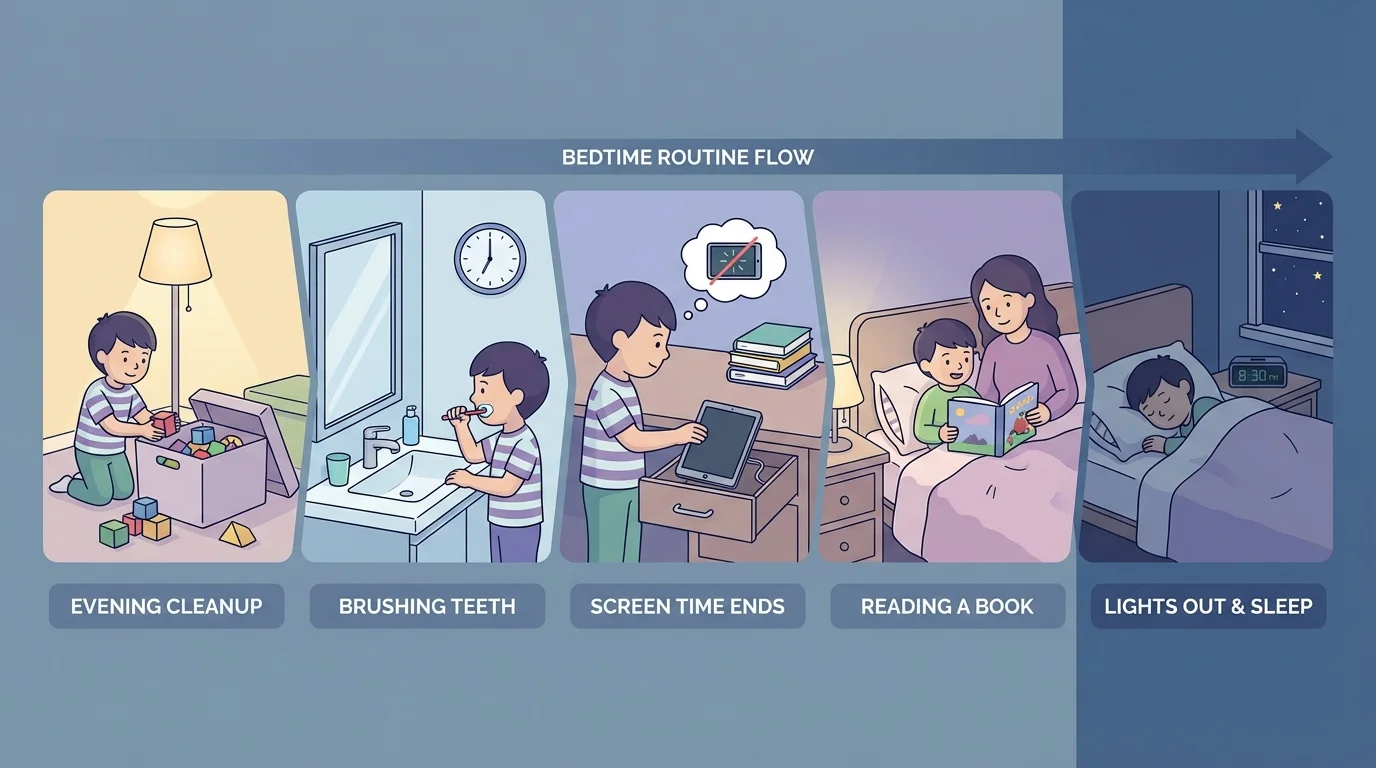
Screens such as tablets, phones, and TVs can make it harder for some children to feel sleepy, especially right before bed. Bright light and exciting videos can keep the brain awake. A better choice is to have quiet time before bed. You might draw, read, cuddle with a stuffed animal, or listen to soft music.
A bedtime routine you can try
Step 1: Pick a bedtime and a wake-up time that work well for your family.
Step 2: About 30 minutes before bed, turn off exciting screens.
Step 3: Wash up, brush teeth, and get cozy.
Step 4: Do one calm activity, like reading.
Step 5: Turn off the lights and rest.
Doing the same steps most nights helps your body learn the pattern.
When you do not get enough sleep, you may feel grumpy, unfocused, extra silly, or very tired. You may crave sugary snacks for quick energy. You may also have a harder time solving problems kindly when something goes wrong. That is one reason sleep connects to stress and food choices too.
If you have trouble sleeping, it helps to tell a trusted adult. Maybe the room is too bright, too noisy, too hot, or too cold. Maybe you feel worried. As we saw in [Figure 1], a calm and simple routine works better than a rushed or noisy one.
Your brain and body keep growing while you sleep. Rest is not "doing nothing." Sleep is active time for healing, growing, and getting ready for a new day.
A helpful sleep space is as calm as possible. If you can, keep your bed for sleeping, not for exciting games. A favorite blanket, dim lights, or a quiet bedtime story can make bedtime feel safe and peaceful.
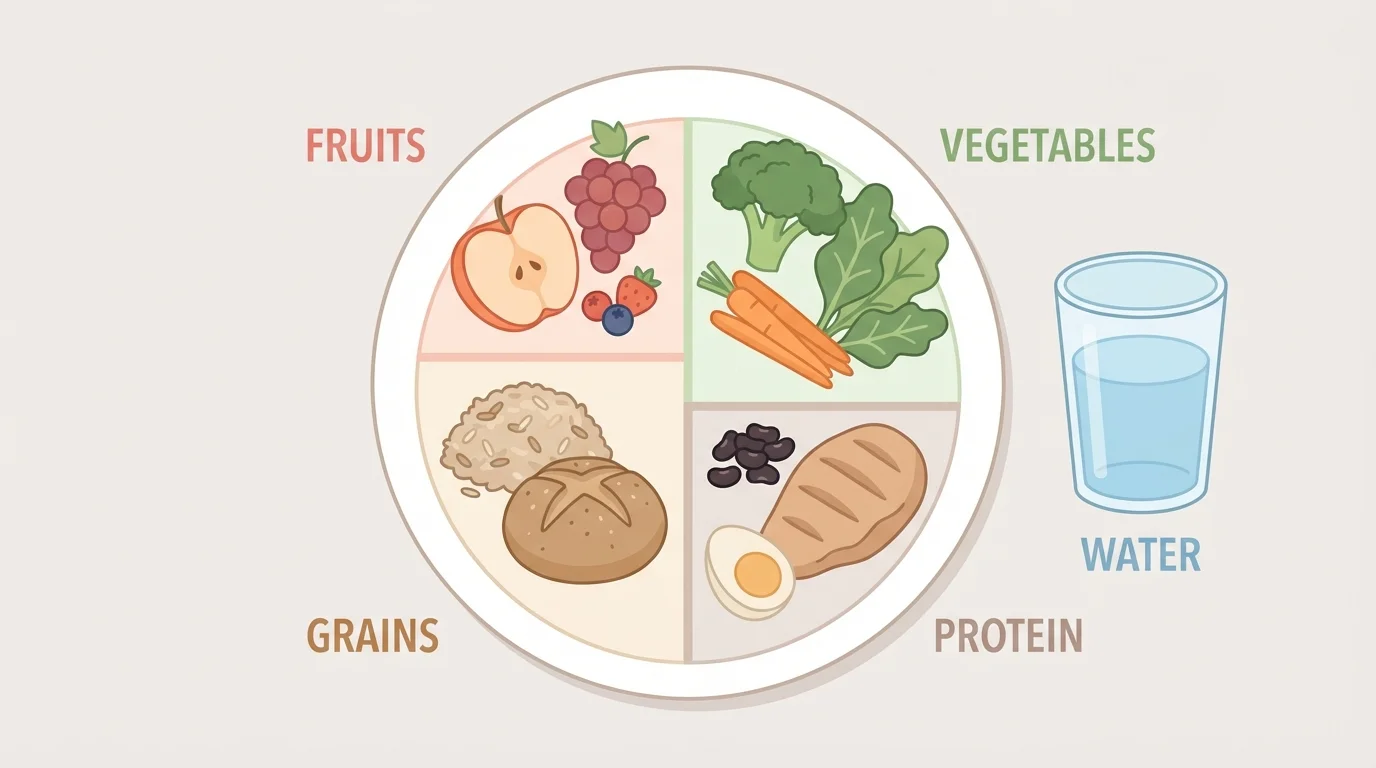
[Figure 2] Food gives your body energy and building materials. A balanced meal includes a mix of foods instead of only one kind. Your body likes variety because different foods help in different ways.
Healthy food routines include eating meals at regular times, not skipping breakfast if possible, having healthy snacks ready, and drinking enough water. Many children feel better when they eat breakfast because their bodies have been resting all night. A morning meal can help with focus and energy.
A balanced meal might include fruit or vegetables, a grain food, and a protein food. For example, breakfast could be oatmeal with fruit and milk. Lunch could be a turkey sandwich with carrot sticks and water. A snack could be apple slices with peanut butter, yogurt, cheese and crackers, or cucumber slices. Water is important too. Your body needs hydration, which means having enough water to work well.
Eating too little can leave you tired and cranky. Eating lots of sugary foods all at once may give you quick energy, but then your body can feel tired again later. That does not mean treats are "bad." It means your body feels best when treats are not the only thing you eat.
Another healthy food habit is noticing your body's signals. Hunger can feel like a growling stomach, low energy, or trouble focusing. Fullness can feel like your stomach is comfortable and you do not need more food right now. Learning these signals helps you take care of yourself.
Choosing a healthy snack
You finish an online lesson and feel hungry. Here are two choices:
Choice 1: Only candy. You may get energy fast, but you may feel hungry again soon.
Choice 2: Yogurt and fruit, or crackers and cheese. This often helps your body feel satisfied longer.
A healthy snack usually includes foods that help your body stay fueled, not just foods that taste sweet or salty.
Some families have different foods because of culture, allergies, cost, or what is available at home. Healthy eating does not look exactly the same for everyone. What matters most is doing your best to eat regular meals, include a variety of foods, and ask for help if you are unsure what your body needs.
Water matters during the day, not only when you feel very thirsty. Keep a water bottle nearby when you can. The meal ideas in [Figure 2] show that food and water work as a team.
| Habit | Helpful Choice | Why It Helps |
|---|---|---|
| Breakfast | Eat in the morning | Gives your body fuel after sleep |
| Snack time | Choose fruit, dairy, grains, or protein | Helps energy last longer |
| Drinks | Drink water often | Helps your body stay hydrated |
| Meals | Eat at regular times | Can help mood and focus stay steadier |
Table 1. Simple healthy food habits and how they support the body.
[Figure 3] Your body is built to move. Physical activity helps muscles grow stronger, helps your heart work well, and can even improve your mood. Movement is not only sports. It can be stretching, walking, dancing, biking, playing outside, helping carry groceries, or doing a silly movement break between online lessons.
When you learn at home, it is easy to sit for a long time. But long sitting can make your body feel stiff and your brain feel sleepy. Short breaks can help. You can stand up, roll your shoulders, touch your toes, walk around a room, or do jumping jacks. Even a few minutes of movement can wake your body up.
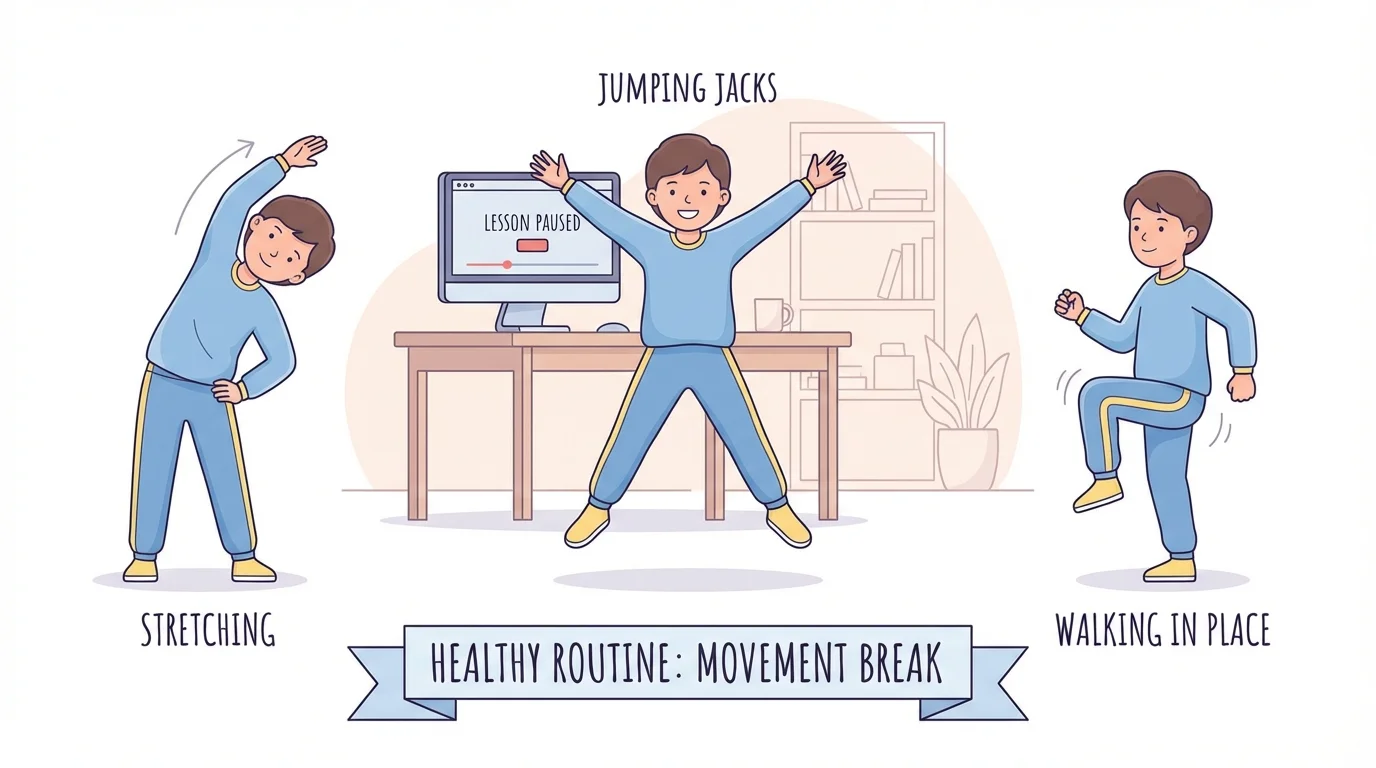
A healthy movement routine can include active play every day. It is also smart to balance screen time with body time. If you watch a show or do schoolwork on a computer, take breaks to move safely. Good posture matters too. Try not to hunch over for too long. Sit tall, relax your shoulders, and let your feet rest comfortably if possible.
Movement helps more than muscles. Moving your body can also help your brain focus and your feelings settle. Many people notice they feel calmer after a walk, bike ride, dance break, or stretch.
Safe movement is important. Wear the right gear when needed, such as a helmet for biking. Drink water when you are active. Stop if something hurts sharply, and tell a trusted adult if you feel pain, dizziness, or trouble breathing.
You do not have to be the fastest or strongest. The goal is not to win all the time. The goal is to build a habit of moving your body in ways that are safe and fun. The movement ideas in [Figure 3] show that even home spaces can become good places to stretch and play.
Your body sends signals. A fast heartbeat during active play can be normal. Sharp pain, feeling faint, or trouble breathing are signals to stop and get help from an adult right away.
If you are not sure where to begin, start small. A short walk, a dance to one song, or five stretches is a real beginning. Small actions done often become strong habits.
[Figure 4] Everyone feels stress sometimes. Stress is your body's and mind's reaction to something challenging, new, worrying, or upsetting. Healthy stress management means using safe ways to calm down, solve problems, and ask for help when you need it.
Stress can happen before a hard assignment, after an argument, during a change in plans, or when something feels unfair. Your body may show stress through a stomachache, headache, sweaty hands, tight shoulders, tears, anger, or wanting to hide. Your thoughts may race, and it may feel harder to listen or focus.
One useful skill is deep breathing. This means taking slow breaths that help your body settle. You can breathe in through your nose, let your belly rise, and breathe out slowly. Another skill is taking a short quiet break. You might draw, squeeze a pillow, stretch, listen to calm music, or sit with a comforting object.
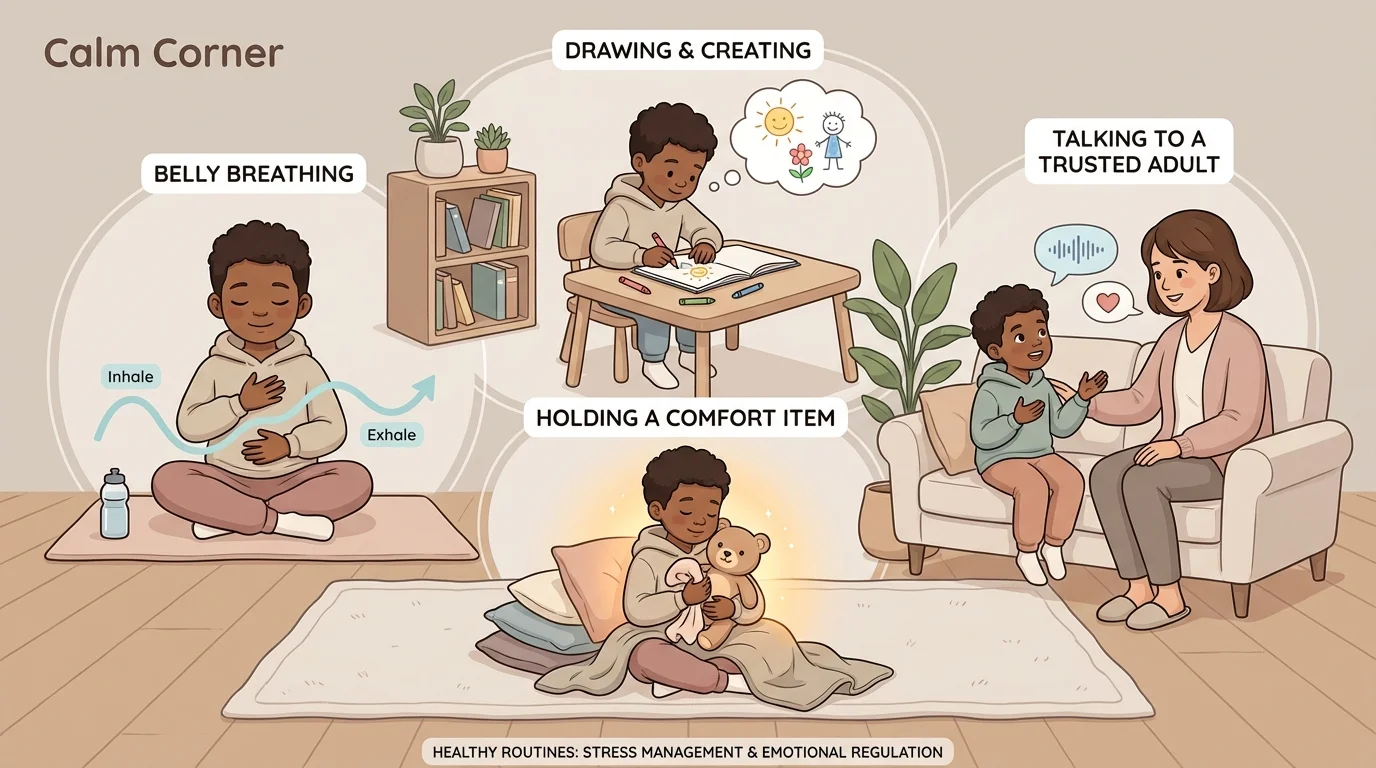
Talking to someone you trust is also a healthy choice. You might tell a parent, caregiver, family member, counselor, coach, or another trusted adult, "I feel worried," "I need help calming down," or "Something is bothering me." Asking for help is a strong decision, not a weak one.
A calm-down plan for a hard moment
Step 1: Notice the clue. Maybe your fists are tight or your stomach feels upset.
Step 2: Pause before shouting or quitting.
Step 3: Take slow breaths and relax your shoulders.
Step 4: Choose one calm action, like drawing or getting a drink of water.
Step 5: Tell a trusted adult if the feeling is too big to handle alone.
This plan can help you feel safer and more in control.
Some stress lasts only a short time, but some worries stay around longer. If you feel very sad, scared, angry, or worried for many days, or if your body hurts often from stress, tell a trusted adult. Big feelings deserve support.
"Taking care of yourself helps you take care of everything else."
Healthy stress management is not pretending feelings are gone. It is noticing feelings, calming your body, and choosing safe actions. The calm tools in [Figure 4] remind us that there are many good ways to handle stress.
These four areas connect all day long. If you sleep poorly, you may feel too tired to move and too cranky to handle stress. If you skip meals, you may feel low energy and less patient. If you move your body, you may sleep better later. If you calm stress in healthy ways, bedtime may feel easier. Healthy routines are a team.
Here is one example of a balanced day at home. You wake up, drink water, wash up, and eat breakfast. During online learning, you stand and stretch between lessons. At lunch, you eat a meal with different kinds of food. In the afternoon, you play outside or move indoors. In the evening, you have a calm bedtime routine with less screen time and more quiet time.
You do not have to do everything perfectly. Maybe one day you miss a snack, stay up late, or feel extra stressed. That happens. The goal is to notice what your body needs and try again the next day. Healthy habits grow with practice.
Many healthy routines take only a few minutes. A glass of water, a stretch break, three slow breaths, or reading before bed are small actions that can make a big difference over time.
It can help to choose one habit to practice first. For example, you might keep water nearby, take one movement break each morning, or follow the same bedtime steps every night. Once that habit feels easier, you can add another one.
When you take care of your sleep, food, movement, and stress, you are taking care of your whole self. That helps you learn, play, communicate kindly, and feel more ready for everyday life.
