Have you ever noticed that some days feel smooth and easy, while other days feel messy and rushed? A big reason is often what happens at home. When you know your routine, help with chores, and plan ahead, you can do more by yourself. That is called independence. Independence does not mean doing everything alone. It means learning how to take care of your own tasks, make good choices, and be ready for daily life.
At your age, independence can look like getting dressed without reminders, feeding a pet on time, packing what you need for an online class activity, or cleaning up after a snack. These may seem like small things, but they matter a lot. Each time you do a job on your own, you are practicing skills that help you now and will help you even more as you grow.
Routine is something you do in a regular order again and again, like brushing your teeth before bed.
Chore is a job that helps take care of your home, like folding towels or putting dishes away.
Planning means thinking ahead about what you need to do and how you will do it.
These three things work together. Routines help you remember. Chores help you practice responsibility. Planning helps you get ready before a problem starts. When you use all three, daily life feels less confusing and more manageable.
Home is one of the first places where you learn to take care of yourself and help others. You learn where things belong, how to use your time, and how your actions affect the people around you. If you leave your toys, books, or art supplies everywhere, someone may trip or the room may stay messy. If you put things away, the space is safer and easier for everyone to use.
Independence also grows when adults trust you with real jobs. Maybe you water a plant, sort laundry, or clear your plate after a meal. These jobs tell you, "You are capable." The more you practice, the more confident you become.
Confidence is important because it helps you try new tasks. If you know you can handle small jobs, you are more likely to say, "I can do that," instead of waiting for someone else to fix everything. That is a big step toward becoming responsible and self-reliant.
Your brain likes patterns. Repeating steps in the same order can make tasks easier to remember and quicker to do over time.
That is one reason home habits matter so much. They train your brain and body to know what comes next.
[Figure 1] A routine is like a path you can follow each day. Instead of stopping to wonder, "What do I do now?" you already know the next step. This saves time and energy.
For example, a morning routine might be: wake up, get dressed, wash your face, eat breakfast, brush your teeth, and check your learning space. A bedtime routine might be: put away toys, get pajamas on, brush teeth, put tomorrow's things in one spot, and read quietly. When you do these in the same order, you need fewer reminders.
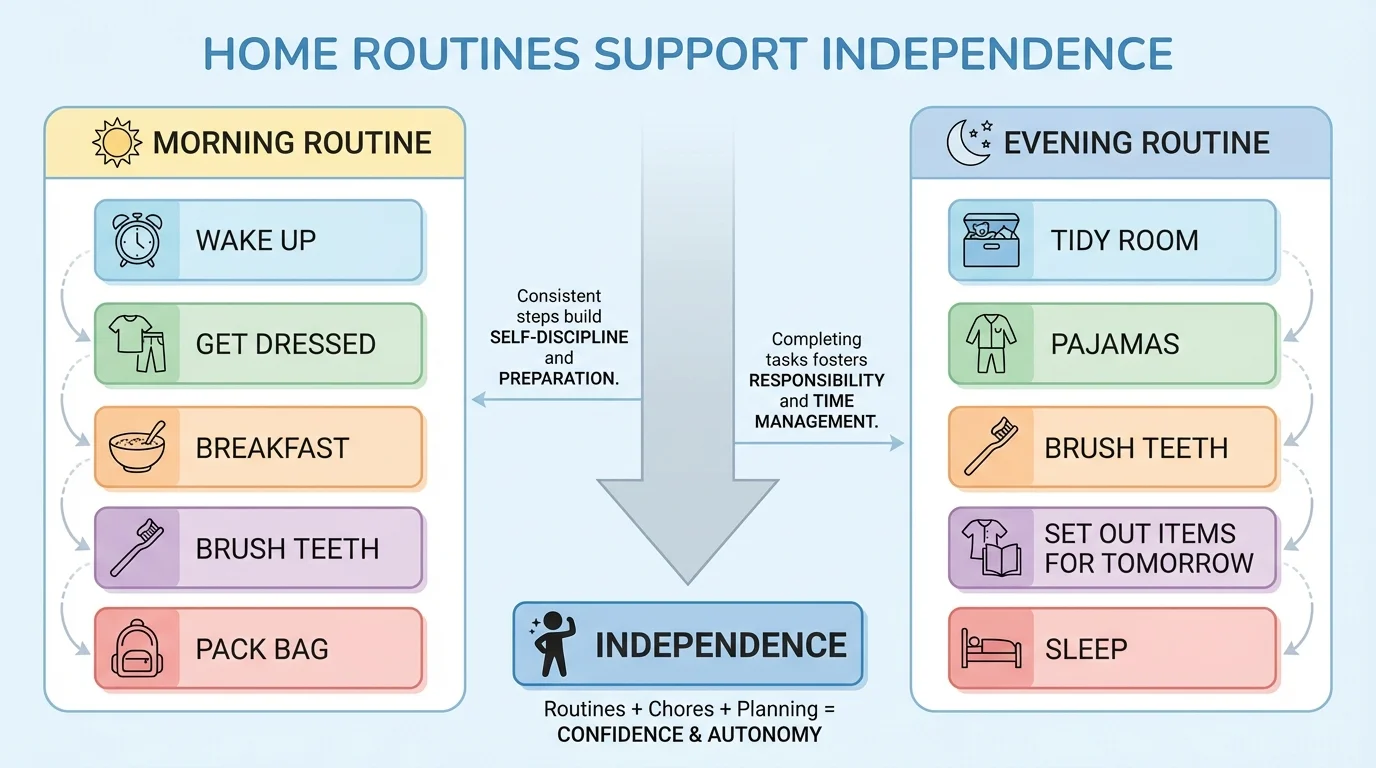
Routines also reduce stress. If mornings are rushed, people may forget things, argue, or feel upset. But when everyone knows what to do, the day can start more calmly. You are not just "following rules." You are helping your home run smoothly.
Routines can support online learning too. If you always charge your device, fill your water bottle, and sit in a ready learning spot before logging in, you are preparing yourself without needing someone to remind you each time. That is a real sign of growing independence.
Another helpful part of routines is that they make hard tasks feel smaller. Cleaning your room might feel huge. But a routine such as "books on shelf, clothes in hamper, trash in bin, bed straightened" turns one giant job into a few small steps.
As you keep repeating a routine, it starts to feel more automatic. That means you spend less time deciding and more time doing. Later, when you need to learn a new responsibility, you can add it into your routine instead of starting from scratch.
[Figure 2] Chores are not just about cleaning. They teach real-life skills by matching common tasks to important abilities like responsibility and organization. When you help care for your home, you learn that everyone has a part to play.
If you make your bed, you practice finishing a task. If you feed a pet, you practice remembering something that matters to another living thing. If you fold clothes, you practice sorting and organizing. If you wipe the table after eating, you learn to clean up after yourself instead of leaving the mess for someone else.
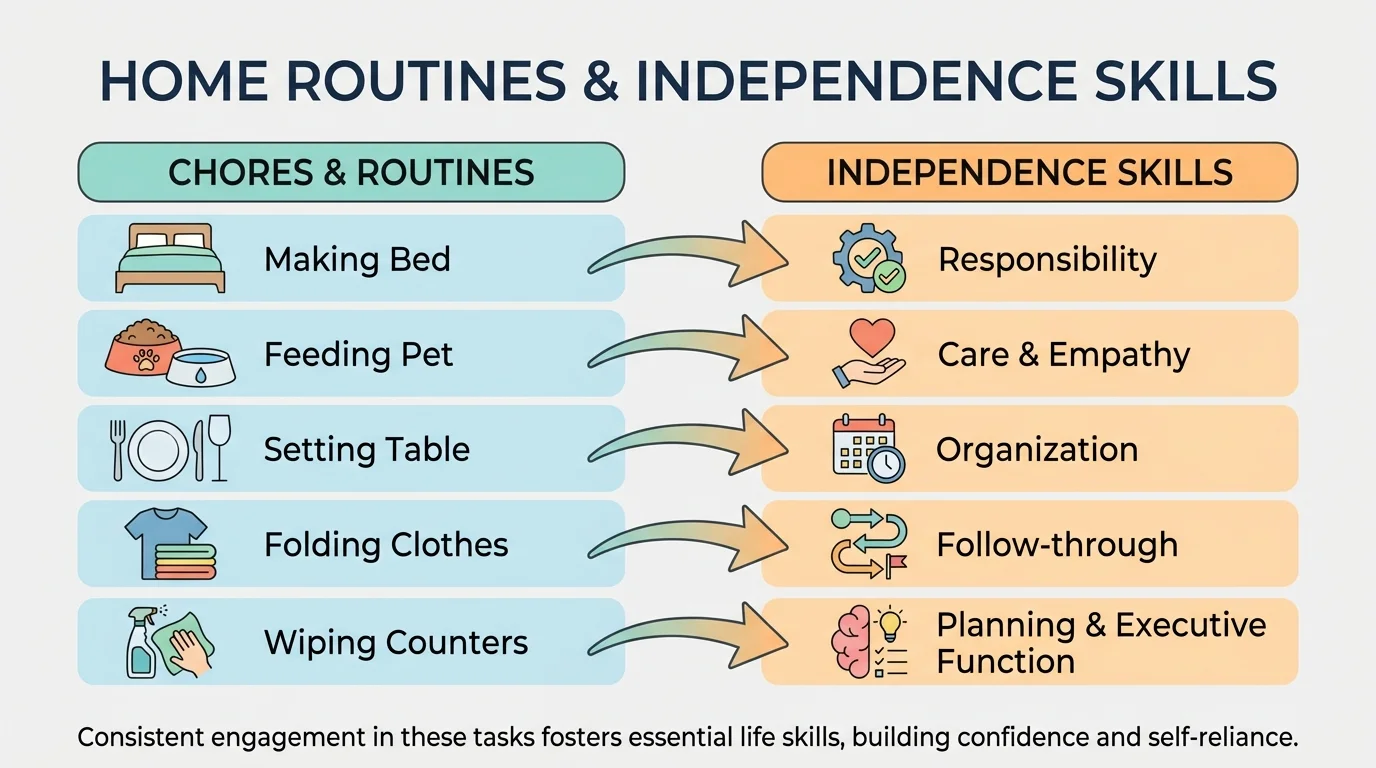
Chores also teach responsibility. Responsibility means doing what you are supposed to do and taking ownership of your actions. If your job is watering a plant and you forget for many days, the plant may droop or dry out. If you remember, the plant stays healthy. Your actions have real results.
This is important because independence is not only about freedom. It is also about being dependable. Other people begin to trust you when they see that you follow through. Trust often leads to more choices and more independence.
Chores can help you notice what a home needs. You may begin to see that the trash is full, the shoes need to be lined up, or the pet bowl needs fresh water. This skill is called noticing without being told. It is a powerful life skill because it means you are paying attention to your environment.
It is also okay if chores are not perfect at first. Maybe a folded towel looks bumpy, or your bed is not super neat. Learning matters more than perfection. Each time you practice, you improve.
Real-life example: One chore, many skills
Think about setting the table for dinner.
Step 1: You check how many people are eating.
This helps you notice what is needed.
Step 2: You gather plates, cups, and napkins.
This builds organization.
Step 3: You place the items where they belong.
This teaches care and attention to detail.
Step 4: You finish the whole job before leaving.
This builds follow-through.
One small chore can teach several useful skills at once.
As you saw earlier in [Figure 2], many chores teach more than one skill at the same time. That is why they are such strong practice for independence.
[Figure 3] Planning is like giving your brain a map. When you plan, you think ahead about what needs to happen, what you need, and when you will do it. This helps you avoid last-minute problems.
Suppose you want to do an art project after your online lessons. If you wait until the last second, you might discover that the scissors are missing or the table is cluttered. But if you plan ahead, you can gather paper, crayons, glue, and a clean workspace before you begin.
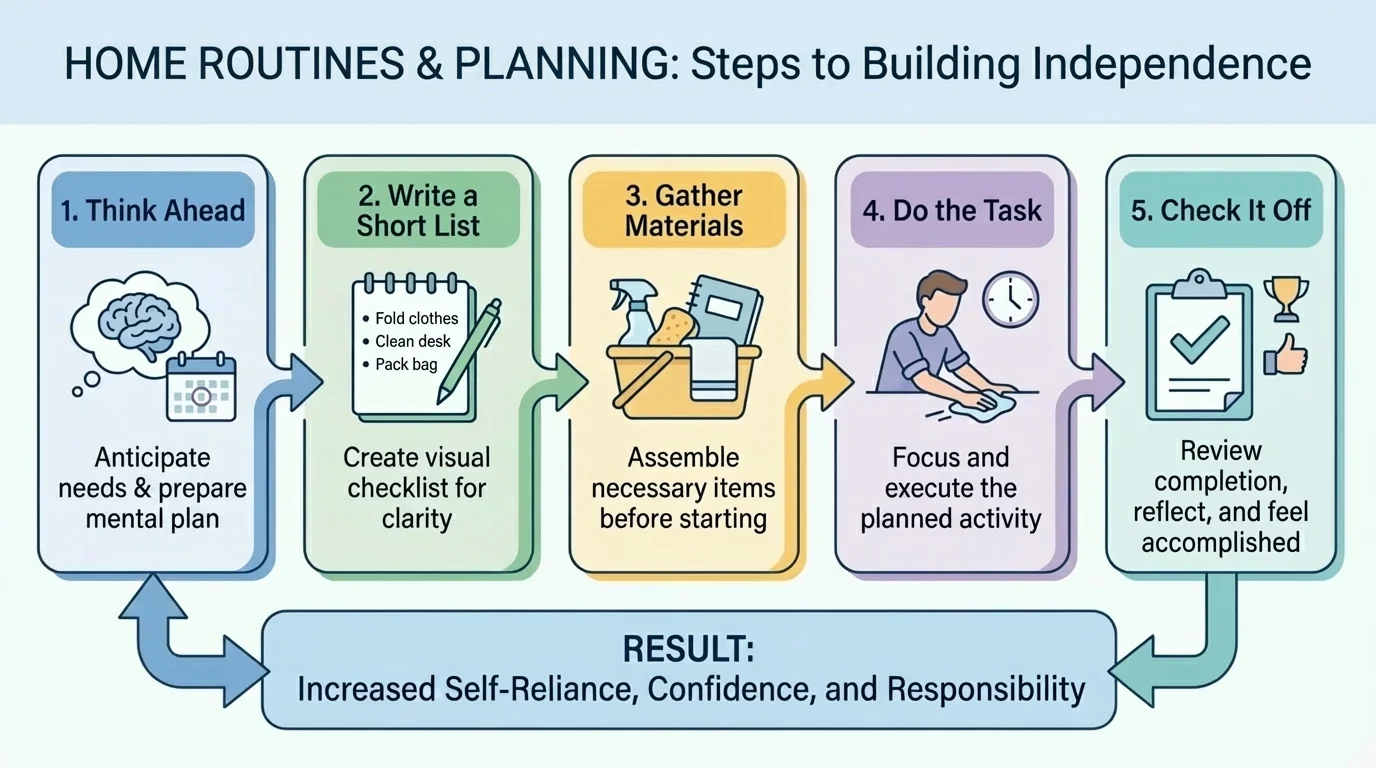
Planning is helpful for simple daily tasks too. You can lay out tomorrow's clothes, put your library book by the door, or make a short list for what to do after lunch. A plan does not have to be fancy. Even a sticky note with three jobs can help.
Planning also helps with time. If you know you need to clean your room, read for twenty minutes, and help with dishes, you can choose an order that makes sense. Maybe you clean first, read next, and help with dishes after dinner. That way, you are not trying to do everything at once.
When people do not plan, they often forget important steps. They may run out of time, lose materials, or feel overwhelmed. Planning does not make life perfect, but it makes surprises easier to handle because you have already thought ahead.
A useful tool for planning is a checklist. A checklist is a short list of tasks that you can mark when they are done. Seeing a check mark can help you remember what is finished and what still needs attention.
| Planning Tool | How It Helps | Example |
|---|---|---|
| Checklist | Keeps steps in order | Brush teeth, pack notebook, clear desk |
| Calendar | Shows what happens on different days | Video club on Tuesday, grocery trip on Saturday |
| Reminder spot | Keeps needed items in one place | Backpack, headphones, and water bottle by the desk |
| Timer | Helps you focus for a set amount of time | 20 minutes for room cleanup |
Table 1. Simple planning tools and how they support independence at home.
Planning is not only for busy adults. Kids use it every day when they prepare for activities, remember responsibilities, and get ready for tomorrow.
[Figure 4] These three habits are strongest when they work together. A routine gives your day structure. A chore gives you a way to contribute. Planning helps you be ready.
Picture a weekday at home. In the morning, you follow your routine: get dressed, eat breakfast, brush teeth, and set up your learning space. Later, you do a chore such as feeding the pet or sorting socks. In the evening, you plan for tomorrow by charging your device, putting a book where you can find it, and setting out what you need.
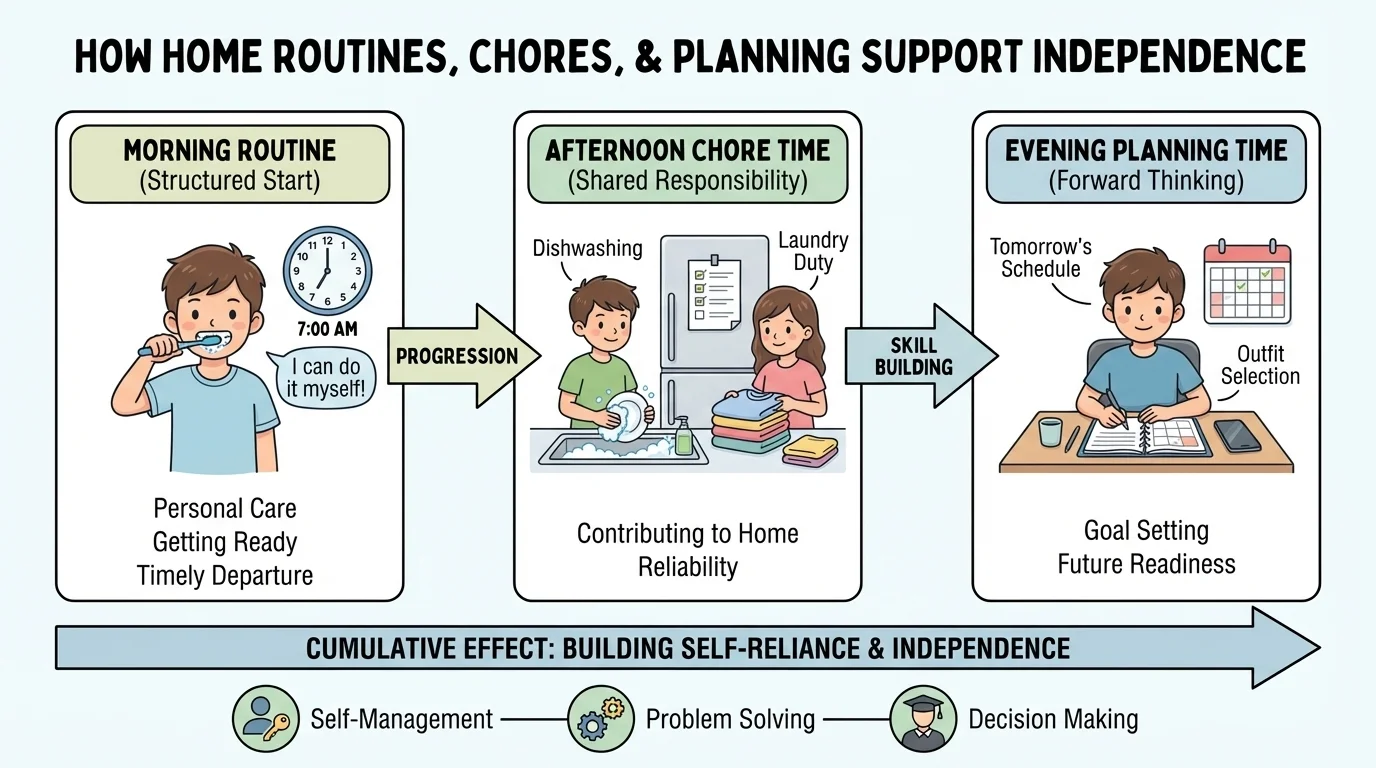
That one day includes all three skills. Because of your routine, you are ready in the morning. Because of your chore, you help your home. Because of your planning, tomorrow starts more smoothly. Independence grows from doing these small actions again and again.
This matters even more when life gets busy. If there is a family appointment, a club meeting, or a special event, your usual habits help you stay steady. You may need to change the schedule a little, but the skills still support you.
Later, when you face bigger tasks, the same idea still works. You break the task into steps, do your part, and prepare ahead. As shown in [Figure 4], independence is built from many small choices across the day, not from one giant moment.
No one follows a routine perfectly every day. Sometimes you forget a chore. Sometimes you feel tired. Sometimes your plan does not work. That does not mean you failed. It means you are learning.
The important thing is to reset. If you forgot to put your shoes away, put them away now. If you missed feeding the pet and an adult reminds you, do it right away and think about how to remember next time. Maybe you need a note, a timer, or to connect the chore to another routine, like feeding the pet right after breakfast.
It also helps to notice what gets in your way. Are your supplies in different rooms? Is your list too long? Are you trying to do everything without breaks? Small changes can make a big difference.
Small systems beat big promises. Saying "I will remember everything" is hard. Creating a simple system is easier. A system might be a basket for school supplies, a bedtime checklist, or always doing one chore at the same time each day. Systems help your brain and your home work together.
If something feels too hard, ask for help learning the steps. Independence does not mean you never need support. It means you are growing your ability to handle more and more on your own.
You do not need a perfect house or a giant chart to become more independent. Start small and be consistent. One new habit done often is better than ten habits you forget.
Here is a simple way to begin:
Step 1: Choose one routine to strengthen. Maybe it is your morning routine or your bedtime routine.
Step 2: Choose one chore you can do regularly. It could be making your bed, feeding a pet, folding small towels, or wiping the table.
Step 3: Choose one planning tool. You might use a checklist, a timer, or a special spot for important items.
Step 4: Practice every day for a week. Improvement comes from repetition.
Step 5: Notice what is working. If a step is hard, change the system instead of giving up.
Try This: Build one independence habit
Step 1: Pick one small job you want to do on your own every day.
Step 2: Decide when you will do it.
Example: "I will put my cup in the sink right after snack."
Step 3: Put a reminder where you can see it.
Step 4: Keep doing it until it feels normal.
Small habits grow into big independence over time.
Another smart idea is to connect a new habit to something you already do. For example, if you already brush your teeth every night, you can add "put tomorrow's book by the desk" right after. Linking tasks helps your brain remember.
You can also talk with a family member about which jobs are right for you. Good chores are safe, clear, and possible for your age. The goal is not to do adult-sized work. The goal is to practice being capable, helpful, and ready.
As you grow, your routines may change, your chores may become more challenging, and your planning may get more detailed. But the basic idea stays the same: repeated habits, useful jobs, and thinking ahead help you become a person who can handle daily life with confidence.
"Little by little, a little becomes a lot."
That is exactly how independence grows at home.
