Have you ever noticed that many important things in your life only work because lots of people work together? Clean water, safe streets, parks, libraries, and help during emergencies do not happen by accident. A community works best when people follow rules, support services, and take part in helping others. Even if you learn from home, you are still part of a community where your choices matter.
A community is a group of people who live in the same place or share something important, such as a neighborhood, town, city, or even an online community that works toward a common goal. Communities have shared needs. Shared needs are things many people need, not just one person. These include safety, clean spaces, places to learn, help when someone is sick or hurt, and fair ways to solve problems.
Think about a neighborhood park. Many people want to use it. Children want to play. Adults want to walk or relax. Families want it to be clean and safe. Because many people use the same place, the community needs a plan for how to care for it. That plan usually includes rules, services, and participation.
Shared needs are needs that many people in a community have in common, such as safety, clean water, roads, parks, and help in emergencies.
Rules are agreed-upon directions for behavior that help people act safely and fairly.
Services are jobs and systems that help a community function, such as trash pickup, fire protection, and libraries.
Participation means taking part in ways that help the community, such as volunteering, speaking up, or following rules.
When communities meet shared needs well, people feel safer, healthier, and more connected. When communities do not meet shared needs well, people may feel frustrated, unsafe, or left out.
One way a community meets shared needs is through laws and other rules. Some rules are official community laws. Others are posted rules, like signs at a park, pool, or library. These rules help shared spaces work smoothly by making clear what behavior is expected in each one.
Rules are not just about telling people what not to do. Good rules help protect people, property, and fairness. A crosswalk rule tells drivers to stop and let people cross safely. A park rule may say to throw trash in bins. A library rule may ask people to use quiet voices so everyone can read or study.
Rules matter most in places where many people share the same space or service. Without rules, people might cut in line, leave dangerous messes, damage shared property, or act in ways that make others feel unsafe. A community with clear rules gives people a better chance to solve problems peacefully.
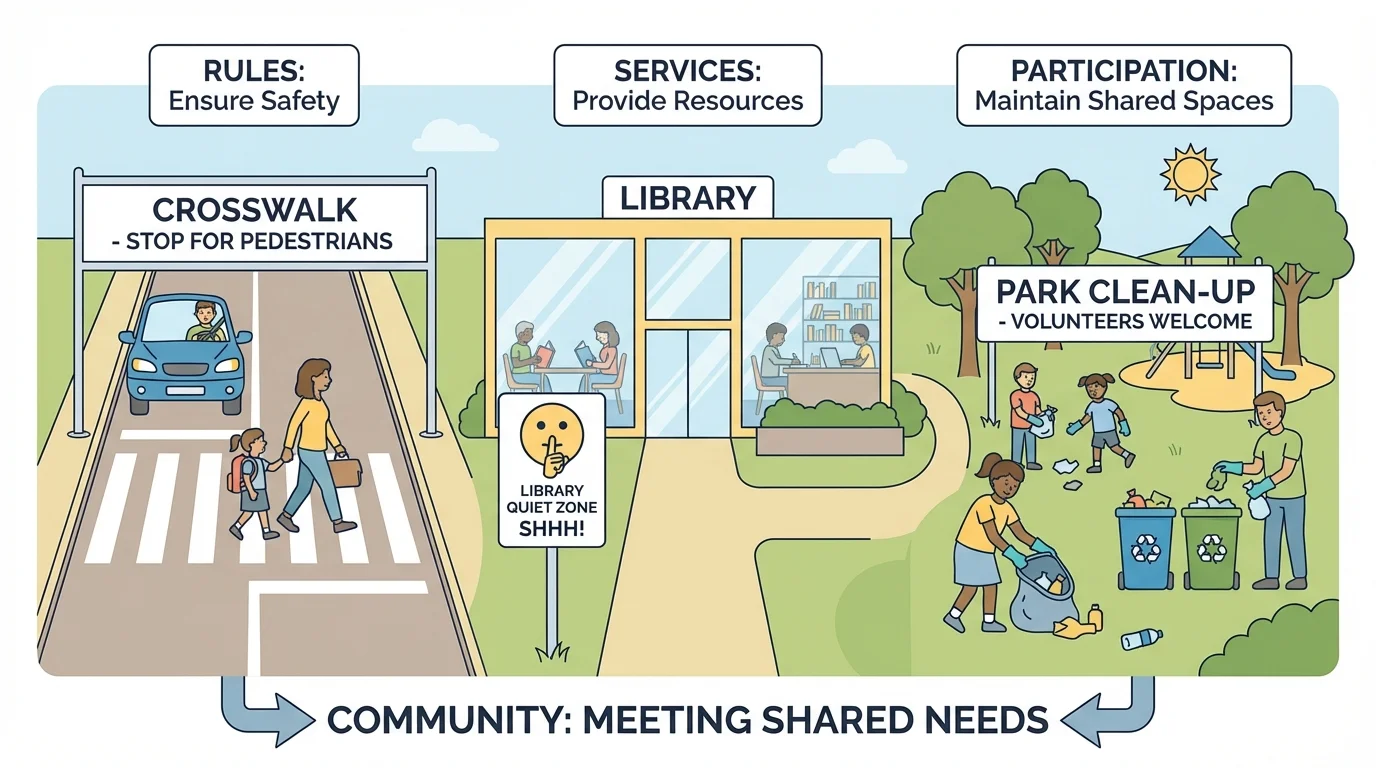
Following rules is part of being responsible. It shows respect for other people. It also helps services work better. For example, if people put trash where it belongs, sanitation workers can keep the area cleaner. If drivers follow traffic rules, emergency vehicles can move more safely.
Sometimes rules feel annoying. Maybe you have to wait your turn at a community center website sign-up, or maybe a park closes at sunset. But many rules exist because someone learned that a problem can happen without them. A fair rule protects everyone, not just certain people.
Real-life example: Why a simple rule matters
A neighborhood has a small playground. People begin leaving snack wrappers on the ground.
Step 1: The mess makes the playground look dirty.
Step 2: Bugs and animals may come near the trash.
Step 3: Children have less clean space to play.
Step 4: The community adds a clear rule: place trash in bins.
Step 5: When people follow the rule, the playground stays safer and nicer.
A small rule can help many people at once.
If someone thinks a rule is unfair, communities often have ways to talk about it respectfully. Adults may attend meetings, contact leaders, or share ideas. This matters because communities should not just have rules; they should also listen and improve.
Rules alone cannot meet shared needs. Communities also need services. Services are the organized kinds of help that people and groups provide every day. A strong community relies on many services working together.
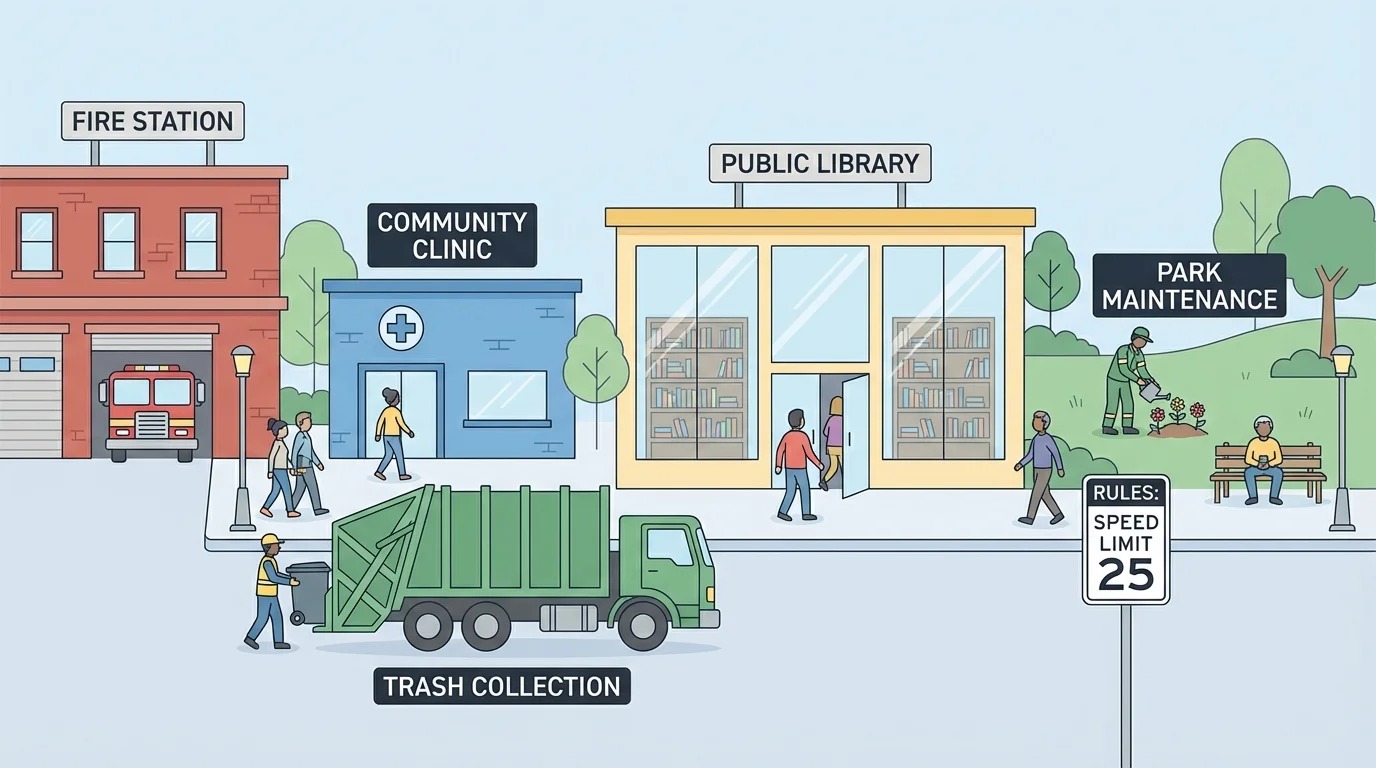
Some services protect safety. Firefighters respond to fires and emergencies. Police officers help keep order and protect people. Crossing guards, animal control workers, and emergency medical teams also support safety in different ways.
Other services help with daily life. Trash and recycling workers keep spaces cleaner. Water workers help make sure homes have safe water. Road crews repair streets and sidewalks. Park workers care for public outdoor spaces. Library workers help people borrow books, use computers, and join learning programs.
Some services support health and care. Clinics, hospitals, food banks, and shelters help people who need medical care, food, or a safe place to stay. Even when you do not use every service yourself, they still matter because someone in your community needs them.
Many community services cost money to run. Adults in the community often help support them through taxes, donations, and local budgets. You do not need to know all the money details yet to understand the big idea: services need planning, workers, tools, and community support.
When services are strong, life becomes easier and safer. When services are weak or missing, problems grow. If trash is not collected, streets become dirty. If parks are not cared for, they may become unsafe. If emergency services are too slow, people can get hurt.
| Community Service | What It Helps With | Example |
|---|---|---|
| Fire department | Safety and emergencies | Helps during a fire or rescue |
| Library | Learning and access | Lends books and provides computers |
| Sanitation | Clean spaces | Picks up trash and recycling |
| Parks department | Shared outdoor spaces | Cares for playgrounds and fields |
| Clinic or hospital | Health | Treats sickness and injuries |
Table 1. Examples of community services and the shared needs they meet.
As seen earlier in [Figure 2], one community may use many different services at the same time. This is why communities need teamwork, not just one helper or one building.
Libraries are more than places to borrow books. Many libraries also offer story programs, online homework help, internet access, and community events for families.
Services are easier to trust when they are fair and available to everyone who needs them. That is one reason communities keep working to improve transportation, access, and communication.
A community is not only run by leaders and workers. It also depends on participation. Participation means people do their part. They help, speak up, cooperate, and take responsibility. This can happen in big ways or small ways.
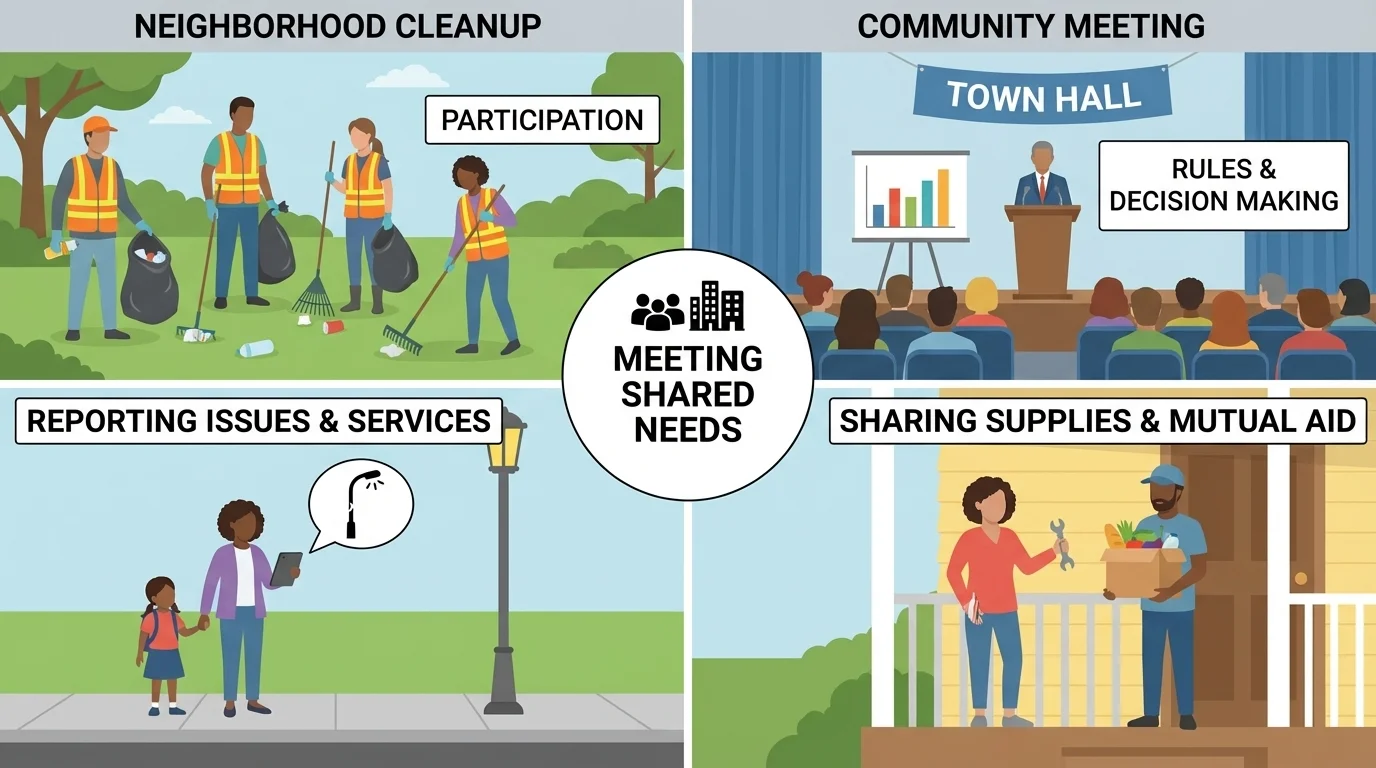
Adults may participate by voting, attending local meetings, helping neighbors, or joining service groups. Children can participate too. You can follow community rules, care for shared spaces, be respectful online, help during a neighborhood cleanup, or tell a trusted adult when something in the community seems unsafe.
Participation also means paying attention. If a streetlight is broken, someone needs to report it. If a park bench is damaged, someone should let the right people know. If a family nearby needs help after a storm, neighbors can share supplies or information. Communities become stronger when people notice needs instead of ignoring them.
Participation should be safe and respectful. You should not try to handle dangerous problems alone. Instead, tell a trusted adult, call for help when needed, or use a safe reporting method with an adult. Being helpful does not mean putting yourself in danger.
Small actions can have a big effect
Communities improve when many people each do one helpful thing. One person picks up litter. Another reports a loose fence. Another volunteers at a food drive. These actions may seem small alone, but together they solve larger problems and show care for others.
Participation also includes how you act in online spaces connected to your community. If your neighborhood group shares updates online, respectful messages help everyone. Spreading rumors, being rude, or sharing private information can hurt trust. Good digital behavior is part of good citizenship too.
Later, when you are older, you may participate in even more ways, such as voting or serving on local groups. But even now, your actions matter. Holding a door, returning library books on time, or helping keep a shared area clean are all real forms of participation.
These three parts are strongest when they work together. Rules set expectations. Services provide organized help. Participation keeps the community active and caring. If one part is missing, the other parts have a harder job.
Think about a community recycling program. The rules explain what can be recycled and where to place it. The service includes workers and trucks that collect the recycling. Participation happens when people sort their items correctly and follow pickup instructions. If people do not participate, the service becomes less effective. If there is no service, the rule cannot do much. If there are no rules, people get confused.
The same idea fits many situations. A park stays nice when there are rules about caring for it, workers who maintain it, and people who clean up after themselves. Safe roads depend on traffic rules, road repair crews, and drivers who pay attention. The teamwork shown in [Figure 1] and [Figure 2] helps explain why communities need more than one solution.
"A community works best when people care not only about themselves, but also about one another."
When communities work well, people often feel proud of where they live. They trust each other more, use shared places more safely, and can solve problems faster.
You do not have to wait until you are grown up to be a helpful community member. There are practical things you can do now from home, online, and in your neighborhood.
Step 1: Learn the rules for the spaces you use. This could be the local library website, a playground, a sports field, a community center, or an online neighborhood group your family uses.
Step 2: Follow those rules even when no one is watching. Real responsibility means doing the right thing because it helps everyone.
Step 3: Notice needs around you. Is there litter in a shared space? Is a book overdue from the library? Is there a kind way to help a neighbor?
Step 4: Tell a trusted adult about problems that need bigger help. For example, a broken street sign, unsafe sidewalk, or concerning online message in a community group should be reported safely.
Step 5: Join in when your family participates. You might help collect canned food, attend a community event, support a cleanup day, or thank service workers.
Try This
Choose one shared place or group you are part of this week. It could be a library, park, apartment building, sports team, club, or online family community page. Notice one rule, one service, and one way people participate. Then think about one helpful action you can take.
Being helpful does not have to be huge. If ten people each do one kind and responsible action, that can make a big difference. In a way, community care grows a little at a time.
It is easier to understand why these ideas matter when you picture what happens without them. If people ignore rules, shared spaces can become messy, unsafe, or unfair. If services are missing, important needs go unmet. If no one participates, problems may stay unsolved for too long.
For example, suppose a neighborhood has a park but no one reports broken equipment. The service team may not know there is a problem. If people also ignore safety rules, someone could get hurt. But if people participate by reporting the problem and following park rules, workers can repair the equipment and make the park safe again.
This is why communities need both systems and people. Systems include rules and services. People bring care, attention, and action. The helpful choices in [Figure 3] remind us that participation is often the part that gets things moving.
Fairness means people are treated in a way that is just and respectful. Community rules and services should aim to help everyone, not only a few people.
Sometimes communities do not agree right away. People may have different ideas about what is most important. That is normal. Respectful discussion, listening, and problem-solving help communities improve over time.
Communities are always changing. New families move in. Roads age. Parks need repairs. Weather causes damage. Technology creates new ways to connect and new problems to solve. Good communities keep adapting.
Thinking about the future means asking helpful questions. What do people need now? What might they need later? How can we make places safer, cleaner, kinder, and fairer? These are civic questions because they are about how people live together and solve shared problems.
You are already practicing civic engagement when you care about shared spaces, treat others with respect, and help solve problems. Even small actions teach big habits: responsibility, kindness, attention, and teamwork.
Communities meet shared needs best when people understand the rules, value services, and choose to participate. That is how places become stronger not just for today, but for the future too.
