Have you ever noticed that one small problem can feel huge to one person and not very big to another? Maybe a delayed text reply makes one person worried, while someone else barely notices. Maybe losing a game makes one player laugh and try again, while another feels upset and wants to quit. The situation may be the same, but people are not all the same. Learning to understand that difference is an important life skill.
When you understand why people respond differently, you become better at friendship, teamwork, family life, and online communication. You are less likely to judge too quickly. You are more likely to stay calm, ask helpful questions, and make fair choices. This helps you to solve problems and build trust with others.
A response is the way a person reacts to something that happens. A challenge might be a mistake, a change in plans, a hard task, a disagreement, or an uncomfortable surprise. Even when two people face the exact same challenge, they may think about it in very different ways.
For example, think about a video call where the internet connection stops working. One child might say, "That's okay, I'll reconnect." Another child might feel frustrated and think, "Everything is ruined." A third child might feel embarrassed and worry that others think they left on purpose. Same problem, different reactions.
Situation means what is happening. Response means how someone reacts. Empathy means trying to understand how another person may feel or what they may be going through.
Your job is not to guess perfectly what every person feels. Your job is to remember that there is usually more than one possible reason for someone's behavior. That idea helps you become more patient and more fair.
Many things affect a person's reaction. One big factor is perspective. Perspective is the way someone sees a situation. Two people can look at the same event and notice different parts of it. One may focus on the problem. Another may focus on the solution.
Past experiences matter too. If someone has had a bad experience before, they may react more strongly. For example, if a child was once left out of a group chat, they may feel worried when friends are slow to answer. Someone else who has not had that experience may stay relaxed.
Feelings also shape behavior. A person who is tired, hungry, stressed, or already upset may react faster and more strongly than usual. Sometimes the reaction is not only about the current problem. It may also be affected by what happened earlier that day.
Personality can make a difference. Some people are naturally more outgoing. Some are more cautious. Some like to talk right away when upset. Others need quiet time before they are ready to speak. Neither style is automatically wrong. What matters is learning to handle feelings in a respectful way.
Family rules, culture, and community habits can shape responses too. In some homes, people speak very directly. In others, people are taught to stay quiet first and think carefully. These differences can lead to misunderstandings if you assume that everyone should react exactly the way you do.
Your brain often makes quick guesses about other people's behavior, even when you do not have the full story. Slowing down and asking questions helps you avoid unfair assumptions.
[Figure 1] Support also matters. A person with a trusted adult, friend, or plan for handling stress may recover faster from a challenge. Someone without much support may feel stuck longer. This is one reason kindness matters so much.
One useful way to understand behavior is to look at the chain of events. A situation happens first. Then a person has thoughts about it. Those thoughts connect to feelings. Feelings influence choices. Choices lead to actions, and actions lead to results. This chain can happen very quickly.
Here is a simple example. Situation: a community club leader changes the schedule. One child thinks, "No problem, I can adjust." That child feels calm and makes a new plan. Another child thinks, "Now everything is messed up." That child feels upset and may complain or shut down. The schedule change is the same, but the thoughts and feelings differ.
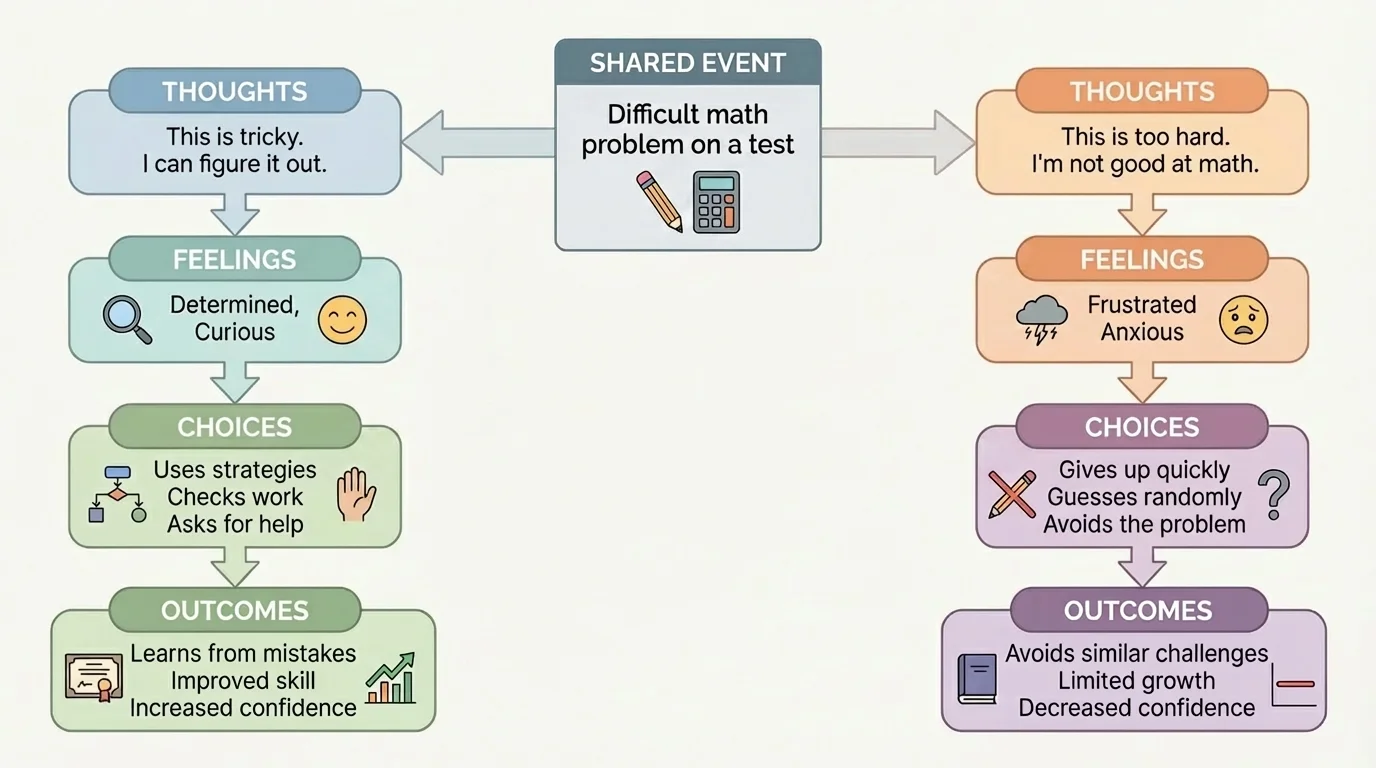
When you understand this chain, you stop seeing behavior as random. You start noticing clues. You may ask, "What might this person be thinking right now?" or "What feeling might be behind this action?" Those questions lead to better choices.
This also helps you understand yourself. If you know that your thoughts affect your actions, you can practice better self-talk. Instead of thinking, "I can't do this," you can try, "This is hard, but I can take one step at a time." A small change in thought can lead to a calmer response.
The reaction chain helps explain why people behave differently. A person usually does not jump straight from a problem to an action. Thoughts and feelings happen in between. When you notice that middle part, you can respond with more understanding.
Later, when you see someone react strongly to a small problem, remember the chain in [Figure 1]. There may be invisible thoughts or feelings you cannot see from the outside.
People may respond in many different ways to the same challenge. Some common responses are staying calm, asking for help, trying to fix the problem, getting angry, becoming quiet, blaming others, joking to hide discomfort, or avoiding the problem completely.
A calm response can help solve problems faster, but it does not always mean the person does not care. A strong emotional response does not always mean the person is being rude on purpose. Sometimes it means the person feels overwhelmed and does not yet know how to handle the moment.
It helps to separate the behavior from the person. You can think, "That action was hurtful," without deciding, "That person is bad." This keeps you fair and gives room for repair and growth.
| Possible Response | What it might mean | A helpful way to respond |
|---|---|---|
| Gets quiet | May need time to think or may feel nervous | Give space, then check in kindly |
| Gets angry | May feel embarrassed, scared, or stressed | Stay calm and avoid arguing back right away |
| Jokes around | May be hiding discomfort | Gently bring focus back to the issue |
| Starts problem-solving | May feel ready to act | Work together and share ideas |
| Avoids the problem | May feel overwhelmed | Break the problem into smaller steps |
Table 1. Different responses to a challenge, what they may mean, and helpful ways to react.
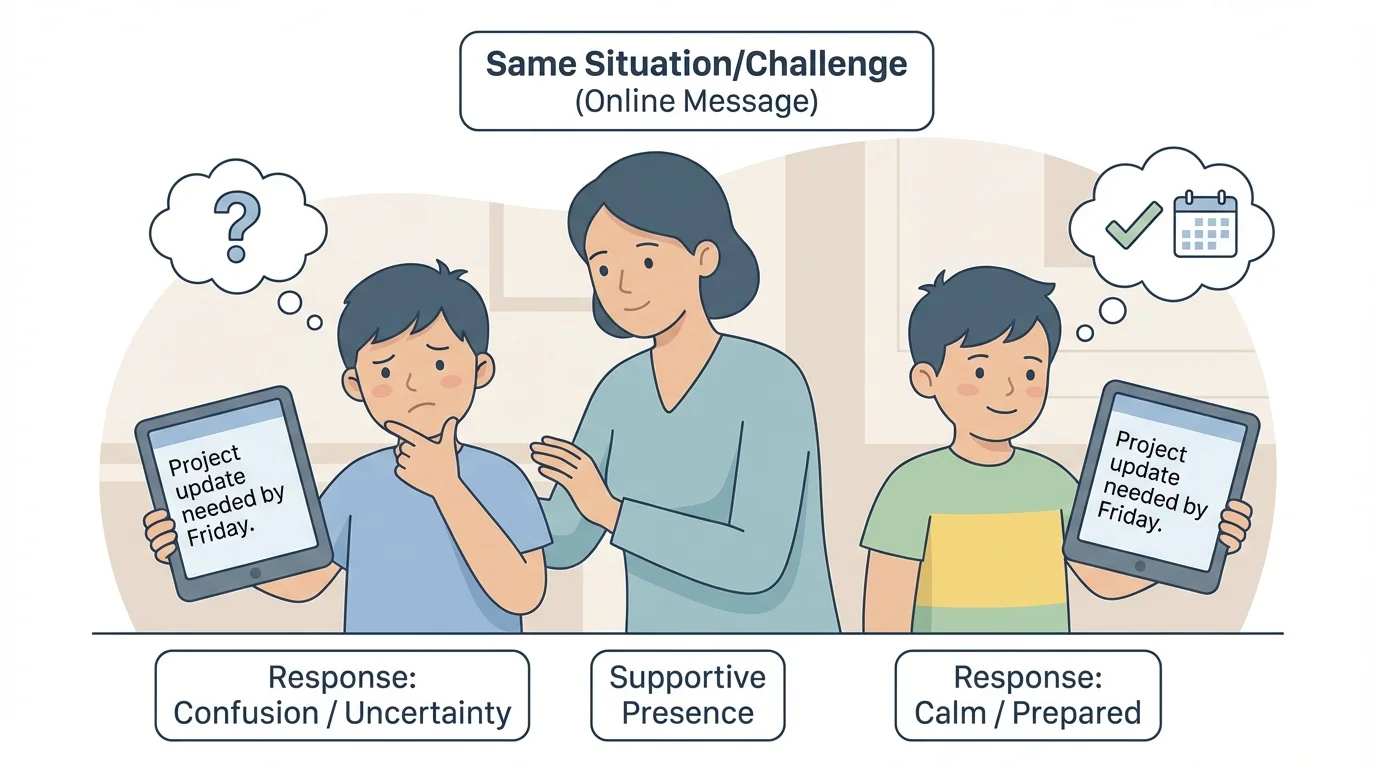
[Figure 2] You will not always know the exact reason behind someone's reaction, and that is okay. The goal is not perfect mind-reading. The goal is to choose a response that is respectful, safe, and thoughtful.
Online communication often causes misunderstandings because you cannot always hear tone of voice or see facial expressions. In the example shown here, two children read the same short message, but they do not react the same way. One thinks the message sounds rude. The other thinks it is normal and brief.
Suppose someone sends, "Fine." One reader may think, "They're mad at me." Another may think, "They're just busy." If you react too fast, you might send an upset message back. If you slow down, you might ask, "Hey, are you okay? Your message seemed short, so I wanted to check."
Sports and games are another good example. After losing, one player may feel motivated to practice more. Another may feel disappointed and need a break. A teammate who understands this difference can say, "Want to try again later?" instead of, "Why are you acting like this?"
Changes at home can also bring different responses. If a family moves to a new place, one child may feel excited about exploring. Another may feel sad about leaving familiar people and routines. Both feelings can be real at the same time.
In community groups, a shared task may also bring mixed reactions. If volunteers are asked to clean up a park, one child may jump in right away, while another feels unsure about what to do. Clear instructions and welcoming words can help everyone join in.
Case study: A group project in a community club
Three kids are planning a poster for a neighborhood event. The printer stops working.
Step 1: One child says, "Let's make it by hand." This response is focused on solving the problem.
Step 2: Another child sighs and says, "This always happens." This response may come from frustration or stress.
Step 3: A third child gets quiet. This response may mean they feel worried and do not know what to say.
A helpful teammate notices the differences and responds kindly: "We have a few ideas. Let's slow down and choose one together."
[Figure 3] That kind of response does not ignore feelings. It makes space for them while still helping the group move forward.
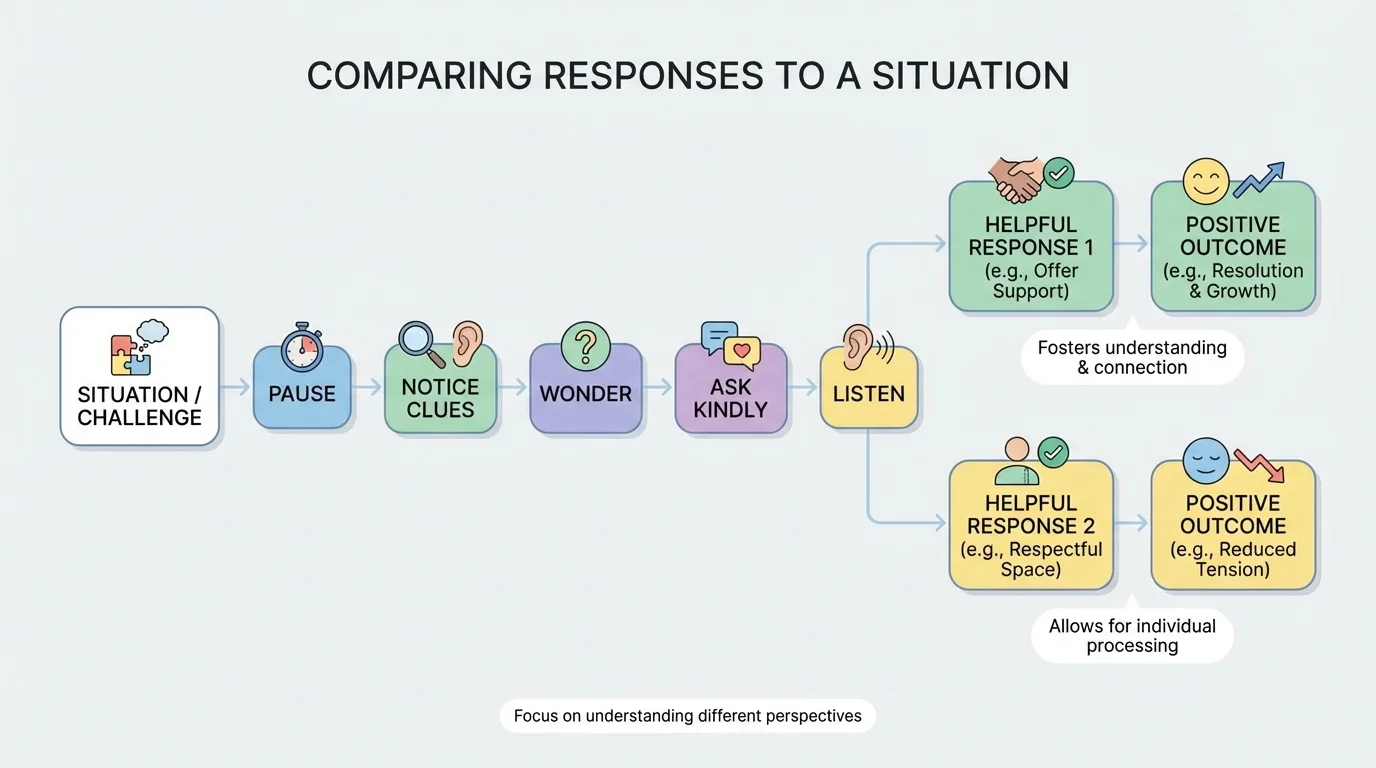
Empathy does not mean agreeing with every action. It means trying to understand what someone else may be feeling before you react. A simple empathy routine can help you handle many situations more wisely.
Step 1: Pause. Before you speak or type, take a breath. This gives your brain time to think instead of just react.
Step 2: Notice clues. Look for signs such as tone, facial expression, silence, short messages, or body language on a video call.
Step 3: Wonder, don't assume. Think, "There may be a reason for this." Replace quick judgments with curiosity.
Step 4: Ask kindly. You can say, "Are you upset?" "Do you want help?" or "Did something happen?"
Step 5: Listen. Let the other person answer. Do not interrupt with your own story right away.
Step 6: Choose a helpful response. You might give space, offer help, explain your side calmly, or ask an adult for support if needed.
These steps are especially useful in digital spaces, where messages can be misunderstood. They also work in families, sports teams, clubs, and neighborhood activities.
If someone says something hurtful, empathy still matters, but safety matters too. You can be understanding and still set a boundary. For example, you might say, "I want to talk, but not if you call me names." That is both kind and strong.
"Kindness is not weakness. It is strength with care."
When you use the routine from [Figure 3], you are more likely to respond in a way that helps instead of hurts.
Sometimes two people react so differently that conflict starts. One person wants to talk immediately. Another wants to be left alone for a while. One thinks the issue is small. Another thinks it is very important. This can lead to hurt feelings if nobody slows down.
When responses clash, try this practical plan. First, stay as calm as you can. Second, describe the situation without blame. Third, name your feeling. Fourth, ask a question. Fifth, agree on a next step.
Here are some sentence starters you can use: "I think we saw that differently." "I noticed you got quiet." "I feel confused about what happened." "Can you tell me what you meant?" "What would help right now?" These phrases lower the heat and open the door to understanding.
You already know that words can solve problems or make them bigger. Tone, timing, and respect matter just as much as the message itself.
If the problem is getting bigger instead of smaller, bring in a trusted adult. Asking for help is a smart choice, not a weak one. Adults can help you stay safe, clear up misunderstandings, and make a fair plan.
Understanding different responses helps more than just one friendship. It makes families, teams, clubs, and communities stronger. When people feel seen and respected, they are more likely to cooperate and solve problems together.
A strong community does not mean everyone reacts the same way. It means people learn how to handle differences with respect. That includes giving others a chance to explain, noticing when someone needs help, and avoiding quick labels such as "dramatic," "lazy," or "mean" when you do not know the full story.
This skill also helps you become a leader. Leaders notice how others are doing. They adjust their approach. They do not treat every person exactly the same in every moment. They try to be fair, helpful, and aware of what others may need.
You can practice this skill every day in small ways. When someone reacts differently than you expected, pause before deciding what their behavior means. Ask yourself, "What are three possible reasons for this reaction?" That simple question can stop unfair assumptions.
You can also practice noticing your own reactions. Maybe you get quiet when embarrassed. Maybe you get frustrated when plans change. The more you understand your own patterns, the easier it becomes to understand others too.
Here are a few practical habits you can use right away:
These habits may seem small, but they can make a big difference. They help you avoid extra conflict, show care for others, and build trust over time.
