Have you ever noticed that one small choice can change how much people trust you? If you forget to do a chore, ignore a message, or make a mistake in an online class and hide it, people may wonder if they can count on you. But if you speak up, fix the problem, and do what you said you would do, trust grows. That is the power of accountability.
Accountability means being honest about your actions, correcting mistakes, and doing what you promised to do. It does not mean being perfect. Everyone forgets things sometimes. Everyone makes mistakes. What matters most is what you do next.
When you are accountable, people learn that you are dependable. Your family can trust you to finish a task. A coach or club leader can trust you to show up prepared. A friend can trust you to respond honestly and kindly. In online learning, your teacher can trust that your work is your own and that you will speak up if something goes wrong with an assignment or technology.
When people are not accountable, problems often grow. A small mistake can become a bigger one. A missed promise can hurt feelings. An excuse can make others feel that their time and effort do not matter. Accountability helps stop that pattern early.
Trust usually grows gradually, but it can shrink very quickly. One honest apology and a real effort to fix a mistake can protect trust before the problem gets bigger.
Being accountable also builds character. Character is the way you act when something is easy, hard, fun, or uncomfortable. Owning a mistake when you feel embarrassed takes courage. Following through when you feel lazy takes self-control. These are life skills you will use for years.
Accountability is taking ownership of your choices, correcting mistakes, and completing responsibilities. A commitment is something you said you would do. A consequence is what happens because of a choice. An excuse is a reason used to avoid responsibility instead of solving the problem.
You can think of accountability as three big actions: own it, fix it, and finish it. First, own what happened. Second, fix what you can. Third, finish what you promised. These three actions work at home, online, in sports, in clubs, and in your community.
A responsible person does not say, "It was not my fault," right away just to escape trouble. Instead, they stop and think. Maybe part of the problem really was theirs. Even if other things made it harder, they still ask, "What is my part, and what can I do now?" That is a strong and mature way to act.
Accountability is closely connected to trust. Trust means people believe you will be honest and dependable. When you correct a mistake quickly, trust can stay strong. When you hide, blame, or delay, trust can weaken.
[Figure 1] Correcting a mistake works best when you follow clear steps. You do not need fancy words. You just need honesty and action.
Mistake-fixing can feel uncomfortable, especially if you are worried someone will be upset. But avoiding the mistake usually makes it worse. A fast, truthful response is almost always better than silence.
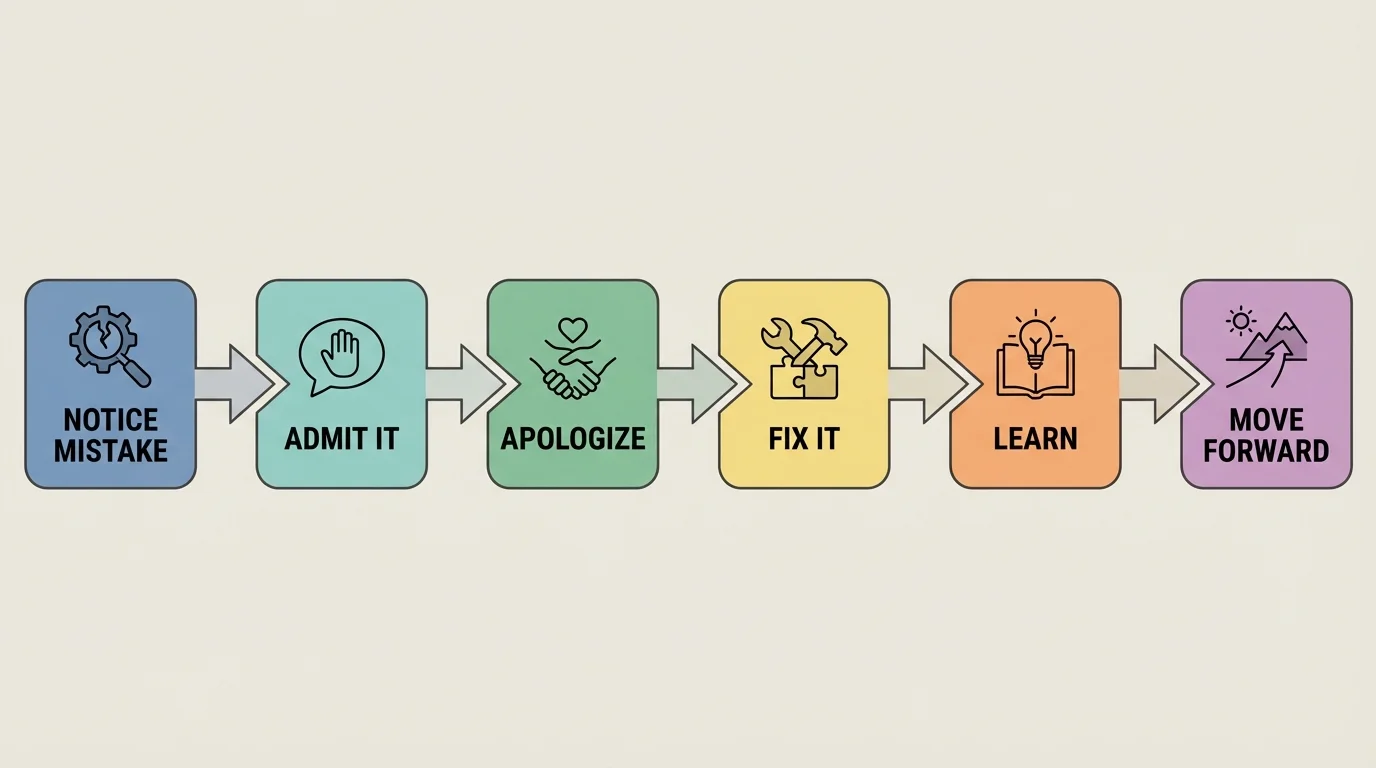
Step 1: Notice the mistake. Maybe you sent the wrong file to your teacher. Maybe you forgot to feed a pet. Maybe you promised a friend you would join a video call and forgot. First, be honest with yourself about what happened.
Step 2: Admit it clearly. Say what happened without hiding behind confusing words. You might say, "I forgot to upload the right document," or "I said I would do the dishes, and I did not do them." Clear words show responsibility.
Step 3: Apologize simply. A good apology is short and sincere. It sounds like this: "I'm sorry. I made a mistake." You do not need a long speech. The important part is that you mean it.
Step 4: Fix what you can. This is the action step. Upload the correct file. Do the missed chore now. Send the needed message. Replace what you broke if possible. Accountability is not only saying sorry. It is also repairing the problem.
Step 5: Learn for next time. Ask yourself what will help you avoid the same problem again. Do you need a reminder alarm? A checklist? A better place to keep important items? Learning turns a mistake into improvement.
Example: Fixing an online school mistake
You finish an assignment, but later you realize you uploaded the wrong photo.
Step 1: Admit the problem.
You send a message: "I noticed I uploaded the wrong image for my assignment."
Step 2: Apologize and explain briefly.
You add: "I'm sorry for the mistake."
Step 3: Fix it.
You attach the correct file right away.
Step 4: Prevent it next time.
You rename files more clearly and check before uploading.
This response is accountable because you are honest, respectful, and ready to solve the problem.
Notice what this example does not include: blaming technology, pretending nothing happened, or waiting and hoping nobody notices. As we saw in [Figure 1], accountability moves forward from the mistake to the repair.
[Figure 2] A commitment is anything you said you would do. It might be big or small: practicing piano, finishing a homework task by dinner, helping a younger sibling, bringing supplies to a club meeting, or replying to a group message. Keeping commitments shows people they can count on you, and simple systems help a lot.
Sometimes people break commitments not because they wanted to, but because they forgot, got distracted, or did not plan ahead. That is why accountability includes preparation. If you know you forget things, use tools that help you remember.
Helpful tools include a paper checklist, a calendar, a timer, sticky notes, or a reminder on a device. These tools are not signs of weakness. They are smart ways to support your memory and your promises.
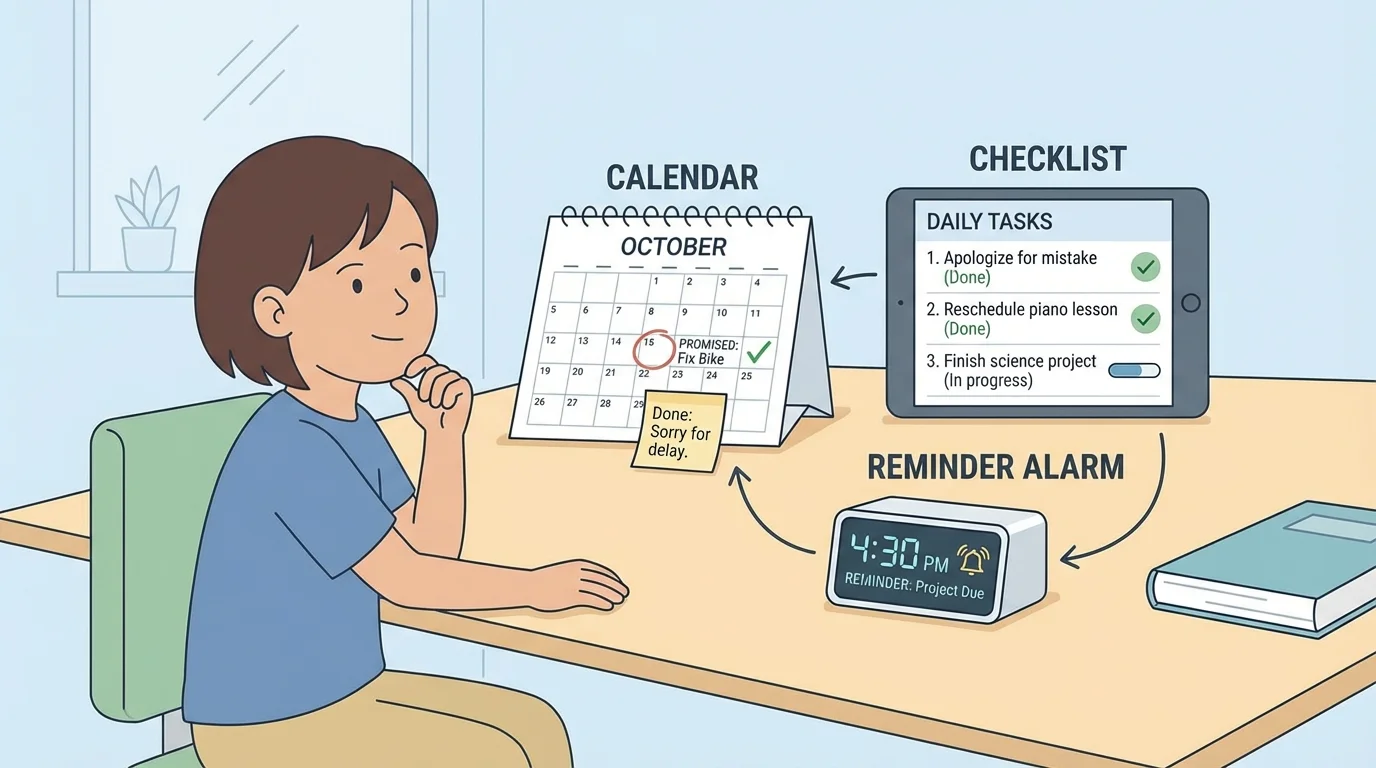
Here is a simple way to follow through:
First, say yes only when you mean it. If you are not sure you can do something, do not promise too quickly. It is better to say, "I need to check first," than to make a promise you cannot keep.
Second, break the commitment into small parts. "Clean my room" becomes "put away clothes, put books on shelf, make bed, throw away trash." Smaller steps are easier to finish.
Third, choose a time. A task is more likely to happen if it has a place in your day. "Later" is hard. "At 3:30 after my snack" is clearer.
Fourth, use a reminder. An alarm or note can help you start on time.
Fifth, report back if needed. If you promised someone something, let them know when it is done.
Promises need planning
Accountability is not only about your words. It is also about your systems. A student who sets reminders, checks a calendar, and starts early is more likely to keep promises than a student who just hopes to remember everything.
Following through does not mean everything will always go perfectly. Sometimes a plan changes. If that happens, tell the person early. Saying, "I can't finish by 5:00, but I can finish by 6:00," is much more responsible than disappearing. These planning tools help prevent last-minute surprises.
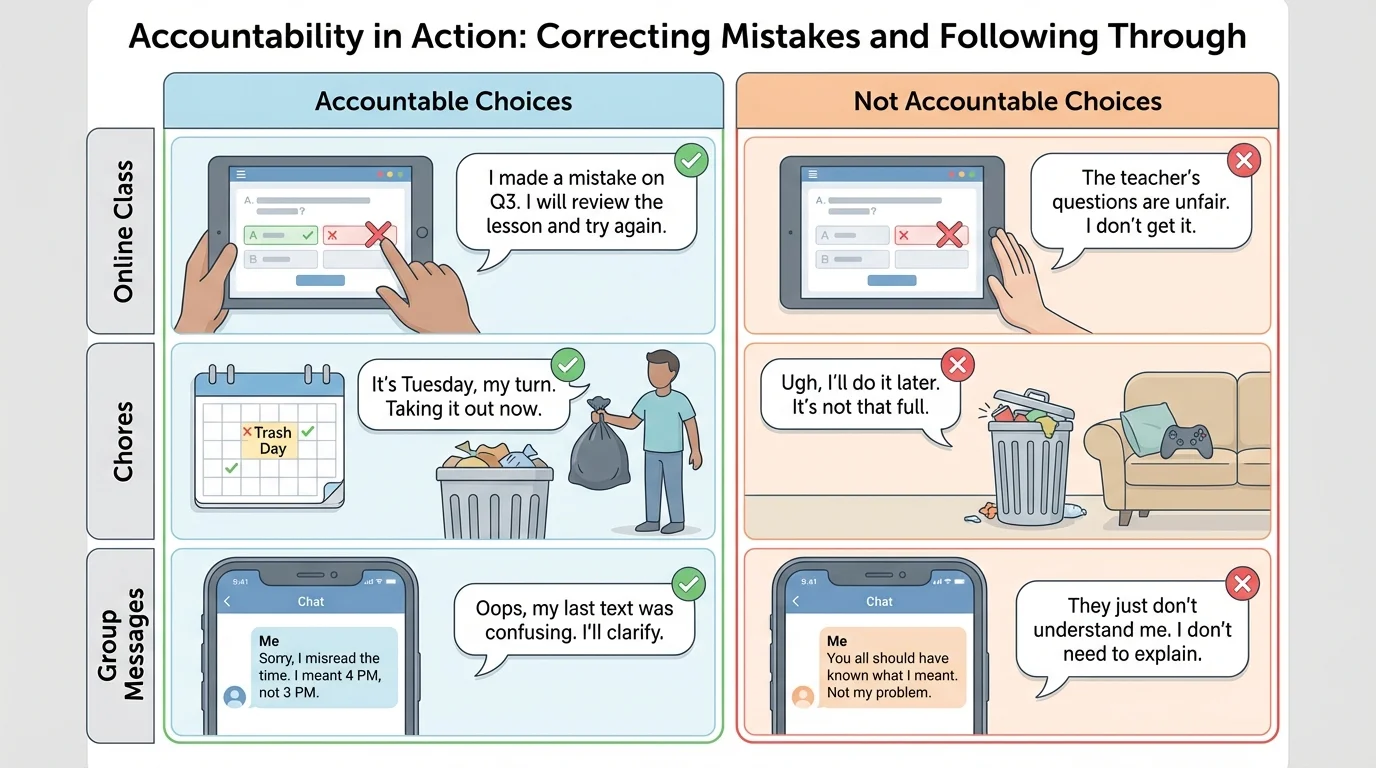
[Figure 3] Real-life examples make accountable choices easier to spot. The difference is often not the problem itself, but the response to the problem.
| Situation | Accountable response | Not accountable response |
|---|---|---|
| You miss an online meeting. | You send a message, apologize, and ask how to catch up. | You ignore it and hope nobody asks. |
| You forget a chore. | You admit it and do it as soon as possible. | You blame someone else or argue. |
| You break something. | You tell the truth and help repair or replace it. | You hide it. |
| You promise to help a friend with a project. | You help when you said you would, or warn them early if you cannot. | You stop replying. |
| You post something unkind online. | You delete it, apologize, and choose kinder words. | You say, "It was just a joke," and refuse to fix it. |
Here are some everyday examples you might actually face:
At home: You promised to water the plants every evening, but you forgot. An accountable response is: "I forgot tonight. I'm watering them now, and I'm setting a reminder for tomorrow."
With friends: You said you would join an online game at a certain time, but your plans changed. An accountable response is: "I can't make it tonight. I should have told you sooner. I'm sorry."
In a group activity: You were supposed to bring poster paper or supplies to a community club event. If you forgot, you tell the leader early and ask how to help in another way.
Online: If you share incorrect information in a chat or social media post, accountability means correcting it. You can say, "I shared something that was not correct. Here is the right information."
The patterns in [Figure 3] appear again and again: tell the truth, act quickly, and make a repair.
Sometimes accountability is hard because of feelings. You may feel embarrassed, nervous, angry, or afraid of getting in trouble. Those feelings are real. But feelings do not have to decide your actions.
If you feel embarrassed, remember this: making a mistake does not make you a bad person. Hiding it often causes more trouble than the mistake itself. Honest people still make errors. Honest people just deal with them.
If you feel angry and want to blame someone else, pause first. Take a slow breath. Ask, "What part is mine?" Even if another person contributed to the problem, you can still own your part.
If you feel afraid, use a sentence starter. You can say, "I need to tell you something," or "I made a mistake and I want to fix it." Starting is often the hardest part.
"Being responsible means doing the right thing even when it feels uncomfortable."
Sometimes you may face an unfair situation. Maybe something truly was not your fault. Accountability still matters. You can calmly explain the facts and also say what you will do next. For example: "The internet stopped during the call, and I am sending my work now." That is different from making excuses. It gives useful information and shows action.
Accountability becomes easier when it turns into a habit. Habits are actions you practice often until they become more natural.
Here are helpful habits you can build:
Useful accountable phrases include: "I was wrong." "I forgot." "I'm sorry." "Here's how I will fix it." "Next time I will..." These words may feel small, but they show big responsibility.
Try This: A one-day accountability check
Step 1: In the morning, choose one commitment you will definitely complete today.
Step 2: Set one reminder to help you remember it.
Step 3: If you make a mistake during the day, use the words: "I made a mistake, and I'm fixing it."
Step 4: At the end of the day, notice how it felt to be honest and dependable.
These small actions build a strong reputation over time. People start to think, "If this person says they will do something, they mean it." That kind of reputation is valuable in friendships, family life, and every future responsibility you will have.
