One message, one threat, or one unusual request can change how safe you feel online. Sometimes the problem is obvious, like repeated insults in a group chat. Sometimes it is harder to spot, like a person who says, "If you're really my friend, prove it," and keeps pushing you to do something that feels wrong. Knowing how to get help and keep records is not about overreacting. It is about protecting yourself early, before a bad situation grows.
This skill matters because unsafe situations often get worse when no one knows about them. A person who bullies, pressures, threatens, or manipulates others usually depends on silence. When you know how to name the problem, save evidence, and tell the right adult, you give yourself more control. That does not mean everything becomes easy right away. It means you are no longer handling it alone.
If someone is making you feel small, scared, trapped, or pressured, your feelings are important information. You do not need to wait until something becomes "serious enough" in someone else's eyes. If your stomach drops when a notification appears, if you feel nervous about saying no, or if you are worried someone will embarrass or expose you, those are signs to pay attention.
Strong help-seeking is a life skill. It can protect your mental health, your reputation, your personal information, and sometimes your physical safety. It also helps adults support you better. Adults can act faster when they know what happened, when it happened, who was involved, and what evidence exists.
Bullying is harmful behavior that is mean, repeated, or uses power to hurt someone. Coercion is pressure, threats, guilt, or manipulation used to push someone into doing something they do not want to do. An unsafe peer situation is any interaction with someone your age or close in age that puts your emotional, digital, social, or physical safety at risk.
These ideas overlap, but they are not exactly the same. A rude comment once is not the same as repeated harassment. A disagreement is not the same as pressure. An invitation is not the same as a demand.
[Figure 1] These situations are not all the same, and the comparison helps sort out some important differences. Knowing the difference helps you choose the right response. If two friends disagree respectfully, that is a problem to solve. If one person repeatedly humiliates another, spreads rumors, excludes them on purpose, or uses a group to gang up on them, that is much more serious.
Bullying can happen through texts, gaming chat, livestream comments, social media, shared photos, private messages, or voice chat. It can include name-calling, mocking, threatening, repeated rumors, impersonation, posting embarrassing content, or encouraging others to pile on. Coercion often sounds different. It may include guilt, fake friendship, dares, pressure to share private photos, pressure to reveal passwords, or threats like "Do this or I'll post what you told me."
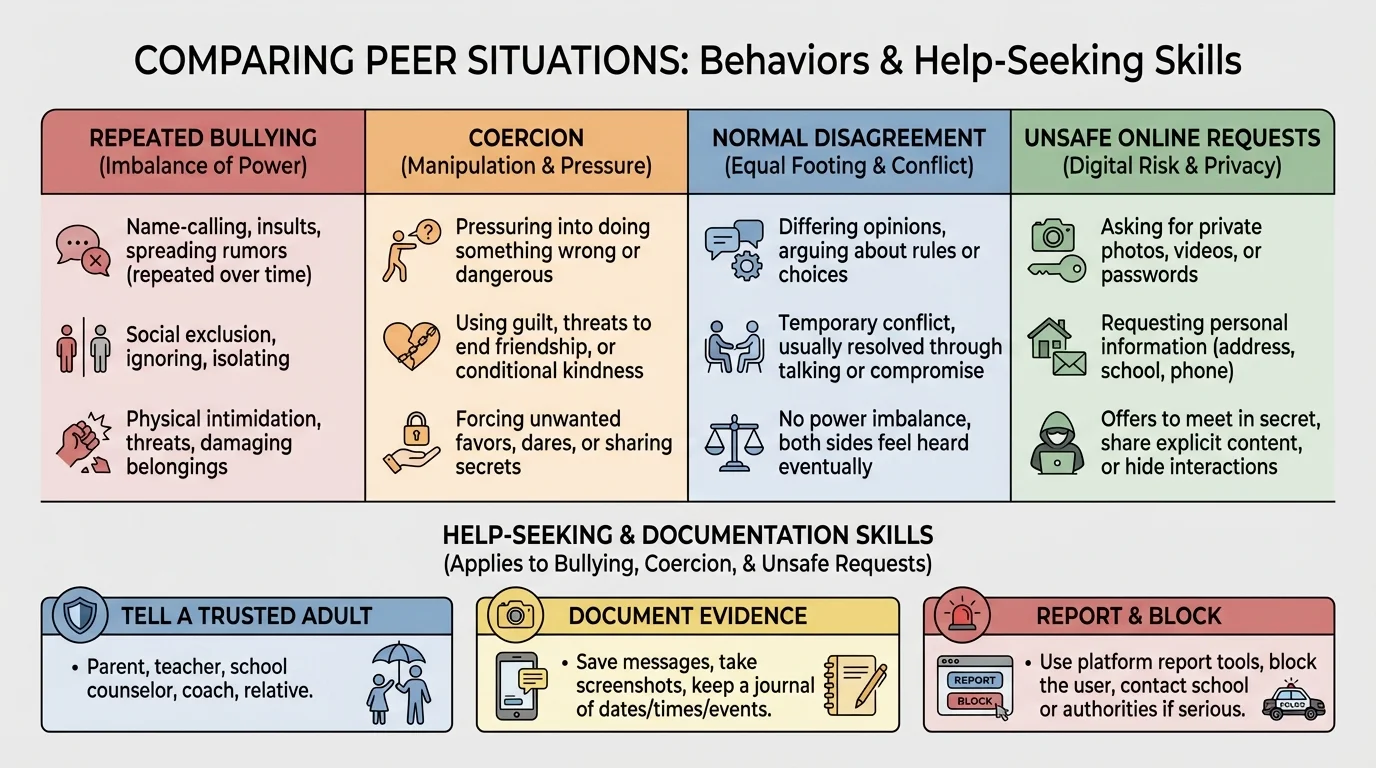
Unsafe peer situations are not always loud. Sometimes they are quiet and sneaky. A person may ask you to keep a secret from your parent or caregiver, hide a conversation, break a rule that protects you, meet someone without telling anyone, or send personal information. When a situation depends on secrecy, fear, or pressure, that is a major red flag.
Here are some examples of situations that deserve attention:
When you compare these examples to the categories in [Figure 1], the pattern becomes clearer: the key warning signs are repeated harm, pressure, threats, secrecy, and disrespect for your boundaries.
Your body and emotions often notice danger before your brain has the perfect words for it. If you feel frozen, panicky, ashamed, confused, or pressured, do not ignore that. A situation does not have to look dramatic to be unsafe.
Watch for warning signs such as repeated unwanted contact, someone refusing to accept "no," demands for secrecy, blackmail, threats, pressure to share photos or personal details, pressure to insult or exclude someone else, or someone trying to isolate you from adults who care about you. Another warning sign is a power imbalance. That might mean the person has social influence, knows embarrassing information, has a bigger following, is older, or is using a group against one person.
Red flags often come in clusters. One rude message may be a bad choice. But repeated insults plus threats plus secrecy plus pressure usually mean the situation is not random. When several warning signs happen together, treat the situation seriously and start documenting right away.
A useful question is: "If I showed this conversation to a trusted adult, would I feel worried about their reaction?" If the answer is yes, that is a strong clue that you need support. Another question is: "Do I feel free to say no without punishment?" If not, coercion may be happening.
When something unsafe is happening, your first job is not to win the argument. Your first job is to protect yourself. That usually means getting space, staying calm enough to think, and reducing the other person's access to you.
Step 1: Pause before replying. People who bully or pressure others often want a fast emotional reaction. If you answer while upset, you may say something that makes the situation messier or gives them more to use against you.
Step 2: Use a short boundary if needed. Examples: "Stop messaging me about this." "I said no." "Do not contact me again." "I am not doing that." You do not owe a long explanation.
Step 3: Leave, mute, block, or log off if needed. In a game, leave the lobby or chat. On social media, block and restrict. In a group text, mute, save evidence, and step away. Safety is more important than seeming polite.
Step 4: Save evidence before deleting or blocking if it is safe to do so. A screenshot taken now can be much more useful later than trying to remember exact words from memory.
Step 5: Tell a trusted adult soon. If there is a threat, sexual pressure, stalking behavior, or any chance of physical danger, tell an adult immediately.
"You do not have to handle unsafe pressure by yourself just because someone told you to keep it secret."
If a situation feels urgent, skip straight to help. You never need to collect perfect evidence before reaching out. Safety comes first, documentation comes second.
Good documentation is organized, factual, and simple. You are not building a dramatic story. You are creating a clear record that helps someone understand what happened.
[Figure 2] Think like a reporter. What exactly was said or done? When did it happen? Where did it happen? Who was involved? Were there witnesses? What happened before and after? If you can answer those questions clearly, adults and platforms can act more effectively.
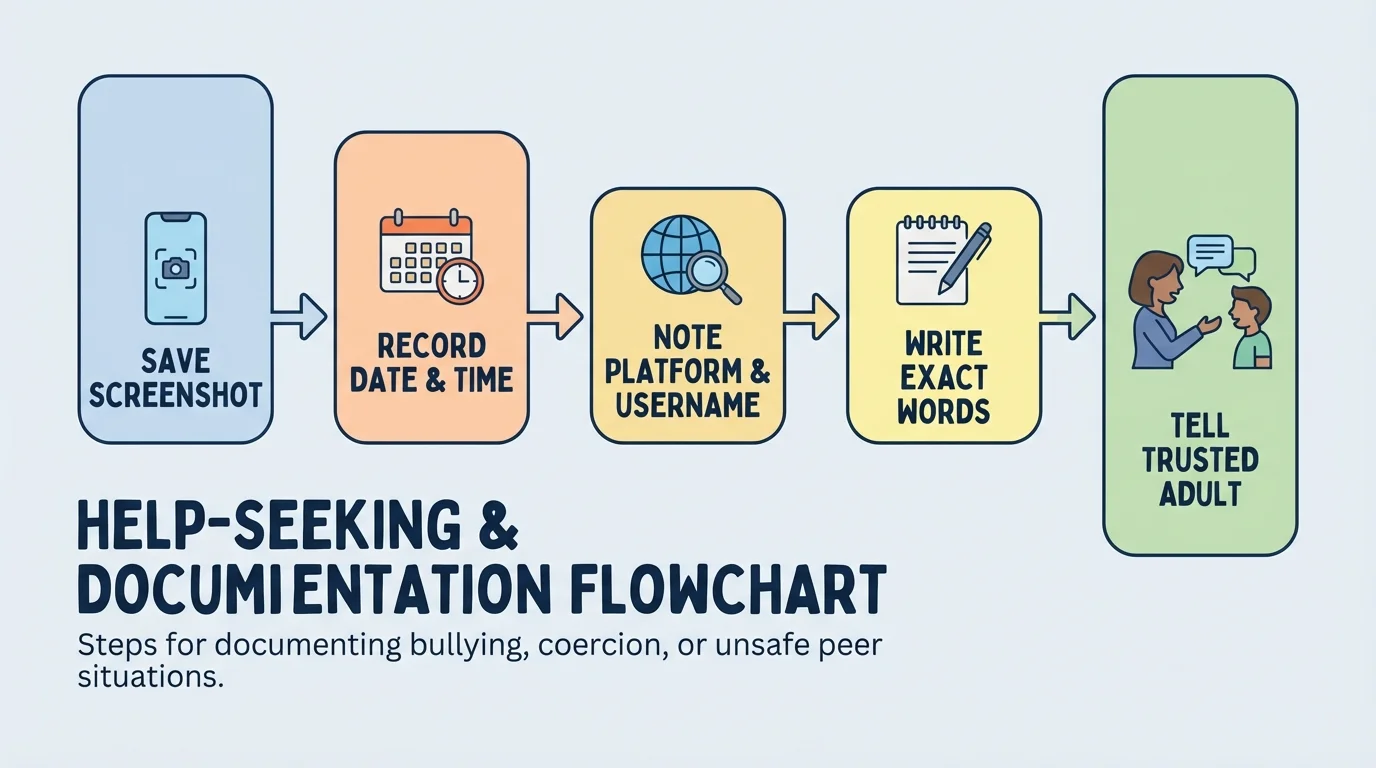
Here is a practical way to document:
Save screenshots. Capture the full screen if possible so the date, username, app, or context appears. If there are multiple messages, take several screenshots in order.
Write down the basics. Make a note in your phone, a document, or on paper with the date, time, platform, usernames, and a short description.
Use exact words when possible. Instead of writing "they were mean," write "they said, 'Everyone hates you,' in the group chat at about 8:15 p.m." Exact language is more useful.
Keep the order clear. List what happened first, next, and last. That timeline matters. Adults may need to know whether there was a warning, a threat, or repeated contact.
Save links or usernames. If a post, account, or message thread can be found again, record that information.
Do not edit the evidence. Cropping too much, adding stickers, or changing files can make the record less useful. Keep original screenshots when possible.
Back it up safely. If needed, send screenshots to a parent, caregiver, or another trusted adult so they are not lost if the content disappears.
Example: turning a messy situation into a useful record
A student gets repeated messages in a gaming chat saying, "You better do it or we'll post the clip," along with insults from two users.
Step 1: Save the evidence
The student takes screenshots of the threat, the usernames, and the timestamps.
Step 2: Write a short note
"Friday, about 7:40 p.m., in game chat. Usernames were RavenX and NovaTag. They told me, 'You better do it or we'll post the clip.' They also called me names after I said no."
Step 3: Tell a trusted adult
The student sends the screenshots and note to a parent and says they want help reporting and blocking the accounts.
This record is much stronger than saying, "Some people were bothering me online."
Later, if the behavior repeats, you can add new entries. As shown earlier in [Figure 2], a calm step-by-step record helps adults see patterns over time instead of isolated moments.
Different situations need different kinds of help, and this section lays out a simple decision path. If there is immediate danger, threats of harm, sexual exploitation, stalking, or pressure to meet secretly, contact a trusted adult right away and get urgent help. If the situation is harmful but not immediate danger, you may still need an adult, plus a report on the app or platform.
A trusted adult is a grown-up who takes your safety seriously, listens, and acts responsibly. This could be a parent, guardian, older family member, coach, club leader, counselor, or another safe adult in your life. The key is choosing someone likely to help, not minimize the problem.
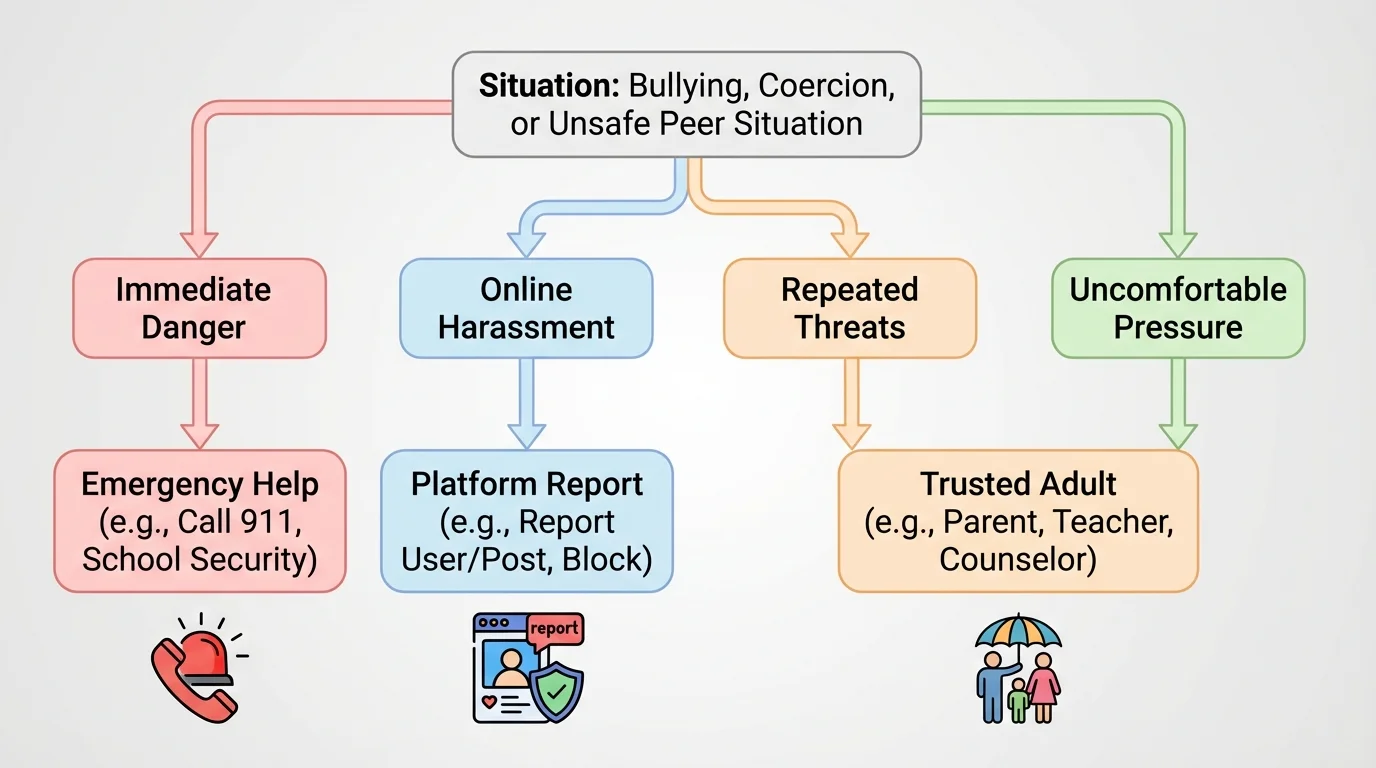
[Figure 3] If you are not sure what to say, keep it direct. You can use this script: "I need help with something serious. Someone has been pressuring me online, and I saved screenshots. I do not feel comfortable handling it by myself." That is enough to start.
You can also be specific about what you need. For example: "Can you stay with me while I report this?" "Can you help me decide whether to block them now?" "Can you help me save the evidence first?" "Can you help me tell another adult too?"
Many platforms have reporting tools for harassment, impersonation, threats, or sexual content. Reporting does not replace telling a trusted adult when the situation is serious. It is often best to do both. The decision tree in [Figure 3] helps you sort whether a problem needs platform action, adult support, emergency help, or all three.
| Situation | Best First Move | Also Do This |
|---|---|---|
| Repeated insults or harassment online | Save evidence | Block/report and tell a trusted adult |
| Pressure to share private images or personal details | Stop responding and save evidence | Tell a trusted adult immediately |
| Threats of harm or stalking behavior | Get adult help right away | Use emergency help if needed |
| Pressure to meet secretly | Do not go | Tell a trusted adult immediately |
| A rumor or embarrassing post | Screenshot it | Report it and tell a trusted adult |
Table 1. Common unsafe situations and practical first responses.
If one adult does not help, tell another. Sometimes adults misunderstand at first. That does not mean the problem is not real. Keep going until someone listens and acts.
You do not want to invent a safety plan while you are panicking. A simple plan made ahead of time can make you faster and calmer in a tough moment.
Your plan can include:
You might even keep a short checklist on your device: Pause. Screenshot. Note the date and username. Tell an adult. Report/block. The point is not to memorize a perfect rule. The point is to reduce confusion when emotions are high.
Many harmful online posts disappear quickly, either because the sender deletes them or because content is changed. A screenshot taken early can be the difference between having evidence and having only a memory.
Planning ahead also helps you notice patterns. If the same person keeps pushing your boundaries, your record becomes stronger each time you add clear details.
One common mistake is arguing for too long. If someone is trying to upset, scare, or manipulate you, a long back-and-forth usually gives them more access to your attention. Another mistake is deleting everything before saving it. If the messages are upsetting, it makes sense to want them gone, but save evidence first when you safely can.
A third mistake is keeping dangerous secrets to protect someone else's reputation. If someone threatens you, pressures you sexually, asks for private photos, demands secrecy from adults, or pressures you to break a safety rule, that is not a secret you should carry alone.
Another mistake is minimizing what happened because "it was online" or "they were probably joking." Jokes do not require fear, pressure, or humiliation. A joke stops being a joke when one person says stop and the other person keeps going.
You are allowed to protect your time, privacy, and peace. Saying no, blocking someone, leaving a chat, or asking for help are healthy actions, not rude ones, when someone is crossing the line.
Finally, do not assume you need perfect proof before speaking up. A trusted adult can help you decide the next step even if you only have part of the record.
Here is what it can look like to apply these skills in real life.
Scenario 1: A friend keeps pushing you to send a private photo and says, "If you trust me, you would." That is coercion. The right response is to stop replying, save the messages, and tell a trusted adult immediately.
Scenario 2: In a community sports group chat, several kids keep mocking one person with edited images. That is bullying. Save screenshots, avoid joining in, and tell a trusted adult or coach who can act.
Scenario 3: Someone from a game asks where you live and wants to meet without telling your parent or caregiver. That is unsafe. Do not share information, save the messages, block, and tell an adult right away.
Scenario 4: A person threatens to post a clip of you making a mistake unless you do what they say. That is coercion and possible blackmail. Save evidence, do not negotiate, and get help.
Scenario 5: You are not sure whether something is "bad enough." If you feel nervous, pressured, trapped, or afraid of what will happen if you say no, that is enough reason to ask for help.
When students build these habits early, they become stronger communicators. They learn to state limits clearly, organize facts, and seek support before a problem grows. Those skills matter far beyond one bad chat or one unsafe request. They help you protect yourself in friendships, teams, clubs, online communities, and future workplaces too.
