Many serious problems get worse not because no help exists, but because someone waits too long to ask. Knowing how to get help is a real-life skill. It can help when you are sick, scared, overwhelmed, injured, threatened online, or worried about someone else. Asking for help is not weakness. It is a smart move that protects your health, emotional well-being, and safety.
When you learn from home, you may not have a nearby teacher or school nurse in the same building. That means your help-seeking plan needs to fit your real life: home, neighborhood, sports, clubs, doctor visits, phones, messages, video calls, and trusted adults in your community. The good news is that you can build a plan before you need it.
Help-seeking means noticing a problem, deciding what kind of help you need, and reaching out to the right person or service. People who practice this skill often solve problems earlier. They get care faster, stay safer, and feel less alone.
Think about two situations. In one, a student twists an ankle, tells a parent right away, gets it checked, rests it, and heals. In the other, the student hides the pain, keeps walking on it, and makes the injury worse. The problem is not just the ankle. The bigger issue is whether the student knew when and how to ask for help.
Getting help early changes outcomes. A small health concern can become a bigger medical problem. A stressful feeling can grow into a crisis. An unsafe online conversation can become a real danger. Reaching out early gives adults and professionals more time and more options to help you.
Some students avoid asking because they feel embarrassed, fear getting in trouble, or worry that others will not believe them. Those feelings are real, but they should not stop you from protecting yourself. If something feels wrong, painful, confusing, or unsafe, it matters.
A physical concern involves your body. This can include pain, injury, illness, allergic reactions, dizziness, trouble breathing, a bad headache, unusual swelling, vomiting, fever, or symptoms after a hit to the head. It also includes body changes you are unsure about and side effects from medicine.
An emotional concern involves thoughts, feelings, or mental well-being. This can include anxiety, panic attacks, deep sadness, intense anger, hopelessness, feeling numb, feeling out of control, or being unable to focus on daily tasks. It can also include grief, stress from family changes, friendship conflict, cyberbullying, or fear that will not go away.
A safety concern means there is a risk of harm to you or someone else. This may include abuse, threats, harassment, being pressured to send private photos, someone asking you to keep a harmful secret, being followed, dangerous dares, unsafe driving by an adult, or a person online trying to get your location or trying to meet you in person.
Emergency means immediate danger and the need for urgent action right away. Trusted adult means a grown-up who listens, takes your concerns seriously, and acts to help keep you safe. Support network means the group of people and services you can contact for different kinds of help.
Sometimes concerns overlap. For example, cyberbullying might start as an emotional concern because it hurts your feelings, but it can also become a safety concern if someone threatens you, shares your address, or pressures you to meet up. A hard fall at sports practice can be physical, but if you feel scared and shaken afterward, there may be an emotional part too.
[Figure 1] presents a simple way to sort a problem by urgency. Ask yourself: Is someone in immediate danger? Could waiting make this much worse? Can I stay safe while I get help?
There are three useful levels: emergency, urgent, and can wait a little. Emergency means act now. Urgent means get help soon, today if possible. Can wait a little means it still matters, but you can plan the right time and person to tell.
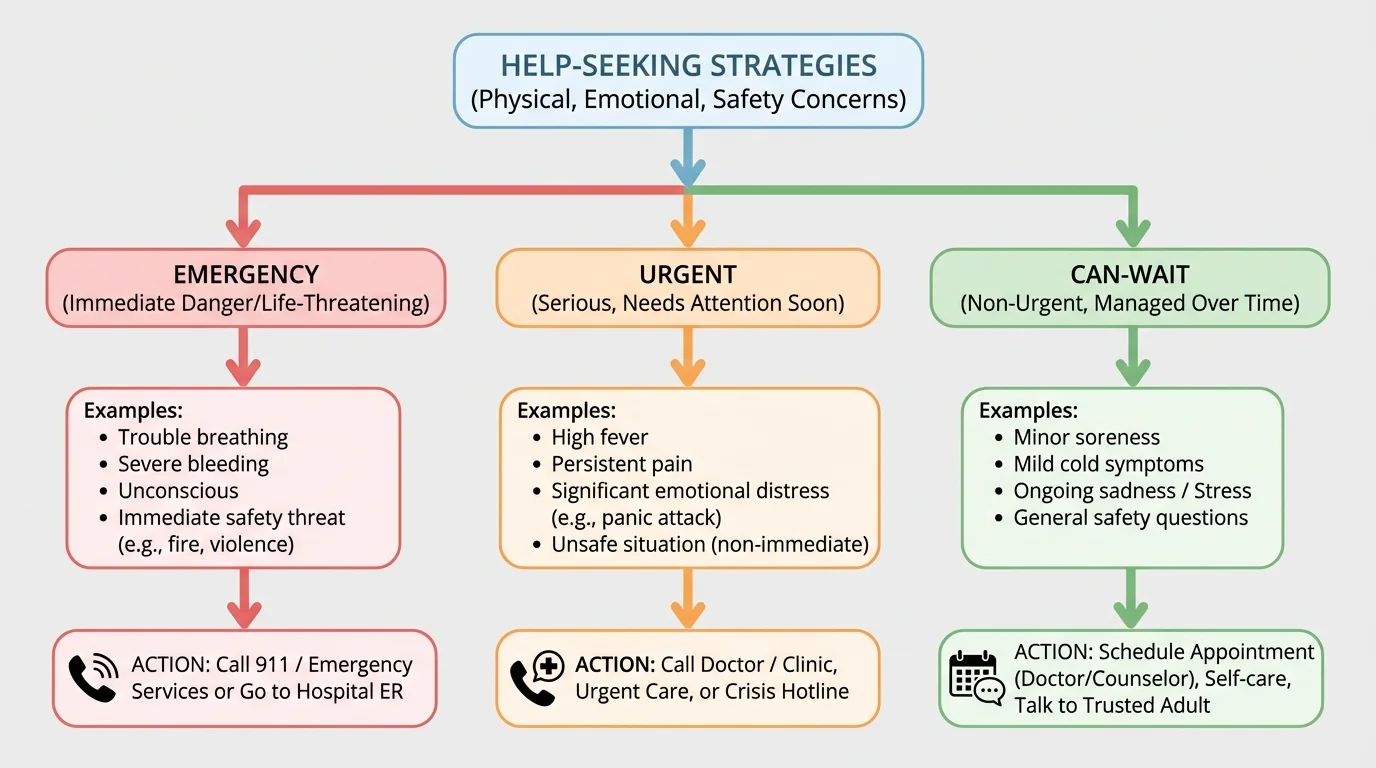
Emergency examples: trouble breathing, severe bleeding, chest pain, passing out, signs of a serious allergic reaction, wanting to hurt yourself right now, a weapon present, a fire, abuse happening now, or being unable to stay safe. In an emergency, call emergency services or get a trusted adult to do it immediately.
Urgent examples: fever that stays high, possible concussion, repeated vomiting, panic attacks, threats online, being scared to be alone with a certain person, or thoughts of self-harm even if there is no immediate action happening. These need adult help as soon as possible, not days later.
Can-wait examples: a mild but persistent headache, stress about a schedule, conflict with a friend, trouble sleeping for a few nights, or questions about a body change that is not painful or dangerous. Even when a concern can wait a little, do not ignore it for weeks. Small problems can grow.
Many people freeze during stressful situations. That is why having a plan matters. You do not have to invent your next step while scared; you can follow a simple routine you practiced earlier.
If you are unsure which level fits, choose the safer option and tell an adult. It is better to ask for help and learn it was less serious than to stay silent during a dangerous situation. As the decision tree makes clear, when safety is uncertain, moving upward in urgency is the smart choice.
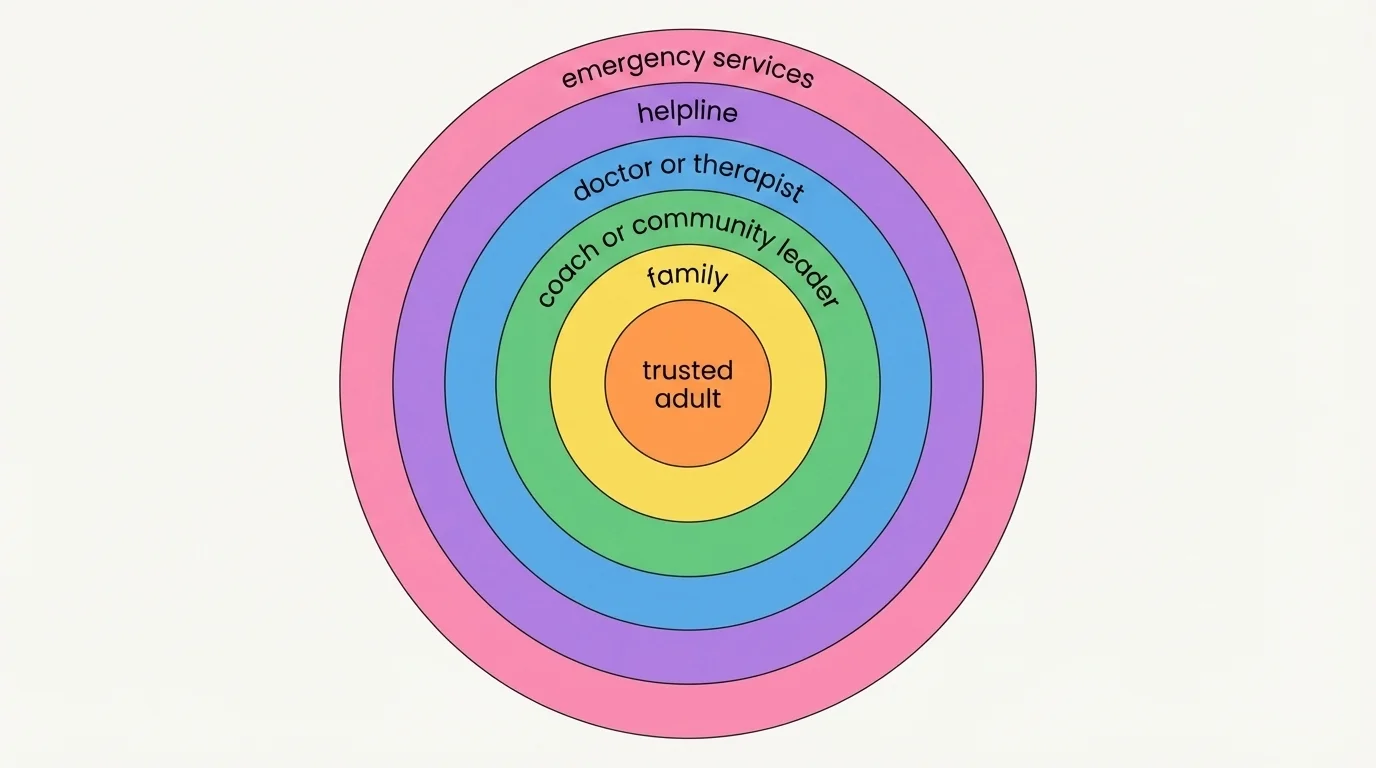
[Figure 2] shows why you need more than one helper: different people are good at different things. A strong support network includes trusted adults close to you, community adults, and professional help when needed.
Your network might include a parent, grandparent, aunt, uncle, older sibling who is an adult, neighbor, coach, faith leader, club leader, doctor, therapist, school counselor connected to your online school, or the parent of a close friend. You should also know how to contact emergency services and, where available, a crisis or child-help hotline.
Do not choose someone just because they are an adult. Choose people who are calm, respectful, reachable, and likely to act. A trusted adult believes safety concerns should be taken seriously. They do not laugh things off, blame you for asking, or tell you to keep dangerous secrets.
It helps to build a list before you need it. Include names, phone numbers, and what each person can help with. For example, one adult might be your first call for injuries, another might be best when you are upset and need to talk, and another might be the person to contact if you feel unsafe at home.
| Helper | Best for | Example |
|---|---|---|
| Parent or guardian | Fast support, transportation, decisions | You have a fever or need to leave an activity |
| Doctor or nurse line | Medical advice | You hit your head and feel dizzy |
| Mental health professional | Strong emotions, anxiety, hopelessness | You feel overwhelmed most days |
| Coach or community leader | Support and reporting concerns | Another kid is threatening you at practice |
| Emergency services | Immediate danger | Severe injury, fire, violence, or someone cannot breathe |
Table 1. Different helpers and the kinds of situations they are best prepared to handle.
Keep backup options. If your first adult does not answer, who is second? If you cannot safely speak out loud, can you text? If your device dies, where is another phone? The layers of support in [Figure 2] remind you that you are not limited to one person.
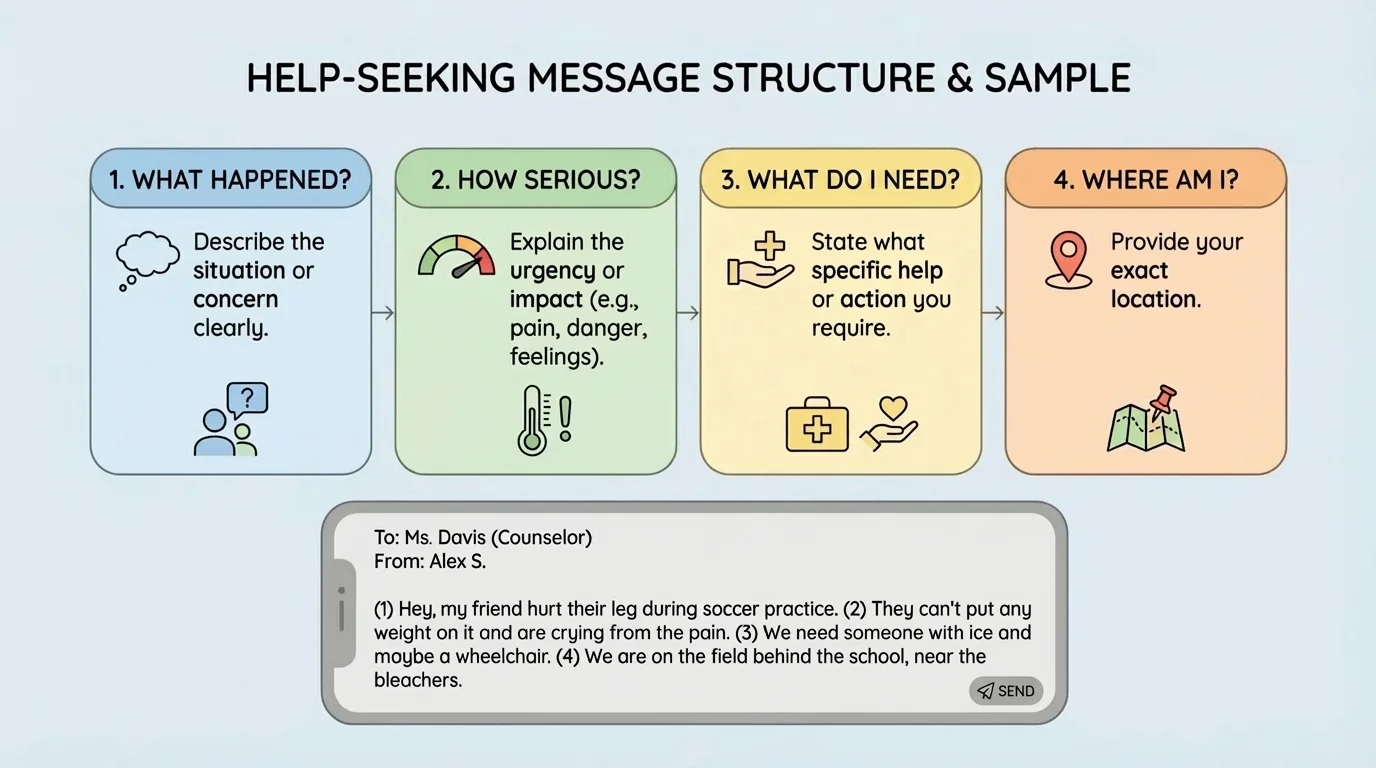
[Figure 3] illustrates a four-part pattern for a clear help message: what happened, how serious it feels, what you need, and where you are. When stress is high, your words may come out mixed up, so a simple script helps.
You do not need perfect words. You just need enough clear information for the other person to understand the problem and act. Short and direct is often best.
Here is the pattern: "This is what happened. This is how I feel or what I notice. I need help now or soon. I am at this place."
Clear help message examples
Step 1: Physical concern
"I fell off my bike and hit my head. I feel dizzy and my head hurts. I need an adult to help me now. I'm at the park by the tennis courts."
Step 2: Emotional concern
"I've been feeling really overwhelmed and I'm crying a lot. I don't feel okay being by myself right now. Can you call me as soon as possible?"
Step 3: Safety concern
"Someone online keeps asking for my address and private photos. I feel unsafe. I need you to help me block and report them, and I don't want to handle this alone."
If talking feels hard, you can text a message, send a voice note, or call and read from a written note. You can even start with one powerful sentence: "I need help with something serious, and I need you to listen all the way through." That sentence can create enough space for you to continue.
If the problem is urgent, do not hide important facts to avoid embarrassment. Say if there is blood, trouble breathing, threats, fear of going home, thoughts of self-harm, or pressure for sexual images. The message pattern in [Figure 3] works best when the facts are honest and direct.
With physical problems, your first job is to notice symptoms and report them accurately. Common signs to mention include where it hurts, when it started, what happened before it started, whether it is getting worse, and whether you have other symptoms like dizziness, swelling, rash, fever, nausea, or trouble moving.
Do not pretend you are fine just because you do not want to interrupt plans. If you faint, hit your head, have strong pain, cannot breathe normally, or think you are having an allergic reaction, tell an adult immediately. Your body gives warning signs for a reason.
If you take medicine, supplements, or use an inhaler, adults and medical professionals need accurate information. Knowing the name, dose, and time you last took something can help them respond correctly.
For milder concerns, you can still use a simple report. Try: "My throat started hurting this morning. My temperature is high. Swallowing hurts, and I feel tired." Clear details help adults decide whether you need rest, water, monitoring, a doctor visit, or urgent care.
If another person is hurt, get adult help fast. Do not try to diagnose a serious injury on your own. Stay with the person if it is safe, speak calmly, and get a trusted adult or emergency services involved right away if the danger is severe.
Emotional struggles can be harder to notice because you cannot always see them. Still, they are real health concerns. Warning signs include crying often, isolating yourself, losing interest in things you usually enjoy, panic, feeling worthless, extreme anger, sleeping much more or less than usual, changes in eating, or feeling hopeless.
Sometimes students think they need to wait until things are "bad enough" to ask for help. That is not true. If your feelings are affecting sleep, focus, relationships, appetite, motivation, or your ability to feel safe, it is worth telling someone.
Emotions become safer when they are shared with the right person. Talking does not instantly solve every problem, but it lowers isolation and helps adults notice patterns, risks, and supports you may need. The goal is not to be dramatic. The goal is to be honest.
You can use words like: "I haven't felt like myself for two weeks," "I feel anxious almost every day," "I feel angry and I don't know why," or "I keep thinking that nothing will get better." These statements give adults useful information.
If you ever think about hurting yourself, or feel like you might not be able to stay safe, that is an emergency. Tell a trusted adult immediately and stay near people who can help. If a trusted adult is not available, contact emergency services or a crisis line right away. Do not stay alone with that danger.
You can also ask for support for a friend, but do not promise to keep self-harm, suicide, abuse, or threats secret. A harmful secret is not loyalty. It is a danger signal.
[Figure 4] highlights warning signs that can help you recognize safety concerns quickly. Many safety concerns now happen through devices and apps, but unsafe situations can also happen at home, in the neighborhood, or during activities.
Red flags include someone asking you to keep a secret that makes you uncomfortable, pressuring you for photos, asking for your location, threatening to share private information, offering gifts for attention, trying to separate you from safe adults, or making you feel afraid to say no.
Another major red flag is when someone says the problem will get worse if you tell. That is a control tactic. Safe adults do not ask children to hide harm, threats, touching, or exploitation.
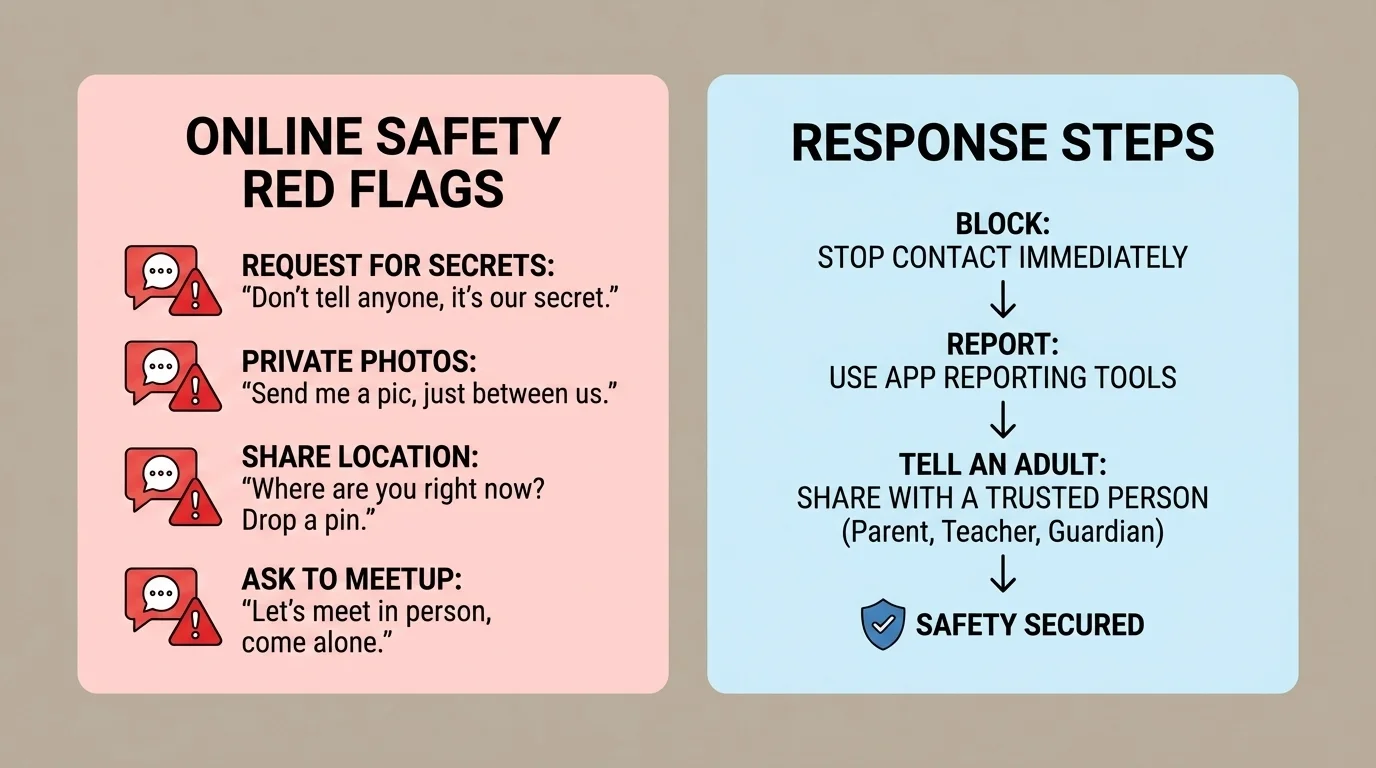
If something unsafe is happening online, stop replying, save evidence if possible, block the person, report the account, and tell a trusted adult. Evidence can include screenshots, usernames, dates, and messages. Do not keep negotiating with the person yourself.
If the unsafe situation is in real life, move toward safety first. Go where other safe people are. Get to a locked or public place if needed. Call or text a trusted adult. If the danger is immediate, call emergency services. The response steps are simple on purpose: get safe, get help, and do not keep dangerous secrets.
"If a secret could hurt you or someone else, it should not stay secret."
Abuse, harassment, grooming, and threats are never your fault. Even if you answered a message, clicked something, or stayed quiet at first, you still deserve help. Adults are responsible for protecting children and reporting serious harm.
Sometimes the first person you tell may minimize the problem, misunderstand you, or be unavailable. That does not mean your concern is unimportant. It means you go to the next safe person on your list.
Use a stronger second message if needed: "I need you to take this seriously. I feel unsafe," or "This is not getting better, and I need help today." If a person dismisses a safety concern, move quickly to another trusted adult, a professional, or emergency services depending on the urgency.
What persistence looks like
Step 1: Tell one trusted adult clearly.
Step 2: If they do not respond or do not help, contact a second adult on your list.
Step 3: Save facts such as screenshots, dates, symptoms, or what was said.
Step 4: If the situation is urgent or dangerous, skip waiting and contact emergency services or a crisis line.
This is especially important for abuse, self-harm risk, threats, stalking, or severe medical symptoms. Persistence is not overreacting. It is protecting your life and health.
A plan helps you act even when you feel scared or frozen. Keep your plan simple enough that you can use it under stress.
Your plan should include three trusted adults, their contact information, your address, any important medical information, and one or two help messages you can copy quickly. You might save these in your phone and also write them on paper in case your device is unavailable.
Simple personal help plan
Step 1: List your top three trusted adults and one backup.
Step 2: Save emergency numbers and your full home address.
Step 3: Write one text for physical help, one for emotional help, and one for safety help.
Step 4: Decide where you can go if you need immediate safety.
Step 5: Practice saying, "I need help now," out loud.
You can also add a calming step for yourself while waiting for help: slow breathing, sitting near a safe adult, unlocking your front door for emergency responders if told to do so, drinking water if appropriate, or moving away from the person or place that feels unsafe. These steps do not replace help; they support you until help arrives.
The goal is not to handle every crisis alone. The goal is to recognize problems, know your options, and act early. That is what real safety skills look like.
