Have you ever wanted a high-five but not a hug? That shows something important: you get to have rules for your own body. Those rules are called body boundaries, and they help keep you safe, comfortable, and respected.
Your body boundary is a rule about your body and personal space. Everyone has an invisible personal space bubble, and you get to decide what feels okay for your body.
You can like some touches and not like others. You may want a hug from a parent, but not want a tickle from a cousin. You may want to hold hands to cross a street, but not want someone to sit too close.
[Figure 1] It is okay to say what feels safe and okay for you.
Private parts are the parts of your body covered by a swimsuit. Those parts are private, and other people should not touch or look at them, except when a caregiver helps keep you clean and healthy, or a doctor checks your body to help you stay healthy, with a trusted adult there to help you feel safe.
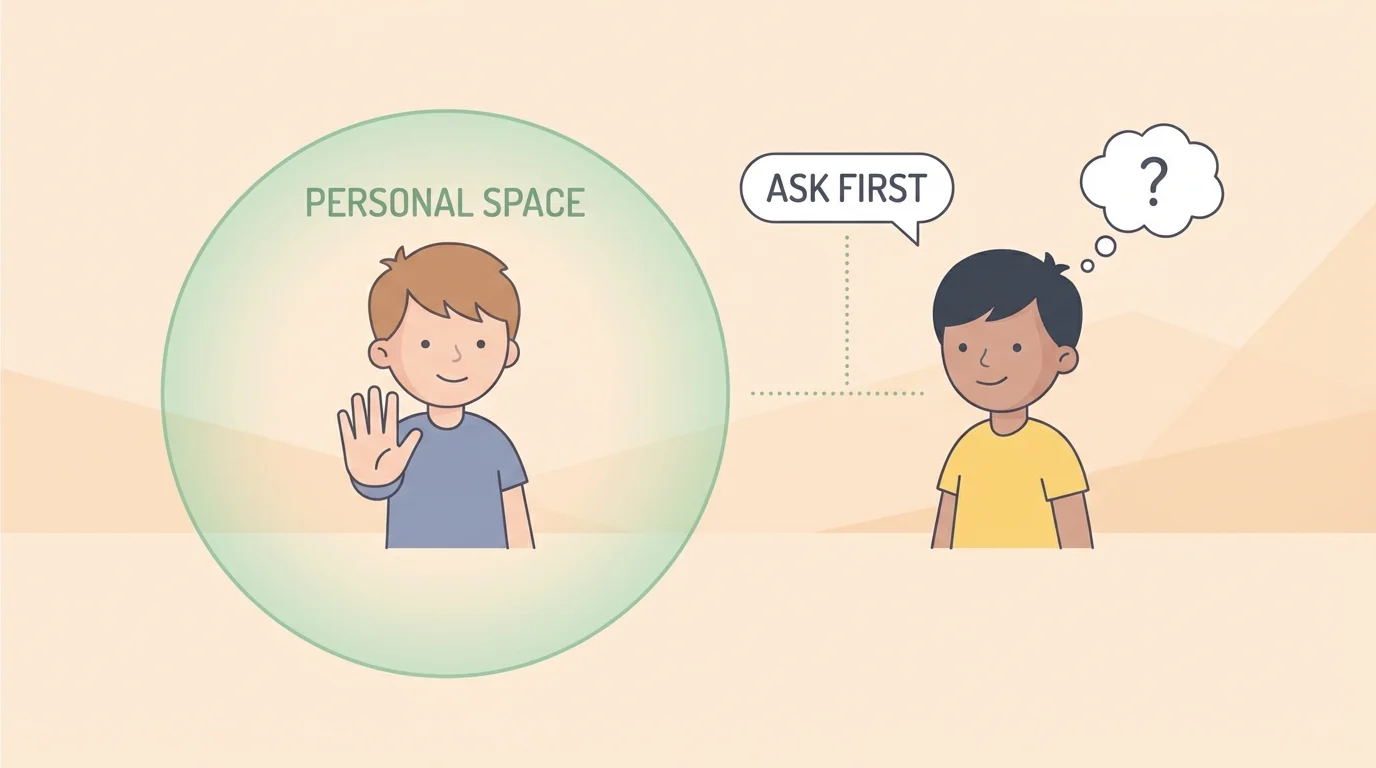
Consent means saying yes to something that feels okay. If you do not want a touch, hug, kiss, tickle, or game, then the answer is no.
A good rule is: ask first. Before hugs, kisses, cuddles, tickles, or rough play, people should ask. If you say no, they should stop.
A safe touch helps, cares for, or protects you. Holding hands while crossing a parking lot can be safe. A bandage put on your knee can be safe. A hug you want can be safe too.
An unwanted touch is a touch you do not want, even if it does not hurt. A tickle that keeps going after you say stop is unwanted. A kiss you do not want is unwanted. Being picked up when you do not want to be picked up can be unwanted.
An unsafe touch is a touch that hurts you, scares you, confuses you, or breaks body safety rules. If someone touches your private parts, asks you to touch theirs, or tells you to keep a touch secret, that is unsafe. Unsafe touch is never your fault.
Your body can give you clues. If your tummy feels twisty, your heart starts beating fast, or you want to move away, those feelings can be signs that a boundary is not being respected.
Sometimes a person may smile or say, "I'm just playing." But if you feel scared, uncomfortable, or upset, you should still get help. A joke is not okay if it breaks your body boundary.
When someone does not respect your boundary, you can use a simple safety plan: No, Go, Tell. These are safe steps you can remember.
[Figure 2] Use a strong voice. You do not have to be rude. You can be clear and brave. Short words work best when you need help fast.
No means say what you want. You can say, "No." "Stop." "I don't like that." "Do not touch me." "I said no."
Go means move away to a safer place. Go to a parent, grandparent, babysitter, coach, neighbor, or other safe grown-up nearby.
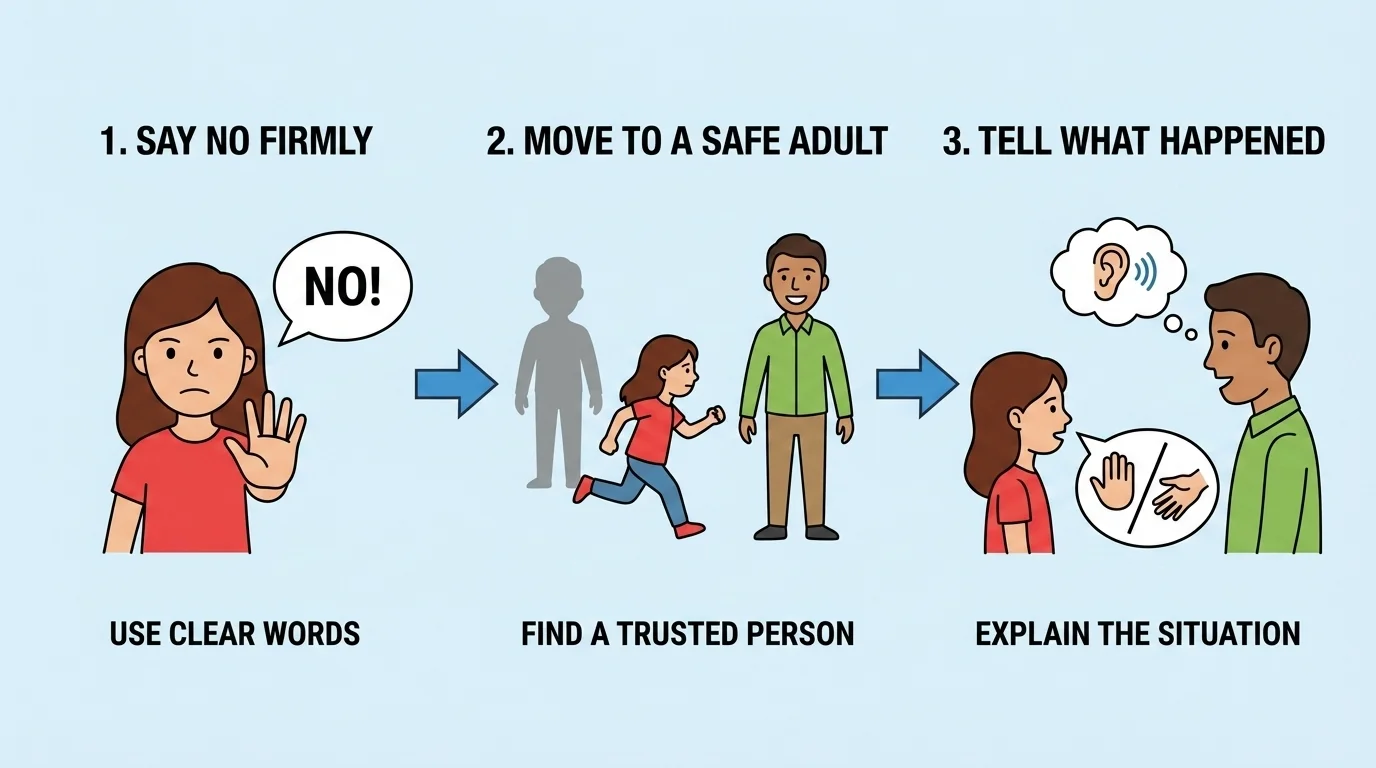
Tell means tell a trusted adult what happened. You can say, "He kept tickling me after I said stop." "She tried to kiss me and I did not want that." "I feel unsafe."
Using the safety plan
Step 1: Say no.
"Stop. I don't like that."
Step 2: Go away.
Move to the kitchen, yard, living room, or right next to a trusted adult.
Step 3: Tell.
"Grandma, I said stop and he did not stop."
You are not tattling when you are trying to stay safe.
If you feel frozen and cannot say the words right away, that is okay. You can still move away and tell. Safety matters more than saying the perfect words.
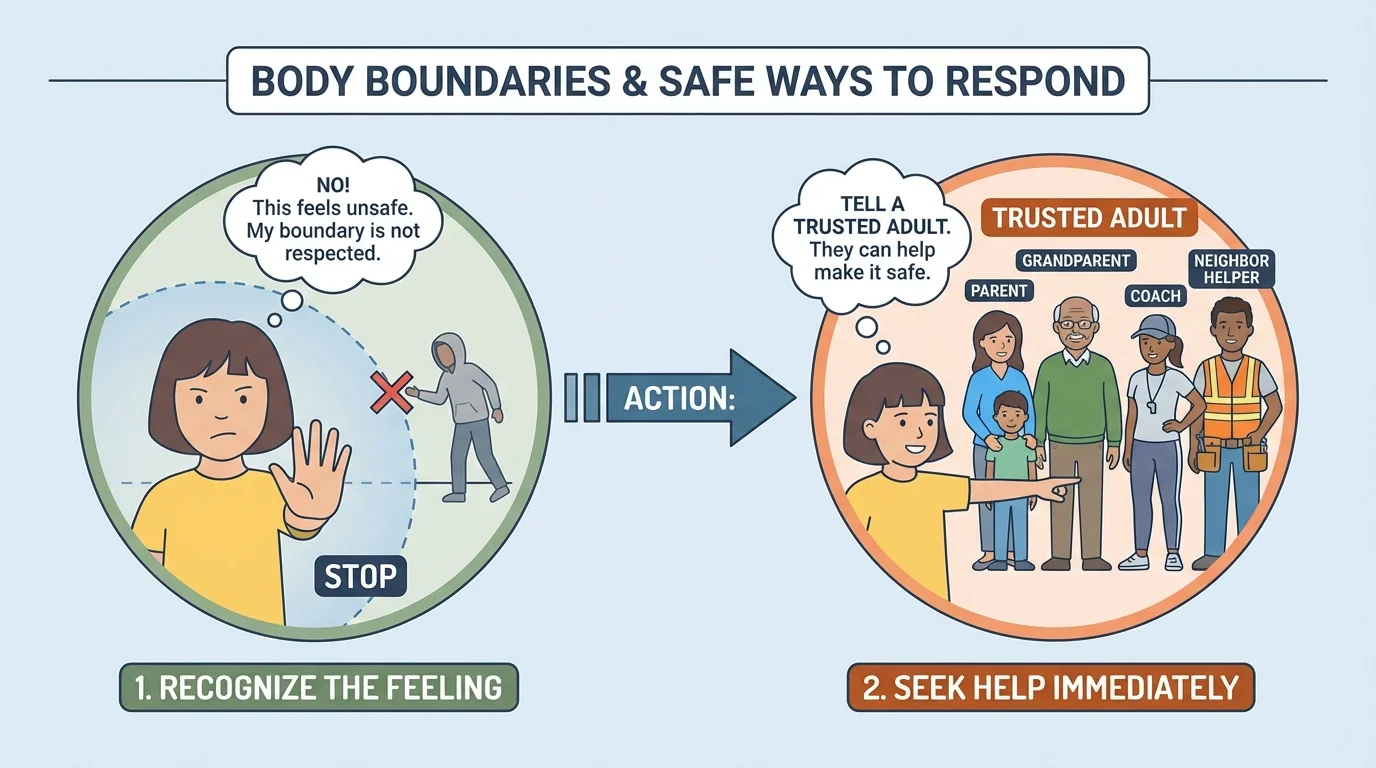
A trusted adult is a grown-up who listens, helps, and works to keep you safe. This could be a parent, grandparent, caregiver, family friend, coach, club leader, or a trusted neighbor you know well.
Pick a few trusted adults before you need help. It is smart to know their names now.
[Figure 3] Then if something happens, you already know who to find.
Secrets vs. surprises
A surprise is something happy that will be told soon, like a birthday card. A secret about touching, private parts, or feeling unsafe should never be kept. Unsafe secrets should always be told to a trusted adult.
If someone says, "Don't tell," that is an extra reason to tell. Safe adults want you to speak up.
Body boundaries can come up in many parts of your day, as [Figure 4] shows. They matter at home, at a playdate, during sports or dance, at a family gathering, in the neighborhood, and even on a video call.
If a family member asks for a hug, you can say, "No thank you. I want to wave." That is a kind way to keep your boundary.
If another child keeps grabbing you during a game, you can say, "Stop. I need space," and move closer to a safe adult. This is like the space bubble in [Figure 1], where people show respect by not getting too close without asking.
If someone keeps tickling after you said stop, that is not okay. Use No, Go, Tell just like in [Figure 2]. The same rule works even if the person says it is only a game.
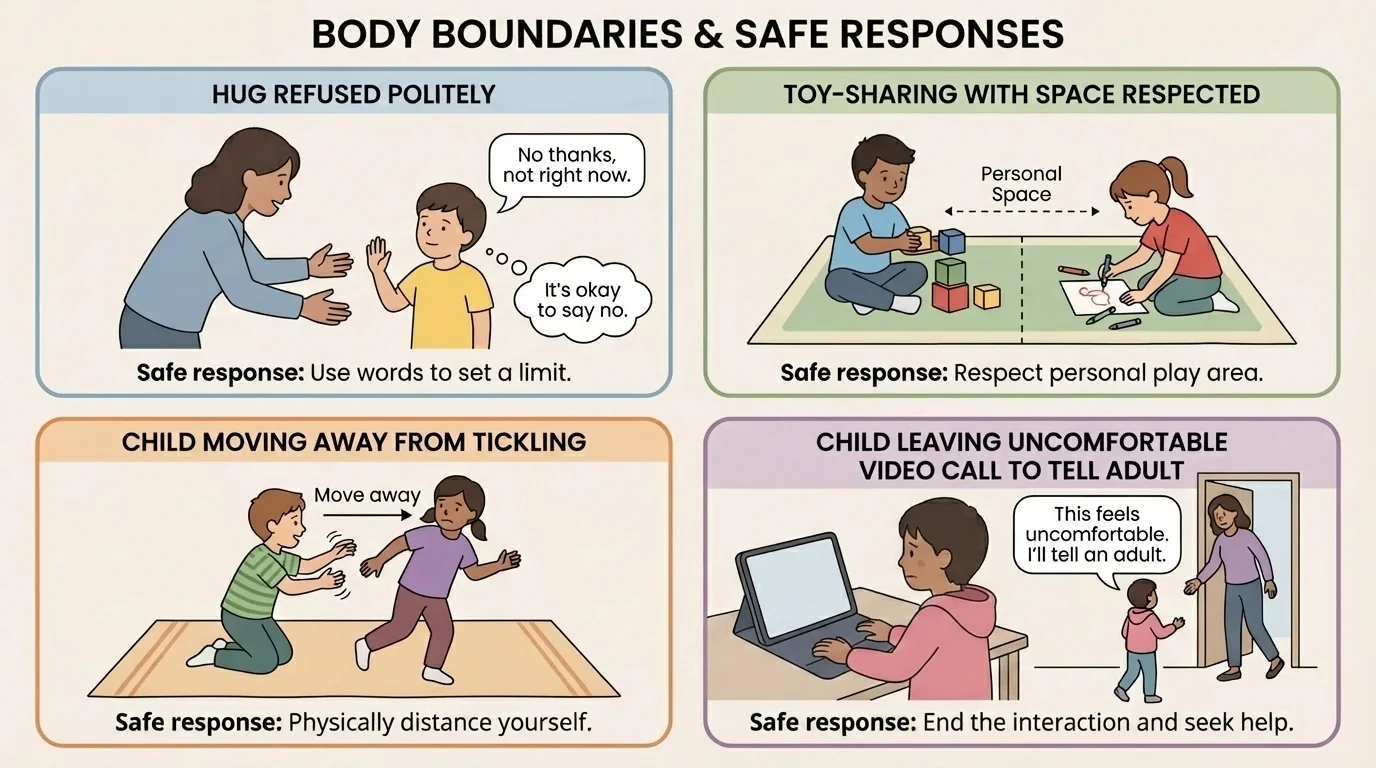
If a person on a video call asks to see private parts, asks you to keep a secret, or makes you feel weird or scared, leave the call and tell a trusted adult right away. Body safety also matters online.
If a doctor needs to check your body, you can ask questions. You can ask for a trusted adult to stay with you. Safe care should be explained to you in a calm way.
"My body belongs to me."
Those words are powerful because they remind you that you matter. Respect helps you feel safe. When people listen to your no, trust grows. When they do not listen, it is time to get help.
A simple rule can help you remember what to do: No, Go, Tell. You can say no with words, go with your feet, and tell with your voice.
You do not have to handle a hard situation all by yourself. Grown-ups who care about you want to help you stay safe, and your job is to speak up and keep telling until you are heard. The helpers in [Figure 3] remind us that there can be more than one safe adult in your life.
