Have you ever helped build something with friends and noticed that the job gets done faster when everyone works together? In a class, on a team, or at home, groups can do big things when people know how to help. Sometimes you may lead the group. Sometimes you may follow someone else's lead. Both jobs are important.
A group is two or more people working together. In first grade, groups may read a book, clean up centers, make a poster, or play a game. Groups work best when everyone has a job and tries to help.
When people work together, they can share ideas, tools, and time. One child may pass out crayons. Another child may color. Another child may glue. When each person does a part, the whole group can finish the job.
Leader means a person who helps guide a group. Team member means a person who works with others and does a part of the job. Both are responsible for helping the group do well.
Good groups are not just about finishing a task. They are also about being kind, safe, fair, and respectful. That means listening, taking turns, and caring about other people's ideas and feelings.
A leader helps the group know what to do. A leader does not boss people around. A good leader uses a calm voice, gives simple directions, and makes sure everyone understands the job.
A leader also listens. If one child has a good idea, the leader pays attention. If someone is confused, the leader helps. If a person is left out, the leader invites that person in. Good leaders are fair and kind.
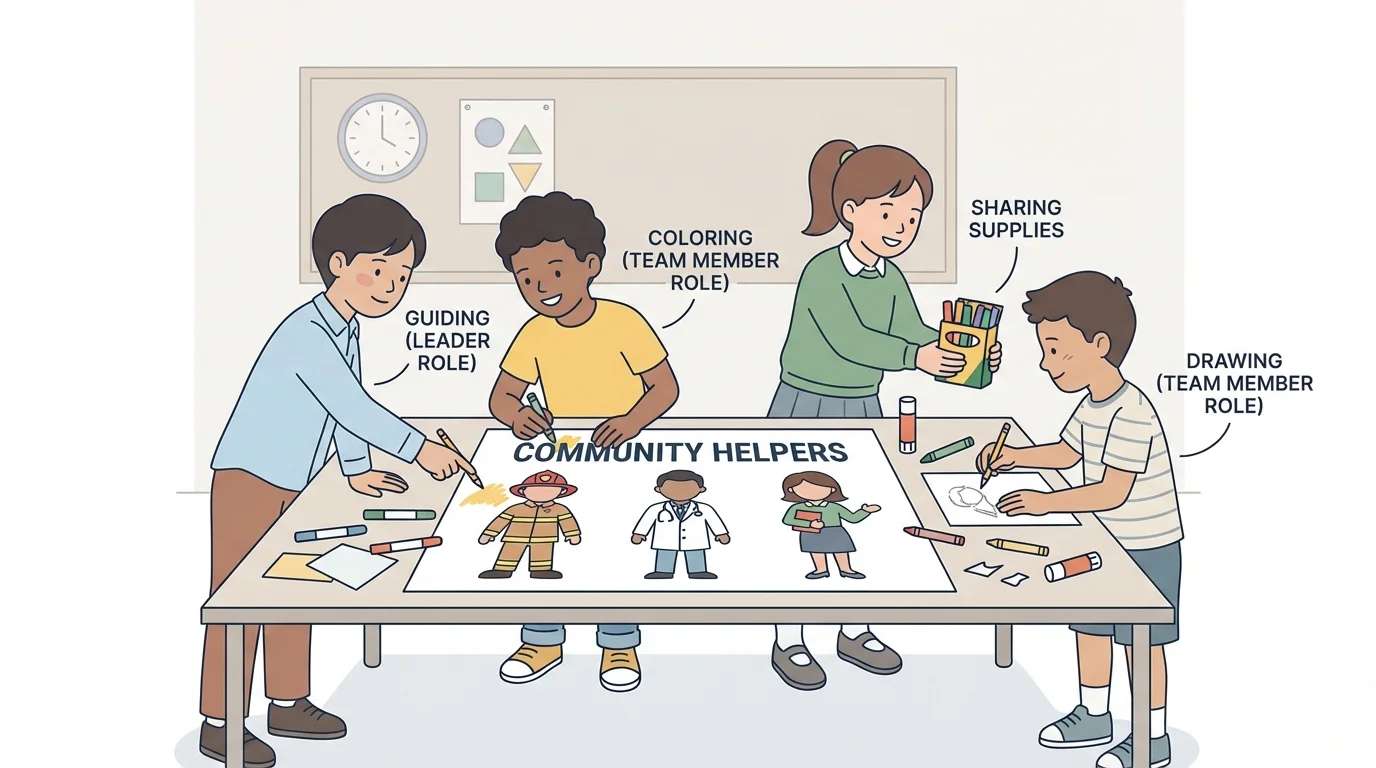
A leader can say things like, Let's each take one part, or You can color the sky, and I can draw the tree. These words help the group stay organized. A leader also remembers that everyone matters.
Responsible leadership means helping the group without trying to control everything. A responsible leader guides, listens, includes others, and helps the group solve problems in a kind way.
Sometimes a leader must make a choice. For example, if two children want the same marker, the leader can help them take turns. That helps the group stay peaceful and keep working.
A team member helps the group by doing a job. Team members listen to directions, share tools, and try their best. They do not have to be in charge to be important.
A good team member waits for a turn, uses kind words, and stays on the task. If the group is building with blocks, one child might find long blocks, another might stack them, and another might check if the tower is straight. Each part helps.
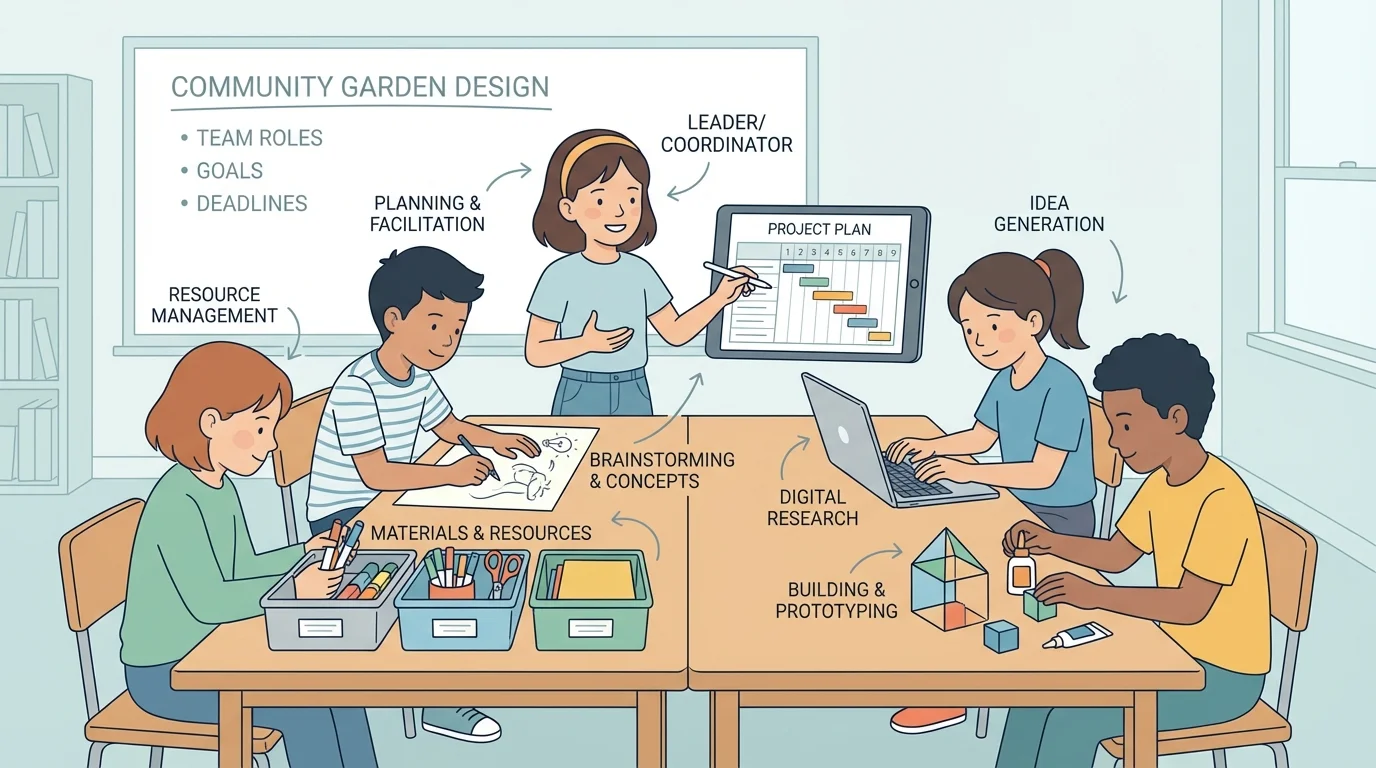
Good team members also help each other. If a friend drops papers, a team member can pick them up. If someone forgets the directions, a team member can remind them kindly. Helping the group means thinking about others, not only yourself.
Sometimes being a team member means following a plan you did not choose. That is okay. You can still be respectful and helpful. Groups need people who can cooperate.
Many games work only when players follow rules, take turns, and help their teammates. Even the best player cannot make a team successful alone.
When we saw the children sharing jobs in [Figure 2], we could see that every small action helped the whole project. A group becomes stronger when each person does a part.
One of the most important things to learn is that you can be both a leader and a team member. In one activity, you may lead the line to lunch. In another activity, you may listen while someone else explains the rules.
This shows what it means to be responsible. Responsible children know that different times call for different roles. They are ready to guide when needed, and they are ready to follow when someone else is leading.
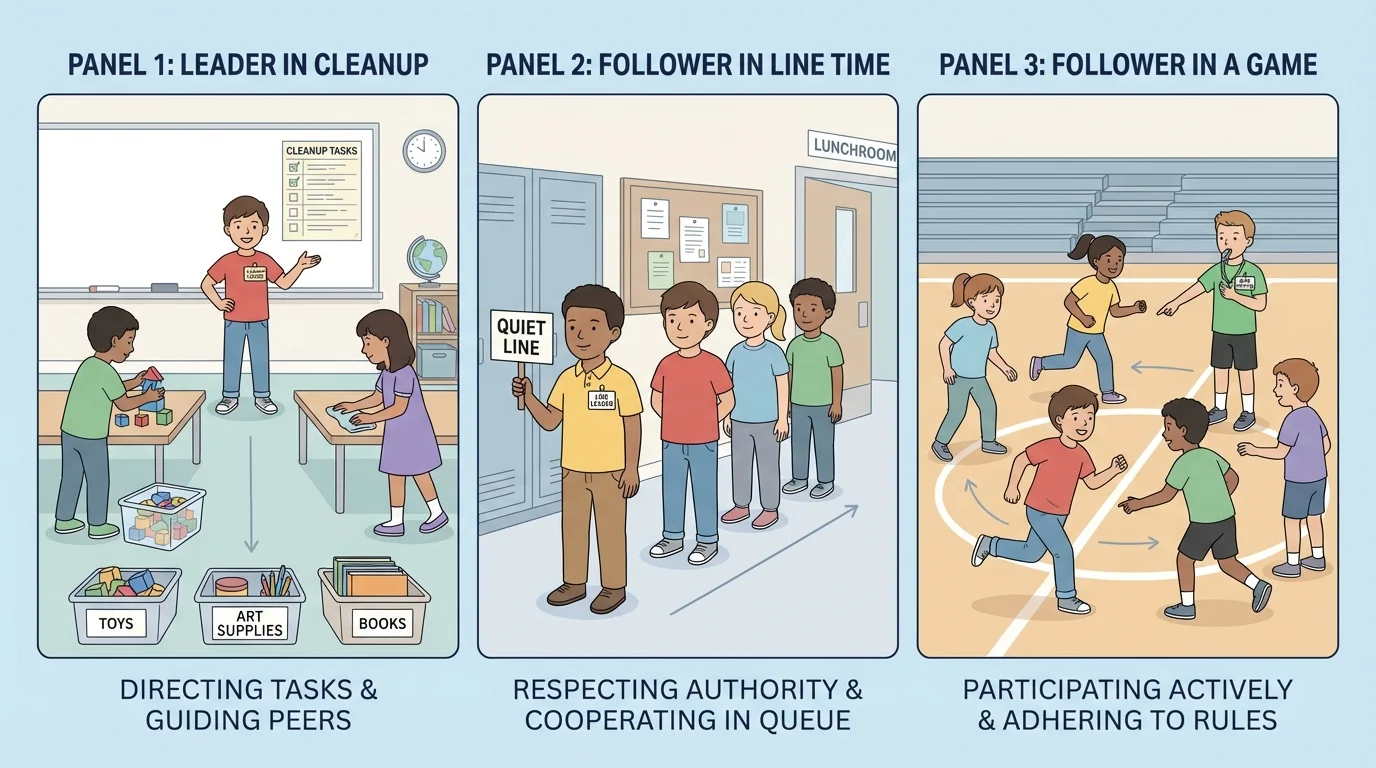
For example, Maria may be the leader during cleanup because she knows where the books go. Later, Jamal may be the leader in a game because he knows the rules. Maria becomes a team member in the game, and Jamal becomes a team member during cleanup. Both children are showing good citizenship.
Example: Taking turns with roles
Step 1: The class makes a paper garden.
One child leads by saying who cuts, who glues, and who decorates.
Step 2: The next activity is reading time.
A different child leads by holding the book and turning pages.
Step 3: Everyone else listens, helps, and waits for a turn.
This shows that each child can lead sometimes and be a team member other times.
Later, the role-changing in [Figure 3] still matters. It reminds us that being first is not what makes someone valuable. Helping the group is what matters.
Sometimes groups have problems. Two people may both want the same job. Someone may feel left out. Someone may not listen. Good leaders and good team members both help solve these problems.
Kind words are very important. You can say, "Can we take turns?" or "You can go first, and I will go next." You can also say, "Let's listen to everyone." These words help people feel respected.
Remember that classroom rules help everyone stay safe and learn. Group rules do the same thing. They help people know how to act when they work together.
If someone makes a mistake, the group can keep helping instead of being mean. Mistakes happen when people learn. A strong group encourages each other and keeps trying.
Leaders should not shout or grab. Team members should not ignore directions or refuse to help. Everyone should try to be patient, calm, and respectful.
You use these skills every day. In line, a leader walks safely and shows where to go. Team members follow quietly. During cleanup, a leader may remind everyone where supplies belong. Team members put items away.
On the playground, a leader may explain the rules of tag. Team members listen and play fairly. In art, a leader may hand out paper. Team members wait their turn. At home, a leader may help plan how to set the table, while others carry forks, napkins, or cups.
| Situation | Leader Action | Team Member Action |
|---|---|---|
| Cleanup time | Explains what goes where | Puts materials away |
| Class game | Tells the rules clearly | Follows rules and takes turns |
| Art project | Helps organize jobs | Does a part and shares tools |
| Walking in line | Shows safe behavior | Stays in line and listens |
Table 1. Examples of how leaders and team members help in everyday school situations.
Whether you are leading or following, your actions affect the whole group. When you listen, share, include others, and do your job, you help everyone succeed. Effective groups need both responsible leaders and responsible team members.
"We can do more when we help each other."
Being a good citizen in school means caring about the group. You do not always need to be the one in front. You also show strength when you help, listen, and work well with others.
