Have you ever noticed that many towns are near rivers, lakes, or oceans? That is not an accident. People usually choose places to live where the environment can help them. The land, the water, the weather, and the plants and animals in a place all matter. These things help people find food, build homes, travel, and stay safe.
A community is a group of people living in the same place. Communities can be tiny, like a small farming village, or large, like a busy city. Long ago and today, people think carefully about where to build homes, schools, roads, and stores. The environment often helps them decide.
When people establish a settlement in an area, they choose to live there and build a community. They may build houses, plant crops, open shops, and make roads. A settlement can begin with just a few families. Over time, it may grow into a town or city.
Settle means to move to a place and make it your home. Environment means the natural world around us, such as land, water, air, plants, animals, and weather. Community means a group of people living in the same place.
People do not usually pick a place at random. They look for places that meet important needs. They need clean water to drink, land to build on, and ways to get food. They also need protection from danger, such as flooding, strong storms, or very little water.
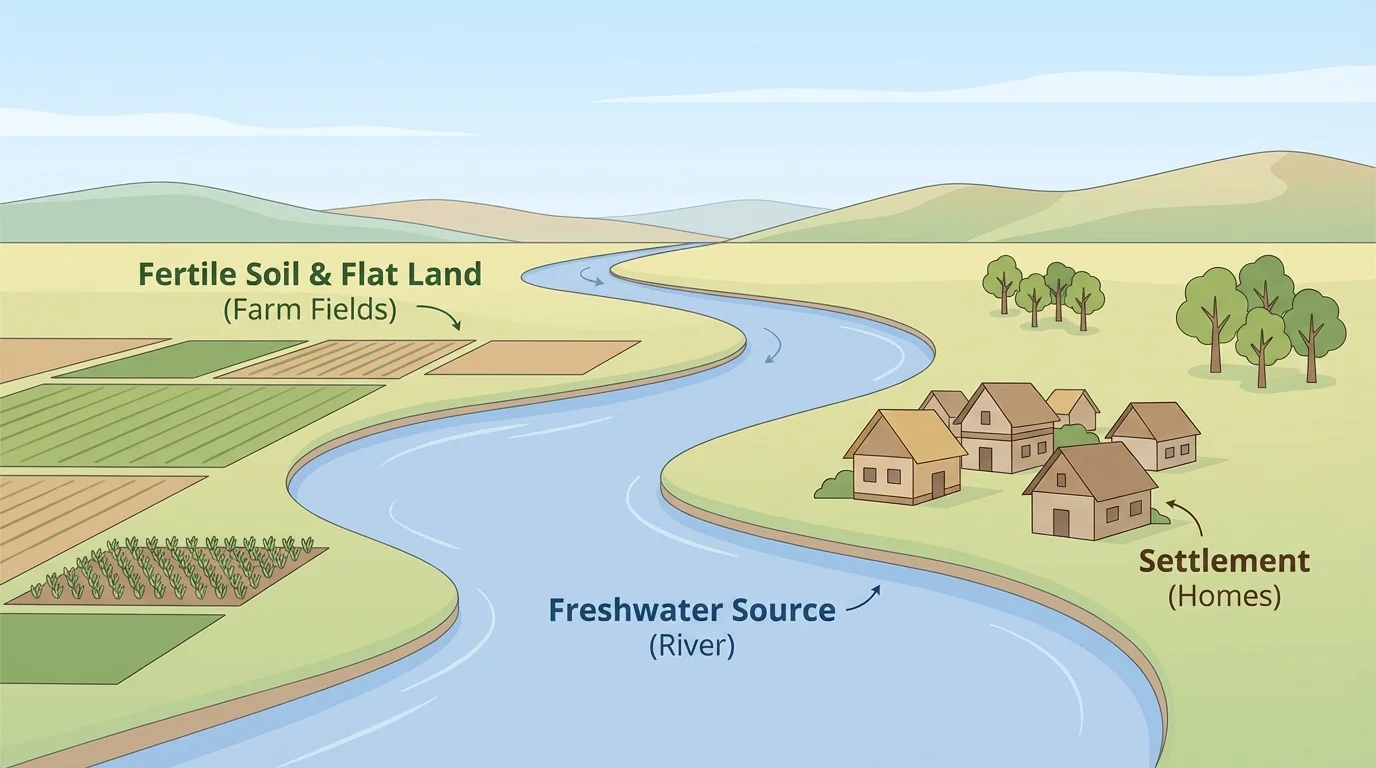
As [Figure 1] shows, one big reason people choose a place is access to resources. Water is one of the most important resources. Many communities grow near rivers, lakes, or coasts because people need water every day. Water is used for drinking, washing, cooking, farming, and sometimes travel. Boats can move people and goods across water.
Flat land is also helpful. It is easier to build houses, schools, and roads on land that is level. Farmers also like land that has good soil because plants grow well there. Places with rich soil often become farming communities. Weather matters too. If a place is too dry, too cold, or too hot for long periods, it can be harder to live there.
Some people settle near oceans because they can fish and use ships. Some settle near forests because trees can be used to build homes and make tools. Others settle on grassy plains where crops and animals can be raised. The environment helps determine what kind of community might grow there.
Some of the world's oldest cities grew near rivers. Rivers gave people water, fish, transportation, and rich soil for farming.
Mountains can be beautiful, but they may be harder places to settle. Steep land makes building difficult. Travel can also be slower in mountain areas. Deserts may have wide open space, but they often have very little water. This is why fewer people live in very dry deserts than in places with more water.
Natural resources are things from nature that people use. Water, trees, soil, fish, rocks, and sunlight are all resources. Different places have different resources, and those resources can help create jobs. In a place with rich soil, many people may work on farms. Near the sea, people may fish or work at ports. In a forest, people may use wood to build or make paper.
Resources help people live, but they also shape communities. A farming town may have barns, fields, and tractors. A coastal town may have boats and docks. A city near a river may have bridges and busy trade routes. The environment does not just affect where people live. It also affects how they live and work.
We can compare different environmental features and how they help people.
| Environmental feature | How it helps people | Possible community type |
|---|---|---|
| River | Provides water and travel routes | Town or city near water |
| Good soil | Helps crops grow | Farming community |
| Forest | Provides wood and wildlife | Forest town |
| Coast | Provides fishing and shipping | Coastal community |
| Flat land | Makes building easier | Town, farm, or city |
Table 1. Environmental features and how they influence settlement.
People depend on the environment every day. They drink water, eat food grown in soil, and use materials from nature to build homes. Even roads and playgrounds are built on land chosen for a reason. Without the environment, communities could not survive.
Think about breakfast. Bread may come from wheat grown on farms. Fruit may come from orchards in warm places. Milk may come from cows raised on grassy land. All of these foods depend on the environment. The same is true for clothing, wood for furniture, and water for bathing and cooking.
Why environment matters every day
The environment is not just scenery. It provides the things people need to live. Communities need safe land for homes, water for people and animals, and resources for jobs and transportation. When the environment changes, communities may need to change too.
The environment also affects travel. Rivers and oceans can help boats move. Flat land makes it easier to build roads and railways. In snowy or icy places, travel can be more difficult in winter. So, people often settle where movement is easier and supplies can reach them.
As [Figure 2] illustrates, people do not only depend on nature. They also modify it, or change it, to meet their needs. People build homes, roads, bridges, farms, and dams. These changes help communities grow and function.
For example, if a river is in the way, people may build a bridge. If land is covered with trees, they may clear some space to build homes or plant crops. If an area needs water for farms, people may dig canals or build systems to move water. These changes can make life easier, but people should be careful not to harm the land and water too much.
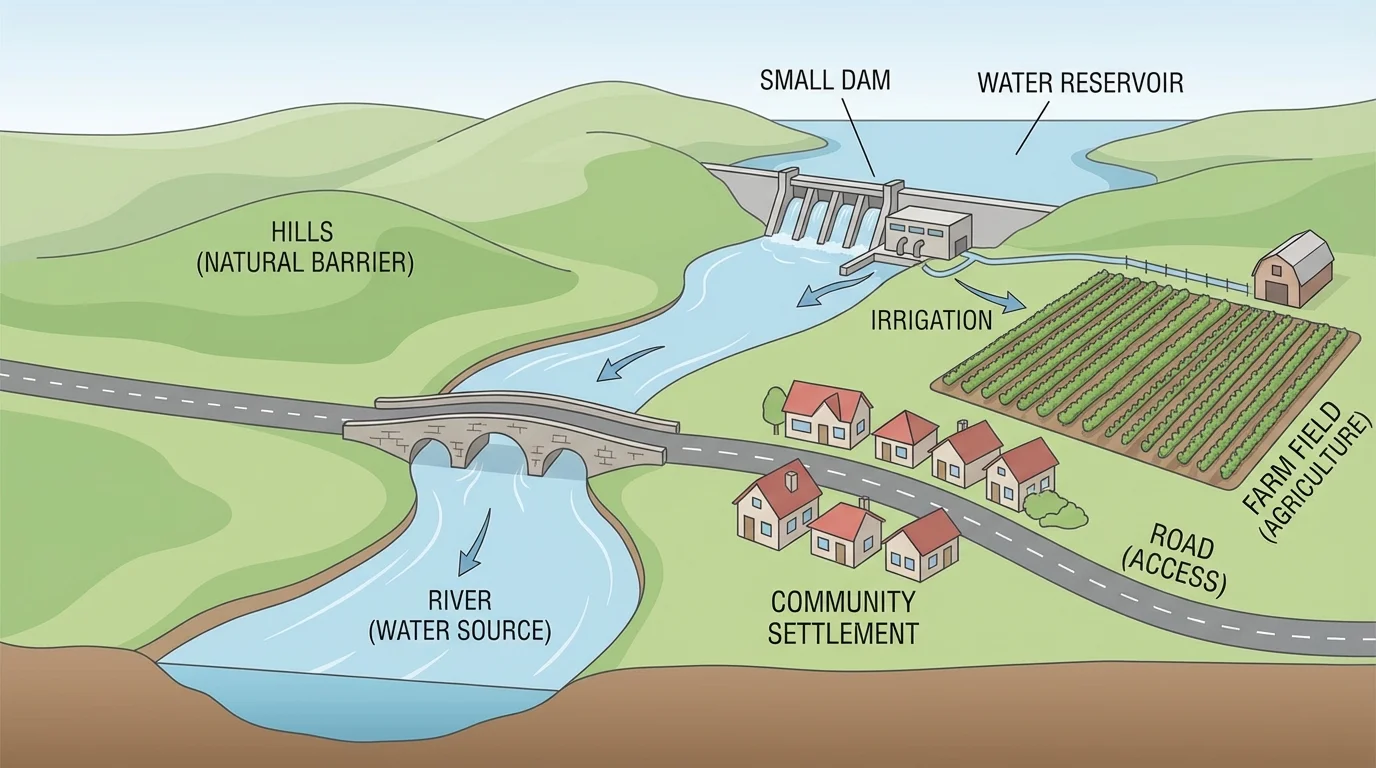
A city is a good example of how people can greatly modify the environment. Before buildings and streets are made, the land may be very different. Over time, people add sidewalks, parks, schools, and stores. They create places that fit their needs. Communities often change land near water so people can travel, farm, and live more easily.
Real-world example: A town near a river
Step 1: Families choose land near a river because they need water for drinking and farming.
Step 2: They build homes on higher ground so floods are less likely to reach them.
Step 3: They make a bridge and roads so people can travel and trade.
Step 4: The settlement grows into a town because the environment supports daily life.
This example shows both dependence on the environment and changes people make to it.
Not all communities look the same because not all environments are the same. On the Great Plains, people may live in farming communities with large fields. In mountain regions, communities may be smaller and spread out because the land is steep. Near the coast, people may fish, use harbors, and trade by ship.
In a forest region, people may build with wood and work with forest resources. In a desert, communities are often built near places where water can be found, such as oases or rivers. In cold northern places, homes may be built to stay warm during long winters. The environment shapes buildings, clothing, work, and travel.
Some cities grow where two helpful features meet. A city might be near a river and on flat land. Another might be beside the ocean with a large harbor. These places often attract more people because they offer many advantages.
People need food, water, shelter, and transportation. When you think about settlement, ask: How does this place help people meet those needs?
Even today, people continue making choices about where to live. Some families move closer to jobs. Some move to places with milder weather. Some choose homes near parks, lakes, or good farmland. Environmental features still matter, even when places have modern buildings and technology.
Some places are harder to settle because they have dangers. Floodplains can provide rich soil, but they may flood. Coastal places can be good for fishing and trade, but storms can be strong there. Dry places may not have enough water. Earthquakes, volcanoes, and landslides can also make some areas risky.
Because of these challenges, people make careful choices. They may build homes on higher ground, make walls to help block floods, or create drainage systems for rainwater. They may plant trees to protect soil. They may also decide not to build in some places at all.
Many communities use maps and weather information to help decide where it is safest to build homes, schools, and roads.
Good settlement choices try to balance needs and safety. A place may have water and rich soil, but if it floods too often, people may need to build farther away. The environment can be helpful, but it can also bring problems. Smart communities learn to work with nature.
Maps help us see why one place may be a better settlement spot than another. The map shows different features such as a river, mountain, forest, and coast. A river area with flat land may be a strong choice because people can get water and build more easily.
If one spot is high in the mountains, it may be harder to build roads there. If another spot is in a very dry area, water might be hard to find. Map clues help us think like geographers. We ask which places have the resources people need and which places might be dangerous or difficult.
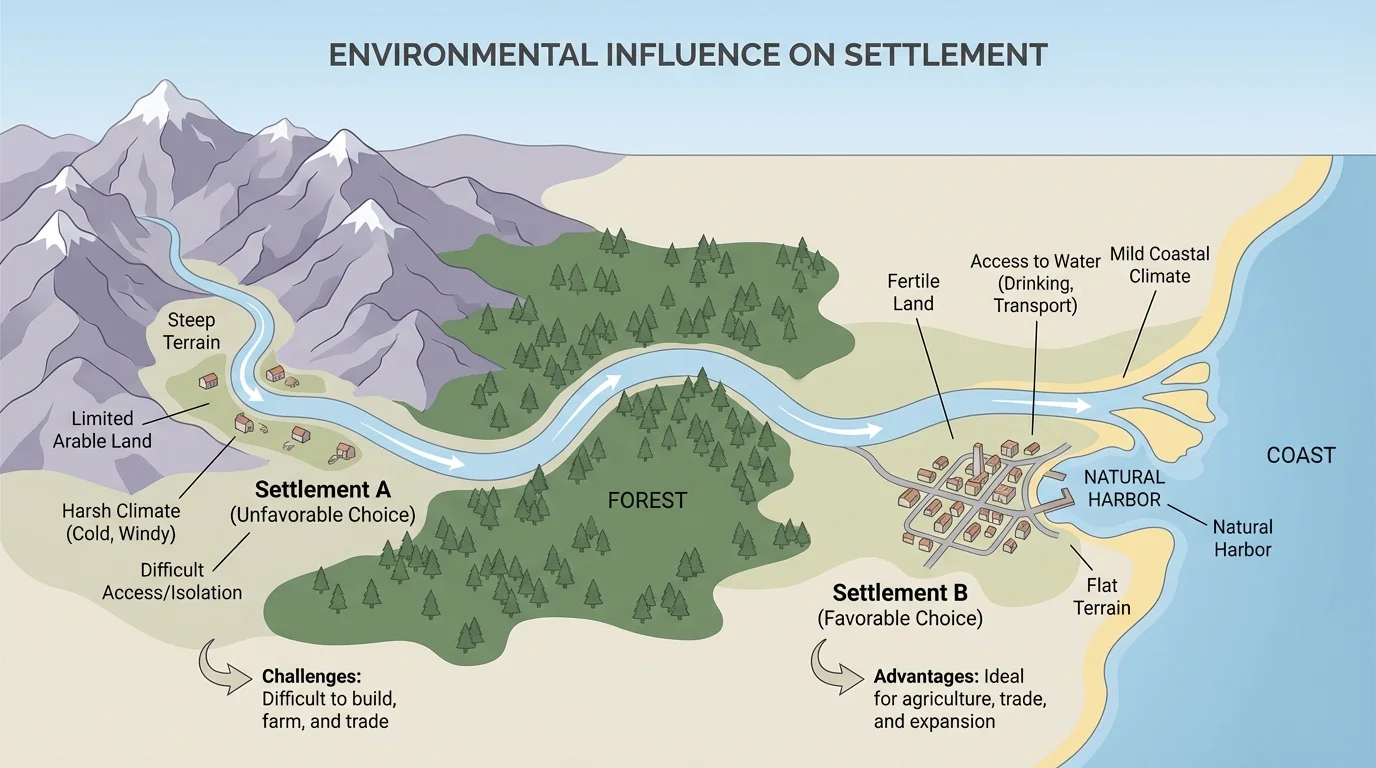
When we use a map, we can compare places. A place near a river and on flat land may be better for farming and travel. A place near a coast may be good for fishing and trade. A place far from water may be harder for settlement. This is the same idea we saw earlier, where water and land features helped explain why homes were built in one place and not another.
So, why do people settle in certain areas? They settle where the environment helps them live. They look for water, land, resources, good travel routes, and safety. Then they change the environment in careful ways to build the communities they need.
