Have you ever noticed that a playground, a library, and a school all work better when people help take care of them? A community is like a team. Many people live, learn, work, and play together. They may look different, speak different languages, celebrate different holidays, or have different family traditions. Even with these differences, they share the same town, neighborhood, or school, and they can help make it better.
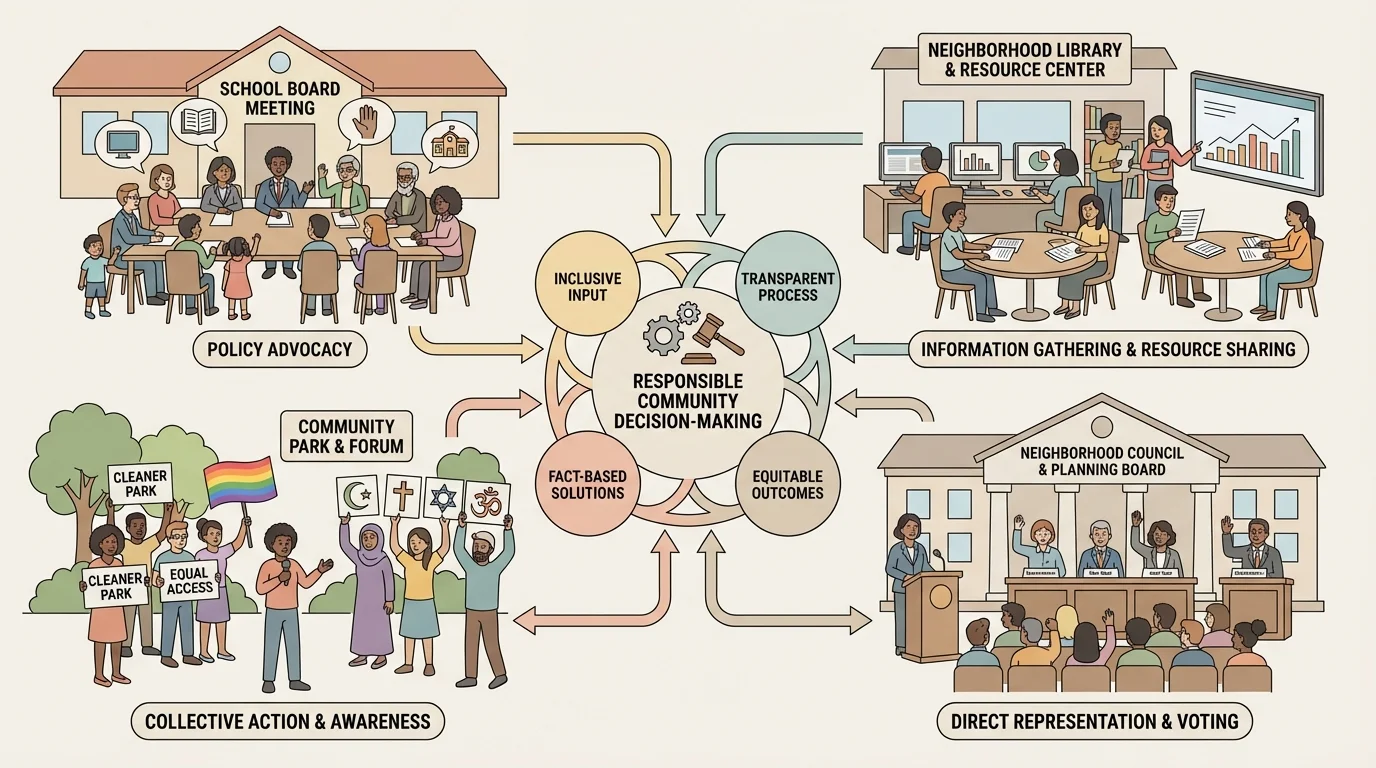
A community is a group of people who share a place and work together in many ways. A community includes families, children, teachers, store workers, firefighters, leaders, and neighbors. It also includes important places such as parks, houses, schools, places of worship, and community centers. A strong community has many voices, as [Figure 1] shows, because different people notice different needs and ideas.
Some people in a community may need safer streets. Others may want cleaner parks, better sidewalks, more books in the library, or celebrations that welcome many cultures. When people care about these things and try to help, they are being active community members.
Advocate means to speak up for something important and try to help make things better. Decision means a choice people make. Fairness means treating people in a just and kind way. Respect means listening, caring, and treating others as important.
Communities are stronger when people understand that not everyone has the same experiences. A child who uses a wheelchair may notice that a building needs a ramp. A family new to the area may need signs in more than one language. An elder may know the history of the town and share wise ideas about how to protect important places.
People often want to improve their community. They may speak up because they want others to be safe, included, and treated fairly. This is called advocating. Advocating does not mean being rude or bossy. It means using words and actions in a peaceful and responsible way.
Listening is just as important as speaking. If only one person talks, the group may miss an important idea. Good communities make room for many voices. People can take turns, ask questions, and think carefully before making choices.
Why many voices matter
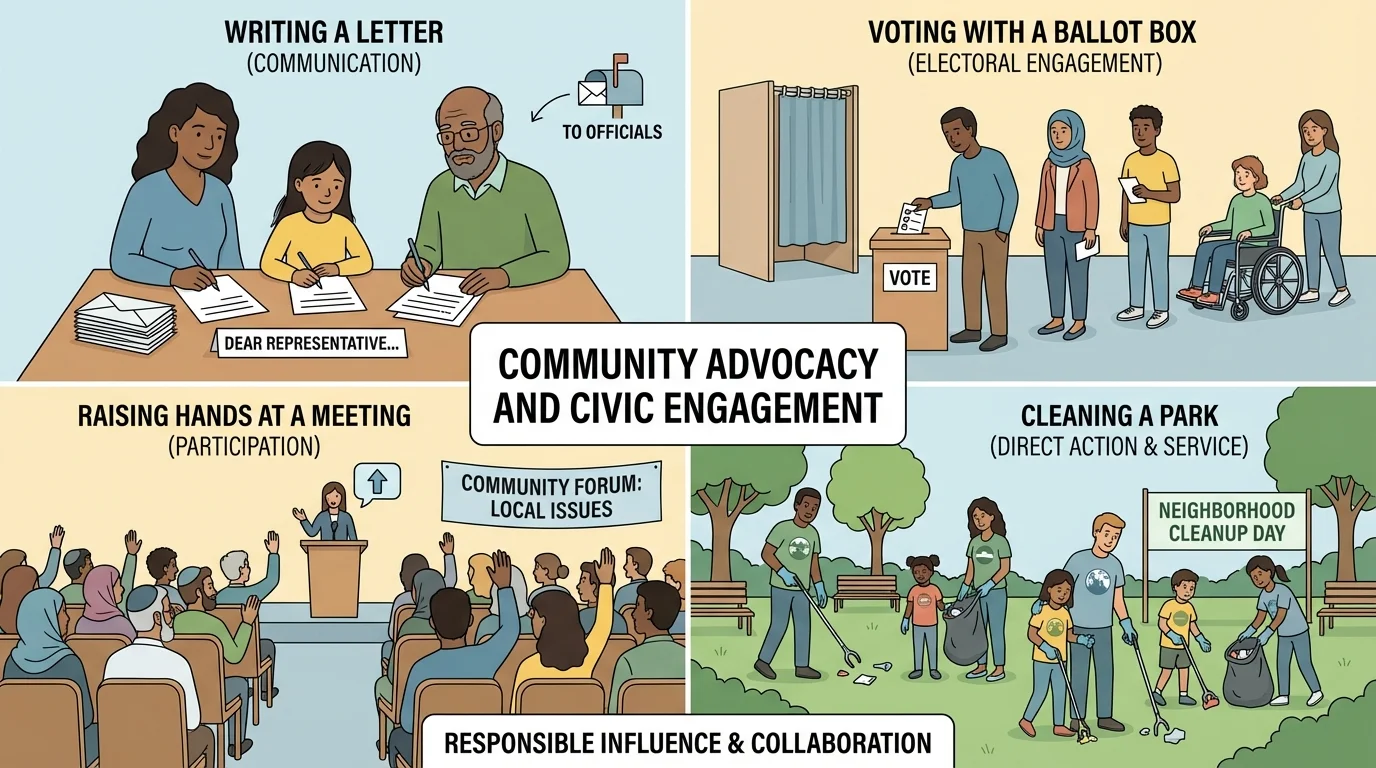
[Figure 2] When people with different backgrounds share ideas, the whole community learns more. One person may notice a problem that others do not see. Another person may know a helpful solution. By listening to many voices, leaders and neighbors can make smarter and fairer decisions.
Children can do this too. In a classroom, students may talk about how to keep the room clean, how to stop hurtful words, or how to make games fair at recess. Each student sees the classroom in a slightly different way, so each student can help.
Communities include people from many backgrounds. Diversity means people are not all the same, and that is a strength. African American, Latino, Asian American, Hawaiian/Pacific Islander, Indigenous Peoples, LGBTQ people, and religious minorities are all part of many communities. Each group may share special histories, traditions, languages, beliefs, or experiences.
African American community members may advocate for fair treatment, honest teaching about history, and events that celebrate Black leaders, artists, and families. They might help plan a school program for Black History Month or ask for books that tell more African American stories.
Latino community members may advocate for language help, family events, and fair access to services. For example, families might ask for school notes in both English and Spanish so everyone can understand important information.
Asian American community members may advocate for respect, safety, and learning about many Asian cultures instead of only one. They may help organize a cultural fair or speak up if someone makes unfair guesses about them.
Hawaiian/Pacific Islander community members may advocate for cultural respect, accurate learning about island traditions, and care for land and water. They may share songs, stories, dances, or ideas about protecting nature.
Indigenous Peoples may advocate for respect for tribal nations, land, language, and traditions. They may ask schools and towns to learn the true history of the land and to honor Native cultures in respectful ways.
LGBTQ community members may advocate for kindness, safety, and welcoming spaces where everyone can be themselves. They may ask schools or centers to stop bullying and use words that make all families feel included.
Religious minorities are people whose religion is not the same as the religion of most people around them. They may advocate for respect for their holidays, clothing, food choices, and places of worship. For example, a family may ask that a school understand an important religious holiday.
These groups are not separate from the community. They are the community. They are neighbors, classmates, workers, leaders, artists, and helpers. When they share what matters to them, they help the whole community become wiser and fairer, just as the many people in [Figure 1] make the neighborhood stronger by participating together.
Many communities celebrate special months, holidays, and heritage events to learn about different groups. These celebrations are not just parties. They also help people understand each other better.
It is important to remember that no group is exactly alike. People within the same group can have different ideas, jobs, hobbies, and opinions. Respect means not making unfair guesses about people.
People can help make changes in peaceful ways through actions like talking, writing, voting, and helping. These actions are forms of participation, which means taking part in community life. Responsible participation follows rules, shows respect, and tries to help others.
Community members may go to a meeting and raise a hand to share an idea. They may write a letter or send a message to a principal, librarian, or mayor. They may sign a petition, which is a paper or message that shows many people agree on something. Adults may vote for leaders or on local decisions. Neighbors may also lead by action, such as planting flowers, cleaning up trash, or collecting food for families.
Example: Improving a school playground
Students and families notice that the playground has very little shade, so it gets too hot.
Step 1: They observe the problem and talk about why it matters.
Children say they want a safer, cooler place to play.
Step 2: They share ideas respectfully.
Families write a letter to the principal and ask if trees or shade covers can be added.
Step 3: Leaders listen and consider choices.
The school looks at safety, cost, and the best place to add shade.
Step 4: The community helps.
Families and staff may help plant trees or support a school project.
This is a peaceful way to improve the community.
Sometimes influencing a decision means asking for something new. Sometimes it means protecting something important that already exists. A family may ask a library to keep books in many languages. A neighborhood group may ask a city to save an old tree or add a crosswalk.
Responsible action also means telling the truth, following rules, and keeping people safe. Breaking things, shouting hurtful words, or leaving others out does not help a community solve problems well.
Communities need rules so people can live together safely. But rules should also be fair. Fair rules do not ignore some people. They try to include everyone.
For example, if a school plans a family event, fairness means thinking about many kinds of families and many needs. Can everyone get into the building? Are the signs easy to understand? Are all children welcomed? Are important holidays considered? These questions help people make better decisions.
Responsible influence
Responsibly influencing a decision means trying to change something in a peaceful, honest, and respectful way. It includes listening to others, using facts, following rules, and caring about the good of the whole community, not only yourself.
Sometimes people disagree. That is normal. Two groups may both care about the community but have different ideas. One group may want a field for sports, while another wants a garden. Community members can talk, listen, and find a solution that is fair, like making space for both if possible.
Many people help make community decisions. Some are leaders with official jobs, and some are helpers without official titles. A leader can be a principal, mayor, city council member, librarian, or teacher. But a grandparent, neighbor, coach, or student can also lead by helping others and sharing good ideas.
Elders and long-time residents can teach history and traditions. Faith leaders may help families, organize service projects, and encourage kindness. Parents and caregivers may join school groups. Young people may make posters, speak at a meeting, or help welcome new students.
Leaders should not make decisions alone without listening. Good leaders ask questions and hear from many community members. That is one reason meetings, surveys, letters, and conversations are important.
"Every person can help make a community stronger."
When leaders listen to many groups, they learn more. This includes hearing from people who may not always be heard first. That helps the whole community grow in fairness and trust.
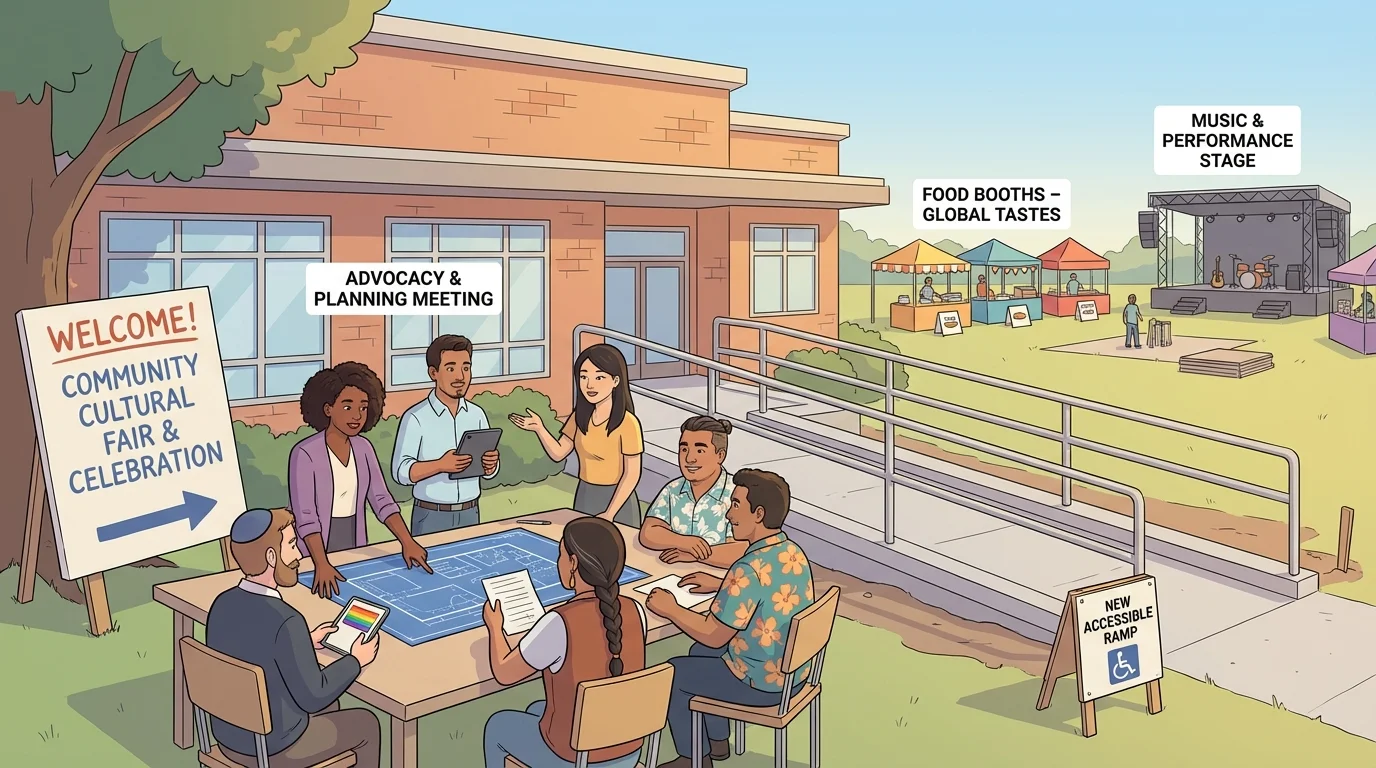
[Figure 3] Communities often solve problems by working together. One neighborhood may decide to hold a cultural fair so families can share food, music, art, and stories from African American, Latino, Asian American, Hawaiian/Pacific Islander, Indigenous Peoples, and other traditions. This helps people learn about each other and feel proud of who they are.
Another community center may hear from LGBTQ families, people with disabilities, and religious minority families that the building should feel more welcoming. So the center adds a ramp, updates signs, offers quiet spaces, and makes sure events respect many families and beliefs.
Example: A library listens to families
A library wants more families to visit.
Step 1: Community members share ideas.
Some families ask for books in different languages. Others ask for story times that include many cultures and family types.
Step 2: The library listens and plans.
Librarians choose new books and create welcoming events.
Step 3: More people feel included.
Families see themselves in the books and activities, so the library better serves the whole community.
This is a good example of listening, fairness, and action.
A school might also learn from Indigenous community members about the land where the school stands. Then students can learn local history more honestly and respectfully. In another place, families may ask for a quiet room during a long event so people can pray or rest. Small changes can make a big difference.
These examples show that advocacy is not only about problems. It is also about belonging, care, celebration, and making room for everyone. The teamwork in [Figure 2] and [Figure 3] reminds us that communities improve when people both speak up and help out.
You do not need to be grown up to help your community. Children can notice needs, share ideas kindly, include others in games, respect differences, and tell an adult when something is unfair or unsafe. Students can make welcome cards for new classmates, help clean shared spaces, and learn about people whose lives are different from their own.
Being part of a community means caring about more than yourself. It means asking, listening, helping, and treating people with dignity. When many different community members work together, decisions can become more thoughtful, fairer, and more helpful for everyone.
