Have you ever ridden on a road, played at a park, or seen the American flag at school and wondered, "Who helps make rules and choices about these things?" Different leaders help different groups of people. Some leaders help a city, some help a state, and some help the whole country. Learning about these leaders helps us understand how our communities work.
A community is a group of people who live in the same place. Communities can be small, like a town or city, or very large, like a state or a whole nation. Because people share places, roads, schools, and services, they need leaders to help make decisions, solve problems, and keep people safe.
Leader means a person who guides others and helps make decisions. In government, a leader is chosen to serve people, follow laws, and help a community work well.
Government is the system people use to make rules and decisions for a community. Some leaders are elected, which means people vote to choose them. When people vote, they help decide who will represent them and make important choices.
[Figure 1] Think about a classroom. If no one helped organize supplies, reminded students about the rules, or solved problems, the classroom might feel confusing. Communities are much bigger than classrooms, so they need leaders even more. Leaders help people work together.
Leaders do not do every job by themselves. They work with many other people. A mayor works with city workers. A governor works with state workers. The President works with many people across the country. Leaders listen, plan, make choices, and try to help the people they serve.
Different levels of government help different-sized communities. Local government serves a town or city. State government serves one state, such as Colorado. National government serves the entire United States.
When we understand these levels, it becomes easier to know why one leader takes care of city parks while another helps lead the whole country. The size of the community changes the leader's job.
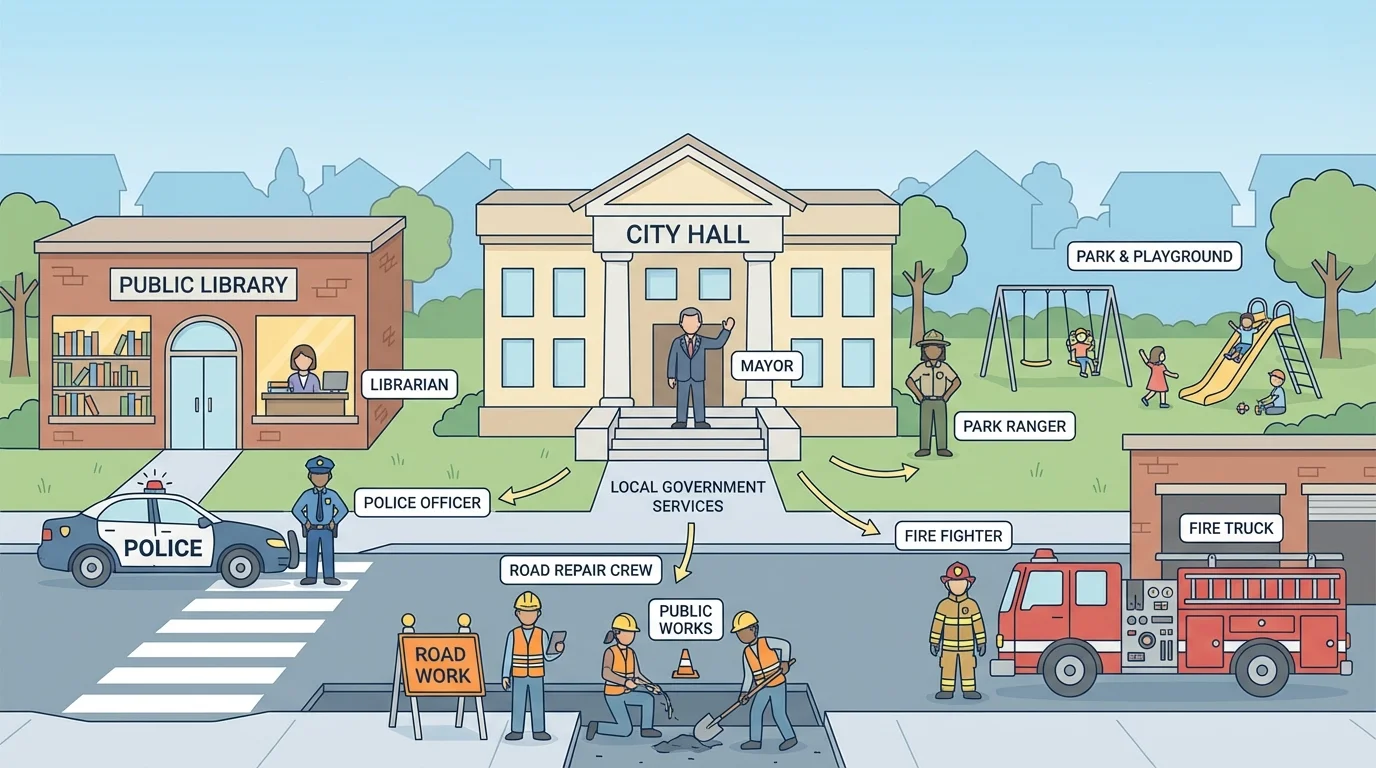
A mayor is a local leader of a city or town. The mayor helps lead the city government and make decisions about local needs. A mayor may help with parks, trash pickup, libraries, streets, fire protection, and police.
For example, the mayor may help decide whether a playground should be repaired or whether a new stop sign is needed near a school. If a road has big holes, city leaders may make plans to fix it. If a library needs more books or a park needs clean benches, local leaders can help.
Mayors serve the people in one city or town, not the whole state or whole country. That is why they focus on nearby places that people use every day. Local leaders often know a lot about the neighborhoods, buildings, and services in their own city.
A mayor is often not the only local leader. Many cities also have a city council. A city council is a group of people who help make local laws and decisions. The mayor and city council work together to help the city run well.
Some communities are cities, some are towns, and some are smaller areas with different local leaders. Even when the titles are different, local leaders still help with everyday community needs.
Children may notice local government in action when they see snow plows, crossing guards, buses, playground repairs, or community events. These local services help people in one area. Later, when we compare leaders, we can return to the city services shown in [Figure 1] to remember that local leaders are closest to daily life.
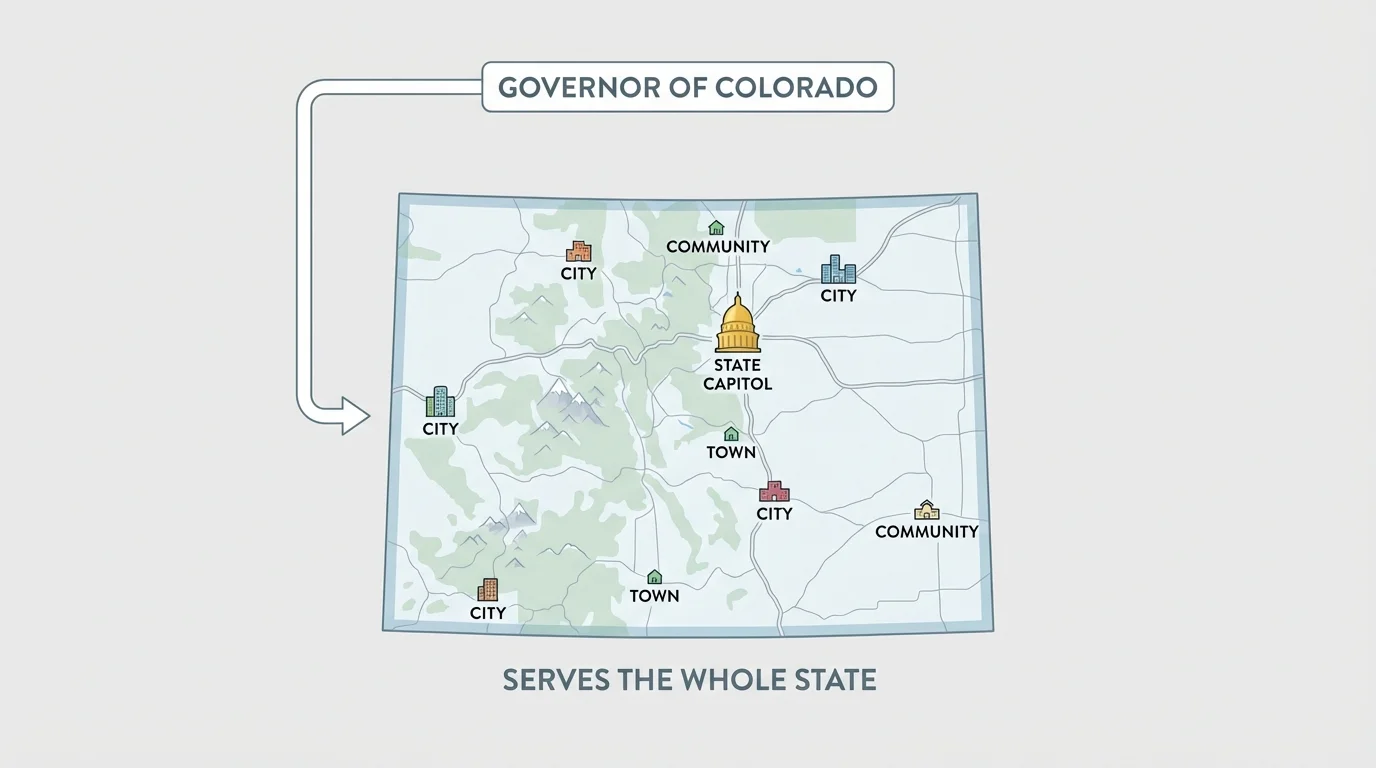
A governor is the leader of a state. In Colorado, the Governor of Colorado helps lead the whole state, including many different cities, towns, and rural areas. This job is bigger than a mayor's job because the governor serves everyone in the state.
[Figure 2] The governor helps make decisions about state matters. These may include state highways, state parks, some school issues, public safety, and helping the state during emergencies. If a problem affects many places in Colorado, the governor may help lead the response.
For example, if a wildfire, snowstorm, or flood affects many communities, the governor can work with others to help people stay safe. The governor may also help decide how state money is used for important needs. A governor works with other state leaders, not alone.
Colorado is a state in the United States. Each state has its own government. That means each state has leaders who focus on that one state's needs. What is best for one state may not be exactly the same as what is best for another state.
A governor must think about many kinds of places. Colorado has large cities, small towns, plains, and mountains. Because the state is large, the governor helps with big-picture decisions. Looking back at [Figure 2], we can see that a governor's work reaches across the whole state, not just one neighborhood.
The President of the United States is a national leader. The President helps lead the whole country. This is the largest level we are studying, because the President serves people in all the states, not just one city or one state.
The President has important jobs. The President helps carry out national laws, works with other national leaders, and represents the United States. The President may speak for the country, help make big decisions, and respond to issues that affect the whole nation.
For example, the President may help lead the country during a national emergency or work with other countries. The President also has to think about many different people and places across the United States. That makes the job very large and very important.
Examples of who each leader serves
Step 1: Think about one city
If a streetlight is broken in one city, the mayor is the local leader who may help with that city problem.
Step 2: Think about one state
If a big snowstorm affects many parts of Colorado, the governor may help lead the state response.
Step 3: Think about the whole country
If a decision affects all the states, the President may help lead at the national level.
The President works with many other leaders in the national government. Even though the President is a very important leader, government is designed so that many people share responsibilities. This helps keep power from resting in only one person's hands.
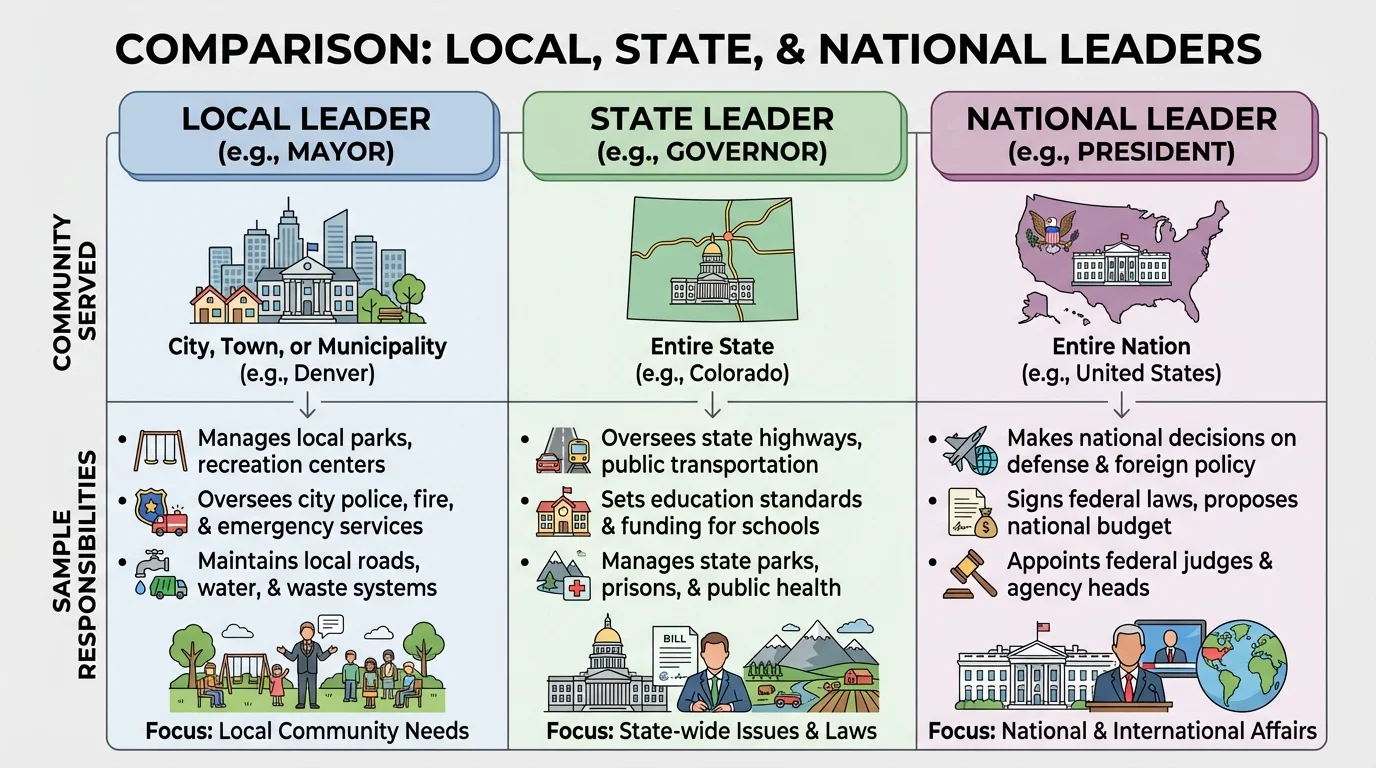
These leaders can be compared side by side, and [Figure 3] presents that comparison clearly. A mayor, a governor, and the President are all leaders in government. They all serve people, make decisions, and work with others. They are alike because they are chosen to lead and help communities.
They are different because they serve different-sized communities. A mayor serves a city or town. A governor serves a state. The President serves the whole country. The larger the community, the broader the leader's job becomes.
| Leader | Level | Who the leader serves | Examples of jobs |
|---|---|---|---|
| Mayor | Local | A city or town | Parks, local roads, libraries, city safety |
| Governor | State | One state, such as Colorado | State highways, state parks, statewide emergencies |
| President | National | The whole United States | National decisions, carrying out laws, representing the country |
Table 1. Comparison of local, state, and national leaders and the communities they serve.
Another important difference is how close the leader's work is to students' everyday surroundings. The mayor's work may be easiest to spot because it affects nearby places, like roads and playgrounds. The governor's work affects the whole state. The President's work reaches across the entire country. The comparison in [Figure 3] helps us see these size differences quickly.
Rules and responsibilities help communities run smoothly. Leaders are part of that system because they help people follow laws, solve problems, and make fair decisions.
Even though these leaders have different jobs, they all should try to serve people well. A leader's title matters, but good leadership also depends on character.
A good leader should be responsible. That means doing important jobs carefully and trying to make wise choices. A good leader should also be fair. Fair leaders try to treat people honestly and listen to different needs.
Another important characteristic is honesty. Honest leaders tell the truth and try to earn people's trust. Respect matters too. Leaders should respect laws, workers, and the people they serve.
Good leaders are also good listeners. They may hear many opinions before making a decision. Sometimes leaders must be brave. If a hard problem happens, they need courage to act and help others.
Leadership is service. In government, leadership is not about bossing people around. It is about helping a community, solving problems, and making life better for others.
People may not always agree with every decision a leader makes. Still, strong leaders should try to learn, listen, and help. They should think about what is good for the community, not only what is easy.
Sometimes leaders at different levels must work together. A city may need help from the state. A state may need help from the national government. This teamwork is important when a problem is too big for one group to handle alone.
For example, if a flood damages homes in one city, the mayor may help the local community first. If the damage spreads to many places in Colorado, the governor may help lead the state response. If the emergency becomes very large, national leaders may help too.
This means local, state, and national leaders are connected. They have different jobs, but they can cooperate. Communities are stronger when leaders work together and share information.
"Government of the people, by the people, for the people."
— Abraham Lincoln
That famous idea reminds us that leaders are meant to serve the people. Whether the leader is a mayor, a governor, or the President, the purpose of government is to help communities live, work, and grow together.
People are not just bystanders. Citizens help government too. Adults can vote for leaders. People can learn about issues, follow laws, speak respectfully, and share ideas. When citizens take part, leaders can better understand what the community needs.
Children are citizens too, and they can start learning now. Students can practice leadership by listening, being fair, helping others, and taking responsibility. These are the same kinds of traits good government leaders need.
When you see a clean park, a repaired road, a state highway sign, or the flag of the United States, you can think about the leaders who help make decisions for those places. Knowing the roles of local, state, and national leaders helps us understand the world around us.
