What did you do this morning? Maybe you ate breakfast, hugged a grown-up, or played with a toy. Those things already happened, so they are part of the past. What are you doing right now? You are in the present. History begins with remembering that time moves and that things happen in an order.
[Figure 1] The past is what happened before now. The present is what is happening now. Even something from this morning is in the past. A trip from last week is in the past too. Time moves from before to now.
You can remember small things and big things. Small things can be, "I had apples today." Big things can be, "We went to Grandma's house last month." When we remember, we learn that life has a sequence. One thing happens, and then another thing happens.
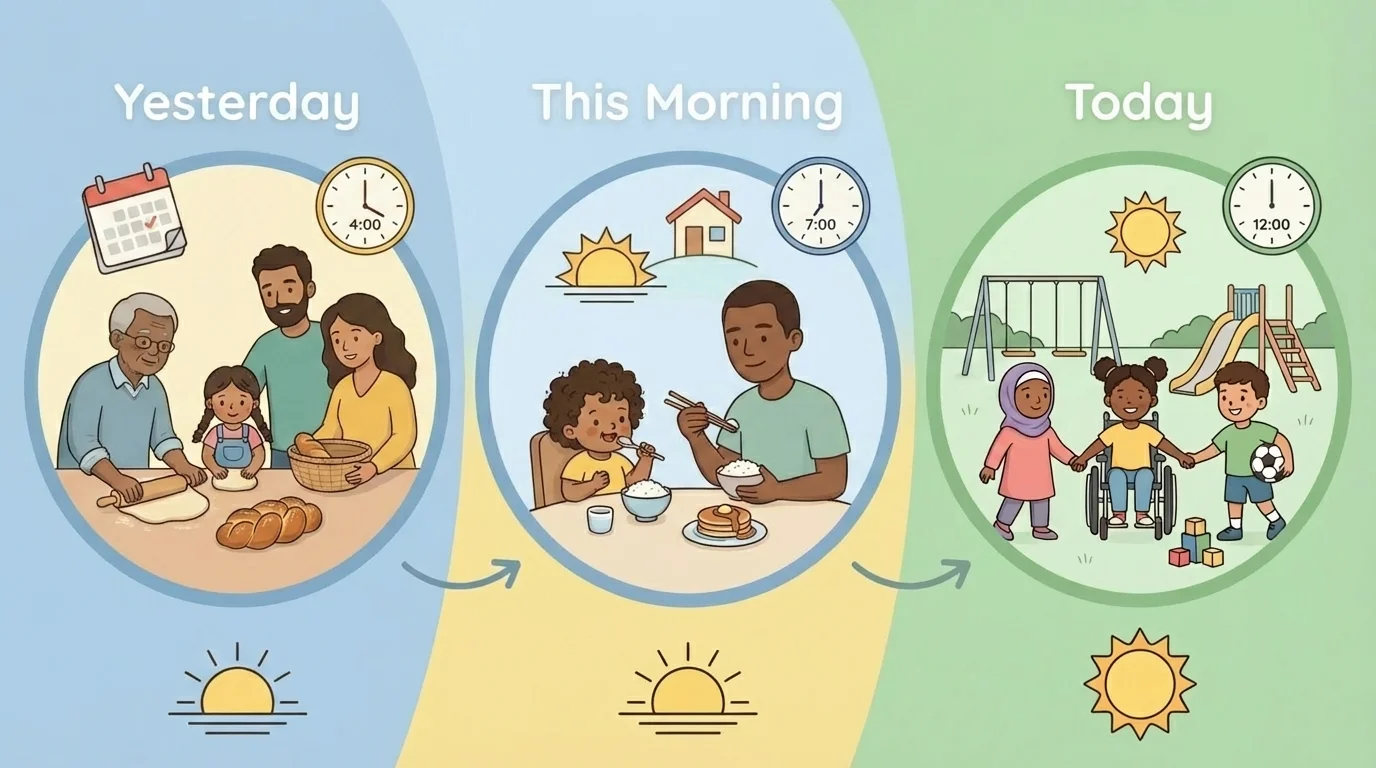
Past means before now. Present means now. Sequence means the order things happen.
You may also hear time words like today, yesterday, last week, and long ago. These words help us talk about when something happened.
[Figure 2] A tradition is something a family does again and again. Some families sing a song before bed. Some families eat a special food on a holiday. Some families visit relatives on Sundays. Some families tell stories from parents, grandparents, or elders. Family traditions can look different, and each one is important to the people who share it.
Families come from many places and backgrounds. Families may have different races, skin colors, languages, music, clothes, and foods. One family may make tamales together. Another family may light candles for a celebration. Another family may clap, dance, and sing. Another family may share rice, bread, noodles, or soup at a special meal. These are all ways families show love, memory, and belonging.
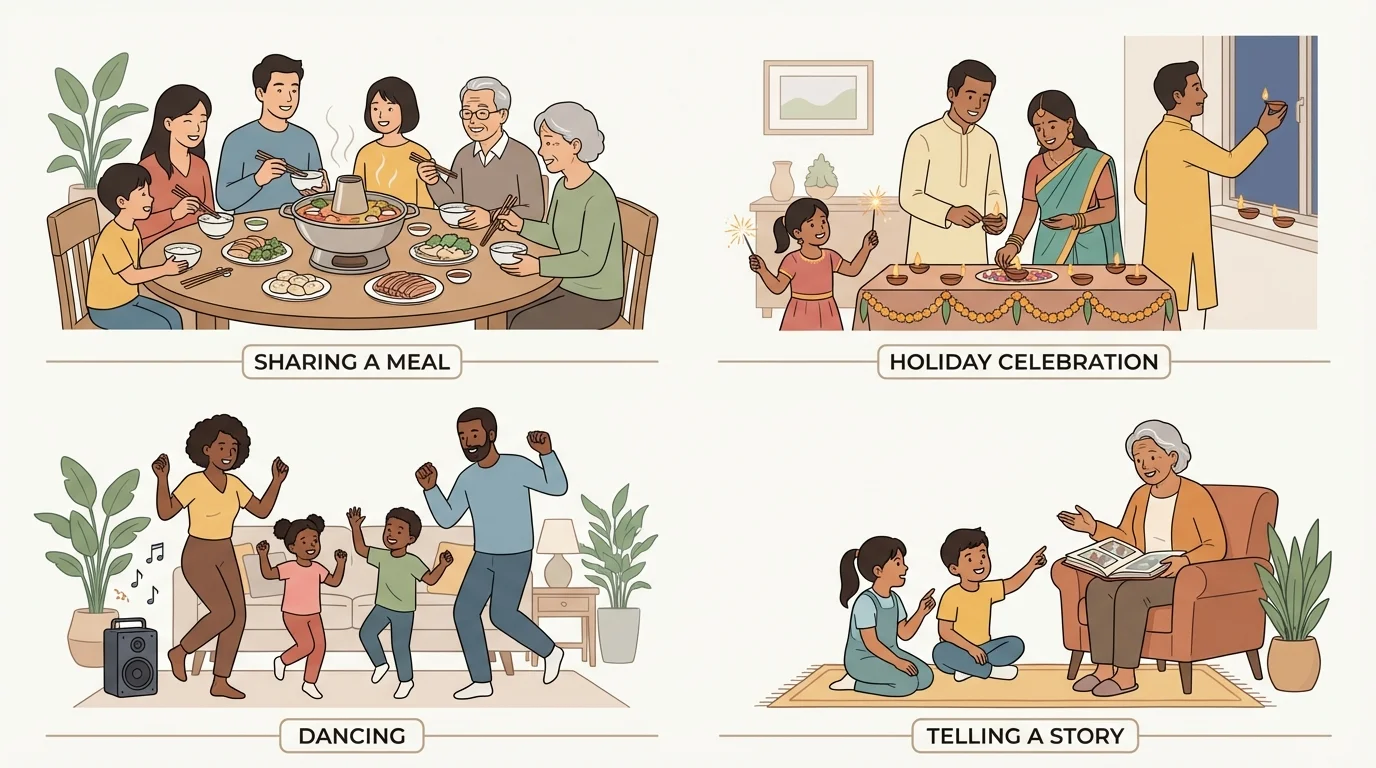
Many traditions are passed from older family members to younger family members. A song, a recipe, or a way to celebrate can travel through a family for many years.
Some traditions happen every day. Some happen every week. Some happen once a year. A family can even start a new tradition, like Friday game night or a walk in the park. Traditions help us remember who we are and what our family cares about.
A event is something that happens. Events can be everyday events or very special events. Today you may have painted a picture. This week you may have gone to the library. Long ago you may have had a birthday party or met a new baby in your family.
When children talk about events, they begin to understand change over time. A baby may become a big sibling. A family may move to a new home. A child may grow taller. A tradition from a long time ago may still happen now. Looking back helps us see what changed and what stayed the same.
Talking about one event
Step 1: Name the event.
"We had dinner at Grandpa's house."
Step 2: Say when it happened.
"It happened yesterday."
Step 3: Say one thing you remember.
"We ate noodles and listened to a story."
Photos, songs, and family objects can help us remember events. A picture from a picnic, a holiday outfit, or a favorite bowl used at a special meal can remind us of the past.
Some children live with two parents. Some live with one parent. Some live with grandparents, aunts, uncles, foster families, or other caring adults. Some families are big, and some are small. What makes a family is the people who care for one another.
Families may celebrate in different ways because of culture, religion, language, race, or where they came from. These differences are good to notice with kindness. We can say, "My family does this," and also learn, "Your family does that." We respect all families.
Same and different over time
History helps us notice two things at once: some parts of family life change, and some parts stay the same. A child may wear bigger clothes than before, but the family still reads the same bedtime story. A family may move to a new place, but they still cook the same special food.
The family scenes in [Figure 2] remind us that there is not just one way to be a family. Different traditions still do the same important job: they help people remember, celebrate, and feel close.
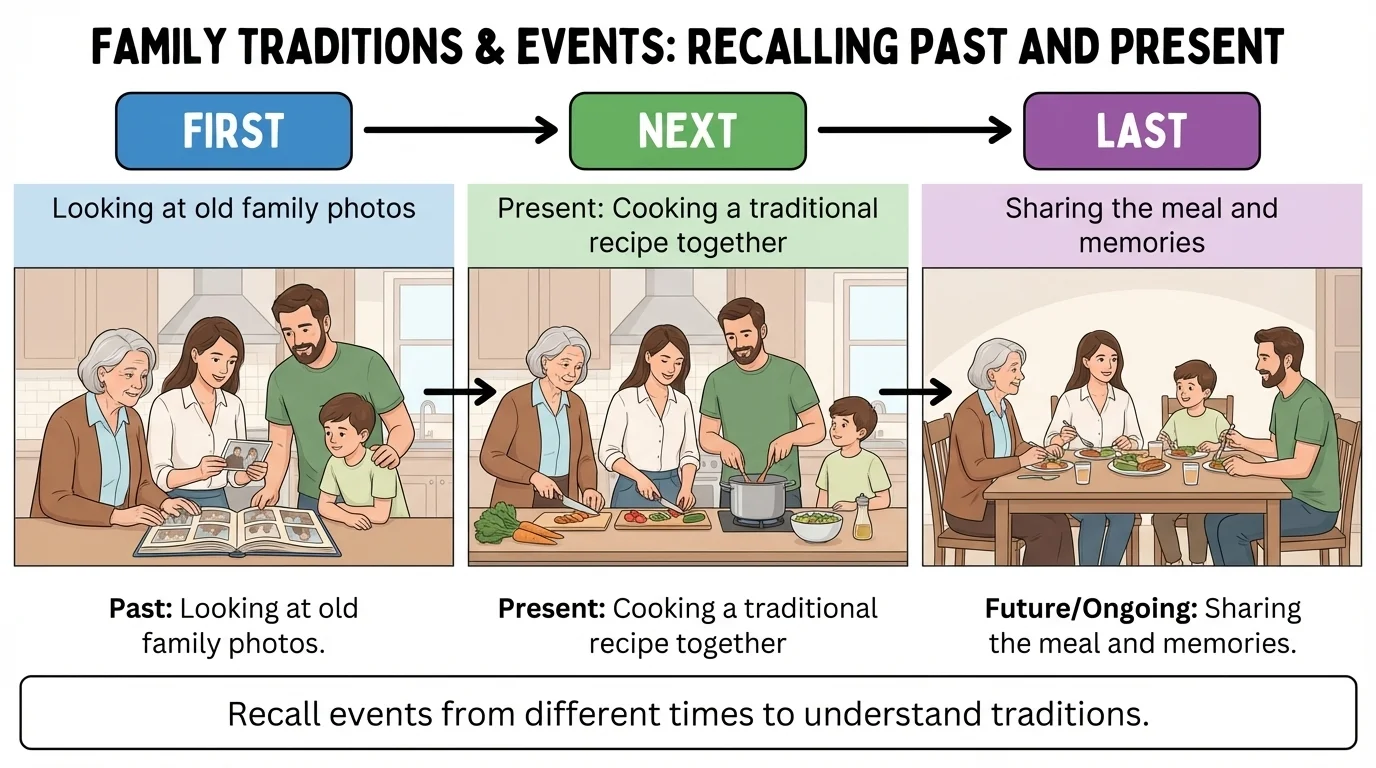
When we tell about the past, we can put things in sequence. We use words like first, next, and last. A simple order helps other people understand what happened in a family event with three parts.
[Figure 3] For example, first a family mixes dough, next they cook the food, and last they eat together. Or first guests arrive, next everyone sings, and last a child blows out birthday candles. Putting events in order is one way we study history.
You already know how to talk about things that happen during a day. Now you are using those same ideas to think about family life over time.
The timeline in [Figure 1] helps us see that even a short time ago is still the past. The event order in [Figure 3] helps us tell what happened clearly. When we remember family traditions and events, we learn about ourselves, our families, and other people too.
